

Inlays and Onlays: Restoring Teeth When a Filling Is Not Enough

Inlays fit within the grooves of a tooth, while onlays also cover one or more cusps, the raised biting points. They are often recommended for moderate tooth decay, cracked or fractured teeth, or replacement of large old fillings.
Key Takeaways
- Inlays fit within the grooves of a tooth, while onlays also cover one or more cusps, the raised biting points.
- They are often recommended for moderate tooth decay, cracked or fractured teeth, or replacement of large old fillings.
- Common materials include ceramic, porcelain, composite resin, and gold, each with different strengths and appearance.
- The procedure usually involves removing damaged tissue, taking digital or conventional impressions, and bonding the custom restoration to the tooth.
- Good oral hygiene, regular dental check-ups, and avoiding excessive biting force help inlays and onlays last longer.
Inlays and onlays are custom-made dental restorations used when a tooth needs more support than a standard filling but may not require a full crown. They help restore chewing function, protect weakened tooth structure, and preserve as much natural tooth as possible.
Overview: What Are Inlays and Onlays?
Inlays and onlays are custom dental restorations designed to repair teeth that have been damaged by decay, cracks, wear, or large old fillings. They are sometimes called indirect fillings because they are made outside the mouth, usually in a dental laboratory or with digital chairside technology, and then bonded to the tooth. Their purpose is to restore tooth shape, strength, and function while conserving healthy tooth structure.
A dental inlay is used when the damaged area lies within the central grooves of a back tooth and does not extend over the cusps. A dental onlay is larger and covers one or more cusps, which are the raised points used for chewing. For this reason, onlays are sometimes described as partial crowns, although they are more conservative than full crowns.
These restorations are most commonly used on molars and premolars, where chewing forces are strongest. They can be an excellent option when a standard filling may not provide enough durability, but a crown would remove more natural tooth structure than necessary. The dentist decides whether an inlay, onlay, filling, or crown is most appropriate after assessing the amount of healthy tooth remaining, the bite, and the patient’s oral health needs.
When Is an Inlay or Onlay Recommended?

Inlays and onlays are often recommended for moderate damage: more extensive than a small cavity, but not severe enough to require full coverage with a crown. They may be used when a tooth has a large cavity, a broken or weakened cusp, a failing large filling, or a crack that needs reinforcement. They are also considered when the dentist wants to avoid placing a very large direct filling that could wear down or fracture over time.
They may be especially useful for back teeth because these teeth must withstand repeated pressure during chewing. When a restoration needs to rebuild the biting surface accurately, an inlay or onlay can provide a precise fit and strong contact with neighboring teeth. This can help food avoid becoming trapped between teeth and support comfortable chewing.
Common reasons a dentist may suggest an inlay or onlay include:
- Repairing a tooth with a large area of decay after the damaged tissue is removed.
- Replacing an old filling that has cracked, leaked, or weakened the tooth.
- Restoring a tooth with a chipped or fractured cusp.
- Protecting a tooth that needs strength but still has enough healthy structure to avoid a crown.
- Improving the shape or contact of a tooth for better chewing and cleaning.
Inlays, Onlays, Fillings, and Crowns: Key Differences
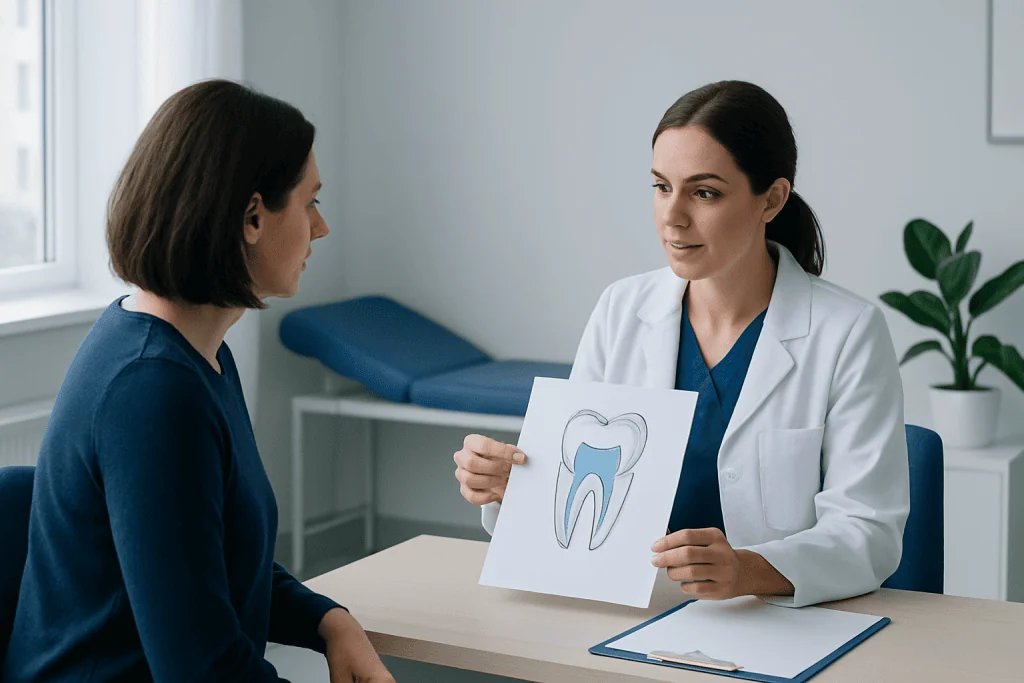
A standard filling is placed directly into a prepared cavity and shaped inside the mouth. Fillings are usually suitable for smaller areas of decay or minor tooth damage. However, when a filling becomes very large, the remaining tooth may be less supported, and the filling may be more likely to wear, crack, or separate at the edges.
Inlays and onlays are made as a single custom piece and then bonded into or onto the tooth. Because they are fabricated outside the mouth, they can be shaped with high precision, especially for the chewing surface and the points of contact between teeth. They can also be made from durable materials that resist wear and provide a natural appearance, depending on the case.
A crown covers the entire visible part of the tooth above the gumline. Crowns are often recommended when a tooth is severely weakened, heavily cracked, has had root canal treatment with significant structure loss, or cannot be predictably restored with a more conservative option. In comparison, an inlay or onlay aims to preserve more natural enamel and dentin while still giving the tooth added strength.
Materials Used for Inlays and Onlays
Several materials can be used for inlays and onlays. The best choice depends on the tooth’s location, the size of the restoration, cosmetic expectations, bite forces, habits such as grinding, and the dentist’s clinical judgment. The dentist will also consider whether the material bonds well to the remaining tooth and how it will perform in the patient’s mouth over time.
Ceramic and porcelain restorations are popular because they can closely match the color and translucency of natural teeth. They are often chosen for patients who want an aesthetic result, particularly when the restoration is visible during speaking or smiling. Modern dental ceramics can be strong, but they still require careful design, accurate bonding, and protection from excessive force.
Composite resin inlays and onlays can also be tooth-colored and may be used in selected cases. Gold is less commonly chosen for cosmetic reasons, but it has a long history of durability and gentle wear against opposing teeth. No material is perfect for every patient, so the decision should be individualized after a detailed dental examination.
The Procedure: What Patients Can Expect
The process begins with an examination, which may include dental X-rays to evaluate decay, existing restorations, cracks, and the health of the tooth roots and surrounding bone. Local anesthesia is commonly used so the dentist can remove decay or old filling material comfortably. The tooth is then shaped to create a clean, stable foundation for the inlay or onlay.
Next, the dentist takes an impression. This may be a conventional mold or a digital scan, depending on the clinic’s technology and the treatment plan. If the restoration is made in a dental laboratory, a temporary restoration may be placed to protect the tooth until the final piece is ready. Patients are usually advised to chew carefully on the temporary restoration and avoid sticky or very hard foods during this period.
At the placement appointment, the dentist checks the fit, color, bite, and contact with neighboring teeth. The inlay or onlay is then bonded using dental cement or adhesive resin. After bonding, the dentist polishes the restoration and adjusts the bite as needed. It is normal for the tooth to feel slightly different at first, but persistent high spots, pain when biting, or ongoing sensitivity should be reported to the dentist.
Benefits, Limitations, and Possible Risks
One of the main benefits of inlays and onlays is conservation of natural tooth structure. Compared with a crown, less tooth tissue may need to be removed, which can be important for long-term tooth health. They also offer good strength for chewing, a precise fit, and, when tooth-colored materials are used, a natural appearance.
Like all dental restorations, inlays and onlays have limitations. They may not be suitable if the tooth is too broken down, if there is extensive cracking, if decay extends below the gumline, or if the bite places unusually heavy forces on the tooth. In these situations, a crown, root canal treatment, periodontal care, or another dental plan may be more appropriate.
Possible risks include temporary sensitivity to cold, heat, or pressure; discomfort if the bite needs adjustment; chipping or fracture of the restoration; or decay developing at the edges if oral hygiene is poor. In rare cases, the tooth nerve may become irritated, especially when decay was deep. Regular follow-up allows the dentist to monitor the restoration and manage issues early.
Care, Longevity, and Prevention
Inlays and onlays can last for many years when they are well made, properly bonded, and cared for consistently. Their longevity depends on oral hygiene, diet, bite forces, the material used, and the amount of remaining healthy tooth. Patients who grind or clench their teeth may need a custom night guard to reduce stress on the restoration and natural teeth.
Daily care is similar to caring for natural teeth. Brushing twice a day with fluoride toothpaste, cleaning between the teeth with floss or interdental brushes, and attending regular dental check-ups are important. The edges where the restoration meets the tooth need careful cleaning because plaque can collect there and contribute to new decay.
Patients can help protect restorations by limiting frequent sugary snacks and drinks, avoiding chewing ice or hard objects, and seeking dental advice if they notice sensitivity, rough edges, food trapping, or changes in the bite. Preventive dental visits allow the dentist to check the fit of the restoration, evaluate the surrounding gums, and identify small problems before they become more complex.
When to See a Dentist
A person should see a dentist if a tooth has a large cavity, an old filling that is cracked or loose, pain when chewing, a chipped cusp, or sensitivity that does not settle. Early assessment can help determine whether the tooth can be restored with a filling, inlay, onlay, or crown. Delaying care may allow decay or cracks to progress, which can make treatment more complex.
It is also important to return to the dentist after an inlay or onlay if the bite feels high, if chewing is uncomfortable, or if sensitivity persists beyond the expected adjustment period. A small bite adjustment can sometimes make a significant difference in comfort. If symptoms suggest deeper inflammation or fracture, the dentist may recommend further evaluation.
International patients seeking dental care can ask for a clear treatment plan, imaging, material options, expected timelines, and aftercare instructions before treatment begins. Acibadem International’s multidisciplinary specialists and JCI-accredited hospitals diagnose and treat dental conditions, including restorative needs such as inlays and onlays, for international patients. A qualified dentist should always provide individualized advice based on examination findings.
Frequently asked questions
Are inlays and onlays painful?
The procedure is usually performed with local anesthesia, so patients should not feel pain during tooth preparation. Mild tenderness or sensitivity can occur afterward, especially if the cavity was deep or the bite needs time to settle. Persistent or increasing pain should be checked by the dentist.
How long do inlays and onlays last?
Their lifespan varies depending on the material, oral hygiene, bite forces, and regular dental care. Many last for years when they are properly designed and maintained. Patients who grind their teeth or chew very hard objects may place extra stress on the restoration.
Is an onlay better than a crown?
An onlay is not always better or worse; it is simply a different option. It may be preferred when enough healthy tooth remains and the dentist wants to preserve more natural structure. A crown may be more suitable when the tooth is severely weakened, heavily cracked, or needs full coverage.
Can an inlay or onlay get cavities?
The restoration material itself does not decay, but the natural tooth around its edges can develop cavities. Good brushing, interdental cleaning, fluoride use, and regular dental check-ups help reduce this risk. If the edge becomes rough or food starts trapping, the dentist should evaluate it.
What is the difference between a dental inlay and a dental onlay?
A dental inlay fits within the grooves of a tooth and does not cover the cusps. A dental onlay is larger and covers one or more cusps to restore a broader area of the biting surface. The dentist chooses between them based on the extent and location of tooth damage.
Can inlays and onlays match the color of natural teeth?
Yes, ceramic, porcelain, and composite resin materials can often be matched closely to the surrounding teeth. The final appearance depends on the material, shade selection, tooth position, and lighting. Gold restorations are very durable but are visible and not tooth-colored.
References
- American Dental Association
- European Federation of Periodontology
- FDI World Dental Federation
- National Institute of Dental and Craniofacial Research
- NHS
This article is for general information only and is not a substitute for professional medical advice. Please consult a qualified doctor about your individual situation.
Explore treatments in Turkey — costs, top hospitals & a free quote
JCI-accredited · board-certified surgeons · reply within 24h
Add us as a Preferred Source to see more of our trusted health content across Google Search, AI Overviews and Discover.

Dental & Oral Health
Full-scope dental care from implants and aesthetics to oral and maxillofacial surgery.
158 specialists in this unitRelated Treatments
More from the Health Library



Related Specialists

Assoc. Prof. Dr. Ferit Bayram
Oral & Dental Health
Dt. Alara Naz Kenir
Oral & Dental Health
Dt. Gonca Katmer
Oral & Dental HealthDt. Doğa Baysal
Oral & Dental Health