Intensive Feeding Therapy: How It Works, Results and What to Expect

Intensive feeding therapy is designed for complex or persistent feeding difficulties that need more support than occasional outpatient sessions. Care is usually provided by a multidisciplinary team that may include pediatricians, dietitians, speech-language therapists, occupational therapists and psychologists.
Key Takeaways
- Intensive feeding therapy is designed for complex or persistent feeding difficulties that need more support than occasional outpatient sessions.
- Care is usually provided by a multidisciplinary team that may include pediatricians, dietitians, speech-language therapists, occupational therapists and psychologists.
- Programs use gradual, child-centered strategies to improve nutrition, oral-motor skills, food acceptance and mealtime participation.
- The length and format of therapy vary widely, from frequent outpatient appointments to structured day programs or inpatient care.
- Progress is measured by functional changes, such as better intake, a broader range of foods, safer swallowing and less distress at meals.
- A child with choking, breathing changes during meals, dehydration, poor growth or sudden feeding refusal needs prompt medical assessment.
Intensive feeding therapy is a concentrated, individualized program for children with significant feeding difficulties, such as limited food intake, food refusal, swallowing concerns or dependence on tube feeding. It combines medical assessment, nutrition support and skill-based therapy to make eating safer, more comfortable and more sustainable at home.
Overview: How Intensive Feeding Therapy Works
Intensive feeding therapy is a structured treatment approach for children whose eating or drinking difficulties are affecting nutrition, growth, health, development or daily family life. It is more frequent and coordinated than standard feeding therapy, often bringing several specialists together to understand why feeding is difficult and to build practical skills over a focused period.
Feeding challenges can involve more than being a selective eater. A child may avoid certain textures, eat very little, take an unusually long time to finish meals, gag or vomit with foods, struggle to chew, cough while drinking, or rely on nutritional supplements or tube feeding. Intensive programs aim to address the medical, sensory, oral-motor, behavioral and nutritional factors that may be contributing.
The goal is not to force a child to eat. Instead, the team develops a safe, individualized plan that supports adequate nutrition while gradually improving comfort, confidence and skills around food. Parents and caregivers are actively involved so that strategies can continue during everyday meals at home.
Who May Be a Candidate for Intensive Feeding Therapy?

Intensive feeding therapy may be considered when a child has persistent feeding difficulties despite routine support, or when the effects are significant. This may include poor weight gain, nutritional deficiencies, dehydration risk, dependence on enteral tube feeds, a very restricted diet, frequent distress at meals or an inability to eat safely for their developmental stage.
Children with certain health or developmental conditions may have a higher likelihood of complex feeding needs. Examples include premature birth, neurological conditions, developmental differences, gastrointestinal disease, structural differences affecting the mouth or airway, chronic lung disease and previous medical treatments that changed appetite or swallowing. A diagnosis does not automatically mean intensive care is needed; the decision is based on the child’s individual needs.
Before starting a program, clinicians consider whether medical issues need attention first. Painful reflux, constipation, food allergy, oral dental problems, breathing difficulties and swallowing disorders can all affect feeding. When swallowing safety is a concern, a specialist may recommend a formal assessment before changes are made to food textures or drinking methods.
What Does a Feeding Therapy Evaluation Look Like?
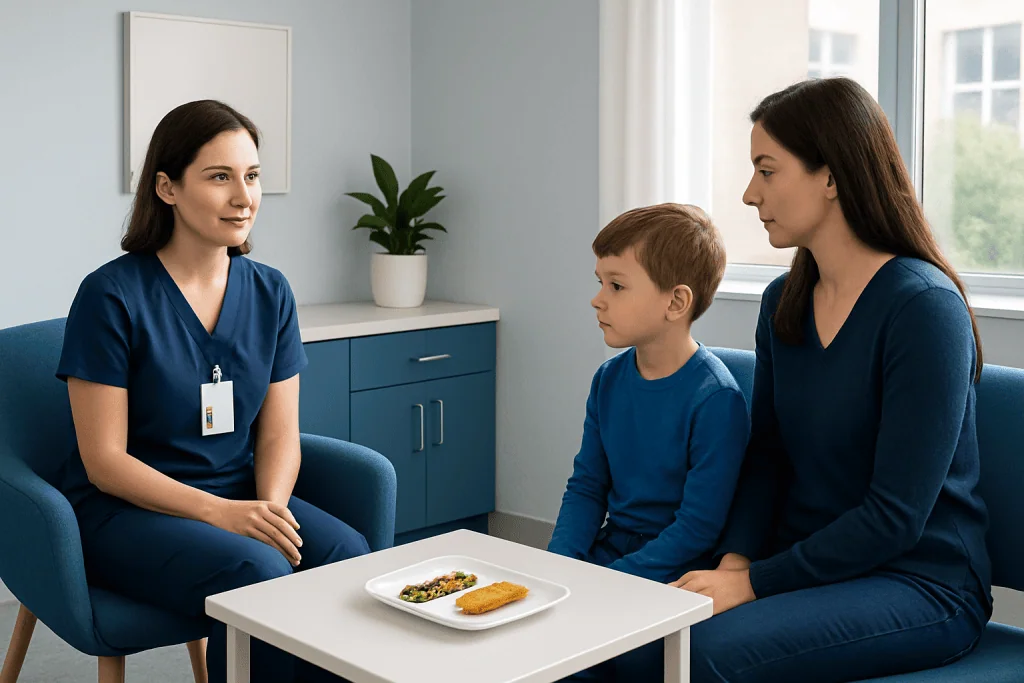
A feeding therapy evaluation begins with a detailed history. The team asks about pregnancy and birth history, medical conditions, growth, medications, tube-feeding history, allergies, bowel habits, sleep, developmental milestones and prior therapies. Caregivers are also asked about the child’s usual foods, drinks, meal schedule, eating environment and specific behaviors during meals.
Clinicians commonly observe the child eating or drinking when appropriate. They may assess posture, alertness, chewing, lip and tongue movement, coordination of swallowing, response to textures, pacing and signs of discomfort. The assessment is adapted to the child’s age, medical stability and tolerance; it should not push a child beyond what is safe or manageable.
A dietitian may review calorie, fluid and nutrient intake and plot growth over time. The findings are used to set realistic priorities, such as improving hydration, expanding accepted foods, supporting weight gain, reducing tube-feed reliance where medically appropriate or making swallowing safer. Families should leave the evaluation with an explanation of the suspected contributors to feeding difficulty and the proposed care plan.
What Can I Expect During a Feeding Therapy Session?
A feeding therapy session is tailored to the child’s goals and may take place individually or within a structured group setting. It often starts with a brief check-in about appetite, illness, bowel habits, sleep, recent foods and any changes since the previous visit. The therapist then uses planned activities that help the child practise a specific feeding skill in a calm, supportive environment.
Sessions may include work on seating and positioning, tolerance of food near the mouth, touching or smelling new foods, chewing practice, controlled sips, pacing, utensil use or gradually accepting a new texture. A child may begin with very small steps, such as interacting with a food without eating it. This approach can be especially useful when fear, sensory sensitivity or prior unpleasant experiences have made meals stressful.
Caregivers usually observe, participate or receive coaching. They may learn how to present foods, respond consistently to refusal, create predictable meal routines and avoid pressure that can increase distress. The strategies selected should fit the child’s medical needs, culture, routines and family resources.
Step by Step: A Typical Intensive Program
Although programs differ, intensive feeding therapy usually follows a phased process. The first phase confirms that the child is medically stable and identifies barriers to eating. This may involve coordination with pediatric specialists, a dietitian and therapists, as well as review of growth and, when indicated, swallowing studies or other tests.
Next, the team sets measurable goals. These may include increasing the volume of accepted foods, adding foods from a particular texture group, reducing meal duration, improving chewing, drinking safely from a cup or decreasing distress. Nutrition is protected throughout treatment, and any adjustments to supplements or tube feeds should be made only by the child’s medical team.
The active therapy phase involves repeated, carefully planned practice. Frequent sessions can help children learn and generalize skills, while team members monitor progress and adjust the plan. Near the end of a program, attention shifts toward caregiver training, school or nursery planning and a home routine that supports continued progress after formal treatment becomes less frequent.
For children with complex nutrition or digestive concerns, coordination with pediatric gastroenterology and nutrition services may be helpful. Pediatric gastroenterology care can help assess medical contributors that may be affecting appetite, digestion or feeding tolerance.
How Long Does Feeding Therapy Last?
The duration of feeding therapy depends on the child’s needs, the cause of the feeding difficulty and the program format. Some children benefit from weekly outpatient appointments over several months, while others with more urgent nutritional, behavioral or medical needs may attend multiple sessions per week in a day-treatment program. Inpatient treatment is reserved for selected children who need close medical monitoring or highly structured care.
Progress rarely follows a straight line. A child may advance quickly with one skill but need more time with another, particularly after illness, developmental changes or a disruption to routine. The team reviews goals regularly and modifies the pace to maintain safety and reduce unnecessary stress.
After an intensive phase, many families continue with less frequent follow-up. This helps reinforce skills in real-life settings, address setbacks early and adjust the plan as the child grows. A successful timeline is one that supports steady, safe progress rather than rapid change at the expense of wellbeing.
Does Feeding Therapy Really Work? Benefits, Limits and Risks
Feeding therapy can help many children improve their nutritional intake, food variety, oral-motor skills, swallowing safety and mealtime participation. Intensive programs may be particularly helpful when feeding problems are complex because they allow consistent practice and close coordination between disciplines. Outcomes depend on the underlying condition, the child’s medical stability, the quality of caregiver support and whether the plan addresses all contributing factors.
It is important to have realistic expectations. Therapy may not eliminate every food preference or make meals effortless, and some children need long-term support. Meaningful gains may include reduced distress, improved hydration, more reliable growth, safer eating, a shorter mealtime or willingness to interact with previously avoided foods.
Possible challenges include temporary frustration, fatigue and emotional stress for the child or family as routines change. Unsafe texture progression, overlooking pain or treating feeding behavior without addressing a medical cause can be harmful. For this reason, intensive therapy should be supervised by qualified professionals, with prompt review if coughing, choking, vomiting, pain, breathing changes or reduced intake develops.
When to Seek Medical Care
Parents and caregivers should seek medical advice when a child has persistent feeding difficulty, declining intake, poor weight gain, a very limited diet, frequent vomiting, pain during meals or ongoing concern about nutrition. Early assessment can identify treatable causes and may prevent feeding problems from becoming more disruptive over time.
Urgent medical assessment is needed for choking episodes, blue or pale color changes, breathing difficulty during meals, repeated coughing with drinks, signs of dehydration, marked sleepiness, blood in vomit or stool, or a sudden inability to eat or drink. These symptoms may indicate a problem that requires prompt care rather than therapy alone.
Acibadem International’s multidisciplinary specialists and JCI-accredited hospitals can assess and treat complex pediatric feeding concerns for international patients. A pediatrician can help coordinate the appropriate evaluation and referrals based on the child’s symptoms, growth and medical history.
Frequently asked questions
What is the difference between regular and intensive feeding therapy?
Regular feeding therapy is commonly delivered in periodic outpatient sessions, such as weekly or every few weeks. Intensive feeding therapy provides more frequent, coordinated treatment and may involve several specialists. It is generally considered when feeding difficulties are more severe, persistent or medically complex.
Is intensive feeding therapy only for children with tube feeding?
No. Some children in intensive programs use feeding tubes, but tube feeding is not required. A child may be referred because of very limited food intake, poor growth, swallowing concerns, extreme food avoidance or significant mealtime distress.
Will parents be involved in feeding therapy?
Yes. Caregiver involvement is a central part of effective feeding treatment because meals mainly happen at home and in community settings. Families are usually taught strategies that match the child’s goals and can be practised safely between sessions.
Can feeding therapy help a child who is a picky eater?
Many young children go through a normal stage of selective eating and may not need intensive therapy. Professional assessment may be helpful when food restriction affects growth, nutrition, development, swallowing safety or family functioning. The clinician can distinguish typical picky eating from a feeding disorder or medical concern.
How is swallowing safety checked before feeding therapy?
A clinician may first review the child’s history and observe eating and drinking. If there are signs such as coughing, choking, wet-sounding breathing or recurrent chest infections, a specialist may recommend an instrumental swallowing assessment. The results guide safe food textures, liquids and therapy activities.
What happens after an intensive feeding program ends?
Most children transition to a home plan with follow-up appointments as needed. The team may provide meal routines, food-progression ideas and guidance for nursery or school. Continued monitoring helps ensure that nutrition, growth and feeding skills remain on track.
References
- American Academy of Pediatrics
- American Speech-Language-Hearing Association
- North American Society for Pediatric Gastroenterology, Hepatology and Nutrition
- World Health Organization
This article is for general information only and is not a substitute for professional medical advice. Please consult a qualified doctor about your individual situation.
Explore treatments in Turkey — costs, top hospitals & a free quote
JCI-accredited · board-certified surgeons · reply within 24h
Add us as a Preferred Source to see more of our trusted health content across Google Search, AI Overviews and Discover.
Check your numbers in seconds
BMI, calories, due date, blood pressure and 30+ more clinical calculators — free, instant, doctor-reviewed ranges.