Interventional Neurology: How Minimally Invasive Stroke and Aneurysm Treatment Works

Interventional neurology treats some brain and spinal blood vessel disorders through tiny tubes called catheters. These procedures can remove a clot in some strokes or seal an aneurysm from inside the blood vessel.
Key Takeaways
- Interventional neurology treats some brain and spinal blood vessel disorders through tiny tubes called catheters.
- These procedures can remove a clot in some strokes or seal an aneurysm from inside the blood vessel.
- Treatment decisions depend on the type of problem, its location, timing, and the person’s overall health.
- Fast medical attention is critical for stroke symptoms because earlier treatment may improve outcomes.
- Recovery and follow-up imaging are important after endovascular treatment.
Interventional neurology uses image-guided, minimally invasive techniques to diagnose and treat certain blood vessel problems in the brain and spine. It is especially important in emergencies such as stroke and in planned treatment for aneurysms and other vascular conditions.
Overview: What interventional neurology means
Interventional neurology is a medical field focused on diagnosing and treating disorders of the blood vessels in the brain, head, neck, and sometimes spine using minimally invasive techniques. Instead of making a large surgical opening, specialists guide very thin tubes called catheters through blood vessels, usually starting from the wrist or groin, while watching their position with advanced imaging.
This approach is often called endovascular treatment. “Endo” means inside, and “vascular” refers to blood vessels. Through the catheter, the specialist may remove a blood clot, place a tiny device, deliver medication directly to a blockage, or seal a weak area in a vessel wall such as an aneurysm.
Interventional neurology overlaps with vascular neurology, interventional neuroradiology, and neurosurgery. Care is commonly provided by a team that may include emergency physicians, neurologists, neurosurgeons, radiologists, anesthesiologists, intensive care specialists, and rehabilitation experts. The goal is to choose the safest and most effective treatment for the specific condition.
These procedures are used both in emergencies and in planned care. Common examples include treatment for ischemic stroke caused by a blocked artery, certain aneurysms, arteriovenous malformations, narrowing of blood vessels, and some causes of bleeding in or around the brain.
Which conditions can be treated this way?
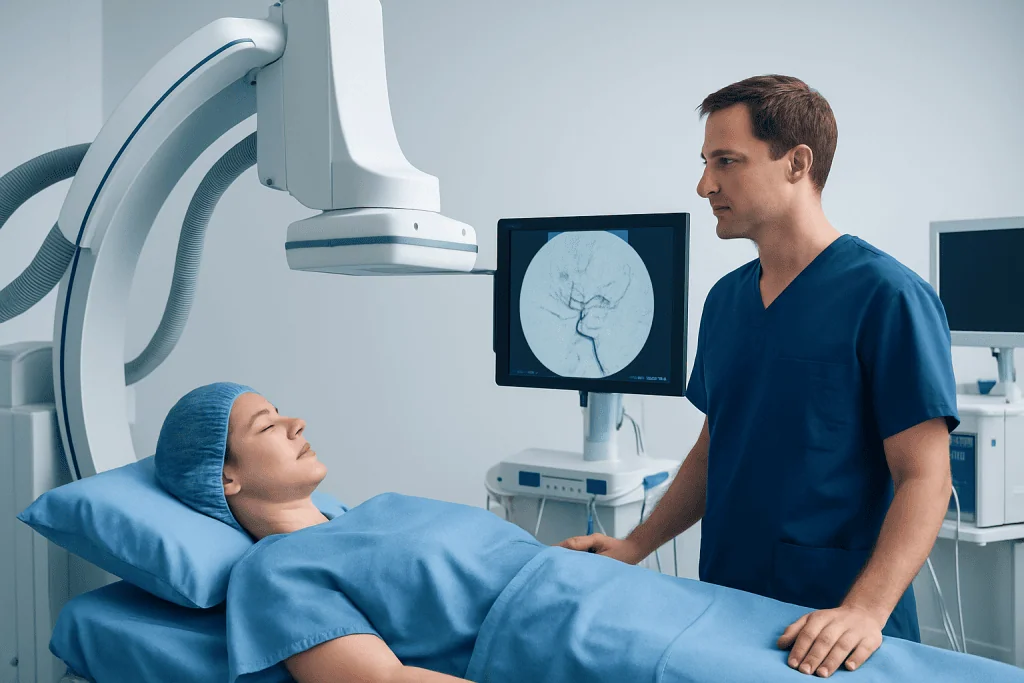
One of the best-known uses of interventional neurology is acute ischemic stroke, where a blood clot blocks blood flow to part of the brain. In selected patients, doctors may perform mechanical thrombectomy, a procedure that physically removes the clot. This can help restore circulation when done quickly and in the right situation. People seeking more background on stroke may also read about stroke.
Another major use is aneurysm treatment. A brain aneurysm is a weakened, bulging area in a blood vessel wall. Some aneurysms are found incidentally on scans, while others cause symptoms or rupture and bleed. Interventional techniques can sometimes seal the aneurysm from inside the vessel using coils, flow-diverting stents, or other devices. Related information may be helpful on brain aneurysm.
Interventional neurology may also help treat narrowing of arteries in the neck or brain, some vascular malformations, dural arteriovenous fistulas, and certain cases of bleeding caused by vessel abnormalities. In some people, minimally invasive treatment is an alternative to open surgery; in others, it is part of a combined treatment plan.
Not every patient or every vascular problem is suitable for catheter-based treatment. Factors such as vessel anatomy, the size and shape of an aneurysm, the location of a blockage, the time since symptoms began, and other medical conditions all affect the decision. Careful imaging and expert review guide the plan.
How minimally invasive stroke treatment works
When a stroke is caused by a blocked artery, brain cells begin to suffer from lack of oxygen. That is why urgent evaluation is so important. The first steps usually include a neurological examination, brain imaging, and tests to determine whether the stroke is ischemic (caused by a clot) or hemorrhagic (caused by bleeding). Interventional treatment is generally used for ischemic stroke with a large vessel blockage and in carefully selected patients.
One common procedure is mechanical thrombectomy. During this treatment, the specialist guides a catheter through the blood vessels to the blocked artery in the brain. Tiny devices, such as a stent retriever or aspiration catheter, are then used to capture or suction out the clot. The aim is to reopen the artery and restore blood flow as safely and quickly as possible.
Some patients may also receive clot-dissolving medication, depending on timing and eligibility. In many hospitals, decisions are made rapidly by a stroke team using imaging to identify who is most likely to benefit. The exact plan can vary based on where the blockage is, how large it is, and whether there is already significant brain injury visible on scans.
Even when treatment is successful, close monitoring remains essential. After thrombectomy, patients are usually observed in a stroke unit or intensive care setting so the team can watch blood pressure, brain function, swallowing, and any signs of complications. Early rehabilitation often begins soon after the procedure.
How aneurysm treatment works from inside the vessel
Endovascular aneurysm treatment aims to reduce the risk of bleeding or re-bleeding by closing off the aneurysm while preserving normal blood flow in the parent vessel. Doctors first study the aneurysm carefully with imaging to understand its size, neck width, shape, and location. These features help determine which technique is most appropriate.
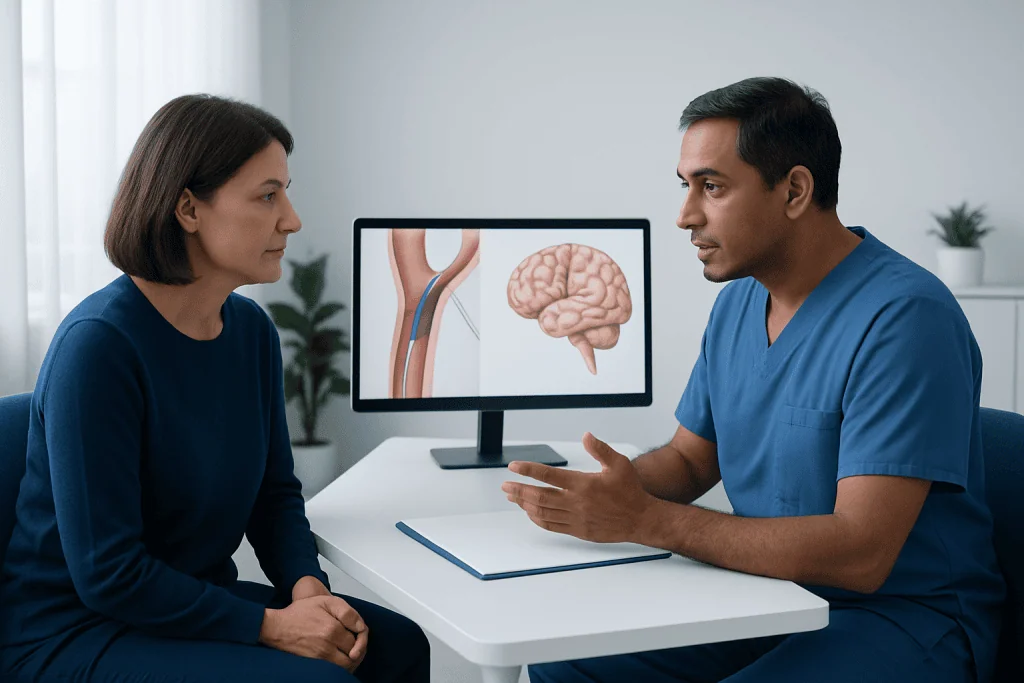
One established option is aneurysm coiling. In this procedure, tiny soft metal coils are placed inside the aneurysm through a catheter. The coils help the blood within the aneurysm clot, which reduces flow into the bulge and lowers the chance of rupture. In some cases, balloons or stents are used to support the treatment if the aneurysm has a wide neck.
Another option for selected aneurysms is flow diverter stent treatment. A flow diverter is a special stent placed in the parent artery across the aneurysm opening. It redirects blood along the normal vessel path and encourages the aneurysm to seal off over time. This can be useful for certain large, wide-necked, or hard-to-treat aneurysms.
These procedures may be done urgently after a ruptured aneurysm or electively for an unruptured one. The choice between endovascular treatment and open surgery depends on the aneurysm’s anatomy, whether bleeding has occurred, the patient’s age and health, and the expertise of the treating center.
Diagnosis, imaging, and who may be a candidate
Imaging is central to interventional neurology. Doctors may use CT, CT angiography, MRI, MR angiography, ultrasound, or catheter angiography to map the blood vessels and understand the problem in detail. Catheter angiography remains an important tool because it provides very detailed pictures and can sometimes be combined with treatment in the same session.
For stroke, the team looks at whether a vessel is blocked, how much brain tissue may still be salvageable, and whether there is bleeding. For aneurysms, imaging helps show the precise shape of the aneurysm and its relationship to nearby branches. These details support a balanced discussion of risks and benefits.
Suitability for minimally invasive treatment varies from person to person. Doctors consider symptoms, timing, age, medical history, medication use, bleeding risk, anatomy, and the urgency of the condition. They also review whether a less invasive option is likely to be as effective as surgery, or whether surgery may offer a better result in that particular case.
Patients and families may hear terms such as “multidisciplinary evaluation” or “neurovascular board.” This means specialists from different fields review the case together. That team-based approach can be especially helpful when more than one treatment path is possible.
Benefits, risks, and recovery after treatment
The main benefit of interventional neurology is that treatment is performed from inside the blood vessel through a small access point rather than a large incision. For many patients, this means less tissue disruption, shorter hospital stays in some situations, and a potentially faster physical recovery. In emergencies such as stroke, it can also provide a way to reopen an artery that cannot be managed with medication alone.
At the same time, these are highly specialized procedures and they do carry risks. Possible complications can include bleeding, damage to a blood vessel, stroke, clot formation, reaction to contrast dye, infection, or problems related to anesthesia. In aneurysm treatment, there may also be a chance of incomplete sealing, recurrence, or the need for future follow-up and retreatment.
Recovery depends on the condition being treated. Someone treated for an unruptured aneurysm may recover quite differently from someone who had a major stroke or bleeding around the brain. After the procedure, doctors monitor neurological status, blood pressure, and the access site, and they may recommend medicines such as blood thinners or antiplatelet drugs when appropriate.
Follow-up care is important. Patients may need repeat scans to confirm that an aneurysm remains sealed or that a treated vessel stays open. Rehabilitation, risk-factor control, and regular neurology or neurosurgery visits may all be part of long-term care. Near the end of the care pathway, some international patients choose centers such as Acibadem International, where multidisciplinary specialists in JCI-accredited hospitals diagnose and treat neurovascular conditions.
Prevention, self-care, and when to seek urgent help
Interventional neurology treats blood vessel problems, but prevention still matters greatly. Steps that support brain and vascular health include controlling blood pressure, managing diabetes, avoiding smoking, limiting excess alcohol, staying physically active, maintaining a healthy weight, and following treatment plans for conditions such as high cholesterol or irregular heartbeat. These measures may help reduce the risk of stroke and some vascular complications.
For people with an unruptured aneurysm or vessel narrowing, doctors may recommend regular monitoring, medicine, or a procedure depending on the level of risk. It is important not to stop prescribed medicines without medical advice. Anyone who has already had a stroke or endovascular procedure should attend follow-up appointments and ask what warning signs to watch for.
Urgent care is essential for possible stroke symptoms. Sudden face drooping, arm weakness, speech difficulty, confusion, severe dizziness, vision loss, trouble walking, or a sudden severe headache should be treated as emergencies. Quick assessment can make a major difference in treatment options.
People should also seek prompt medical attention after a procedure if they develop new weakness, trouble speaking, severe headache, fainting, chest pain, shortness of breath, swelling or bleeding at the catheter site, or any sudden neurological change. When in doubt, emergency evaluation is the safest choice.
Frequently asked questions
What is the difference between interventional neurology and open brain surgery?
Interventional neurology usually treats blood vessel problems from inside the artery using a thin catheter inserted through the wrist or groin. Open brain surgery involves a larger operation to directly reach the brain or blood vessels. The best option depends on the condition, the anatomy, and the patient’s overall health.
Is minimally invasive stroke treatment available for every stroke?
No. Mechanical thrombectomy is mainly used for certain ischemic strokes caused by a large vessel blockage and only when imaging and timing show that it may help. Hemorrhagic strokes and smaller-vessel strokes are treated differently.
How quickly should someone with stroke symptoms get help?
Immediately. Stroke is a medical emergency, and early treatment can affect both recovery and which treatments are possible. Emergency services should be contacted right away rather than waiting for symptoms to improve.
Can all brain aneurysms be treated with coiling or a flow diverter?
Not all aneurysms are suited to every endovascular technique. The size, shape, neck width, location, and whether the aneurysm has ruptured all influence the treatment choice. Some aneurysms are better managed with monitoring or open surgery.
Are these procedures painful?
Patients are typically given anesthesia or sedation, so they should not feel significant pain during the procedure itself. Afterward, there may be mild soreness at the catheter insertion site. The care team provides monitoring and pain relief as needed.
Will follow-up be needed after endovascular treatment?
Yes, follow-up is often an important part of care. Doctors may recommend clinic visits, repeat brain or vessel imaging, and medication review to check healing and make sure the treatment remains effective over time.
References
- World Stroke Organization
- American Stroke Association
- National Institute of Neurological Disorders and Stroke
- Society of NeuroInterventional Surgery
- World Federation of Neurosurgical Societies
This article is for general information only and is not a substitute for professional medical advice. Please consult a qualified doctor about your individual situation.
Interventional Neurology in Turkey — costs, top hospitals & a free quote
JCI-accredited · board-certified surgeons · reply within 24h
Add us as a Preferred Source to see more of our trusted health content across Google Search, AI Overviews and Discover.
Check your numbers in seconds
BMI, calories, due date, blood pressure and 30+ more clinical calculators — free, instant, doctor-reviewed ranges.

Robotic Surgery
Robot-assisted procedures across urology, gynecology and general surgery for greater precision and faster recovery.
More from the Health Library



Related Specialists

Dr. Aytekin Ünlükaplan
Anesthesiology
Dr. Muhammet Buğra Karaaslan
Cardiology
Prof. Dr. Dilaver Erşanlı
Ophthalmology
Prof. Dr. Arel Gereli
Orthopedic Surgery & Traumatology