

Intracranial Artery Stenosis: Stroke Risk, Imaging, and Endovascular Options

Intracranial artery stenosis means an artery within the skull has become narrowed, most often from atherosclerosis. Symptoms may include transient weakness, speech trouble, vision changes, dizziness, or stroke-like symptoms that require urgent medical care.
Key Takeaways
- Intracranial artery stenosis means an artery within the skull has become narrowed, most often from atherosclerosis.
- Symptoms may include transient weakness, speech trouble, vision changes, dizziness, or stroke-like symptoms that require urgent medical care.
- CT angiography, MR angiography, catheter angiography, and perfusion imaging can help show the location and severity of narrowing.
- Most patients are treated first with intensive medical therapy, including antiplatelet medication, cholesterol control, blood pressure management, and lifestyle changes.
- Endovascular options such as angioplasty or stenting are considered only for selected patients when benefits outweigh risks.
- Regular follow-up is important because stroke prevention depends on long-term control of vascular risk factors.
Intracranial artery stenosis is a narrowing of one or more arteries inside the skull, which can reduce blood flow to the brain and increase the risk of transient ischemic attack or stroke. Diagnosis usually combines neurological assessment with vascular imaging, and treatment focuses on preventing stroke through medication, risk-factor control, and carefully selected procedures.
Overview
Intracranial artery stenosis is the medical term for narrowing of an artery inside the skull. These arteries supply oxygen-rich blood to the brain. When one becomes narrowed, blood flow may be reduced, and small clots can also form on the diseased artery wall. Either process can lead to a transient ischemic attack, often called a TIA or “mini-stroke,” or to an ischemic stroke.
The condition most often affects major brain arteries such as the middle cerebral artery, intracranial internal carotid artery, basilar artery, or vertebral artery. It is commonly related to atherosclerosis, the same process that can narrow arteries in the heart and neck. Atherosclerosis develops gradually when cholesterol, inflammation, and other factors damage the inner lining of blood vessels.
Not every intracranial narrowing causes symptoms, and the level of risk varies from person to person. Doctors consider the degree of narrowing, whether symptoms have occurred, which artery is involved, and the patient’s overall vascular health. The main goal of care is to reduce the chance of future stroke while choosing treatments that are appropriate for the individual patient.
Symptoms and Warning Signs
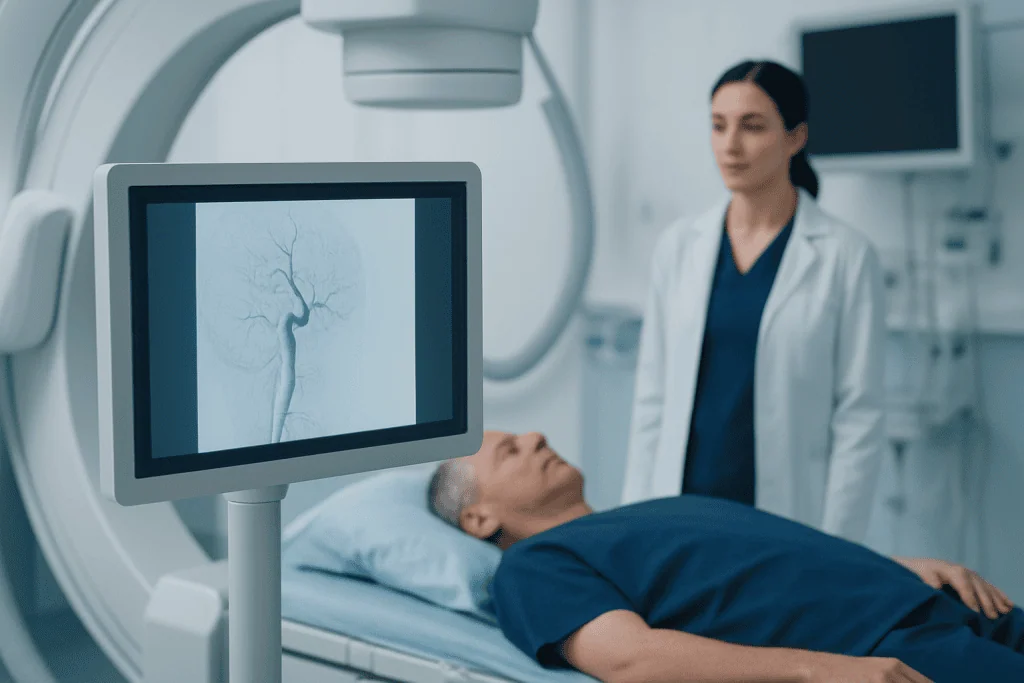
Intracranial artery stenosis may be discovered after a person has stroke-like symptoms, or it may be found incidentally during imaging for another reason. When symptoms occur, they usually reflect a temporary or sustained reduction in blood flow to a specific brain region. Symptoms can come on suddenly and may improve within minutes or hours, but they should still be treated as urgent.
Possible symptoms include weakness or numbness on one side of the body, facial drooping, difficulty speaking or understanding speech, sudden vision loss or double vision, loss of balance, severe dizziness, or trouble walking. If the narrowed artery is in the back part of the brain circulation, symptoms may include vertigo, swallowing difficulty, coordination problems, or changes in alertness.
Common warning signs that need emergency evaluation include:
- Sudden weakness, numbness, or clumsiness of the face, arm, or leg
- New speech difficulty, confusion, or trouble understanding words
- Sudden vision loss in one or both eyes
- Severe dizziness, imbalance, or loss of coordination
- A sudden, unusual headache, especially with neurological symptoms
Even if symptoms disappear, a TIA can be an important warning that the brain’s blood supply is at risk. Prompt assessment helps doctors start preventive treatment and decide whether further imaging or specialist care is needed.
Causes and Risk Factors

The most common cause of intracranial artery stenosis is intracranial atherosclerotic disease. In this condition, plaque builds up inside the artery wall and narrows the channel through which blood flows. Plaque can also become unstable, encouraging clot formation or sending tiny emboli downstream into smaller brain arteries.
Several health factors increase the likelihood of atherosclerosis. These include high blood pressure, high LDL cholesterol, diabetes, smoking, obesity, physical inactivity, and a family history of vascular disease. Risk also tends to increase with age. Some populations have a higher burden of intracranial atherosclerosis, although risk in any individual depends on a combination of genetics, lifestyle, and medical conditions.
Less common causes of intracranial arterial narrowing include inflammation of blood vessels, arterial dissection, radiation-related vessel injury, certain infections, rare inherited vascular disorders, and reversible cerebral vasoconstriction syndromes. Because treatment depends on the cause, doctors review the patient’s history, symptoms, laboratory findings, and imaging pattern rather than relying on one test alone.
Managing risk factors is central to care. Blood pressure, blood sugar, cholesterol levels, tobacco use, sleep quality, diet, and activity level all influence long-term vascular health. A patient who has already had a TIA or stroke related to intracranial stenosis generally needs a structured prevention plan and close follow-up.
Diagnosis and Imaging
Diagnosis starts with a medical history and neurological examination. The doctor asks about the timing of symptoms, previous TIA or stroke, vascular risk factors, current medications, and family history. A careful examination helps identify which part of the brain may have been affected and whether symptoms fit the area supplied by a narrowed artery.
Imaging is essential because intracranial arteries cannot be assessed by physical examination alone. CT angiography can show narrowed arteries quickly and is often used in urgent stroke evaluation. MR angiography can also assess blood vessels and may be combined with brain MRI to show recent or older areas of ischemic injury. Transcranial Doppler ultrasound may estimate blood flow velocity in certain intracranial vessels, although it is operator-dependent and may not visualize every artery well.
Digital subtraction angiography, also called catheter cerebral angiography, is the most detailed test for viewing brain arteries. It can precisely define the location and severity of stenosis and may be used when noninvasive tests are unclear or when an endovascular procedure is being considered. Because it is invasive, doctors weigh its benefits and risks for each patient.
Additional tests may include perfusion imaging to evaluate how well blood reaches brain tissue, heart rhythm monitoring to look for atrial fibrillation, echocardiography, and blood tests for cholesterol, diabetes, kidney function, and selected inflammatory or clotting conditions. The aim is not only to confirm stenosis but also to understand the patient’s overall stroke mechanism.
Treatment Options
Treatment is individualized, but most patients are managed first with intensive medical therapy. This usually includes antiplatelet medication to reduce clot formation, cholesterol-lowering therapy, blood pressure control, diabetes management when needed, and support for smoking cessation. The exact medication plan depends on whether the stenosis is symptomatic, the patient’s bleeding risk, other medical conditions, and current clinical guidelines.
Risk-factor control is not a secondary detail; it is one of the strongest parts of stroke prevention. Doctors may set specific targets for blood pressure, LDL cholesterol, and blood sugar, while also encouraging regular physical activity, weight management, and a Mediterranean-style or heart-healthy eating pattern. Patients should not stop or change prescribed medicines without medical advice, because consistency is important for lowering future risk.
Endovascular treatment may be considered for selected patients, especially when symptoms recur despite well-managed medical therapy or when imaging suggests a high-risk pattern. Options can include balloon angioplasty, in which a small balloon widens the narrowed segment, or intracranial stenting, in which a tiny mesh tube supports the artery. These procedures are technically complex and are not suitable for everyone, because the artery walls inside the skull are delicate and the procedure itself can carry stroke or bleeding risks.
Decision-making is best done by a multidisciplinary team that may include neurologists, interventional neuroradiologists, neurosurgeons, and vascular specialists. The team reviews symptom history, stenosis severity, artery location, collateral blood flow, previous treatments, and overall health. The safest plan is the one that balances stroke prevention with procedure-related risk for that specific patient.
Prevention and Self-Care
People with intracranial artery stenosis can take practical steps to support brain and vascular health. The most important self-care measures are taking medications as prescribed, attending follow-up appointments, and monitoring risk factors. Home blood pressure tracking may be useful for some patients, but targets should be discussed with the treating doctor.
Lifestyle changes work best when they are realistic and sustained. Patients are commonly advised to avoid smoking and secondhand smoke, limit alcohol according to medical advice, choose foods rich in vegetables, fruits, whole grains, legumes, nuts, fish, and unsaturated fats, and reduce excess salt and highly processed foods. Regular physical activity is usually encouraged, but the type and intensity should be tailored to the patient’s neurological status and heart health.
Helpful prevention habits include:
- Keeping a current list of medications and allergies
- Knowing personal blood pressure, cholesterol, and blood sugar goals
- Seeking help for tobacco cessation if needed
- Reporting new neurological symptoms immediately
- Following rehabilitation recommendations after TIA or stroke
Emotional well-being also matters. Living with a stroke-risk condition can create worry, especially after a TIA or stroke. Clear communication with the care team, family support, and rehabilitation services when needed can help patients stay engaged in long-term prevention.
When to See a Doctor
Any sudden stroke-like symptom should be treated as a medical emergency, even if it improves quickly. Emergency evaluation can identify whether a stroke is occurring, whether urgent treatment is possible, and whether an artery is significantly narrowed. Time-sensitive stroke treatments depend on rapid assessment, so patients should not wait at home to see if symptoms resolve.
A person should also seek non-emergency medical review if imaging has shown intracranial stenosis, if there have been recurrent brief episodes of weakness, speech difficulty, vision change, or dizziness, or if vascular risk factors are not well controlled. Follow-up with a neurologist or stroke specialist helps clarify the cause, adjust prevention treatment, and plan repeat imaging when appropriate.
Patients considering endovascular treatment should ask about the reason for the recommendation, expected benefits, possible risks, available alternatives, and the experience of the treating team with intracranial procedures. At Acibadem International, multidisciplinary specialists in JCI-accredited hospitals evaluate and treat complex neurovascular conditions for international patients, including diagnostic imaging, stroke prevention planning, and selected endovascular care.
Frequently asked questions
Is intracranial artery stenosis the same as carotid artery disease?
They are related but not the same. Carotid artery disease usually refers to narrowing of the carotid arteries in the neck, while intracranial artery stenosis occurs inside the skull. Both can increase stroke risk and may share causes such as atherosclerosis.
Can intracranial artery stenosis be cured?
The narrowing often cannot be completely “cured,” but stroke risk can usually be reduced with the right prevention plan. Treatment focuses on stabilizing artery disease, preventing clots, and controlling blood pressure, cholesterol, diabetes, and smoking. Some selected patients may be considered for procedures if symptoms continue despite medical therapy.
How serious is a TIA in someone with intracranial stenosis?
A TIA is important because it can be a warning sign that part of the brain is not getting enough blood or that small clots are forming. Even if symptoms disappear, urgent medical assessment is recommended. Early treatment can help reduce the risk of a future stroke.
What imaging test is best for intracranial artery stenosis?
There is no single best test for every patient. CT angiography and MR angiography are commonly used noninvasive tests, while catheter angiography provides the most detailed view when needed. Doctors choose the test based on symptoms, urgency, kidney function, previous imaging, and whether a procedure is being considered.
When is stenting used for intracranial artery stenosis?
Intracranial stenting is generally reserved for carefully selected patients rather than used routinely. It may be discussed when stenosis is severe, symptoms recur despite optimized medical treatment, and the anatomy is suitable. The decision requires a detailed review of benefits and risks by an experienced neurovascular team.
What can patients do at home to lower stroke risk?
Patients can take prescribed medications consistently, avoid smoking, follow blood pressure and cholesterol plans, and keep diabetes well controlled if present. A heart-healthy diet, regular physical activity approved by the doctor, good sleep, and follow-up appointments also support prevention. New neurological symptoms should be treated as urgent.
References
- American Heart Association
- American Stroke Association
- European Stroke Organisation
- National Institute of Neurological Disorders and Stroke
- Society of NeuroInterventional Surgery
This article is for general information only and is not a substitute for professional medical advice. Please consult a qualified doctor about your individual situation.
Explore treatments in Turkey — costs, top hospitals & a free quote
JCI-accredited · board-certified surgeons · reply within 24h
Add us as a Preferred Source to see more of our trusted health content across Google Search, AI Overviews and Discover.
Check your numbers in seconds
BMI, calories, due date, blood pressure and 30+ more clinical calculators — free, instant, doctor-reviewed ranges.

More from the Health Library



Related Specialists

Prof. Dr. Özgen Işık
General Surgery
Prof. Dr. Mefkür Bakan
Anesthesiology
Assoc. Prof. Dr. Nilüfer Aykaç
Pulmonology
Prof. Dr. Faruk Abike
Gynecology & Obstetrics