Ionm Surgery: Procedure, Recovery and Results

IONM is monitoring performed during surgery, not a surgical procedure by itself. It may be used when an operation is close to the spinal cord, nerves or parts of the brain that control movement or sensation.
Key Takeaways
- IONM is monitoring performed during surgery, not a surgical procedure by itself.
- It may be used when an operation is close to the spinal cord, nerves or parts of the brain that control movement or sensation.
- Changes in monitored signals alert the surgical team to assess possible causes promptly.
- Recovery depends mainly on the underlying operation, such as spine decompression or fusion, rather than on monitoring itself.
- IONM supports, but does not replace, surgical skill, imaging, anaesthesia care or informed consent.
IONM surgery refers to operations performed with intraoperative neuromonitoring (IONM), a method that tracks nerve, spinal cord, brain or muscle signals in real time. It is commonly used in selected spine, brain, peripheral nerve and other complex procedures to support surgical decision-making and help reduce the chance of neurological injury.
Overview: What Is IONM Surgery?
IONM surgery is a common way of describing surgery performed with intraoperative neuromonitoring (IONM). IONM records electrical activity from the nervous system while a person is under anaesthesia. The information can help the surgeon and anaesthesia team recognize changes affecting the spinal cord, nerve roots, brain pathways, or peripheral nerves during an operation.
IONM is not a treatment on its own and does not change the planned operation. Instead, it is an additional safety tool used during selected procedures, particularly complex spine operations, brain surgery, scoliosis correction, nerve surgery and some vascular or thyroid procedures. It is one part of a wider safety approach that includes preoperative imaging, careful surgical technique, appropriate positioning and anaesthesia planning.
Different IONM procedures assess different nerve pathways. Depending on the operation, the team may use somatosensory evoked potentials, motor evoked potentials, electromyography, electroencephalography or nerve stimulation. The monitoring plan is individualized according to the area being operated on and the person’s health needs.
How IONM Works in the Operating Room
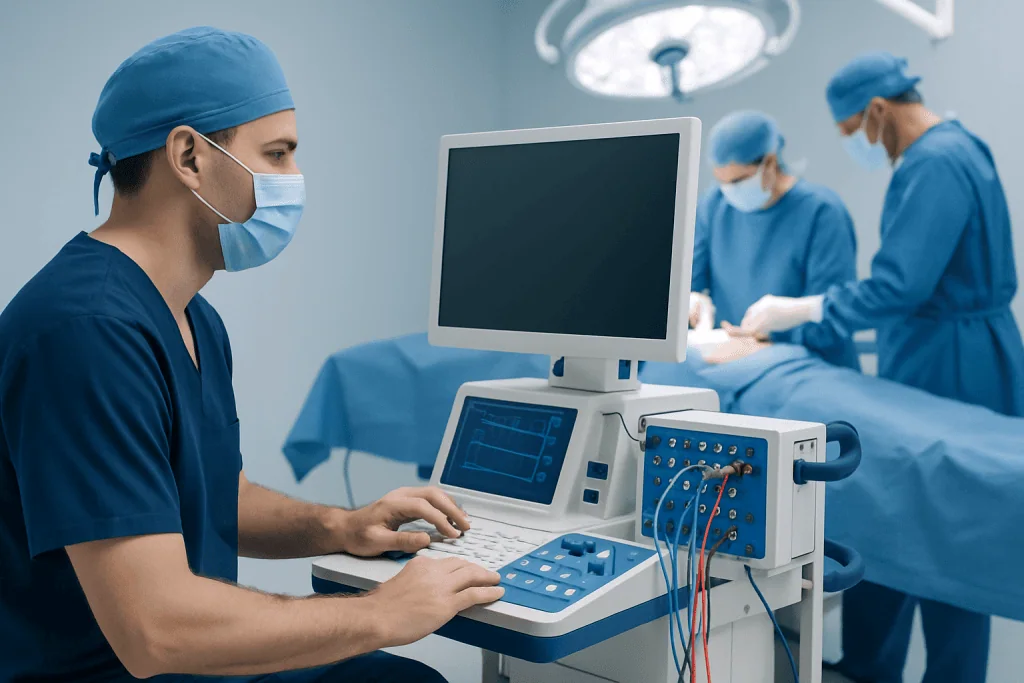
Before surgery, trained staff place small surface electrodes on the scalp, skin or muscles. In some procedures, fine needle electrodes may be used in selected muscles. These electrodes record or stimulate electrical signals that travel through the nervous system. Electrode placement is completed after anaesthesia begins in many cases, so the person does not experience most of this process.
The monitoring professional obtains baseline recordings before the key part of surgery starts. Throughout the operation, signals are reviewed continuously or at important stages. If a substantial change occurs, the monitoring team communicates it immediately to the surgeon and anaesthesia clinician. They may check blood pressure, oxygenation, body position, anaesthetic effects, temperature, technical connections or the surgical area before deciding on the appropriate next step.
People may see phrases such as “IONM in operating room 15 min” when reading a schedule or planning document. This usually refers to a short preparation or setup period, not the total monitoring time. Monitoring may continue for much longer, often for the clinically relevant portion of the operation. After surgery, an IONM report summarizes the techniques used, baseline findings, notable signal changes and the final monitoring status.
Who May Benefit From IONM During Surgery?

IONM may be considered when surgery takes place close to nerves or critical nervous system structures. In spine care, this can include surgery for deformity, spinal cord compression, instability, tumors or revision procedures. It may also be considered for selected decompression procedures when the surgeon believes monitoring will add useful information.
Candidacy is determined by the operating surgeon, anaesthesia team and the individual’s clinical situation. The decision considers the planned procedure, the location and severity of nerve compression, imaging findings, existing neurological symptoms, prior surgery and the person’s overall health. Not every spine operation requires IONM, and its use varies according to the expected benefit.
For people with pain, weakness or numbness caused by spinal narrowing, the broader treatment plan may include spine surgery or non-surgical care before an operation is considered. Conditions such as lumbar spinal stenosis may be evaluated with a neurological examination and imaging to determine whether decompression, foraminotomy or another approach is appropriate.
Step-by-Step: What Happens During an IONM Procedure?
Before the operation, the surgical team reviews medical history, medication use, previous anaesthetic experiences and relevant scans. The patient is asked to follow fasting and medication instructions from the care team. It is important to mention implanted devices, seizure history, nerve disorders, muscle conditions and any skin sensitivities that could affect electrode placement or monitoring choices.
In the operating room, the anaesthesia team provides the planned anaesthetic and positions the patient carefully for surgery. Electrodes are placed, equipment is checked and baseline nerve signals are recorded. The anaesthesia approach may be adjusted because certain medicines can affect some monitoring signals; this is managed by the anaesthesiologist without compromising comfort or safety.
The surgeon then performs the planned operation while monitoring continues as needed. If the signals remain stable, surgery proceeds according to the clinical plan. If signals change, the team investigates possible reversible factors and assesses the surgical field. At the end, electrodes are removed and the person wakes in the recovery area, where staff assess pain control, movement, sensation and other routine postoperative needs.
Benefits, Limits and Risks of IONM
The main potential benefit of IONM is timely information about the functional state of monitored nerve pathways. It can prompt the team to pause, reassess and correct factors that may be affecting signals. In carefully selected operations, it may support efforts to preserve nerve function and can provide useful documentation of intraoperative neurological monitoring.
However, IONM has limitations. Signal changes do not always mean a permanent injury has occurred, and stable signals cannot guarantee that no neurological complication will happen. Readings may be influenced by anaesthesia, low blood pressure, low body temperature, technical factors, pre-existing nerve damage and other medical circumstances. Results must always be interpreted in the context of the operation and the patient’s clinical condition.
Physical risks from monitoring itself are generally uncommon but can include temporary skin irritation, pressure marks, small bruises or soreness where electrodes were placed. Stimulation used for motor evoked potentials can rarely cause tongue or lip injury from jaw movement, muscle soreness, or complications in people with certain seizure risks. The care team takes precautions, including protecting the mouth when appropriate. The larger risks and expected benefits usually relate to the surgery itself rather than IONM.
What are the risks of IONM?
IONM is generally considered a low-risk adjunct to surgery, but it is not risk-free. Potential issues include skin irritation, bruising from needle electrodes, temporary muscle soreness and rare bite-related mouth injuries during motor stimulation. There is also a possibility of false alarms or missed changes, which is why IONM is used alongside—not instead of—clinical expertise and established surgical safety measures.
Recovery Timeline and Expected Results
IONM does not usually create a separate recovery period. Recovery is based on the type and extent of surgery, the reason for surgery, the person’s general health and whether a nerve was affected before treatment. After surgery, patients may have neurological checks, pain management, mobility support and instructions on wound care, activity and follow-up appointments.
How long does it take to recover from minimally invasive spine surgery?
Recovery after minimally invasive spine surgery varies widely. Some people begin short walks on the day of surgery or the following day and return to lighter daily activities within a few weeks, while recovery after more extensive decompression or fusion may take several months. Pain, stiffness and fatigue often improve gradually. The surgeon’s individualized restrictions and rehabilitation plan should guide lifting, driving, work and exercise.
Results also depend on the underlying condition. Surgery may relieve pressure on a nerve and improve leg pain, walking tolerance or function, but numbness and weakness can take longer to improve, especially when compression was longstanding. A follow-up plan may include physical therapy, activity progression and repeat assessment of symptoms.
Can you walk after a foraminotomy?
Many patients are encouraged to walk short distances soon after a foraminotomy, provided their surgical team considers it safe. Walking supports circulation and gradual return of mobility, but it should be increased slowly and within postoperative instructions. The timeline for longer walks, work, driving and exercise depends on whether the foraminotomy was performed alone or together with another procedure, such as spinal fusion.
When to Seek Medical Care
Before surgery, medical assessment is important for new or worsening back or neck pain with weakness, loss of coordination, progressive numbness or pain that significantly limits daily life. Urgent medical care is needed for sudden loss of bladder or bowel control, numbness around the groin or inner thighs, rapidly progressing leg weakness, severe unexplained headache after neurological surgery, or other sudden neurological changes.
After surgery, patients should contact their surgical team promptly for increasing wound redness, drainage, fever, severe or worsening pain not controlled by the prescribed plan, new weakness, new numbness, difficulty walking or changes in bladder or bowel function. Emergency services should be used for severe breathing difficulty, chest pain, fainting, sudden one-sided weakness or other symptoms of a medical emergency.
Acibadem International’s multidisciplinary specialists and JCI-accredited hospitals evaluate and treat spine and neurological conditions for international patients. A surgeon can explain whether monitoring is relevant to the planned operation and what recovery expectations are most appropriate for the individual.
Is Intraoperative Neuromonitoring a Good Career?
Intraoperative neuromonitoring can be a rewarding career for people interested in neurophysiology, technology, anatomy and team-based surgical care. Professionals in this field work with surgeons, anaesthesiologists and operating-room staff to collect and interpret physiological data during procedures. Roles may include technologists, clinical neurophysiologists and physicians, depending on local regulations and training pathways.
It is also a demanding field. Work may involve early starts, changing operating schedules, extended procedures and a need for sustained concentration. Education requirements differ by country and role, but typically include relevant science or healthcare training, specialized supervised experience and professional credentialing where available.
People considering this profession should explore accredited training opportunities and understand the scope of practice in their region. Strong communication skills, attention to detail, ethical practice and the ability to remain calm in a dynamic operating-room setting are particularly valuable.
Frequently asked questions
Does IONM make surgery safer?
IONM can provide useful real-time information during selected operations near important nerve structures. It may help the surgical team recognize and evaluate changes promptly, but it cannot eliminate all surgical risks or guarantee a neurological outcome. Its value depends on the procedure, the monitoring technique and the clinical context.
Will a patient feel IONM during surgery?
Most IONM is performed while the patient is under general anaesthesia, so the person does not feel the monitoring. Surface or needle electrodes may be placed after anaesthesia begins. Temporary skin marks or mild soreness at electrode sites can occasionally occur afterward.
Why can anaesthesia affect IONM signals?
Some anaesthetic medicines can reduce or alter the electrical signals used in neuromonitoring. The anaesthesiologist selects and adjusts medicines with the monitoring plan in mind while maintaining appropriate anaesthesia and patient safety. This coordination is a routine part of monitored surgery.
What information is included in an IONM report?
An IONM report generally records the monitoring methods used, baseline responses, important events or signal changes, communications made during surgery and final recordings. The report is interpreted alongside the operative note and postoperative clinical assessment. Patients can ask their surgeon to explain any relevant findings.
Is IONM used for every spine operation?
No. The need for IONM depends on the type of spine operation, the anatomy involved, the degree of neurological risk and the surgeon’s assessment. Simple procedures may not require it, while more complex deformity correction, spinal cord surgery or selected revision operations may be more likely to use monitoring.
Can IONM detect all nerve damage?
No monitoring method detects every possible neurological problem. IONM evaluates specific pathways using selected techniques, and signals can be affected by factors unrelated to nerve injury. It is an additional source of information that complements careful surgery, anaesthesia care and postoperative neurological assessment.
References
- American Clinical Neurophysiology Society
- American Society of Neurophysiological Monitoring
- National Institute of Neurological Disorders and Stroke
- North American Spine Society
This article is for general information only and is not a substitute for professional medical advice. Please consult a qualified doctor about your individual situation.
Joint and spine care in Turkey — expert assessment & treatment
JCI-accredited · board-certified surgeons · reply within 24h
Add us as a Preferred Source to see more of our trusted health content across Google Search, AI Overviews and Discover.
Check your numbers in seconds
BMI, calories, due date, blood pressure and 30+ more clinical calculators — free, instant, doctor-reviewed ranges.