Is Hyaluronic Acid Good for Acne? Here Is What the Evidence Says

Hyaluronic acid hydrates the skin but does not directly treat clogged pores, inflammation, or acne-causing bacteria. Most people with acne-prone skin can use a lightweight, fragrance-free hyaluronic acid product without worsening breakouts.
Key Takeaways
- Hyaluronic acid hydrates the skin but does not directly treat clogged pores, inflammation, or acne-causing bacteria.
- Most people with acne-prone skin can use a lightweight, fragrance-free hyaluronic acid product without worsening breakouts.
- Hydration may improve comfort and support the skin barrier when using potentially drying acne medicines.
- A product formula matters: rich, oily, or fragranced products may irritate some people regardless of their hyaluronic acid content.
- Painful, scarring, widespread, or persistent acne should be assessed by a dermatologist or other qualified clinician.
Hyaluronic acid is generally a helpful, low-risk hydrator for acne-prone skin, particularly when acne treatments cause dryness or irritation. It is not an acne treatment itself, so persistent breakouts usually need a broader skin-care plan or medical assessment.
Is Hyaluronic Acid Good for Acne?
For most people, hyaluronic acid can be a useful addition to an acne-prone skin-care routine because it helps the skin hold water without directly adding oil. It is especially helpful when acne treatments such as retinoids, benzoyl peroxide, or salicylic acid leave the skin feeling tight, dry, or irritated. However, hyaluronic acid does not remove blocked pores, reduce acne-causing bacteria, or treat the hormonal and inflammatory processes that drive acne.
Acne is very common and is often manageable with consistent, gentle care. Breakouts that are mild and occasional usually do not indicate a serious health concern. Still, medical review is appropriate for deep painful spots, sudden severe acne, acne that leaves scars or dark marks, or breakouts that do not improve after several weeks of appropriate over-the-counter care. A clinician can examine the skin, identify the acne type, review medicines and possible triggers, and recommend a tailored treatment plan.
In practical terms, hyaluronic acid is best viewed as a supportive product rather than a stand-alone acne solution. It may make an acne routine easier to tolerate, which can help a person use evidence-based acne treatment consistently and protect the skin barrier over time.
What Hyaluronic Acid Does for the Skin
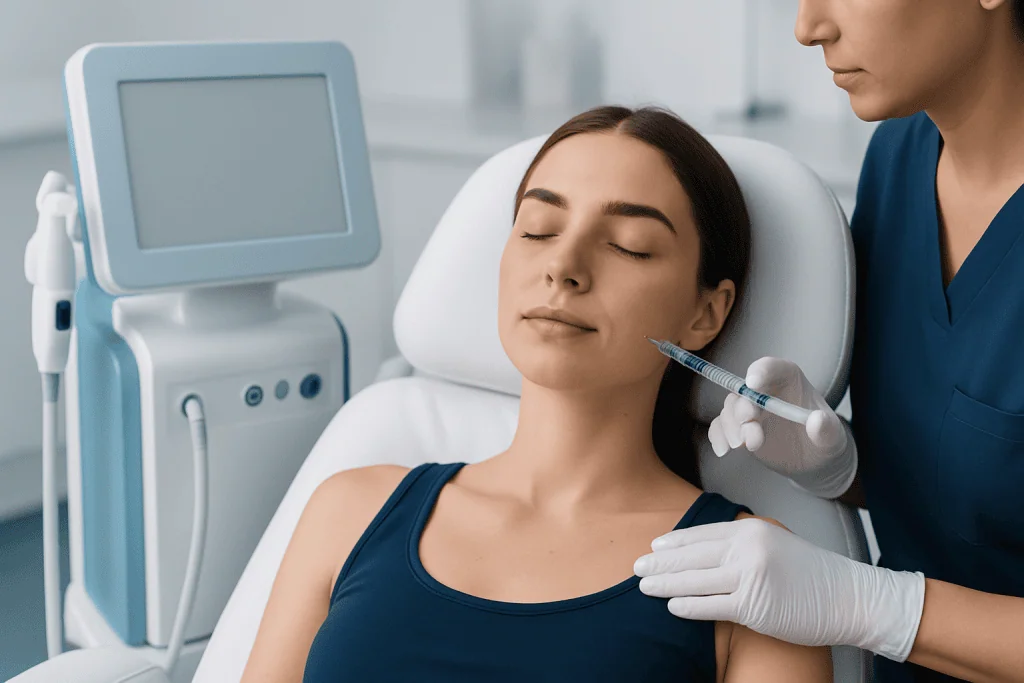
Hyaluronic acid is a substance found naturally in the body, including the skin. It is a humectant, meaning it attracts and holds water in the outer layers of the skin. In skin-care products, it is commonly available as a serum, gel, lotion, or moisturizer, sometimes under the name sodium hyaluronate.
Healthy skin has a protective outer barrier that helps limit water loss and shields the skin from irritants. Acne treatments can be very effective, but some also increase dryness, peeling, stinging, or redness, especially when first introduced. A gentle moisturizer containing hyaluronic acid may reduce these effects by improving hydration and supporting comfort.
Better hydration does not mean that the skin becomes oily. Skin oil, known as sebum, is produced by sebaceous glands, while hydration refers to water content in the skin. A person may have oily yet dehydrated skin, particularly after frequent cleansing, harsh scrubs, or drying acne products. Replacing moisture appropriately can help avoid the cycle of over-cleansing and irritation.
What the Evidence Can and Cannot Show

Evidence supports hyaluronic acid as an effective moisturizing ingredient, and it is widely used in products designed to support the skin barrier. In acne care, its most relevant role is helping the skin tolerate treatments that may otherwise cause dryness or irritation. A routine that is comfortable enough to follow consistently is often more sustainable than one built around strong products used too frequently.
There is not strong evidence that topical hyaluronic acid alone clears acne lesions. It does not have the established acne-targeting effects of ingredients such as topical retinoids, benzoyl peroxide, azelaic acid, or salicylic acid. The right active treatment depends on whether acne is mainly comedonal, meaning blackheads and whiteheads, inflammatory, meaning red bumps and pustules, or deeper and more nodular.
Some early research has explored injectable hyaluronic acid in specific dermatologic settings, including the management of selected acne scars. This is different from applying a cosmetic serum or moisturizer to active acne. Injectable procedures should only be considered after clinical assessment and performed by appropriately trained medical professionals.
Could Hyaluronic Acid Make Acne Worse?
Hyaluronic acid itself is not generally considered pore-clogging, and many people with acne can use it without difficulty. Yet any skin-care product may cause problems for an individual. A new product can lead to irritation, contact allergy, or breakouts if its overall formula contains ingredients that do not suit that person’s skin.
For acne-prone skin, a lightweight, non-comedogenic moisturizer or serum is often a sensible choice. People may prefer products that are fragrance-free and formulated for sensitive skin, especially if they are already using acne medicines. Heavy oils, very occlusive creams, strong fragrance, exfoliating acids, or multiple active ingredients in one new product can make it harder to tell what is causing a reaction.
A temporary flare after starting a product is not always “purging.” Purging is most associated with treatments that increase skin-cell turnover, such as retinoids or exfoliating acids. Hyaluronic acid does not usually cause this process. New itching, burning, rash-like bumps, swelling, or worsening breakouts after use may indicate irritation or a reaction, and the product should be stopped.
- Choose a simple product with a short ingredient list where possible.
- Patch-test a new product on a small area for several days if the skin is sensitive.
- Introduce one new product at a time.
- Use sunscreen daily, particularly when using acne treatments that increase sun sensitivity.
How to Use It in an Acne-Prone Skin-Care Routine
Hyaluronic acid is typically applied after cleansing and before a moisturizer. It can be used once or twice daily, depending on the product instructions and how the skin feels. Applying it to slightly damp skin may help the product bind water at the skin surface. Following it with a moisturizer can help seal in hydration, particularly in dry climates or indoor heated and air-conditioned environments.
A simple routine is often preferable for acne-prone skin. In the morning, this may include a gentle cleanser, hyaluronic acid if desired, a non-comedogenic moisturizer, and broad-spectrum sunscreen. In the evening, a person may cleanse, use their chosen acne treatment as directed, and then apply moisturizer. For people with easily irritated skin, moisturizer may be used before or after certain acne treatments based on a clinician’s advice.
It is important not to use every acne active at once. Combining multiple exfoliants, retinoids, benzoyl peroxide, and harsh cleansers can damage the skin barrier and cause significant irritation. Rather than treating more intensely, it is usually safer to add products gradually and allow time to assess the skin’s response.
When to Seek Medical Care
Most mild acne can be managed initially with gentle skin care and appropriately selected over-the-counter treatment. Medical care should be sought sooner for painful deep lumps, nodules, cyst-like lesions, spreading redness, marked swelling, fever, or signs of skin infection. Urgent assessment is also important if there is swelling of the face or lips, breathing difficulty, or widespread hives after a skin product, as these can be signs of a significant allergic reaction.
A dermatology review is advisable when acne is leaving scars, causing persistent dark marks, affecting self-confidence or daily life, appearing suddenly in adulthood, or not improving after about two to three months of consistent treatment. People who are pregnant, planning pregnancy, breastfeeding, or taking regular medication should check with a clinician before starting acne medicines, as some treatments are not suitable in these circumstances.
During an assessment, a doctor will usually ask about the timing of breakouts, menstrual patterns where relevant, skin-care products, family history, medicines, supplements, and any symptoms suggesting an underlying hormonal condition. They will examine the distribution and type of lesions and may diagnose acne clinically without tests. Blood tests or other investigations are only considered when symptoms or medical history suggest another cause.
Medical Acne Treatment and Long-Term Skin Health
Effective acne treatment is selected according to acne severity, lesion type, skin sensitivity, and a person’s health needs. Topical options may include retinoids, benzoyl peroxide, azelaic acid, antibiotics used in limited circumstances, or combination treatments. Moderate to severe acne may require oral medicines or hormonal approaches under medical supervision.
Patience is important because acne treatment commonly takes several weeks to show meaningful improvement. Stopping and starting products frequently, picking lesions, or using aggressive scrubs can increase irritation and the risk of scarring or uneven pigmentation. A gentle cleanser, non-comedogenic moisturizer, daily sunscreen, and a targeted treatment plan are usually more useful than a complex routine.
Hyaluronic acid can remain part of this plan if it is well tolerated. Its role is to support hydration, not to replace prescribed or evidence-based acne therapies. Acibadem International’s multidisciplinary specialists and JCI-accredited hospitals can assess acne and related skin concerns for international patients who need individualized medical guidance.
Frequently asked questions
Can hyaluronic acid clear acne?
No. Hyaluronic acid does not directly clear acne because it does not target blocked pores, acne-related bacteria, or inflammation. It can still be useful because it helps hydrate skin that is dry or irritated from acne treatments.
Is hyaluronic acid safe for oily and acne-prone skin?
It is generally well tolerated by people with oily and acne-prone skin. Choosing a lightweight, fragrance-free, non-comedogenic formula may reduce the chance of irritation or product-related breakouts.
Should hyaluronic acid be used before or after acne treatment?
It is often used after cleansing and before moisturizer. Depending on the acne medicine and skin sensitivity, it may be used before or after the active treatment; a clinician can advise on the best sequence for an individual routine.
Can hyaluronic acid cause purging?
Hyaluronic acid does not usually cause purging because it does not increase skin-cell turnover. If acne worsens after starting a new product, irritation or another ingredient in the formula may be responsible.
Can hyaluronic acid be used with salicylic acid or benzoyl peroxide?
Yes, it can usually be combined with these treatments and may help reduce feelings of dryness. Products should be introduced gradually, especially for sensitive skin, and significant burning, peeling, or redness should be discussed with a clinician.
How long should a person try an acne routine before seeing a doctor?
A consistent routine often needs several weeks, and sometimes two to three months, to show clear improvement. Earlier medical advice is appropriate for painful deep acne, scarring, severe emotional distress, sudden onset, or signs of infection or allergic reaction.
This article is for general information only and is not a substitute for professional medical advice. Please consult a qualified doctor about your individual situation.
Acne in Turkey — costs, top hospitals & a free quote
JCI-accredited · board-certified surgeons · reply within 24h
Add us as a Preferred Source to see more of our trusted health content across Google Search, AI Overviews and Discover.

More from the Health Library

What Does Sun Poisoning Look Like? Here Is What the Evidence Says

Why Does It Feel Like I Have to Pee? Here Is What the Evidence Says

Do They Test for Herpes When Pregnant? Causes, Explanations, and Next Steps

What Is Hmb? A Doctor-Reviewed Answer

Does Coffee Have Calories? Here Is What the Evidence Says