Itchy Breast: Common Causes, Related Conditions, and When to See a Doctor

Most cases of itchy breast are related to skin irritation, dryness, sweat, or contact allergy. Itching may affect the breast skin, nipple, or area under the breast, and the pattern can help suggest the cause.
Key Takeaways
- Most cases of itchy breast are related to skin irritation, dryness, sweat, or contact allergy.
- Itching may affect the breast skin, nipple, or area under the breast, and the pattern can help suggest the cause.
- Redness, rash, discharge, swelling, fever, or a new lump are important warning signs that need medical review.
- Treatment depends on the cause and may include skin care, avoiding triggers, or treatment for infection or inflammation.
- Persistent or one-sided itching with skin changes should not be ignored, especially if it does not improve with basic skin care.
An itchy breast is commonly linked to dry skin, friction, allergies, eczema, or hormonal changes, and it is often not a sign of a serious illness. However, persistent itching, skin changes, pain, discharge, or a lump should be assessed by a doctor to rule out infection, inflammatory skin disease, or less common breast conditions.
Overview: what an itchy breast can mean
An itchy breast is a symptom rather than a diagnosis. In many people, it is caused by everyday skin issues such as dryness, sweating, friction from clothing, soaps, detergents, or minor inflammation. Itching may involve the skin of the breast, the nipple, the areola, or the fold under the breast, and each location can offer clues about the underlying cause.
Breast itching is often temporary and improves when the skin barrier is protected and irritants are removed. Hormonal changes during menstruation, pregnancy, breastfeeding, or menopause can also make breast skin more sensitive. In these settings, itch is usually benign, although discomfort can still be significant.
Less commonly, an itchy breast may be linked to a skin condition such as eczema, fungal infection, or psoriasis, or to a breast-related problem that needs medical attention. While cancer is not a common cause of breast itching by itself, persistent one-sided itching with skin thickening, scaling, redness, nipple changes, or a lump deserves prompt assessment.
How symptoms can appear
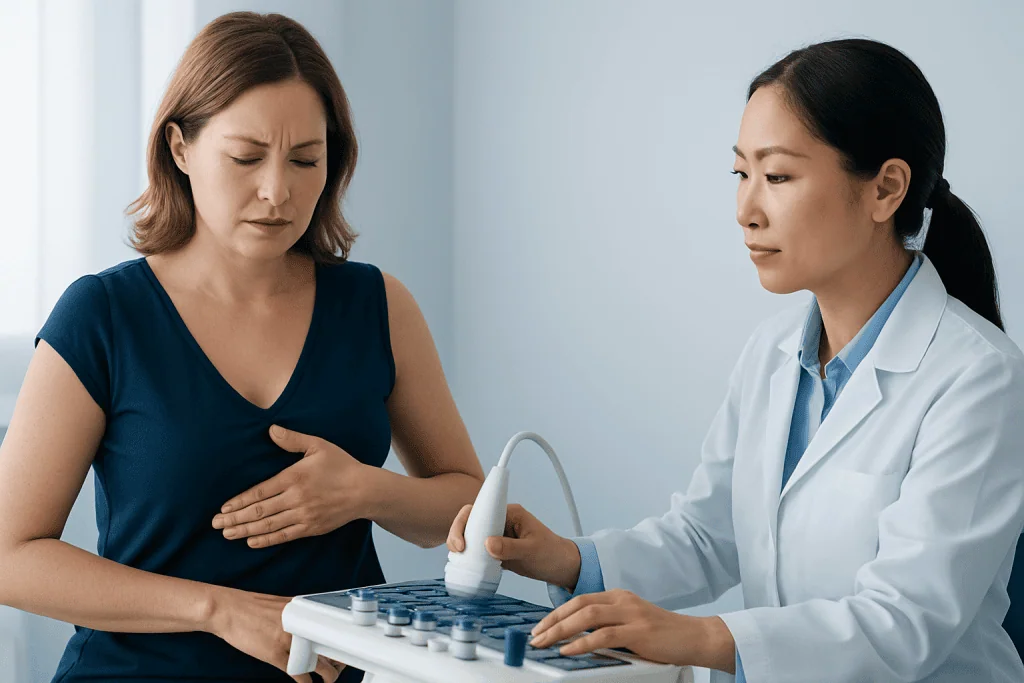
The feeling of an itchy breast can range from mild irritation to persistent scratching that disrupts sleep or daily life. Some people notice only itching, while others also develop dry skin, flaky patches, redness, warmth, tenderness, or a visible rash. Itching may be constant or may flare after exercise, heat, showering, wearing a certain bra, or using a new skin product.
Location matters. Itching under the breast often suggests sweat retention, friction, or a fungal overgrowth in a moist skin fold. Itching centered on the nipple or areola may occur with eczema, dermatitis, breastfeeding-related irritation, or, less often, nipple disorders that need closer evaluation. Generalized itching over both breasts may be more consistent with dry skin or contact irritation.
Associated features are especially helpful in deciding when to seek care. Symptoms that deserve attention include:
- A new lump or thickened area in the breast or armpit
- Nipple discharge, especially if bloody or spontaneous
- Skin dimpling, ulceration, crusting, or scaling that does not heal
- Redness, warmth, swelling, or fever suggesting infection
- Severe pain, rapid worsening, or symptoms affecting only one side
Common causes and related conditions

Skin irritation is one of the most frequent explanations for an itchy breast. Dry weather, hot showers, fragranced soaps, body lotions, laundry detergents, rough fabrics, and underwire or tight bras can all disturb the outer skin barrier. Sweat and friction during exercise may further irritate the skin, especially around the bra line or under the breast.
Inflammatory skin conditions are also common. Eczema can cause itchy, dry, red, or scaly patches on the breast or nipple. Contact dermatitis develops when the skin reacts to an allergen or irritant, such as adhesives, creams, perfumes, or nickel in clothing fasteners. Psoriasis may produce thicker, sharply outlined plaques with scaling. A doctor may consider eczema or other chronic skin diseases if itching keeps returning.
Moisture-related problems are another important group. Under-breast itching is often caused by intertrigo, a rash that develops in skin folds where heat, rubbing, and trapped moisture are common. Sometimes yeast or fungal organisms overgrow in this environment, adding redness, burning, or a sore rash. Bacterial infection is less common but may occur if the skin is broken.
Hormonal and breast-specific causes should also be considered. Breast fullness and skin sensitivity around menstruation may lead to itching. Pregnancy and breastfeeding can stretch the skin and increase dryness or irritation. Mastitis, blocked ducts, or nipple trauma during breastfeeding may cause pain with redness and warmth, and evaluation may include looking for mastitis when symptoms fit.
Although uncommon, certain breast conditions can begin with persistent itch alongside visible skin changes. Paget disease of the breast may affect the nipple and areola and can look like eczema that does not improve. Inflammatory breast cancer usually causes more than itch alone, such as swelling, redness, warmth, or thickened skin. These possibilities are rare, but they explain why ongoing or unusual symptoms should be checked rather than self-treated indefinitely.
How doctors diagnose the cause
Diagnosis starts with a careful history and examination. A doctor will usually ask when the itching began, whether it affects one or both breasts, where exactly it is located, and whether there are triggers such as new products, sweating, exercise, pregnancy, or breastfeeding. They also ask about pain, rash, discharge, fever, and any personal or family history of skin disease or breast disease.
The physical examination focuses on the skin and breast tissue. The clinician looks for dryness, rash pattern, scaling, crusting, broken skin, signs of fungal infection in skin folds, nipple changes, or a lump. In many cases, the appearance of the skin is enough to suggest a likely cause and guide initial treatment.
If symptoms are persistent, one-sided, or associated with other concerning findings, further testing may be recommended. This can include breast imaging such as mammography or breast ultrasound to assess deeper breast tissue, especially when there is a lump, nipple discharge, or focal skin change. A skin swab, fungal test, or biopsy may be considered if infection or an unusual skin condition is suspected. In selected cases, referral to dermatology or a breast specialist may help clarify the diagnosis.
Treatment options for an itchy breast
Treatment depends on the cause. For simple dryness or irritation, the main approach is to restore the skin barrier and remove triggers. This usually means avoiding fragranced products, switching to mild cleansers, wearing breathable fabrics, and applying a plain, fragrance-free moisturizer regularly, especially after bathing. Keeping the area cool and dry can also reduce itching.
If the doctor suspects eczema or contact dermatitis, treatment may include short-term anti-inflammatory creams and a plan to avoid likely irritants or allergens. When a fungal rash is present, antifungal treatment may be recommended. Bacterial infections, breastfeeding-related mastitis, or skin infections may require a different approach, including prescription medication and medical follow-up.
When itching is caused by nipple trauma from breastfeeding, latch technique, nipple care, and treatment of any underlying infection can help. For recurrent under-breast irritation, managing sweat and friction is important. Weight changes, bra fit, exercise habits, and climate can all contribute, so practical daily adjustments often play a meaningful role in relief.
If testing suggests a breast-specific disorder, treatment is directed at that condition rather than the itch alone. Because the same symptom can come from very different causes, persistent symptoms should not be treated repeatedly with over-the-counter products without a proper diagnosis.
Self-care and prevention
Basic skin care can prevent many episodes of breast itching. Gentle cleansing with lukewarm water, avoiding very hot showers, and using fragrance-free moisturizers can help maintain the skin barrier. It may also help to choose soft, breathable bras and tops, especially during exercise or hot weather. Clothes and bras should be changed when damp with sweat.
People who tend to develop under-breast rash often benefit from keeping the fold clean and dry. Drying the area carefully after bathing, changing out of sweaty clothes promptly, and reducing friction can make a difference. Those with sensitive skin may wish to avoid perfumed lotions, dryer sheets, harsh laundry detergents, and adhesive products on the chest area.
For recurring itch, a symptom diary can be useful. Noting when symptoms flare, what products were used, and whether the itch follows exercise, a menstrual cycle, or a change in clothing may help identify patterns. This information can make medical evaluation more efficient if symptoms continue.
When to seek medical care
Medical care is appropriate if an itchy breast lasts more than a short time, keeps returning, or does not improve with gentle skin care and avoidance of irritants. A doctor should also evaluate symptoms that affect only one breast, especially if the itching is focused on the nipple or is accompanied by visible scaling, crusting, or persistent redness.
Prompt assessment is especially important when itching occurs with a lump, nipple discharge, breast swelling, warmth, significant pain, fever, or skin thickening. These features can point to infection, inflammatory conditions, or less common but important breast disorders. Any rapidly changing breast symptom deserves attention.
For international patients who need coordinated assessment, Acibadem International offers diagnosis and treatment through multidisciplinary specialists in JCI-accredited hospitals. When breast symptoms need further investigation, clinicians may combine breast examination with imaging such as breast MRI when clinically appropriate, based on the individual situation.
Frequently asked questions
Is an itchy breast usually serious?
Most of the time, an itchy breast is not serious. Common causes include dry skin, irritation from soaps or clothing, sweat, and eczema. Still, symptoms that persist or occur with skin changes, a lump, or discharge should be checked by a doctor.
Can hormonal changes cause breast itching?
Yes. Hormonal changes around menstruation, pregnancy, breastfeeding, and menopause can affect the skin and make the breasts feel more sensitive or itchy. If the symptom is mild and temporary, it is often related to these normal changes, but persistent symptoms still deserve evaluation.
Why does the skin under the breast itch more than other areas?
The fold under the breast traps heat and moisture, which increases friction and irritation. This can lead to intertrigo or allow yeast to grow, especially in hot weather or after sweating. Keeping the area dry and reducing rubbing often helps.
Can breast cancer cause itching?
Itching alone is not a common sign of breast cancer. However, persistent one-sided itching with nipple changes, skin thickening, redness, swelling, or a lump should be assessed promptly. These features do not always mean cancer, but they should not be ignored.
Should an itchy nipple be treated the same way as itchy breast skin?
Not always. The nipple and areola can be affected by eczema or irritation, but they can also be involved in breastfeeding-related problems or rarer nipple disorders. If nipple symptoms continue despite gentle skin care, medical review is important.
What can someone do at home for mild itchy breast symptoms?
Using fragrance-free moisturizers, avoiding harsh soaps, wearing breathable fabrics, and changing out of sweaty clothes may help. It is best to avoid repeated scratching, which can further irritate the skin. If symptoms do not improve, a doctor can help identify the cause.
References
- American Academy of Dermatology
- Centers for Disease Control and Prevention
- National Health Service
- American Cancer Society
- Mayo Clinic
This article is for general information only and is not a substitute for professional medical advice. Please consult a qualified doctor about your individual situation.
Explore treatments in Turkey — costs, top hospitals & a free quote
JCI-accredited · board-certified surgeons · reply within 24h
Add us as a Preferred Source to see more of our trusted health content across Google Search, AI Overviews and Discover.