Itchy Bumps Filled with Clear Liquid Explained: Common Triggers and Red Flags

Clear liquid-filled itchy bumps often come from eczema, contact dermatitis, heat rash, friction, or insect reactions. Location, timing, and related symptoms help doctors tell allergic, inflammatory, and infectious causes apart.
Key Takeaways
- Clear liquid-filled itchy bumps often come from eczema, contact dermatitis, heat rash, friction, or insect reactions.
- Location, timing, and related symptoms help doctors tell allergic, inflammatory, and infectious causes apart.
- Red flags include severe pain, fever, pus, fast spreading, facial or eye involvement, and rash in people with weak immune systems.
- Treatment depends on the cause and may include skin protection, moisturizers, anti-itch care, or treatment for infection.
- Scratching can break the skin and increase the risk of infection and slower healing.
Itchy bumps filled with clear liquid are usually small blisters or vesicles caused by skin irritation, allergy, eczema, heat, friction, or sometimes infection. Many cases improve with trigger avoidance and gentle skin care, but medical review is important if the rash is painful, widespread, infected, or involves the eyes, mouth, or genitals.
Overview: what itchy clear-fluid bumps usually mean
Itchy bumps filled with clear liquid usually describe tiny blisters in the top layers of the skin, also called vesicles. In many people, these bumps are linked to non-serious problems such as eczema, allergic or irritant contact dermatitis, heat rash, friction, or a reaction to an insect bite. Less commonly, they can be caused by viral, fungal, or bacterial infections.
The most helpful clues are where the bumps appear, how quickly they started, what the person was exposed to, and whether there are other symptoms such as pain, fever, swelling, or oozing. For example, bumps on the hands may suggest dyshidrotic eczema, while a linear rash after outdoor exposure may point to plant-related contact dermatitis.
Because several different conditions can look similar, the appearance alone does not always give a final answer. A careful history and skin examination are often enough to identify the cause, but some cases need tests, especially if the rash is recurring, severe, or not improving as expected.
Common symptoms and patterns to notice
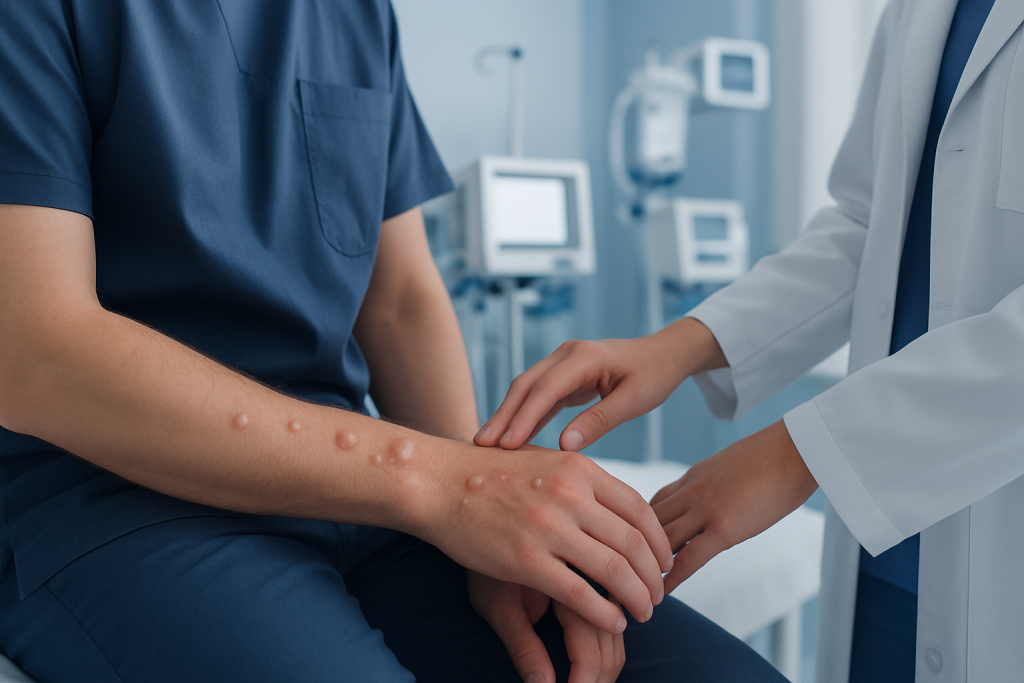
These bumps may appear as tiny pinhead-sized blisters or larger fluid-filled spots. They can occur alone or in clusters and may sit on red, dry, swollen, or otherwise normal-looking skin. The itch can be mild and annoying or intense enough to disturb sleep and daily activities.
Some people notice burning, tenderness, scaling, crusting, or peeling after the fluid dries. If scratching breaks the skin, the area may sting or become more inflamed. Bumps can show up on the hands, feet, arms, legs, torso, or around areas that have been exposed to sweat, new products, metals, plants, or tight clothing.
Pattern matters. Doctors often ask whether the rash is symmetrical, whether it follows a strap, shoe, glove, or jewelry line, and whether it comes and goes. They also ask whether others in the household are itchy, which may suggest contagious causes such as scabies.
- Hands and sides of fingers: often seen with dyshidrotic eczema
- Areas under clothing or heat: can suggest heat rash
- Linear or streaky rash: may happen after plant exposure
- Painful grouped blisters: can suggest a viral cause
- Bumps with honey-colored crust or pus: may indicate secondary infection
Common causes and triggers

One of the most frequent causes is eczema, especially dyshidrotic eczema, which often causes very itchy, small, deep-seated blisters on the hands and feet. Atopic dermatitis can also flare with weeping or blistering areas, particularly when the skin barrier is dry and inflamed. People with a personal or family history of allergies, asthma, or eczema may be more prone to these patterns. Related background information about eczema can be helpful when symptoms keep returning.
Contact dermatitis is another common explanation. This happens when the skin reacts to an allergen or irritant such as soaps, detergents, fragrances, nickel, rubber, plants, adhesives, cosmetics, or cleaning products. In some cases, the rash appears hours to days after contact, which can make the trigger difficult to recognize.
Heat rash, friction blisters, and insect bite reactions can also produce itchy, clear bumps. Heat rash is more likely in hot, humid conditions or after sweating. Friction blisters are common on the feet or hands after repetitive rubbing. Insect bites can cause itchy raised bumps and sometimes small fluid-filled blisters in sensitive skin.
Infections are less common but important to consider. Viral infections such as herpes simplex, chickenpox, shingles, or hand-foot-and-mouth disease can create blisters, though these are often painful or accompanied by other symptoms. Fungal infections, scabies, or bacterial skin infection may also mimic eczema or allergic rashes. If there is concern about persistent inflammation or diagnosis is unclear, specialist input from dermatology care may be useful.
How doctors tell the causes apart
Diagnosis usually starts with a close look at the skin and a review of symptoms. A doctor may ask when the rash began, whether it is itchy or painful, what products or medications were used recently, whether there was outdoor exposure, and whether the person has eczema, allergies, or similar past episodes. This detailed history is often the key to sorting out likely causes.
The distribution of the rash is especially important. Blisters between the fingers and intense nighttime itch may point toward scabies, while a sharply bordered rash under a watch strap or ring can suggest contact dermatitis. Painful grouped vesicles on a red base may raise suspicion for a herpes-related eruption, while sweat-prone areas may fit heat rash.
Tests are not always needed, but they may be recommended when the rash is recurrent, severe, widespread, or unusual. A clinician might consider skin swabs if infection is suspected, patch testing for allergic contact dermatitis, or occasionally a skin scraping or biopsy. If there are signs of a broader allergic process, evaluation through allergy tests may help identify avoidable triggers.
Treatment options depend on the cause
Treatment is most effective when it matches the underlying cause. For eczema and contact dermatitis, the usual approach is to avoid triggers, protect the skin barrier, and calm inflammation. Gentle fragrance-free cleansers, regular moisturizers, and short-term anti-inflammatory treatments recommended by a clinician are common parts of care. Cool compresses may also reduce itch.
If a specific irritant or allergen is responsible, the rash often improves once contact stops. For heat rash, cooler clothing, less sweating, and keeping the skin dry can help. Friction blisters generally improve by reducing rubbing and protecting the area with appropriate dressings.
When infection is suspected, treatment may be different. Antiviral, antibacterial, antifungal, or antiparasitic treatment may be needed depending on the diagnosis. Because several conditions can look alike, it is wise not to self-treat repeatedly without medical advice if the rash is spreading, recurring, or not improving.
Itch control matters because scratching can open the skin and increase the chance of infection. Doctors may suggest practical anti-itch strategies, and some people benefit from a broader evaluation if allergies or chronic inflammatory skin disease are suspected. In selected cases, support from immunology and allergic diseases specialists may be appropriate.
Self-care and prevention
Prevention begins with protecting the skin barrier. Using a bland moisturizer regularly, especially after bathing and handwashing, can reduce dryness and irritation. Lukewarm rather than hot water is usually kinder to the skin, and gentle fragrance-free products are less likely to trigger reactions.
When a trigger is suspected, practical avoidance steps can make a real difference. This may mean changing soaps or detergents, removing jewelry that causes irritation, wearing gloves for cleaning or wet work, choosing breathable clothing, and showering after sweating or outdoor exposure. New skincare products should be introduced one at a time so reactions are easier to identify.
It is best not to pop clear-fluid bumps. Opening them can delay healing and raise the risk of infection. Trimming nails short, using cool compresses, and avoiding scratching can help protect the skin while it heals.
If the bumps happen repeatedly, a symptom diary can be useful. Recording where the rash appears, what was eaten or touched, recent travel, pet contact, stress, exercise, heat exposure, and any new medicines can give a clinician valuable clues.
When to seek medical care
Medical care is recommended if itchy clear-fluid bumps are severe, widespread, rapidly worsening, or not improving with simple skin care and trigger avoidance. A person should also seek care if the rash becomes painful, develops pus, forms thick crusts, or is accompanied by fever, swelling, or feeling unwell. These can be signs of infection or a cause that needs specific treatment.
Prompt assessment is especially important if blisters affect the eyes, mouth, face, genitals, or large areas of skin, or if the person is pregnant, very young, older, or has a weakened immune system. New rashes after starting a medication also deserve medical attention, since drug reactions can sometimes begin with blistering.
Anyone who has repeated outbreaks, uncertain triggers, or persistent hand or foot blisters may benefit from specialist review. Near the end of the care pathway, patients may be referred for tests or specialist treatment to confirm the diagnosis and reduce recurrences. Acibadem International’s multidisciplinary specialists in JCI-accredited hospitals diagnose and treat skin conditions for international patients when expert evaluation is needed.
Frequently asked questions
What are itchy bumps filled with clear liquid called?
They are often called vesicles, which are small blisters containing clear fluid. They can happen with eczema, allergic reactions, heat rash, friction, insect bites, or some infections.
Are itchy clear-fluid bumps usually serious?
Not usually. Many cases are caused by irritation or inflammation of the skin and improve with trigger avoidance and gentle care. They should be assessed sooner if they are painful, spreading, infected-looking, or associated with fever or illness.
Can stress cause itchy blisters?
Stress does not directly create all blistering rashes, but it can worsen conditions such as eczema. In some people, stress contributes to flares by affecting the skin barrier, itch perception, and inflammation.
Should clear-fluid bumps be popped?
It is usually better not to pop them. Leaving the skin intact helps protect against infection and supports healing. If a blister breaks on its own, keeping the area clean and covered is often helpful.
How can someone tell allergy from infection?
Allergic or irritant rashes are often very itchy and linked to a product, metal, plant, or other exposure. Infections may be more painful, may spread, and can come with pus, crusting, fever, or feeling unwell. Because overlap exists, a doctor may be needed to confirm the cause.
When should a child with itchy fluid-filled bumps see a doctor?
A child should be evaluated if the rash is widespread, painful, near the eyes or mouth, associated with fever, or not improving. Medical review is also important if there are signs of dehydration, significant scratching, or possible infection.
References
- American Academy of Dermatology
- National Eczema Association
- Mayo Clinic
- NHS
- World Health Organization
This article is for general information only and is not a substitute for professional medical advice. Please consult a qualified doctor about your individual situation.
Explore treatments in Turkey — costs, top hospitals & a free quote
JCI-accredited · board-certified surgeons · reply within 24h
Add us as a Preferred Source to see more of our trusted health content across Google Search, AI Overviews and Discover.