IVF With Severe Male Factor Infertility: Sperm Retrieval and ICSI Options

Severe male factor infertility may involve very low sperm count, poor sperm movement, abnormal sperm shape, or no sperm in the ejaculate. ICSI allows a single selected sperm to be injected directly into an egg during IVF, which can help when standard fertilization is unlikely.
Key Takeaways
- Severe male factor infertility may involve very low sperm count, poor sperm movement, abnormal sperm shape, or no sperm in the ejaculate.
- ICSI allows a single selected sperm to be injected directly into an egg during IVF, which can help when standard fertilization is unlikely.
- Sperm may be collected from the ejaculate or retrieved surgically from the epididymis or testicle, depending on the cause of infertility.
- Azoospermia may be obstructive, where sperm production continues but sperm cannot exit, or non-obstructive, where sperm production is reduced.
- Genetic testing, hormonal evaluation, and counseling are often important before IVF with severe male factor infertility.
- Treatment plans are individualized and should involve both fertility specialists and urologists experienced in male reproductive health.
Severe male factor infertility can make natural conception difficult, but many couples may still have options through sperm retrieval techniques and intracytoplasmic sperm injection, known as ICSI. A careful evaluation helps identify whether sperm can be obtained, how it should be used, and what additional genetic or reproductive assessments may be needed.
Overview
IVF with severe male factor infertility is a treatment pathway used when sperm-related problems make natural conception or standard insemination unlikely. Severe male factor infertility can include extremely low sperm count, very poor sperm movement, a high percentage of abnormally shaped sperm, or azoospermia, which means no sperm are seen in the semen sample. In some cases, sperm are present but cannot reach the ejaculate because of a blockage; in others, sperm production inside the testicles is limited.
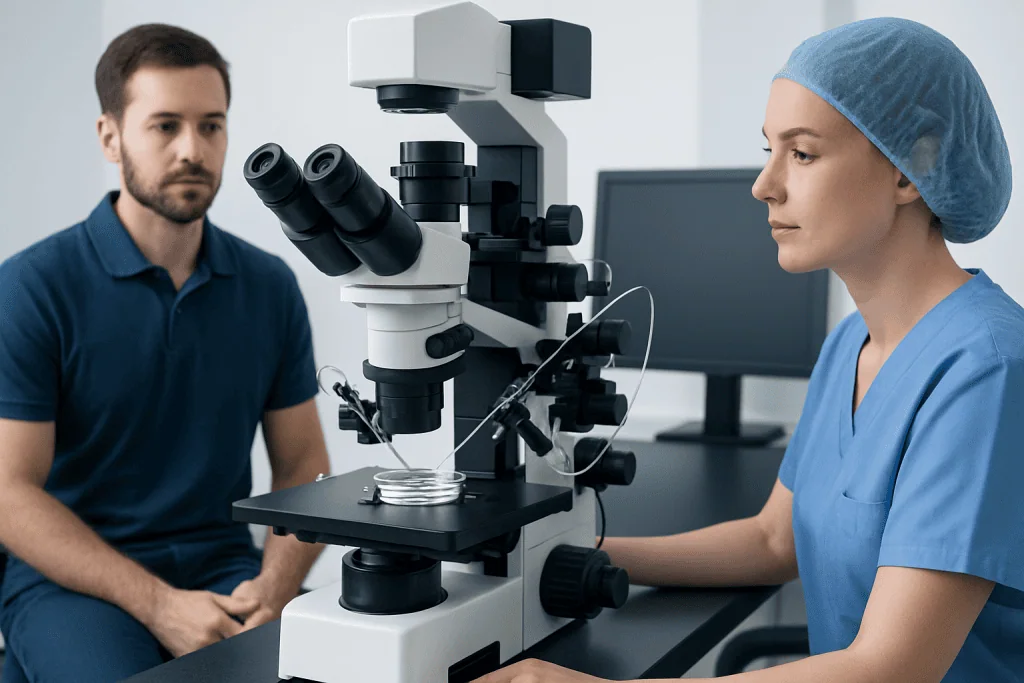
Modern fertility care offers several ways to approach these challenges. The most important advance is intracytoplasmic sperm injection, or ICSI, in which an embryologist injects one sperm directly into a mature egg in the laboratory. This technique is commonly used as part of IVF treatment when sperm numbers or function are too limited for conventional IVF fertilization.
For some men, sperm can be obtained from an ejaculate after repeated collection, special laboratory preparation, or cryopreservation. For others, sperm retrieval procedures may collect sperm directly from the epididymis or testicular tissue. The goal is not only to find sperm, but also to coordinate retrieval with egg collection, embryo development, and safe transfer planning.
What Severe Male Factor Infertility Means
Male factor infertility refers to problems with sperm production, sperm transport, sexual function, or hormonal regulation that reduce the chance of pregnancy. It may be the only identified reason for infertility, or it may occur together with ovulation problems, tubal disease, endometriosis, age-related egg factors, or other reproductive conditions. A complete fertility evaluation generally considers both partners rather than viewing infertility as only one person’s diagnosis.
Common semen analysis findings in severe male factor infertility include oligozoospermia, meaning low sperm concentration; asthenozoospermia, meaning reduced movement; teratozoospermia, meaning abnormal shape; and azoospermia, meaning no sperm are found in the semen. Sometimes the ejaculate volume is very low, which may suggest retrograde ejaculation, ejaculatory duct obstruction, hormonal issues, or problems related to prior surgery.
Azoospermia is usually divided into two broad categories. Obstructive azoospermia occurs when sperm production is present but sperm cannot pass through the reproductive tract, such as after vasectomy, infection, congenital absence of the vas deferens, or blockage. Non-obstructive azoospermia occurs when the testicles produce very few or no mature sperm, which may be related to genetic factors, hormonal disorders, prior chemotherapy, undescended testes, varicocele, or unknown causes.
Symptoms, Clues, and When It Is Discovered

Severe male factor infertility often has no obvious symptoms. Many men have normal sexual function, normal ejaculation, and no pain, so the condition may be discovered only after a couple has difficulty conceiving and a semen analysis is performed. This can be emotionally difficult, and supportive counseling can help couples process the diagnosis and decisions ahead.
Some men have clues that suggest a reproductive or hormonal issue. These may include a history of undescended testicles, testicular surgery, groin surgery, pelvic injury, mumps orchitis, chemotherapy, radiation therapy, anabolic steroid use, or prior vasectomy. Symptoms such as reduced libido, erectile difficulty, breast enlargement, reduced facial or body hair, small testes, or testicular swelling may point toward hormonal or testicular causes.
Medical evaluation is especially important if semen results show very low counts or no sperm, because some causes are treatable or may have broader health implications. For example, hormonal disorders can affect energy, bone health, and sexual function. In selected cases, genetic findings may also have implications for future children or other family members, so genetic counseling may be recommended.
Diagnosis and Fertility Workup
The first step is usually at least one semen analysis, and often a repeat test is needed because sperm numbers can vary over time. The sample is assessed for volume, sperm concentration, total sperm count, movement, shape, and sometimes signs of infection or inflammation. If no sperm are seen, the laboratory may centrifuge the sample and examine the pellet carefully to look for rare sperm.
A male fertility evaluation may also include a medical history, physical examination by a urologist or andrologist, and hormone tests such as follicle-stimulating hormone, luteinizing hormone, testosterone, prolactin, and sometimes estradiol or thyroid tests. Scrotal ultrasound may be used to assess varicocele, testicular structure, or other findings. In suspected obstruction, imaging or additional tests may be considered depending on the clinical situation.
Genetic testing is often discussed when sperm counts are extremely low or azoospermia is present. Tests may include karyotype analysis, Y-chromosome microdeletion testing, and cystic fibrosis transmembrane conductance regulator testing in men with congenital absence of the vas deferens or suspected obstructive azoospermia. These results can influence the chance of sperm retrieval, the choice of treatment, and decisions about embryo testing or prenatal counseling.
Evaluation of the female partner remains essential, even when male factor infertility appears severe. Ovarian reserve testing, ultrasound, uterine assessment, and review of ovulation and medical history help the fertility team plan stimulation, egg retrieval, embryo transfer, and pregnancy preparation. A combined assessment supports a realistic, individualized plan for infertility evaluation and care.
Sperm Retrieval Options
Sperm retrieval is considered when sperm are not available in the ejaculate, when ejaculation is not possible, or when ejaculated sperm quality is insufficient for treatment. The best method depends on whether the likely problem is obstruction or reduced sperm production. Procedures are usually performed by a specialist in male reproductive urology and may use local anesthesia, sedation, or general anesthesia depending on the technique and patient factors.
In obstructive azoospermia, sperm production is usually normal, so retrieval from the epididymis or testicle often aims to obtain enough sperm for ICSI and possible freezing. Techniques may include percutaneous epididymal sperm aspiration, microsurgical epididymal sperm aspiration, testicular sperm aspiration, or testicular sperm extraction. The choice depends on anatomy, prior surgery, local expertise, and whether fresh or frozen sperm will be used.
In non-obstructive azoospermia, sperm may be present only in small areas of the testicle. Microdissection testicular sperm extraction, often called micro-TESE, uses an operating microscope to identify tissue more likely to contain sperm. This approach is more complex than simple aspiration and may be recommended when the chance of finding sperm is limited, although success cannot be guaranteed.
When sperm are retrieved, the laboratory examines the sample and prepares usable sperm for ICSI. If enough sperm are found, some may be frozen for future cycles, which can reduce the need for repeat surgery. If no sperm are found, the team discusses next steps, which may include repeat evaluation, medical treatment if appropriate, donor sperm, adoption, or living child-free, depending on the couple’s values and circumstances.
ICSI and IVF Treatment Planning
ICSI is the main laboratory technique used in IVF with severe male factor infertility. During IVF, the ovaries are stimulated to develop multiple eggs, eggs are collected, and mature eggs are prepared in the embryology laboratory. With intracytoplasmic sperm injection, an embryologist selects an individual sperm and injects it into an egg to support fertilization.
ICSI can be used with ejaculated sperm, frozen sperm, or surgically retrieved sperm. It is particularly helpful when sperm counts are very low, motility is poor, sperm are limited in number, or prior fertilization failure has occurred. However, ICSI does not correct all causes of infertility; egg quality, embryo development, uterine factors, and chromosomal health still influence the chance of pregnancy.
Planning may involve deciding whether sperm retrieval should happen before egg stimulation or on the same day as egg retrieval. Pre-planned retrieval with sperm freezing can provide reassurance that sperm are available before the female partner begins ovarian stimulation. Same-day retrieval may be preferred in some situations, especially when fresh sperm are recommended, but it requires careful coordination and a backup plan.
Embryo culture, embryo transfer timing, and whether to freeze embryos are individualized. Some couples may discuss preimplantation genetic testing, especially when a genetic cause of male infertility is found or when maternal age or recurrent pregnancy loss is relevant. The fertility team should explain benefits, limitations, and alternatives in a balanced way before treatment begins.
Risks, Limitations, and Emotional Considerations
IVF, ICSI, and sperm retrieval are established fertility treatments, but they have limitations. Fertilization may not occur, embryos may stop developing, no sperm may be found during retrieval, or pregnancy may not result after embryo transfer. These possibilities are difficult, but discussing them in advance helps couples make informed decisions and prepare emotionally.
Sperm retrieval procedures can involve temporary discomfort, swelling, bruising, bleeding, infection, or, rarely, testicular injury. IVF-related risks for the female partner may include medication side effects, ovarian hyperstimulation syndrome, procedure-related discomfort, and the emotional stress of waiting for results. Clinics monitor patients closely to reduce risks and adjust treatment when needed.
Severe male factor infertility may also raise questions about genetics and future children. Certain Y-chromosome microdeletions can be passed to male offspring, and congenital absence of the vas deferens may be associated with cystic fibrosis carrier status. Genetic counseling can help couples understand inheritance, testing options, and reproductive choices without pressure.
The emotional impact should not be underestimated. Men may feel guilt, shame, or isolation, while partners may feel uncertainty or grief. A supportive care plan may include counseling, clear communication with the medical team, and time to consider options such as using surgically retrieved sperm, donor sperm, or pausing treatment.
Prevention, Self-care, and When to See a Specialist
Not all causes of severe male factor infertility can be prevented, especially genetic or congenital conditions. Still, general reproductive health measures may support sperm production and overall well-being. These include avoiding anabolic steroids, limiting heat exposure to the testes when possible, stopping smoking, moderating alcohol, maintaining a healthy weight, treating infections promptly, and reviewing medications with a doctor if fertility is a concern.
Men should seek medical evaluation if a couple has not conceived after 12 months of regular unprotected intercourse, or after 6 months if the female partner is 35 or older. Earlier assessment is recommended when there is a known history of vasectomy, undescended testicles, chemotherapy, pelvic surgery, testicular injury, very low semen parameters, or sexual or ejaculatory problems.
A fertility specialist and male reproductive urologist can help clarify whether treatment, sperm retrieval, ICSI, or other options are appropriate. Care is strongest when both partners are assessed together and decisions are made with full information about likely benefits, limitations, costs, timelines, and emotional considerations. Understanding the reproductive system can also help patients ask informed questions during consultations.
Acibadem International’s multidisciplinary specialists and JCI-accredited hospitals diagnose and treat severe male factor infertility for international patients, including coordinated fertility, urology, embryology, and genetic counseling support when appropriate. Patients considering treatment abroad should bring prior semen analyses, hormone results, operative reports, genetic tests, and fertility treatment records to help the team plan safely and efficiently.
Frequently asked questions
Can IVF work with very low sperm count?
Yes, IVF may still be possible when sperm count is very low, especially when ICSI is used. ICSI requires only one sperm for each mature egg, although sperm quality, egg quality, embryo development, and overall reproductive health still affect the outcome.
What is the difference between IVF and ICSI?
In conventional IVF, eggs and sperm are placed together in the laboratory and fertilization occurs if sperm enter the eggs on their own. In ICSI, an embryologist injects a single sperm directly into a mature egg. ICSI is often used for severe male factor infertility because it can help when sperm numbers or movement are limited.
If a semen analysis shows no sperm, does that mean pregnancy is impossible?
No sperm in the semen, called azoospermia, does not always mean pregnancy is impossible. Some men have sperm production in the testicles but a blockage prevents sperm from appearing in the ejaculate, while others have small areas of sperm production that may be found with surgical retrieval. A specialist evaluation is needed to understand the cause and options.
Is sperm retrieval painful?
Sperm retrieval procedures are performed with anesthesia or sedation when appropriate, so pain during the procedure is usually controlled. Some soreness, swelling, or bruising may occur afterward and is typically managed with standard recovery instructions. The doctor will explain the expected recovery and warning signs before the procedure.
Should sperm retrieval be done before the IVF cycle?
In some cases, retrieving and freezing sperm before ovarian stimulation can confirm that sperm are available before the female partner begins IVF medications. In other cases, retrieval may be coordinated on the same day as egg collection. The best timing depends on the diagnosis, the retrieval method, laboratory planning, and the couple's preferences.
Is genetic testing necessary in severe male infertility?
Genetic testing is often recommended when sperm count is extremely low or when azoospermia is present. Results can help explain the cause, estimate the chance of sperm retrieval, and identify inheritance issues that may affect future children. A genetic counselor or fertility specialist can explain which tests are relevant.
Can lifestyle changes reverse severe male factor infertility?
Lifestyle changes may improve general health and sometimes support sperm production, especially when smoking, anabolic steroid use, excess alcohol, obesity, heat exposure, or untreated illness is contributing. However, severe male factor infertility often has medical, obstructive, genetic, or testicular causes that require specialist assessment. Lifestyle measures are best used alongside, not instead of, medical evaluation.
References
- World Health Organization
- European Association of Urology
- American Society for Reproductive Medicine
- European Society of Human Reproduction and Embryology
- National Institute for Health and Care Excellence
This article is for general information only and is not a substitute for professional medical advice. Please consult a qualified doctor about your individual situation.
Infertility in Turkey — costs, top hospitals & a free quote
JCI-accredited · board-certified surgeons · reply within 24h
Check your numbers in seconds
BMI, calories, due date, blood pressure and 30+ more clinical calculators — free, instant, doctor-reviewed ranges.

Related Treatments
Related Conditions
More from the Health Library



Related Specialists

Prof. Dr. Bülent Tıraş
Gynecology & Obstetrics
Prof. Dr. Mete Güngör
Gynecology & Obstetrics
Prof. Dr. Faruk Suat Dede
Gynecology & Obstetrics
Prof. Dr. Tansu Küçük
Gynecology & Obstetrics