Jammed: A Complete Medical Overview

A jammed finger commonly involves a sprain, swelling, and pain around a finger joint after impact. Not every jammed finger is minor; fractures, tendon injuries, and dislocations can look similar at first.
Key Takeaways
- A jammed finger commonly involves a sprain, swelling, and pain around a finger joint after impact.
- Not every jammed finger is minor; fractures, tendon injuries, and dislocations can look similar at first.
- Early protection, ice, elevation, and temporary support may reduce pain and swelling.
- Medical assessment is important if the finger looks crooked, cannot move normally, or remains very painful.
- Recovery time depends on the severity of the injury and whether bone, ligament, or tendon damage is present.
A jammed finger is usually an injury to the ligaments, joint capsule, or soft tissues of a finger after a sudden impact. Many cases improve with rest and support, but severe pain, deformity, or limited movement can signal a fracture or dislocation that needs medical care.
What a Jammed Finger Means
A jammed finger is a common term for an injury that happens when the tip of the finger is forcefully pushed inward, often during sports, falls, or accidental impacts. In many people, this causes a sprain of the ligaments that support the joint, along with swelling, tenderness, and stiffness. The injury may affect the joint closest to the fingertip, the middle joint, or the base of the finger.
Although the term sounds simple, a jammed finger is not one single diagnosis. It can describe a mild soft tissue strain, a more significant ligament sprain, a small fracture, a joint dislocation, or even a tendon injury. That is why the same event can lead to very different levels of pain and recovery time in different people.
The most important first step is to think of a jammed finger as a joint injury rather than only a bruise. If symptoms are mild and the finger still looks straight and moves reasonably well, home care may be enough at first. If the finger is clearly deformed, unstable, numb, or difficult to move, a doctor should evaluate it to rule out a more serious problem.
Common Signs and Symptoms
The typical symptoms of a jammed finger begin soon after the injury. Pain is usually centered at one joint and may worsen when trying to bend or straighten the finger. Swelling often develops quickly, and some people notice bruising within hours.
Stiffness is also common. The finger may feel tight or weak, especially when gripping objects, typing, or making a fist. In a mild sprain, movement is possible but uncomfortable. In a more serious injury, normal motion may be sharply limited.
Symptoms that deserve closer attention include a finger that looks crooked, a joint that feels unstable, severe tenderness over bone, or an inability to fully bend or extend the finger. Numbness, tingling, or color changes may suggest nerve or circulation problems and should not be ignored.
- Pain at one finger joint
- Swelling and puffiness
- Bruising or discoloration
- Reduced range of motion
- Tenderness when touched
- Weak grip or trouble using the hand
How a Jammed Finger Happens

A jammed finger usually occurs when an outstretched finger is hit on the tip, forcing the joint backward or compressing it suddenly. This often happens while catching a ball, during contact sports, in workplace accidents, or from everyday mishaps such as slamming a finger into a door or striking it against a hard surface.
The force of impact can injure several structures at once. Ligaments may stretch or tear, the joint capsule can become inflamed, cartilage can be irritated, and the surrounding tissues may bruise. In some cases, the force is strong enough to crack a bone or pull off a small fragment where a ligament or tendon attaches.
Certain situations make a more significant injury more likely. These include high-speed ball sports, previous finger injuries, reduced hand strength, and delayed treatment after an obvious dislocation or severe sprain. Children and older adults may also need careful assessment because growth plates or age-related bone fragility can affect the pattern of injury.
Conditions That Can Be Mistaken for a Jammed Finger
One reason jammed fingers can be confusing is that several different injuries can look similar at the beginning. A finger sprain may cause pain and swelling without major structural damage, but a fracture can produce nearly the same early symptoms. A joint dislocation may sometimes partially correct itself, leaving behind swelling and stiffness that seem deceptively mild.
Tendon injuries are another important possibility. If the fingertip droops and cannot straighten actively, this may suggest a tendon injury often called mallet finger. If the middle joint bends abnormally while the fingertip extends, a different tendon pattern may be involved. In some patients, injuries around the small finger joints can overlap with problems seen in trigger finger, although trigger finger is usually a different, non-traumatic condition.
Because these injuries can affect long-term hand function, persistent symptoms should not be dismissed as “just jammed.” If swelling lasts, the finger remains stiff, or movement does not improve over several days, a clinician may recommend further evaluation. In some cases, hand specialists or orthopedic teams with experience in orthopedic care help clarify the diagnosis and guide treatment.
How Doctors Diagnose It
Diagnosis begins with a physical examination and a clear description of how the injury happened. A doctor will ask when the pain started, whether the finger bent backward or sideways, and whether there was an immediate popping sensation, numbness, or visible deformity. Examining the direction of pain and the pattern of movement can offer important clues.
During the examination, the clinician checks swelling, bruising, tenderness, range of motion, alignment, circulation, and nerve function. Gentle stress testing may be used to assess ligament stability, but this is done carefully to avoid worsening the injury. The doctor may also compare the injured finger with the same finger on the other hand.
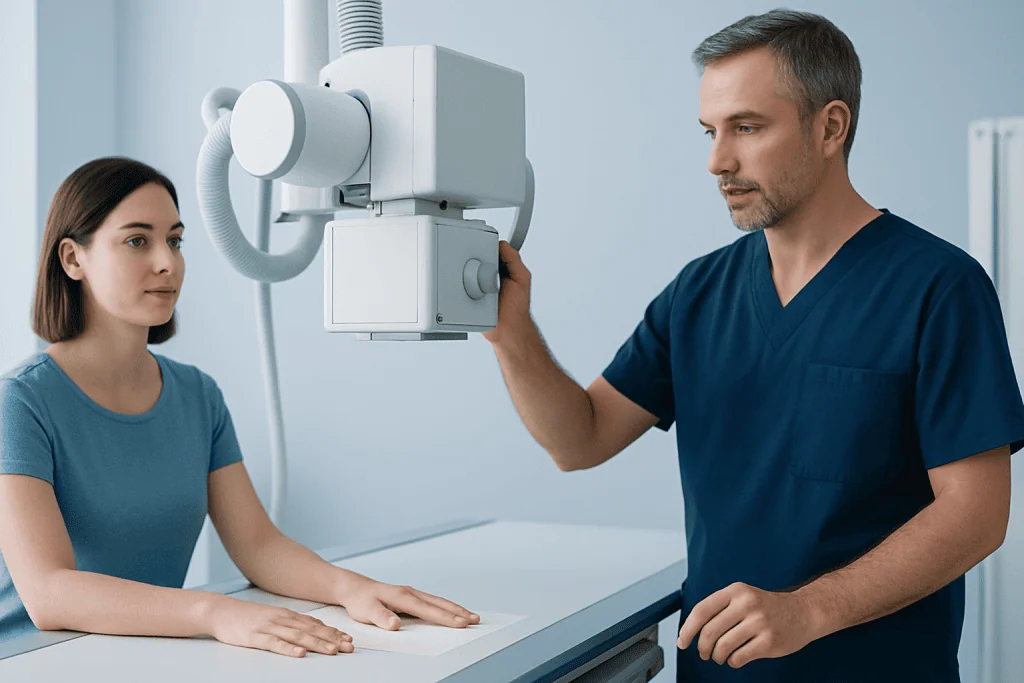
X-rays are commonly used if there is significant pain, deformity, swelling, or concern for fracture or dislocation. Imaging helps identify broken bones, joint alignment problems, and avulsion injuries where a small piece of bone is pulled off. If symptoms remain unclear or more complex damage is suspected, doctors may consider advanced imaging through MRI or other diagnostic imaging methods.
Treatment and Recovery
Treatment depends on the exact injury. For a mild jammed finger without deformity, early care usually focuses on protecting the joint, reducing swelling, and allowing tissues to heal. Rest, ice, elevation, and temporary support such as buddy taping to a neighboring finger are often used, but the method and duration should fit the injury pattern.
If a fracture, dislocation, significant ligament tear, or tendon injury is present, treatment may be different. Some injuries need splinting in a specific position, reduction of a dislocated joint, or close follow-up with a specialist. In selected cases, surgery may be recommended to restore alignment, stabilize the joint, or repair damaged structures, sometimes with support from hand surgery teams.
Recovery often takes longer than people expect. Even a relatively mild finger sprain may remain swollen or stiff for weeks. Guided movement at the right time is important because too much rest can increase stiffness, while returning to sports or work too early can worsen the injury. A doctor or hand therapist can advise when exercises and normal activities can safely resume.
Self-Care and Protecting Hand Function
Simple self-care can support healing when the injury is mild and has no warning signs of a fracture or dislocation. Keeping rings off the injured hand is helpful because swelling can increase quickly. Elevating the hand above heart level when possible may reduce throbbing and swelling during the first day or two.
Cold packs wrapped in cloth can be applied for short periods to ease pain and swelling. Many people also benefit from temporary support, but tight wrapping should be avoided because it can reduce circulation. Pain relievers may help, but they should be used according to general label directions and personal medical advice.
Protecting hand function matters as much as reducing pain. Once a clinician says it is safe, gentle motion can help prevent stiffness. If the finger becomes more swollen, more painful, or harder to move instead of gradually improving, the plan should be reviewed. Near the end of recovery, some patients benefit from structured rehabilitation or specialist follow-up. Acibadem International’s multidisciplinary specialists at JCI-accredited hospitals diagnose and treat hand and finger injuries for international patients.
When to Seek Medical Care
Medical care is recommended promptly if the finger looks bent, rotated, shortened, or out of place. The same is true if there is severe swelling, intense pain, a wound near the joint, numbness, pale or blue skin color, or inability to bend or straighten the finger. These findings may indicate a fracture, dislocation, tendon injury, or circulation problem.
A doctor should also assess a jammed finger if pain remains significant after initial home care, if the finger cannot be used normally, or if symptoms are not improving over several days. Children should be evaluated more readily because growth plate injuries may not be obvious at first. Delayed treatment can sometimes lead to lasting stiffness or poor joint alignment.
Urgent evaluation is especially important after high-impact trauma or if there is concern for another hand injury at the same time. In general, it is safer to have a finger injury checked than to assume it is minor. Early diagnosis can make treatment simpler and support a better functional recovery.
Frequently asked questions
How do people know if a finger is jammed or broken?
A jammed finger and a broken finger can both cause pain, swelling, and bruising, so they are not always easy to tell apart at home. A crooked shape, severe tenderness over bone, major loss of movement, or pain that does not improve should be checked with an exam and often an X-ray.
Can a jammed finger heal on its own?
Many mild jammed fingers do improve with rest, ice, elevation, and temporary support. However, some injuries that seem minor at first are actually fractures, dislocations, or tendon injuries, so persistent pain or limited motion should be medically assessed.
How long does a jammed finger take to heal?
Healing time varies with the severity of the injury. A mild sprain may improve over a few weeks, while more significant ligament, tendon, or bone injuries can take longer and may require splinting, therapy, or specialist care.
Should a jammed finger be pulled straight?
It is generally not a good idea to forcefully pull or manipulate an injured finger at home. If the finger is dislocated or fractured, this could worsen tissue damage, so medical evaluation is the safer option.
Is buddy taping always safe for a jammed finger?
Buddy taping can be helpful for some mild sprains, but it is not right for every injury. If a fracture, dislocation, or tendon injury is present, the finger may need a different splint position or a different treatment plan.
When should someone worry about swelling after a jammed finger?
Some swelling is expected early on, but very severe swelling, worsening pain, numbness, color changes, or tight rings on the hand should raise concern. Swelling that does not gradually improve or is accompanied by poor movement should be evaluated by a doctor.
References
- American Academy of Orthopaedic Surgeons
- American Society for Surgery of the Hand
- National Health Service
- Mayo Clinic
- MedlinePlus
This article is for general information only and is not a substitute for professional medical advice. Please consult a qualified doctor about your individual situation.
Joint and spine care in Turkey — expert assessment & treatment
JCI-accredited · board-certified surgeons · reply within 24h
Add us as a Preferred Source to see more of our trusted health content across Google Search, AI Overviews and Discover.