Jawline Acne — Explained by Medical Evidence, Not Myths

Jawline acne commonly develops when pores become blocked and inflamed, sometimes with a hormonal influence. It can appear as blackheads, whiteheads, red bumps, or deeper tender cyst-like lesions along the jaw and chin.
Key Takeaways
- Jawline acne commonly develops when pores become blocked and inflamed, sometimes with a hormonal influence.
- It can appear as blackheads, whiteheads, red bumps, or deeper tender cyst-like lesions along the jaw and chin.
- Myths such as “dirty skin causes acne” or “certain foods are always to blame” oversimplify a complex condition.
- Treatment may include non-comedogenic skin care, prescription creams, oral medicines, or hormone-focused treatment in selected patients.
- Medical advice is important if acne is painful, scarring, persistent, or affecting emotional well-being.
Jawline acne is acne that forms along the jaw and chin, often because oil, dead skin cells, and inflammation affect hair follicles in this area. Although hormonal changes can play a role, jawline acne is not caused by poor hygiene alone, and effective treatment usually combines gentle skin care with medical guidance when needed.
Overview: what jawline acne really means
Jawline acne refers to acne lesions that appear mainly along the lower cheeks, chin, and jaw. It is not a separate disease from acne, but rather a pattern of where acne shows up on the face. This location can be especially frustrating because breakouts may be recurrent, slow to heal, and more likely to leave marks if they are picked or squeezed.
From a medical perspective, jawline acne develops when hair follicles become blocked with oil and dead skin cells, then inflamed. Bacteria that normally live on the skin can contribute to this inflammation. In some people, hormones appear to make the oil glands more active, which is why jawline breakouts are often discussed in relation to menstrual cycles, stress, or adulthood acne.
It is important to separate evidence from myth. Jawline acne is not simply a sign of poor cleansing, and “face mapping” claims that every jaw breakout must come from one exact internal problem are not strongly supported by medical evidence. Instead, doctors usually look at the person’s age, skin type, pattern of lesions, medications, stress levels, and any signs of hormonal imbalance before deciding what is most likely contributing.
How jawline acne looks and feels
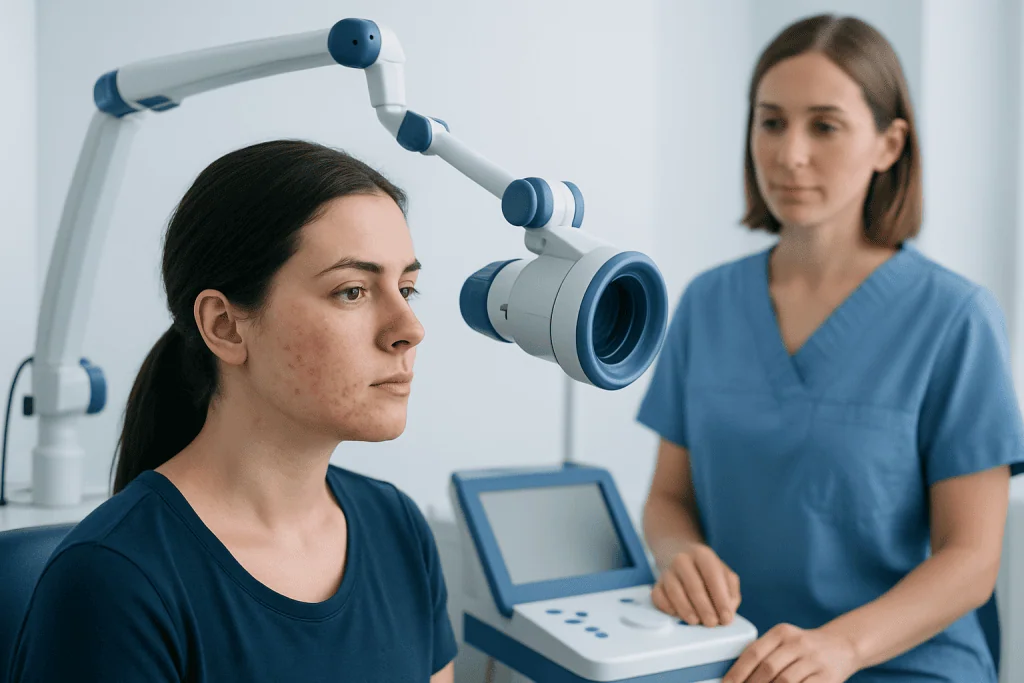
Jawline acne can look different from person to person. Some people mainly notice clogged pores such as blackheads or whiteheads, while others develop red inflamed bumps, pus-filled pimples, or deeper painful nodules. The deeper lesions are more likely to linger and may increase the chance of post-inflammatory dark marks or scarring.
The area may also feel tender, swollen, or irritated, particularly when lesions form close to the skin’s deeper layers. Breakouts can occur in clusters along the chin and jawline, and they may flare at certain times, such as before menstruation, during stressful periods, or after using heavy skin products.
Common features include:
- Small flesh-colored bumps or whiteheads
- Blackheads
- Red, inflamed papules
- Pustules with a visible white or yellow center
- Deep, tender nodules or cyst-like lesions
- Dark marks or textural changes after healing
Although jawline acne may seem easy to identify, similar-looking problems can include folliculitis, perioral dermatitis, rosacea, or irritation from shaving and cosmetics. That is one reason a professional assessment can be helpful when breakouts are persistent or unusual.
What causes jawline acne and what raises the risk
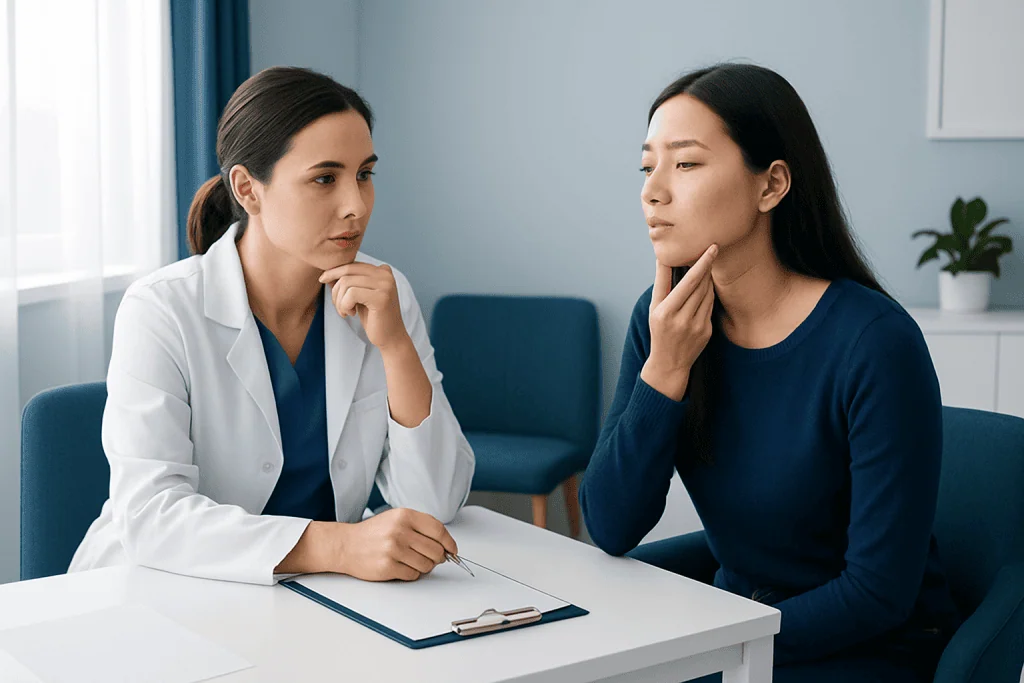
Jawline acne is usually caused by the same core acne processes seen elsewhere on the face: increased oil production, buildup of dead skin cells inside follicles, inflammation, and the activity of skin bacteria. What makes the jawline pattern distinctive is that hormonal influences may be more noticeable there in some adults, especially women. However, hormones are only one part of the picture, not the whole explanation.
Several factors can increase the likelihood of jawline breakouts. Friction and occlusion may contribute, such as pressure from masks, chin straps, helmets, scarves, or repeatedly resting the face on the hands. Thick or comedogenic cosmetics, hair products that transfer to the skin, and inconsistent removal of makeup can also worsen clogged pores in this area.
Other recognized influences include:
- Family history of acne
- Hormonal fluctuations related to menstrual cycles, pregnancy, or conditions such as polycystic ovary syndrome
- Stress, which may aggravate inflammation and skin picking behaviors
- Certain medications, including some steroids or hormone-related treatments
- Shaving-related irritation in some men
- Sweating combined with tight clothing or equipment
Diet is often discussed, but the evidence is more nuanced than many online claims suggest. Some people may notice worsening with high-glycemic diets or certain dairy products, yet no single food causes jawline acne in everyone. A symptom diary can be more useful than broad food restrictions, especially because over-restrictive diets may be unnecessary.
Jawline acne and hormones: what is proven, and what is not
Jawline acne is commonly linked with hormones because this pattern is often seen in adult acne, especially when breakouts recur around the chin and lower face. Androgens, a group of hormones present in all sexes, can stimulate the sebaceous glands to produce more oil. In people who are more sensitive to these hormonal effects, pores may clog more easily and inflammation may increase.
That said, not every case of jawline acne is “hormonal acne,” and not everyone with hormonal changes develops jawline breakouts. The diagnosis is usually based on the overall history rather than location alone. Clues that hormones may be contributing include flares around menstrual periods, acne that began or persisted in adulthood, oily skin, irregular periods, excess facial hair, or scalp hair thinning.
Doctors may consider whether another condition is contributing if acne is severe or accompanied by other symptoms. For example, a clinician may evaluate for polycystic ovary syndrome when acne occurs alongside menstrual irregularity or signs of androgen excess. The goal is not to label every jawline breakout as hormonal, but to identify the people who may benefit from a broader medical assessment.
How doctors diagnose jawline acne
Jawline acne is usually diagnosed with a clinical skin examination and a review of symptoms. A doctor will look at the type of lesions present, where they are located, how long they have been occurring, whether they leave marks or scars, and what treatments have already been tried. This history often provides enough information to guide care.
In many cases, no special tests are needed. However, if the acne pattern suggests an underlying hormonal issue, the doctor may ask about menstrual cycles, sudden worsening, weight changes, hair growth patterns, or medications. In selected patients, blood tests may be considered to look for endocrine causes or other contributors.
Accurate diagnosis matters because several skin conditions can mimic acne. Recurrent pustules may actually be folliculitis, while red bumps around the mouth and chin may point to perioral dermatitis. If lesions are deep, resistant, or causing scars, referral for dermatology evaluation can help confirm the diagnosis and tailor treatment more precisely.
Treatment options supported by medical evidence
Treatment for jawline acne depends on the severity of the breakouts, whether scarring is present, and whether hormones appear to be contributing. Mild cases often improve with a consistent routine that uses a gentle cleanser and non-comedogenic moisturizer, plus active ingredients such as benzoyl peroxide, topical retinoids, or azelaic acid when appropriate. Improvement usually takes time, and most treatments need several weeks before the skin starts to look clearer.
For moderate or more inflamed acne, doctors may prescribe stronger topical medicines or oral treatment. Options can include oral antibiotics for limited periods, prescription retinoids, or hormone-directed therapies in selected patients. When acne is severe, nodular, scarring, or resistant to simpler treatment, a dermatologist may recommend advanced approaches through acne treatment.
Hormone-related strategies can be especially helpful for some adult women with recurring jawline acne. These may include medicines that reduce androgen effects or certain hormonal contraceptives when clinically suitable. Because these treatments are not appropriate for everyone, they require a full discussion of medical history, reproductive plans, and possible side effects.
Scars and persistent marks may also need separate care after active acne is controlled. Procedures are usually considered only once new breakouts are better managed. In some cases, specialists may combine skin-directed therapy with support from endocrinology assessment if symptoms suggest an underlying hormonal disorder.
Daily skin care, prevention, and what to avoid
Preventing jawline acne is not about scrubbing harder. In fact, over-cleansing and harsh exfoliation can irritate the skin barrier and make inflammation worse. A gentle, regular routine is usually more effective than using many products at once. Washing the face twice daily and after heavy sweating is often enough for most people.
Helpful self-care habits include choosing non-comedogenic makeup and sunscreen, removing makeup before sleep, and avoiding frequent touching or picking of the jawline. People who shave may benefit from using a clean razor, shaving gently, and using products designed for sensitive or acne-prone skin. Hair products should be kept away from the lower face when possible.
Practical measures that may reduce flares include:
- Changing pillowcases regularly
- Cleaning phones, helmet straps, and reusable masks
- Using fragrance-free skin care if the skin is sensitive
- Applying acne treatments to the full breakout-prone area, not only to individual spots
- Being patient and consistent with treatment for at least several weeks unless irritation occurs
It is also wise to be cautious with social media advice. Toothpaste, lemon juice, aggressive DIY masks, and repeated spot-drying methods can irritate the skin and worsen discoloration. A simpler, medically grounded routine is usually safer and more effective.
When to seek medical care
Medical care is recommended if jawline acne is painful, deep, scarring, widespread, or not improving with over-the-counter treatment after a reasonable trial. People should also seek advice if breakouts are affecting self-confidence, sleep, or daily life. Acne is a medical condition, not a cosmetic failure, and it deserves appropriate treatment.
It is especially important to speak with a doctor if acne is accompanied by irregular periods, increased facial hair, sudden severe flares, or other symptoms that suggest a hormonal imbalance. Pregnant or breastfeeding patients should also ask for guidance before starting acne medicines, because some commonly used treatments are not suitable during pregnancy.
For international patients who need coordinated evaluation, Acibadem International’s multidisciplinary specialists in JCI-accredited hospitals diagnose and treat acne and related hormonal conditions with individualized care. In selected cases, patients may also benefit from gynecology care when menstrual or reproductive hormone concerns are part of the overall picture.
Frequently asked questions
Is jawline acne always hormonal?
No. Hormones can contribute, especially in adults with recurring chin and jaw breakouts, but clogged pores, inflammation, friction, skin products, and genetics also play important roles. The location alone does not prove a hormonal cause.
Why does jawline acne keep coming back?
Jawline acne often recurs because the contributing factors are ongoing, such as hormonal fluctuations, pore clogging, friction from masks or straps, or use of unsuitable products. Acne treatments also need consistency, and stopping them too early can allow breakouts to return.
Can stress cause jawline acne?
Stress may worsen acne, although it is usually not the only cause. It can influence inflammation, hormone signaling, sleep quality, and behaviors such as touching or picking the skin, all of which may make jawline acne more noticeable.
What is the best treatment for jawline acne?
The best treatment depends on the type and severity of the acne. Mild cases may improve with non-comedogenic skin care and topical acne medicines, while deeper or persistent acne may need prescription creams, oral medication, or hormone-focused treatment under medical supervision.
Should jawline acne be popped or squeezed?
It is best not to pop or squeeze acne lesions. This can push inflammation deeper, delay healing, increase the risk of infection, and make dark marks or scarring more likely.
When should someone see a doctor for jawline acne?
A doctor should be seen if the acne is painful, leaving scars, not improving with over-the-counter care, or causing emotional distress. Medical advice is also important if acne occurs with irregular periods, excess hair growth, or other symptoms that may suggest a hormonal issue.
References
- American Academy of Dermatology
- National Institute of Arthritis and Musculoskeletal and Skin Diseases
- Mayo Clinic
- NHS
- Merck Manual Consumer Version
This article is for general information only and is not a substitute for professional medical advice. Please consult a qualified doctor about your individual situation.
Acne in Turkey — costs, top hospitals & a free quote
JCI-accredited · board-certified surgeons · reply within 24h
Add us as a Preferred Source to see more of our trusted health content across Google Search, AI Overviews and Discover.

More from the Health Library

Water Caltrop — Explained by Medical Evidence, Not Myths

Slap Tear Shoulder: What Patients Need to Know

Genital Herpes: A Complete Medical Overview

Canela: A Complete Medical Overview

Elderly Abuse: An Evidence-Based Guide for Patients