Jumping Jacks — Explained by Medical Evidence, Not Myths

Jumping jacks are a full-body cardio exercise that can help improve endurance, coordination, and calorie use. Proper form helps reduce stress on the knees, ankles, hips, and lower back.
Key Takeaways
- Jumping jacks are a full-body cardio exercise that can help improve endurance, coordination, and calorie use.
- Proper form helps reduce stress on the knees, ankles, hips, and lower back.
- Low-impact variations can make jumping jacks more accessible for beginners, older adults, or people with joint concerns.
- Pain, dizziness, shortness of breath out of proportion to effort, or chest discomfort are signs to stop and seek medical advice.
- They are best used as one part of a balanced exercise routine that also includes strength, mobility, and recovery.
Jumping jacks are a basic aerobic exercise that raises the heart rate, works several muscle groups, and can support overall fitness when performed correctly. They are effective for many people, but technique, starting fitness level, and joint health all matter when deciding how often and how intensely to use them.
Overview: what jumping jacks actually do
Jumping jacks are a bodyweight exercise that combines repeated arm raises with a small jump that moves the feet apart and back together. From a medical and exercise perspective, they are primarily a moderate-to-vigorous aerobic activity, depending on pace, duration, and the person’s fitness level. They also challenge coordination, rhythm, and muscular endurance in the shoulders, hips, thighs, calves, and core.
Because they require no equipment and little space, jumping jacks are often used in warm-ups, home workouts, school physical activity, and interval training. Their main value is practical: they can quickly raise the heart rate and increase body temperature, which may help prepare the body for more demanding exercise. For some people, they are also a convenient way to add short bursts of movement during the day.
At the same time, jumping jacks are not automatically the right exercise for everyone. The repeated impact can be uncomfortable for people with knee pain, ankle instability, hip problems, pelvic floor symptoms, obesity, or deconditioning. In these cases, a modified or lower-impact version may offer similar cardiovascular benefits with less stress on the joints.
Benefits supported by exercise science
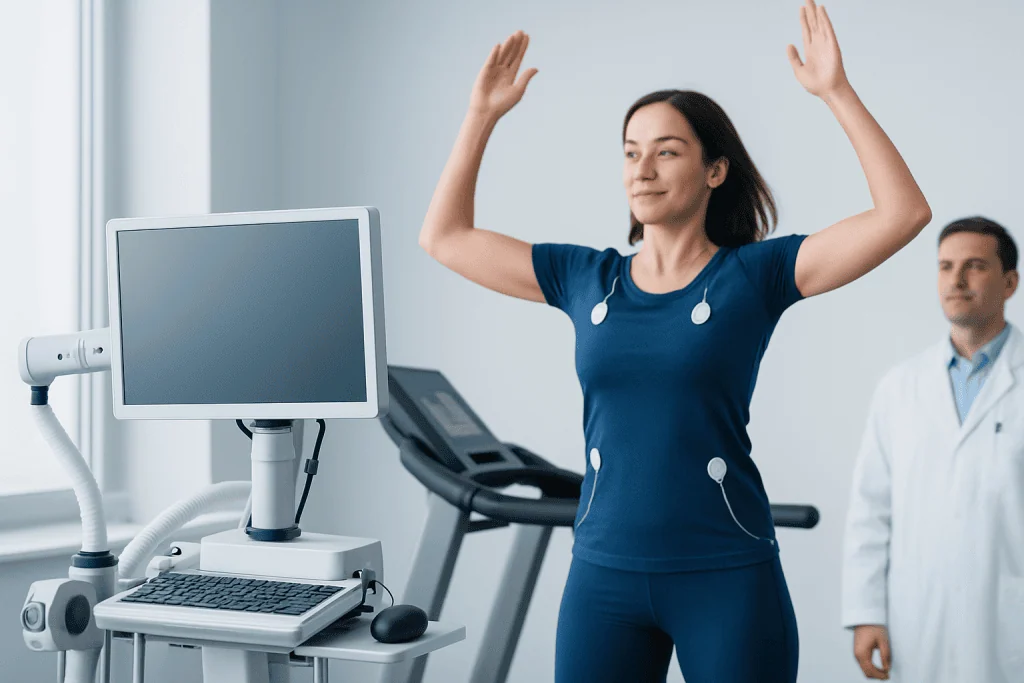
The main benefit of jumping jacks is cardiovascular conditioning. Repeated movement of large muscle groups increases oxygen demand, which causes the heart and lungs to work harder. Over time, regular aerobic exercise may help improve stamina, support heart health, and contribute to better metabolic function. Jumping jacks alone are not a complete fitness plan, but they can be one useful building block.
They also train coordination and movement efficiency. The exercise requires the arms and legs to move in a synchronized pattern while the trunk stays relatively stable. This can help with body awareness and neuromuscular control, especially when performed at a controlled pace with attention to form.
Additional potential benefits include convenience and adaptability. A person can do a short set as part of a warm-up, interval circuit, or indoor exercise session when outdoor activity is not practical. When paired with walking, resistance exercise, and stretching, jumping jacks can support broader weight management and conditioning goals.
- Raises heart rate quickly
- Engages multiple muscle groups at once
- Requires no equipment
- Can be scaled by changing speed, range of motion, or impact
- Fits easily into short exercise breaks
Proper form and common mistakes

To perform a standard jumping jack, the person starts standing upright with feet together and arms at the sides. They then jump the feet out to about shoulder width while lifting the arms overhead, and return to the starting position in one smooth motion. The landing should be light and controlled, with the knees slightly bent rather than locked.
Good form focuses on alignment and shock absorption. The chest stays lifted, the core remains gently engaged, and the knees track in the same direction as the toes during each landing. Soft landings help reduce impact through the ankles, knees, hips, and lower back. Supportive athletic shoes and a stable surface can also improve comfort and control.
Common mistakes include slamming the feet into the floor, collapsing the knees inward, arching the lower back, shrugging the shoulders, or moving too fast to maintain control. People who notice repeated discomfort may benefit from lower-impact alternatives, strength work for the legs and hips, or professional guidance such as physical therapy and rehabilitation to improve movement mechanics.
Risks, limitations, and who should be cautious
Jumping jacks are generally safe for many healthy adults when started gradually, but they do have limitations. Because the exercise is repetitive and impact-based, it may aggravate existing joint or soft-tissue problems. People with a history of knee pain, ankle sprains, plantar heel pain, hip arthritis, or low back pain may find that symptoms worsen with standard jumping versions.
Some people should take extra care before adding this exercise to a routine. This includes those who are new to exercise, have significant overweight, are recovering from illness or surgery, are pregnant or postpartum, or have known heart or lung disease. In these situations, a clinician may recommend a more gradual program or a different type of low-impact aerobic activity.
Symptoms during exercise matter more than the label of the exercise itself. Sharp pain, repeated joint swelling, dizziness, faintness, unusual shortness of breath, palpitations, or chest discomfort are not expected responses and should not be ignored. For people with concerns about the heart, it may be appropriate to discuss exercise planning with a specialist in cardiology before beginning a higher-intensity routine.
How to start safely and modify the exercise
For beginners, the safest approach is usually to start with short sets and modest intensity. A person might begin with 10 to 20 seconds of controlled jumping jacks, followed by rest, and repeat this for a few rounds. As comfort and conditioning improve, the duration or pace can be increased gradually. A warm-up with marching in place, shoulder circles, and gentle leg movements can help prepare the body.
Low-impact versions are often a better first step than full jumping. A common option is the step jack: instead of jumping, one foot steps out to the side while the arms lift, then returns to center, alternating sides. This reduces impact while preserving the arm-leg coordination and aerobic effect. Another approach is to keep the arms lower or move through a smaller range until mobility improves.
People who are rebuilding fitness after inactivity or injury may benefit from a broader exercise plan rather than relying on one movement. This may include walking, cycling, resistance training, and flexibility work. When balance, persistent pain, or weakness are concerns, a supervised program in rehabilitation can help tailor exercise intensity and progression safely.
How they fit into a balanced exercise routine
Jumping jacks work best as part of a larger routine, not as the only form of exercise. They can be used to warm up before strength training, added to interval sessions, or inserted between resistance exercises to keep the heart rate elevated. Their effect depends on the total program: frequency, intensity, recovery, sleep, and nutrition all influence results.
For general health, most people benefit from combining aerobic activity with muscle-strengthening exercise on multiple days each week. Aerobic activity supports heart and lung function, while strength training helps maintain muscle, bone health, posture, and everyday function. Mobility and flexibility training can improve movement quality and may reduce stiffness.
It is also important to view exercise in context. A person does not need to perform high-impact movements to become healthier. Walking, swimming, cycling, rowing, or low-impact aerobics may be equally appropriate or better choices depending on age, goals, symptoms, and medical history. The best exercise is usually one that is safe, sustainable, and performed consistently.
When to seek medical care
Medical advice is recommended if jumping jacks cause persistent joint pain, swelling, repeated ankle rolling, significant back discomfort, or symptoms that do not improve after rest and form correction. A doctor should also evaluate pain that interferes with daily activities, limits walking, or returns every time impact exercise is attempted.
Urgent medical attention is important for chest pain, pressure, fainting, severe shortness of breath, new irregular heartbeat sensations, or sudden severe pain during exercise. These symptoms may have causes unrelated to the exercise itself and deserve prompt assessment.
People with chronic conditions such as heart disease, uncontrolled high blood pressure, significant lung disease, diabetes with complications, or recent surgery should ask a qualified clinician which type of exercise is appropriate. Acibadem International’s multidisciplinary specialists at JCI-accredited hospitals diagnose and treat exercise-limiting musculoskeletal and medical conditions for international patients when a more detailed evaluation is needed.
Frequently asked questions
Are jumping jacks a good exercise?
Yes, jumping jacks can be a useful exercise for cardiovascular fitness, coordination, and general conditioning. They are especially practical because they need no equipment, but they are not ideal for everyone, particularly people with impact-related joint pain.
How many jumping jacks should a beginner do?
A beginner usually does best with short, manageable sets rather than a large target number. Starting with 10 to 20 seconds at a controlled pace, followed by rest, is often more comfortable and safer than pushing to fatigue immediately.
Do jumping jacks help with weight loss?
Jumping jacks can contribute to calorie use and support weight management when included in a regular exercise plan. However, weight loss depends on the overall pattern of activity, nutrition, sleep, stress, and consistency, not one exercise alone.
Are jumping jacks bad for the knees?
They are not automatically bad for the knees, but they can aggravate knee symptoms in some people because of the repeated landing impact. Good form, supportive footwear, gradual progression, and low-impact modifications can reduce strain.
Can older adults do jumping jacks?
Some older adults can do them safely, especially if they already exercise regularly and have good balance and joint comfort. Others may do better with step jacks or other low-impact aerobic movements, depending on their health and mobility.
Should jumping jacks be done before or after a workout?
They are commonly used near the start of a workout as part of a warm-up or in the middle of a circuit for aerobic intensity. Whether they fit best before, during, or after other exercises depends on the person’s goals, fitness level, and tolerance for impact.
References
- World Health Organization
- American Heart Association
- American College of Sports Medicine
- Centers for Disease Control and Prevention
- National Institute of Arthritis and Musculoskeletal and Skin Diseases
This article is for general information only and is not a substitute for professional medical advice. Please consult a qualified doctor about your individual situation.
Joint and spine care in Turkey — expert assessment & treatment
JCI-accredited · board-certified surgeons · reply within 24h
Add us as a Preferred Source to see more of our trusted health content across Google Search, AI Overviews and Discover.
Check your numbers in seconds
BMI, calories, due date, blood pressure and 30+ more clinical calculators — free, instant, doctor-reviewed ranges.

More from the Health Library

Schizoiden — Explained by Medical Evidence, Not Myths

Aquaphor and Tattoo Care: What Patients Need to Know

Blood Sugar After Eating: An Evidence-Based Guide for Patients

Phototherapy: An Evidence-Based Guide for Patients

Normal Heart Rate: A Complete Medical Overview