Kawasaki Disease: Persistent Fever, Rash, and Heart Risks in Children

Kawasaki disease most often affects children under 5 years old, but older children can also develop it. A fever lasting 5 days or more, especially with rash, red eyes, swollen hands or feet, or red cracked lips, needs prompt medical assessment.
Key Takeaways
- Kawasaki disease most often affects children under 5 years old, but older children can also develop it.
- A fever lasting 5 days or more, especially with rash, red eyes, swollen hands or feet, or red cracked lips, needs prompt medical assessment.
- The main concern is inflammation of the coronary arteries, which can usually be reduced with early treatment.
- Treatment commonly includes intravenous immunoglobulin and carefully supervised aspirin therapy in hospital.
- Follow-up with echocardiography and, when needed, pediatric cardiology is important even after the fever improves.
Kawasaki disease is an uncommon childhood illness that causes inflammation in blood vessels and is best treated early. Parents should seek medical care for a child with a persistent fever and symptoms such as rash, red eyes, swollen hands or feet, or changes in the lips and mouth.
Overview
Kawasaki disease is an acute inflammatory condition that mainly affects young children. It causes inflammation in medium-sized blood vessels throughout the body, including the coronary arteries that supply blood to the heart muscle. Although the symptoms can look like an infection at first, Kawasaki disease is not considered contagious and does not spread from one child to another.
The condition is most often seen in children younger than 5 years, but infants, school-age children, and rarely teenagers can be affected. Early recognition is important because timely treatment greatly lowers the chance of coronary artery complications. Many children recover well when the illness is identified and managed promptly.
Kawasaki disease can be stressful for families because the fever may be high and persistent, and the rash or swelling can change quickly. A reassuring point is that doctors are familiar with the pattern of symptoms and use established treatment pathways. The goal is to calm the inflammation, protect the heart, and arrange follow-up until recovery is clear.
Symptoms of Kawasaki Disease
The hallmark symptom is a fever that lasts for at least 5 days and does not settle as expected with routine fever care. The fever is often accompanied by several characteristic signs involving the eyes, mouth, skin, hands, feet, and lymph nodes. Not every child has all features at the same time, which is why repeated medical review may be needed if symptoms continue to evolve.
Common symptoms include:
- Red eyes without thick discharge, often affecting both eyes
- Red, dry, cracked lips or a very red tongue sometimes described as a strawberry tongue
- A widespread rash, which may appear on the trunk, limbs, or diaper area
- Swelling or redness of the hands and feet, followed later by peeling skin around the fingers or toes
- A swollen lymph node in the neck, usually on one side
- Irritability, tiredness, reduced appetite, abdominal pain, vomiting, or diarrhea
Some children have incomplete or atypical Kawasaki disease, meaning they have prolonged fever and only some of the classic signs. This is especially common in infants, who may be at higher risk of delayed diagnosis because symptoms can be subtle. Doctors may still investigate and treat Kawasaki disease when the overall pattern and test results suggest significant inflammation.
Causes and Risk Factors
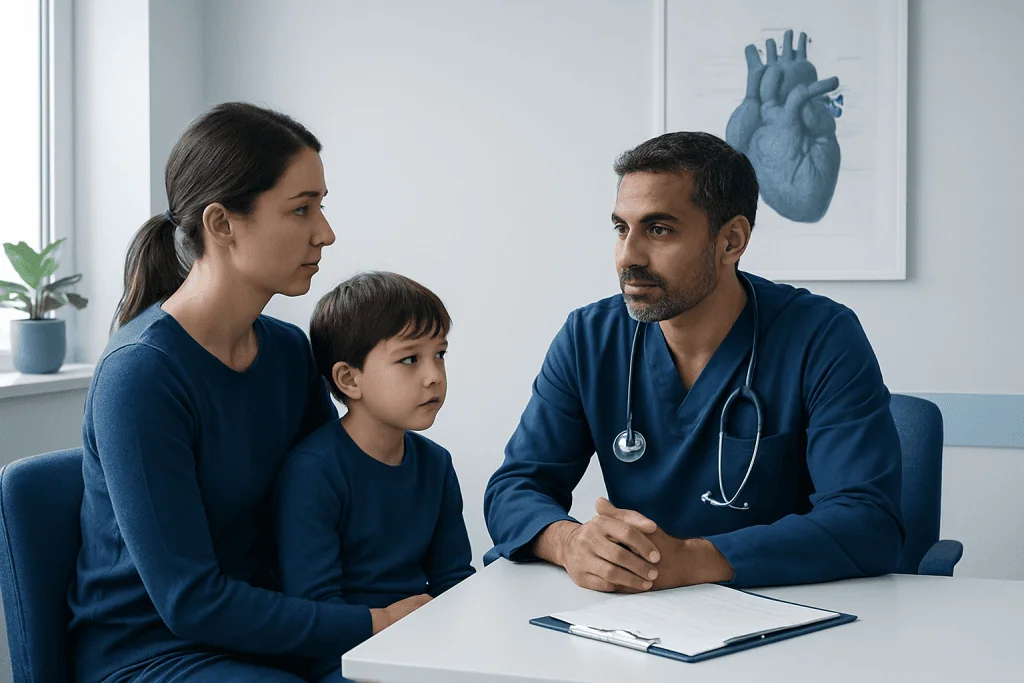
The exact cause of Kawasaki disease is not known. Current evidence suggests that it may occur when the immune system reacts strongly to an environmental or infectious trigger in a child who is genetically susceptible. Researchers have studied viruses, bacteria, seasonal patterns, and immune pathways, but no single cause has been confirmed.
Kawasaki disease is not the result of poor hygiene, diet, vaccination, or anything a parent did or did not do. It is also not typically passed directly between family members. Because the cause remains uncertain, there is no reliable way to predict exactly which child will develop it.
Several factors are associated with higher risk. The condition is more common in children under 5 years of age and occurs more often in boys than girls. It is also reported more frequently in children of East Asian ancestry, although Kawasaki disease can occur in children of any ethnic background and in any country.
Heart Risks and Possible Complications
The main reason Kawasaki disease is treated urgently is the risk of inflammation in the coronary arteries. If these arteries become weakened or widened, a coronary artery aneurysm can develop. This does not happen in every child, and early treatment significantly reduces the risk, but careful heart monitoring is essential.
Other heart-related effects can include inflammation of the heart muscle, heart lining, or heart valves. These problems are often temporary, especially when treatment begins promptly, but they need medical follow-up. An echocardiogram helps doctors assess the coronary arteries and overall heart function during and after the illness.
Long-term care depends on whether the coronary arteries remain normal or show changes. Children with normal follow-up heart tests may eventually return to usual activities with routine pediatric care. Children with coronary artery enlargement or aneurysms may need ongoing pediatric cardiology review, activity advice, and medicines to reduce clotting risk, depending on the severity.
Diagnosis
There is no single test that proves Kawasaki disease. Diagnosis is based on the combination of persistent fever, physical findings, blood and urine test results, and heart imaging. Doctors also consider and rule out other illnesses that can look similar, such as viral infections, scarlet fever, measles, drug reactions, toxic shock syndrome, and other inflammatory conditions.
Blood tests often show inflammation, such as raised inflammatory markers, and may show changes in white blood cells, platelets, liver enzymes, or albumin levels. A urine test may show inflammation without a typical urinary tract infection. These results support the diagnosis but must be interpreted together with the child’s symptoms and examination.
An echocardiogram is a key part of evaluation. It uses ultrasound to look at the heart and coronary arteries and does not involve radiation. A normal first echocardiogram does not always exclude Kawasaki disease, because coronary changes may appear later, so repeat imaging is commonly arranged according to clinical guidelines.
Treatment Options
Kawasaki disease is usually treated in hospital so the child can be monitored closely. The standard first-line treatment is intravenous immunoglobulin, often called IVIG, which is given through a vein. IVIG helps reduce blood vessel inflammation and is most effective when given early, ideally within the first 10 days of illness, although treatment may still be needed later if inflammation continues.
Aspirin is also commonly used in Kawasaki disease, but it must be given only under medical supervision. In most childhood illnesses aspirin is avoided because of the risk of Reye syndrome, but Kawasaki disease is a special situation where doctors may use it carefully for its anti-inflammatory and anti-platelet effects. Parents should not start, stop, or adjust aspirin without the child’s doctor.
Some children do not respond fully to the first IVIG treatment or have higher-risk features. In these cases, doctors may consider additional therapies such as a second IVIG infusion, corticosteroids, or other immune-modulating medicines. The choice depends on the child’s age, severity, test results, heart findings, and local specialist protocols.
After IVIG, certain live vaccines may need to be postponed because IVIG can reduce vaccine effectiveness for a period of time. Families should ask the pediatrician for an updated vaccine plan before the child receives routine immunizations. Follow-up appointments are also important to confirm that fever, inflammation, and heart findings have resolved or are improving.
Recovery, Self-care, and Follow-up
At home, children recovering from Kawasaki disease need rest, fluids, and close observation as advised by their medical team. Appetite and energy may take time to return after the fever settles. Peeling skin around the fingers and toes can occur during recovery and is usually part of the healing phase, but painful swelling, recurrent fever, or new symptoms should be reported.
Parents should give medicines exactly as prescribed and avoid adding over-the-counter anti-inflammatory medicines unless the doctor approves. If the child is taking aspirin, the care team may discuss precautions during chickenpox or influenza exposure and may recommend seasonal flu vaccination when appropriate. Any signs of unusual bruising, bleeding, severe stomach pain, or medication reaction should be reviewed promptly.
Follow-up echocardiograms are typically scheduled after the acute illness to monitor the coronary arteries. The timing varies depending on the child’s condition and initial results. Families should keep all follow-up visits, even if the child appears completely well, because heart changes can be silent.
When to See a Doctor
A child should be seen by a doctor promptly if they have a fever lasting 5 days or more, especially when it is accompanied by rash, red eyes, cracked lips, swollen hands or feet, neck swelling, or unusual irritability. Infants with persistent fever should be assessed early, even if they do not show all typical signs. Parents should seek urgent care sooner if the child is very drowsy, has trouble breathing, shows signs of dehydration, or appears seriously unwell.
Medical review is also needed if a child previously treated for Kawasaki disease develops a new fever, chest discomfort, fainting, unexplained shortness of breath, or reduced exercise tolerance. These symptoms do not always mean a heart problem is present, but they deserve careful assessment, particularly in children with known coronary artery changes.
For international families, Acibadem International provides access to multidisciplinary pediatric and cardiology specialists in JCI-accredited hospitals for diagnosis, treatment, and follow-up of conditions such as Kawasaki disease. Families should always follow the advice of a qualified doctor who can evaluate the child in person and tailor care to the child’s needs.
Frequently asked questions
Is Kawasaki disease contagious?
Kawasaki disease is not considered contagious. It does not spread from child to child like a cold or flu. The exact cause is unknown, but it is thought to involve an immune reaction in susceptible children.
How long does fever last in Kawasaki disease?
Without treatment, fever can last for many days and sometimes longer. With appropriate treatment, many children improve within 24 to 48 hours, although medical monitoring remains important. A fever that returns after treatment should be reported to the doctor.
Can Kawasaki disease affect the heart permanently?
Most children recover without lasting heart problems, especially when treated early. The main concern is coronary artery inflammation or aneurysm formation. Children with coronary changes may need long-term follow-up with a pediatric cardiologist.
What is incomplete Kawasaki disease?
Incomplete Kawasaki disease means a child has persistent fever and some, but not all, of the classic symptoms. It is more common in infants and can be harder to recognize. Doctors may use blood tests, urine tests, and echocardiography to support the diagnosis.
Why is aspirin used if children usually should not take it?
Aspirin is generally avoided in children, but Kawasaki disease is one of the important exceptions where doctors may prescribe it under close supervision. It can help reduce inflammation and decrease platelet stickiness. Parents should never give aspirin for suspected Kawasaki disease unless a doctor specifically instructs them to do so.
Can Kawasaki disease happen again?
Recurrence is possible but uncommon. Families should still mention the previous diagnosis whenever the child is seen for a prolonged fever or concerning symptoms. Past Kawasaki disease also makes follow-up records, including echocardiogram results, important for future care.
References
- American Heart Association
- Centers for Disease Control and Prevention
- American Academy of Pediatrics
- National Health Service
- Mayo Clinic
This article is for general information only and is not a substitute for professional medical advice. Please consult a qualified doctor about your individual situation.
Kawasaki Disease in Turkey — costs, top hospitals & a free quote
JCI-accredited · board-certified surgeons · reply within 24h
Add us as a Preferred Source to see more of our trusted health content across Google Search, AI Overviews and Discover.

Pediatrics
Complete healthcare for infants, children and adolescents across all sub-specialties.
232 specialists in this unit