Kidney Stent: What Patients Need to Know

A kidney stent is placed in the ureter, not inside the kidney itself. It helps urine drain when there is a blockage, swelling, or a need for healing after a urologic procedure.
Key Takeaways
- A kidney stent is placed in the ureter, not inside the kidney itself.
- It helps urine drain when there is a blockage, swelling, or a need for healing after a urologic procedure.
- Common short-term effects include urinary urgency, mild blood in the urine, and flank or bladder discomfort.
- Most kidney stents are temporary and need planned follow-up for removal or replacement.
- Severe pain, fever, chills, or inability to pass urine should be assessed promptly by a doctor.
A kidney stent, also called a ureteral stent, is a small flexible tube that keeps urine flowing from the kidney to the bladder when the normal pathway is narrowed, blocked, or healing after treatment. Most stents are temporary, and while they can cause some discomfort, they are commonly used to protect kidney function and relieve obstruction.
What is a kidney stent?
A kidney stent usually refers to a ureteral stent: a thin, soft, flexible tube placed inside the ureter, the tube that carries urine from the kidney to the bladder. Its job is simple but important: to keep urine moving when the ureter is blocked, narrowed, irritated, or at risk of swelling shut after treatment. This can protect the kidney, reduce pressure, and support healing.
Despite the name, the device is generally not placed within the kidney tissue. One end sits near the kidney and the other in the bladder, often with small curls at each end to help keep it in position. Patients may hear it called a “double-J stent” because of these curled ends.
Kidney stents are often temporary. They may stay in place for days, weeks, or sometimes longer depending on the reason for placement. Because timing matters, patients are usually given a clear plan for follow-up, removal, or exchange. Forgetting a stent can lead to complications, so scheduled review is an important part of care.
Why a kidney stent may be needed
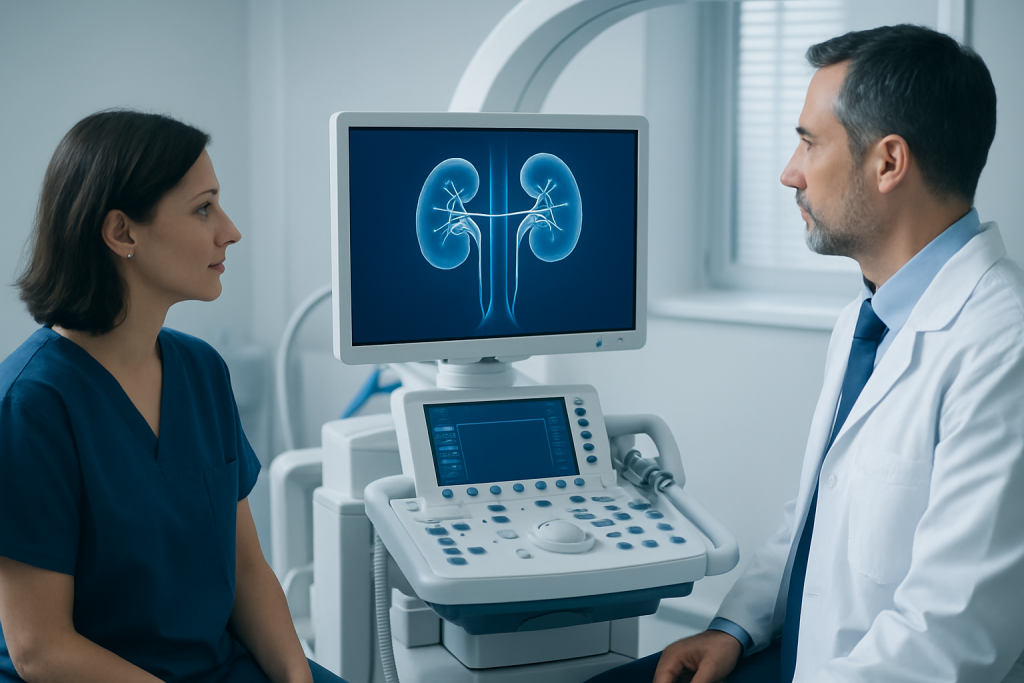
A kidney stent is used when urine cannot drain normally or when doctors want to prevent blockage while the urinary tract heals. One of the most common reasons is a kidney stone that is blocking the ureter. In that setting, the stent can relieve obstruction and may be used before or after treatment such as kidney stone treatment.
Other reasons include swelling after a stone procedure, narrowing of the ureter, scarring, infection with obstruction, or pressure on the ureter from nearby conditions. Some patients need a stent after endoscopic treatment, surgery, or imaging procedures involving the urinary tract. It may also help when a doctor needs to bypass a temporary blockage while the cause is being investigated.
Examples of situations where a stent may be recommended include:
- Blocked urine flow from a stone
- Ureter narrowing or scarring
- Swelling after a urologic procedure
- Obstruction related to infection that needs urgent drainage
- External pressure on the ureter from nearby tissue or disease
When a stent is placed because of a stone, blood in the urine or discomfort afterward does not necessarily mean the treatment has failed. In many cases, symptoms reflect the presence of the stent itself rather than a new problem, though ongoing or severe symptoms should still be reviewed by a clinician.
How the procedure is done

Kidney stent placement is usually done by a urologist. In many cases, the stent is inserted through the natural urinary passage using a small camera passed through the urethra and bladder into the ureter, so there is often no external incision. The procedure may be performed under local, regional, or general anesthesia depending on the clinical situation and the planned treatment.
The doctor guides the stent into the ureter so that one end rests near the kidney and the other in the bladder. Imaging such as X-ray may be used to confirm the correct position. Some stents have a string attached for easier removal in selected cases, while others are removed later with a short cystoscopic procedure.
If there is infection together with obstruction, restoring drainage may be a priority before definitive stone or narrowing treatment is carried out. In other situations, the stent is placed at the end of a planned procedure to reduce swelling-related blockage. Patients who are also being evaluated for conditions such as kidney stones or recurrent infections may have additional tests before or after placement.
What symptoms are common with a kidney stent?
Many people notice some symptoms while the stent is in place. These can include urinary urgency, needing to pass urine more often, a burning feeling with urination, mild blood in the urine, bladder pressure, and discomfort in the side or lower abdomen. Some patients also feel pain in the flank during or after urination because urine can briefly move backward toward the kidney when the bladder squeezes.
These effects are often uncomfortable but manageable, and they do not automatically mean there is a complication. Symptoms can vary from very mild to more noticeable depending on the individual, the reason for the stent, and how long it needs to stay in place. Drinking fluids as advised and following the doctor’s instructions may help reduce irritation.
Patients should know that certain symptoms can overlap with problems such as urinary tract infection. Because of this, worsening pain, fever, chills, foul-smelling urine, or marked difficulty passing urine should not be ignored. A clinician may recommend urine testing or imaging if symptoms are more than expected.
- Common: urgency, frequency, mild blood in urine, flank discomfort
- Less common but important: fever, severe pain, inability to urinate, heavy bleeding
Recovery, daily life, and self-care with a stent
Recovery after kidney stent placement is usually straightforward, but the experience can differ from person to person. Many patients go home the same day and return to light daily activities soon afterward. Tiredness, mild discomfort, and urinary symptoms may be more noticeable in the first few days, then settle gradually.
Practical self-care measures may help. Patients are often advised to drink water regularly unless they have been told to limit fluids for another medical reason. Resting when symptoms flare, avoiding heavy exertion if it worsens pain, and taking prescribed medicines exactly as directed can make the adjustment easier. Some people find that discomfort increases after vigorous activity or at the end of urination.
Because a stent is not meant to stay in forever unless specifically planned, keeping the follow-up appointment is essential. The doctor will explain whether the stent needs removal, replacement, or further treatment. If the stent was placed around the time of ureteroscopy, the follow-up visit may also include review of stone clearance and next steps to prevent recurrence.
Questions patients may want to clarify before going home include how long the stent will stay in place, what symptoms are expected, when driving or exercise can be resumed, and whom to contact if pain or fever develops. Clear instructions help reduce anxiety and support a safer recovery.
Diagnosis, monitoring, and related treatment options
A kidney stent itself is not a diagnosis; it is a tool used to treat or prevent urinary obstruction. To understand why the stent is needed, doctors may use urine tests, blood tests, ultrasound, CT, X-ray, or direct visualization with cystoscopy. These tests help identify stones, narrowing, infection, swelling, or other causes of impaired drainage.
Monitoring after placement depends on the underlying problem. Imaging may be repeated to confirm that the kidney is draining well and that the stent remains in position. If symptoms are more severe than expected, the care team may assess for infection, stent migration, persistent obstruction, or encrustation, especially if the stent has been in place for a longer period.
Further treatment may be needed after urgent drainage is achieved. For example, a patient with a blocked stone may later need definitive stone management. A person with a ureter narrowing may require dilation, reconstruction, or another urologic intervention. In selected cases, a broader evaluation of the urinary system with urology care helps guide long-term management and prevention.
Near the end of the treatment pathway, removal is usually simple and planned. Some stents are removed in clinic, while others require a brief procedure. At centers such as Acibadem International, multidisciplinary specialists in JCI-accredited hospitals diagnose and treat urinary conditions for international patients, including those who need stent placement and follow-up.
When to seek medical care
Patients should contact a doctor promptly if they develop warning signs that could point to infection, significant blockage, or another complication. A temperature rise with chills, severe or worsening pain, vomiting that prevents fluid intake, or inability to pass urine needs medical assessment. Heavy bleeding, large clots, or symptoms that suddenly become much worse also deserve attention.
It is also important to seek medical advice if the stent has been in place longer than planned or if a follow-up appointment has been missed. Stents that remain too long can become difficult to remove and may lead to irritation or mineral build-up. Early review is safer than waiting until symptoms become more troublesome.
In general, patients should not hesitate to ask for help if they are unsure whether a symptom is normal. Personalized advice from the treating team is the best guide, because recommendations can differ based on the reason for the stent, other health conditions, and any procedure performed at the same time.
Frequently asked questions
Is a kidney stent the same as a ureteral stent?
Yes. In everyday use, “kidney stent” usually means a ureteral stent, which sits in the ureter to help urine flow from the kidney to the bladder. The term can be confusing because the device supports kidney drainage but is placed in the urinary tube rather than in the kidney tissue itself.
How long does a kidney stent stay in place?
The timing depends on why it was placed. Some stents remain for only a few days, while others stay for several weeks or longer if ongoing drainage is needed. The treating doctor should give a clear plan for removal or replacement, and that follow-up should not be missed.
Does a kidney stent hurt?
A stent can cause discomfort, but the severity varies. Common sensations include urinary urgency, burning with urination, bladder pressure, and pain in the side, especially after passing urine. These symptoms are often manageable, but severe pain should be assessed by a clinician.
Can someone exercise or work with a kidney stent?
Many people can return to light daily activities relatively quickly. However, strenuous exercise or heavy lifting may worsen discomfort in some patients, especially in the first days after placement. It is best to follow the treating doctor’s advice based on the underlying condition and the type of work involved.
What are the warning signs of a kidney stent problem?
Fever, chills, severe or increasing pain, heavy bleeding, vomiting, or being unable to urinate are important warning signs. These symptoms can suggest infection, blockage, or another complication and should be reviewed promptly by a medical professional.
How is a kidney stent removed?
Removal is often quick and planned. Some stents are taken out in a clinic using a small camera through the bladder, while others may have a string that allows simple removal in selected cases. The method depends on the type of stent and the reason it was used.
References
- National Institute of Diabetes and Digestive and Kidney Diseases
- American Urological Association
- European Association of Urology
- National Health Service
- Mayo Clinic
This article is for general information only and is not a substitute for professional medical advice. Please consult a qualified doctor about your individual situation.
Heart care in Turkey — expert evaluation and treatment
JCI-accredited · board-certified surgeons · reply within 24h
Add us as a Preferred Source to see more of our trusted health content across Google Search, AI Overviews and Discover.

More from the Health Library

Bilberry Myrtille: An Evidence-Based Guide for Patients

Copper Cup: An Evidence-Based Guide for Patients

Nervous System: A Complete Medical Overview

Terry’s Nails: What Patients Need to Know

Fainting Spells: What Patients Need to Know