Nervous System: A Complete Medical Overview

The nervous system includes the brain, spinal cord, and peripheral nerves. It controls both conscious actions, such as movement, and automatic functions, such as digestion and blood pressure.
Key Takeaways
- The nervous system includes the brain, spinal cord, and peripheral nerves.
- It controls both conscious actions, such as movement, and automatic functions, such as digestion and blood pressure.
- Symptoms such as weakness, numbness, severe headache, seizures, or changes in speech need prompt medical assessment.
- Neurological conditions can be diagnosed with a medical history, examination, imaging, and nerve-related tests.
- Early evaluation may improve treatment options and help protect long-term function.
The nervous system is the body’s communication network. It receives information, processes it, and sends signals that control movement, sensation, thinking, mood, and vital automatic functions such as breathing and heartbeat.
Overview: what the nervous system does
The nervous system is the body’s control and communication system. It gathers information from inside and outside the body, interprets that information, and sends signals that allow a person to move, feel, think, remember, and respond. It also helps regulate automatic functions such as breathing, heart rate, temperature control, and digestion.
Doctors usually divide the nervous system into two major parts. The central nervous system includes the brain and spinal cord. The peripheral nervous system includes the nerves that travel from the brain and spinal cord to the rest of the body, carrying messages to muscles, skin, organs, and glands.
Another useful way to understand the nervous system is by function. The somatic nervous system supports voluntary actions such as walking, speaking, and using the hands. The autonomic nervous system manages involuntary functions. This autonomic part has branches that help the body respond to stress and activity, and others that support rest, recovery, and digestion.
Because the nervous system reaches every part of the body, problems can cause a wide range of symptoms. These may involve movement, sensation, balance, vision, speech, bladder control, mood, memory, or consciousness. For that reason, neurological assessment often looks at the whole person rather than one symptom in isolation.
Main parts of the nervous system
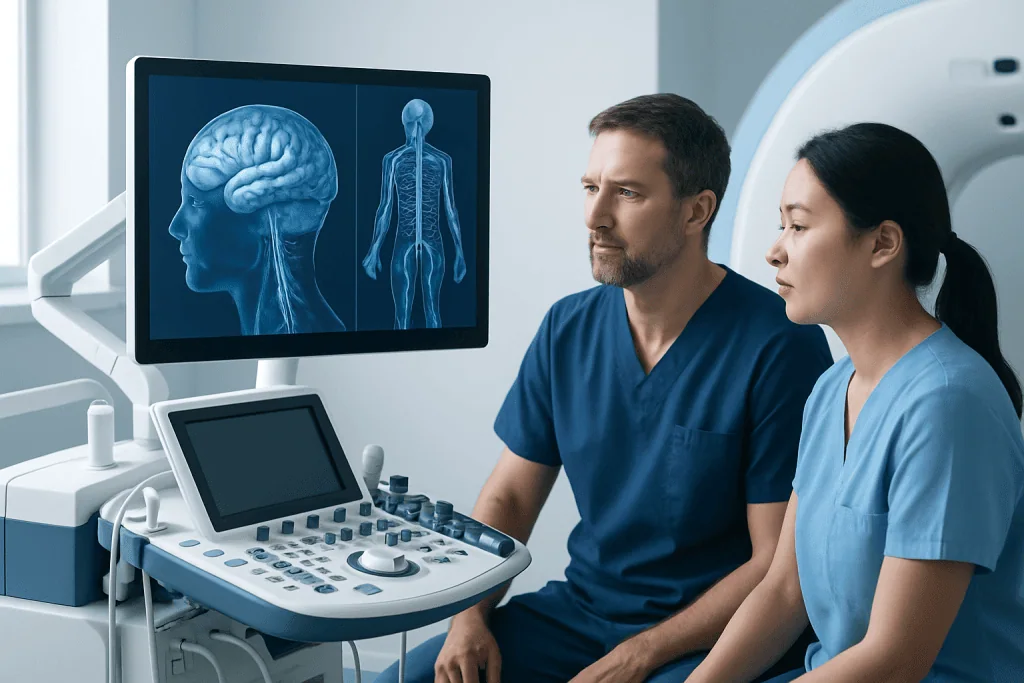
The brain is the command center. Different regions have specialized roles, but they work together closely. The cerebrum is involved in thought, memory, language, sensation, and voluntary movement. The cerebellum helps coordinate balance and precision. The brainstem supports essential functions such as breathing, swallowing, alertness, and heart regulation.
The spinal cord is a long bundle of nerve tissue protected by the spine. It carries messages between the brain and body and also coordinates some reflexes. Damage or pressure affecting the spinal cord can interfere with movement, sensation, and organ control below the level of the injury or disease.
Peripheral nerves branch widely throughout the body. Sensory nerves carry information such as touch, pain, temperature, and body position toward the brain. Motor nerves carry signals outward to muscles. Some peripheral nerves also help regulate sweating, blood vessel tone, and internal organ activity.
Cells called neurons transmit electrical and chemical messages, while support cells help nourish, protect, and insulate them. A fatty covering called myelin helps many nerve signals travel quickly and efficiently. When nerves, myelin, or supporting structures are damaged, communication can slow down or become disrupted, leading to neurological symptoms.
How nervous system problems may appear

Nervous system disorders do not all look the same. Some begin suddenly, such as symptoms related to stroke, while others develop gradually over time. Signs depend on which part of the system is affected and how severe the disruption is.
Common neurological symptoms include headache, dizziness, fainting, numbness, tingling, weakness, tremor, difficulty walking, poor balance, memory changes, confusion, visual disturbance, or speech problems. Some people notice muscle cramps, facial drooping, swallowing difficulty, bladder changes, or altered sensitivity to pain or temperature.
Seizures may occur when abnormal electrical activity affects the brain. Symptoms can range from brief staring episodes to convulsions or loss of awareness. Conditions that affect peripheral nerves may cause burning pain, reduced sensation, clumsiness, or weakness in the hands and feet. Disorders involving the spinal cord can lead to limb weakness, stiffness, gait difficulty, or bowel and bladder symptoms.
Not every symptom means there is a serious disease, but persistent, unexplained, or worsening neurological symptoms deserve attention. A careful medical assessment helps distinguish between common benign causes and conditions that need targeted treatment.
Common causes and types of nervous system disorders
Nervous system problems can result from many different processes. Blood flow problems can deprive the brain or spinal cord of oxygen, as in a stroke. Infections may affect the brain, spinal cord, or surrounding tissues. Autoimmune diseases can damage nerves or myelin. Degenerative conditions may slowly impair cells involved in memory, movement, or coordination.
Other causes include trauma, tumors, metabolic imbalances, vitamin deficiencies, genetic disorders, toxin exposure, and complications of systemic illnesses such as diabetes or kidney disease. Compression of nerves from spinal wear-and-tear or disc problems can also cause pain, weakness, or sensory changes. Some conditions affect the junction between nerves and muscles, while others primarily affect the muscles themselves.
Examples of neurological conditions include Parkinson’s disease, epilepsy, neuropathy, multiple sclerosis, migraine, dementia, spinal cord disorders, and nerve entrapment syndromes. Some are temporary and treatable, while others are chronic conditions that can often be managed to reduce symptoms and protect function.
Risk factors vary by condition but may include older age, high blood pressure, diabetes, smoking, head injury, infections, family history, obesity, poor sleep, and inactivity. For children and younger adults, developmental, inherited, inflammatory, or injury-related causes may play a larger role. A doctor considers age, symptom pattern, and medical history to guide evaluation.
How doctors evaluate the nervous system
Diagnosis starts with a detailed medical history. A doctor asks when symptoms began, whether they came on suddenly or gradually, what makes them better or worse, and whether there are related issues such as fever, headache, back pain, injury, or medication use. Family history and past health conditions can also offer important clues.
The neurological examination looks at mental status, speech, vision, eye movements, facial function, strength, reflexes, coordination, sensation, and walking. This exam helps identify which part of the nervous system may be involved. For example, findings in one limb may point to a peripheral nerve problem, while problems affecting speech and one side of the body may suggest a brain-related issue.
Tests are chosen based on the suspected cause. Imaging such as MRI or CT can show the brain, spine, and surrounding structures. Blood tests may look for infection, inflammation, vitamin deficiency, autoimmune markers, or metabolic problems. Electrical studies such as nerve conduction testing and electromyography can help assess peripheral nerve and muscle function. In some situations, electroencephalography is used to evaluate seizures or altered consciousness.
Some patients may need more specialized studies, such as spinal fluid analysis, vascular imaging, sleep studies, neuropsychological testing, or biopsy. The goal is not simply to name a condition, but to identify whether treatment is needed urgently, whether function is at risk, and what plan is most appropriate for the individual.
Treatment options and long-term care
Treatment depends entirely on the underlying cause. Infections may require antimicrobial treatment. Autoimmune or inflammatory diseases may be managed with medicines that reduce immune activity. Seizure disorders may need anti-seizure medication. Headache disorders may respond to lifestyle changes, trigger management, and preventive or symptom-relief treatment.
Some structural problems call for procedural or surgical care. This may include treatment for brain or spinal tumors, bleeding, pressure on nerves, or significant spinal instability. In selected cases, modern options such as neurosurgery or Gamma Knife radiosurgery are considered as part of a broader neurological treatment plan.
Rehabilitation is often a major part of recovery. Physical therapy can support strength, balance, and mobility. Occupational therapy helps with daily activities and hand function. Speech and language therapy may assist with communication or swallowing. Pain management, sleep support, and psychological care can also improve quality of life for people living with chronic neurological conditions.
Long-term care usually focuses on symptom control, maintaining independence, and monitoring for change. Follow-up allows doctors to adjust treatment over time and respond to new needs. Near the end of the care pathway, some international patients may choose centers such as Acibadem International, where multidisciplinary specialists and JCI-accredited hospitals evaluate and treat neurological conditions.
Protecting nervous system health
Not all neurological diseases can be prevented, but healthy habits can lower the risk of some common problems and support brain and nerve function over time. Controlling blood pressure, blood sugar, and cholesterol is important, especially for reducing stroke risk. Avoiding tobacco and limiting alcohol can also help protect blood vessels and nerves.
Regular physical activity supports circulation, balance, sleep, and overall brain health. A balanced diet with enough vitamins, minerals, and healthy fats helps the nervous system function properly. Good sleep, stress management, hearing protection in loud environments, and using helmets and seatbelts can reduce avoidable injury and strain.
People with diabetes or other chronic illnesses benefit from regular follow-up because these conditions can affect nerves gradually. Early attention to numbness, foot problems, visual changes, or balance issues may help prevent complications. Medication reviews are also useful, since some drugs can affect alertness, coordination, or nerve health.
For older adults, staying mentally active and socially engaged may support cognitive well-being. For everyone, prompt treatment of infections, safe management of chronic disease, and awareness of warning signs can make a meaningful difference in nervous system health.
When to seek medical care
Urgent medical care is needed for sudden weakness, facial drooping, trouble speaking, new confusion, sudden vision loss, severe unexplained headache, seizure, loss of consciousness, or sudden difficulty walking. These symptoms can signal a neurological emergency and should not be ignored.
Medical assessment is also important for persistent numbness, tingling, balance problems, repeated falls, worsening headaches, tremor, memory changes, or weakness that develops over days to weeks. Back or neck pain with loss of bladder or bowel control, or rapidly progressing limb weakness, also needs prompt evaluation.
If symptoms are mild but recurring, it is still reasonable to arrange a routine visit with a qualified doctor. Keeping a symptom diary, noting when symptoms begin and what happens before them, can help guide diagnosis. Early evaluation often improves clarity, reduces uncertainty, and supports timely treatment when needed.
Frequently asked questions
What is the nervous system in simple terms?
The nervous system is the body’s messaging network. It allows the brain, spinal cord, and nerves to communicate so the body can move, sense, think, and control automatic functions like breathing and digestion.
What are the two main parts of the nervous system?
The two main parts are the central nervous system and the peripheral nervous system. The central nervous system includes the brain and spinal cord, while the peripheral nervous system includes the nerves that connect the central system to the rest of the body.
What symptoms can suggest a nervous system problem?
Possible symptoms include numbness, weakness, tremor, dizziness, severe headache, balance trouble, seizures, memory changes, speech difficulty, or visual disturbance. Symptoms vary depending on which part of the nervous system is affected.
Can nervous system disorders be treated?
Many nervous system disorders can be treated or managed, although the best approach depends on the cause. Treatment may involve medication, rehabilitation, lifestyle measures, monitoring, or in some cases surgery or other procedures.
How do doctors test the nervous system?
Doctors begin with a medical history and neurological examination. Depending on the findings, they may use imaging, blood tests, nerve studies, electroencephalography, or other specialized tests to identify the cause.
When should someone worry about neurological symptoms?
Sudden symptoms such as weakness on one side, trouble speaking, a seizure, severe headache, or loss of consciousness require urgent medical care. Persistent or worsening numbness, weakness, memory changes, or balance problems should also be evaluated by a doctor.
References
- World Health Organization
- National Institute of Neurological Disorders and Stroke
- MedlinePlus
- Centers for Disease Control and Prevention
- Mayo Clinic
This article is for general information only and is not a substitute for professional medical advice. Please consult a qualified doctor about your individual situation.
Joint and spine care in Turkey — expert assessment & treatment
JCI-accredited · board-certified surgeons · reply within 24h
Add us as a Preferred Source to see more of our trusted health content across Google Search, AI Overviews and Discover.
Check your numbers in seconds
BMI, calories, due date, blood pressure and 30+ more clinical calculators — free, instant, doctor-reviewed ranges.