Kidney Stones: How to Lower Your Risk and Spot Early Warning Signs

Kidney stones form when minerals and salts become concentrated and crystallize in the urine. Common warning signs include sharp pain in the side or back, nausea, painful urination, and blood in the urine.
Key Takeaways
- Kidney stones form when minerals and salts become concentrated and crystallize in the urine.
- Common warning signs include sharp pain in the side or back, nausea, painful urination, and blood in the urine.
- Drinking enough fluids is one of the most important ways to help prevent kidney stones.
- Diet, family history, certain medical conditions, and some medicines can increase risk.
- A doctor may use urine tests, blood tests, and imaging to confirm a kidney stone and guide treatment.
- Urgent medical attention is needed if stone symptoms occur with fever, vomiting, or difficulty passing urine.
Kidney stones are hard mineral deposits that form in the urinary tract and can cause sudden, severe pain when they move. Many people can lower their risk through daily habits, and early recognition of symptoms can help them get timely care.
Overview
Kidney stones are hard deposits made of minerals and salts that form in the kidneys or elsewhere in the urinary tract. They develop when urine becomes too concentrated, allowing substances such as calcium, oxalate, or uric acid to crystallize and stick together. Some stones stay small and pass without being noticed, while others grow larger and cause symptoms when they move into the ureter, the tube that carries urine from the kidney to the bladder.
Although kidney stones can be very painful, they are common and often manageable. Treatment depends on the stone’s size, location, and type, as well as the person’s symptoms and overall health. Preventing another stone is an important part of care, especially for people who have had one before.
There are several types of kidney stones. The most common are calcium stones, often made of calcium oxalate. Other types include uric acid stones, struvite stones linked to urinary infections, and cystine stones, which are associated with a rare inherited condition. Knowing the stone type can help doctors recommend the most effective prevention plan.
Early Warning Signs and Symptoms

Kidney stones may not cause symptoms until they begin to move. The classic symptom is sudden, intense pain in the side, back, lower abdomen, or groin. The pain may come in waves, change location, and vary in intensity as the stone travels through the urinary tract.
Other early warning signs can include pain or burning during urination, needing to urinate more often, passing only small amounts of urine, or noticing that the urine looks pink, red, or brown from blood. Some people also feel nauseated or vomit because of the body’s response to severe pain.
If a stone blocks urine flow or is linked with infection, symptoms can become more serious. Fever, chills, cloudy or foul-smelling urine, and worsening pain can suggest an urgent problem. These signs should not be ignored, because a blocked and infected urinary tract needs prompt medical attention.
- Sharp pain in the side, back, abdomen, or groin
- Blood in the urine
- Painful or frequent urination
- Nausea and vomiting
- Cloudy or foul-smelling urine
- Fever or chills, which may indicate infection
What Causes Kidney Stones and Who Is at Risk?
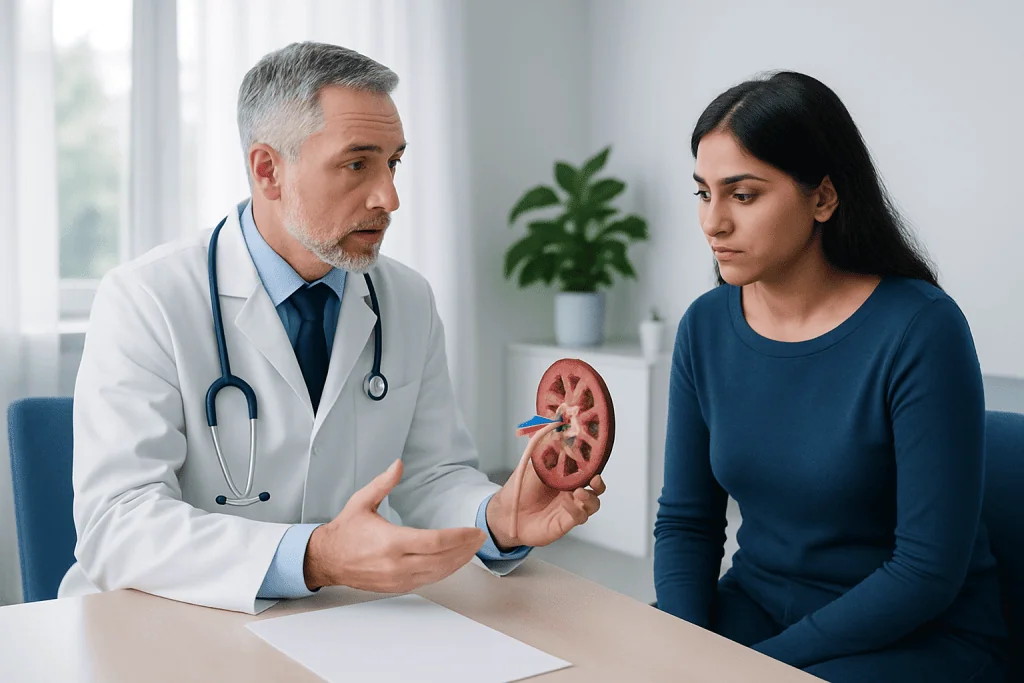
Kidney stones form when the balance of water, minerals, and other substances in urine changes. If there is too little fluid and too much stone-forming material, crystals can form and grow. This process does not always happen for a single reason. Often, several factors work together.
Not drinking enough fluids is a major risk factor, especially in hot climates or in people who sweat heavily. Diet can also matter. Depending on the stone type, high salt intake, too much animal protein, or eating patterns that raise oxalate or uric acid levels may contribute. At the same time, cutting out all calcium is usually not recommended, because normal dietary calcium can actually help reduce absorption of oxalate in the gut.
Some people are more likely to develop stones because of family history, obesity, digestive disorders, recurrent urinary tract infections, or medical conditions such as gout, hyperparathyroidism, and certain metabolic disorders. Some medicines and supplements can also increase stone risk in susceptible individuals. People who have had one stone are more likely to have another, which is why prevention is so important. In some cases, kidney stones may also be related to other urologic conditions such as kidney conditions or structural urinary problems, though stones themselves are usually a separate issue.
How Kidney Stones Are Diagnosed
Doctors usually diagnose kidney stones by combining a person’s symptoms, medical history, physical examination, and tests. Because pain from a kidney stone can mimic other problems, careful evaluation is important. A clinician will often ask when the pain started, whether there is blood in the urine, and whether there has been fever, vomiting, or previous stones.
Urine tests can look for blood, crystals, infection, and signs of dehydration. Blood tests may help assess kidney function and measure levels of substances related to stone formation, such as calcium or uric acid. If a stone is passed, collecting it for analysis can provide useful information about its composition.
Imaging is often used to confirm the diagnosis and locate the stone. Depending on the situation, this may include ultrasound or computed tomography. Imaging can show whether the stone is causing obstruction and help guide treatment decisions. In people with repeated stones, a more detailed metabolic evaluation may be recommended to better understand why they are forming.
Treatment Options
Treatment depends on the size of the stone, its location, the level of pain, and whether there are complications such as infection or obstruction. Many small stones pass on their own with time, fluids, pain relief, and close follow-up. Doctors may also suggest medication to help relax the ureter and make passage easier in selected cases.
Larger stones, stones causing severe symptoms, or stones that do not pass may need a procedure. Common options include shock wave treatment to break stones into smaller pieces, endoscopic procedures using a small scope through the urinary tract, or surgery for more complex cases. Depending on the situation, care may involve urology treatment or minimally invasive kidney stone treatment.
If there is a urinary infection with blockage, urgent treatment is needed to drain the urine and control the infection. After the immediate problem is managed, the next step is to reduce the chance of recurrence. This may include targeted dietary changes, medicines for certain stone types, or evaluation for related issues such as kidney care when kidney function or metabolic factors need closer review.
How to Lower the Risk of Kidney Stones
The most effective prevention step for many people is drinking enough fluids throughout the day. Good hydration helps dilute the urine, making it harder for crystals to form. Water is usually the best choice. The right amount varies from person to person, but the general goal is to keep urine light in color unless a doctor advises fluid restriction for another health reason.
Dietary prevention depends partly on the type of stone, but some general measures help many people. Reducing excess salt can lower calcium in the urine. Eating a balanced amount of calcium from food, rather than avoiding it completely, may help protect against calcium oxalate stones. Limiting excessive animal protein may be helpful for some people, especially those with uric acid stones. A clinician or dietitian can explain whether oxalate-rich foods need special attention.
Maintaining a healthy body weight, staying active, and managing related conditions such as gout or digestive disease can also reduce risk. People with repeated stones may benefit from individualized prevention plans based on stone analysis and 24-hour urine testing. When clinically appropriate, specialists may also review whether other urinary conditions, including bladder-related problems, need attention, although this is not the usual cause of stones.
- Drink fluids regularly, especially in hot weather or during exercise
- Limit excess salt in processed and restaurant foods
- Eat normal dietary calcium unless a doctor advises otherwise
- Avoid extreme high-protein diets without medical guidance
- Follow a personalized plan if stones keep returning
When to See a Doctor
Anyone with severe side or back pain, blood in the urine, or pain during urination should speak with a doctor, especially if symptoms are new. While some stones pass on their own, it is not always possible to know the size or location without proper evaluation. Early assessment can help manage pain, confirm the diagnosis, and reduce the risk of complications.
Urgent medical care is especially important if symptoms are accompanied by fever, chills, persistent vomiting, faintness, reduced urine output, or an inability to urinate. These symptoms can suggest infection, dehydration, or significant blockage, all of which may require prompt treatment.
People with a history of repeated stones, a single kidney, chronic kidney disease, pregnancy, or other complex medical conditions should seek medical advice sooner rather than later. Near the end of treatment and recovery, prevention planning is essential. Acibadem International’s multidisciplinary specialists in JCI-accredited hospitals diagnose and treat kidney stones for international patients and can help guide both treatment and long-term prevention.
Frequently asked questions
Can kidney stones go away on their own?
Yes, many small kidney stones can pass on their own, especially if they are not causing major blockage or infection. A doctor can help determine whether home management is reasonable or whether a procedure may be needed.
What does kidney stone pain feel like?
Kidney stone pain is often described as sudden, sharp, and severe. It usually starts in the side or back and may move toward the lower abdomen or groin as the stone travels.
Does drinking more water really help prevent kidney stones?
For many people, yes. Drinking enough water helps dilute the urine, which lowers the chance that minerals will concentrate and form crystals.
Should a person avoid calcium to prevent kidney stones?
Usually not. Normal calcium from food is often helpful, because it can bind oxalate in the digestive tract and reduce stone formation. A doctor may give more specific advice depending on the type of stone and the person’s health.
Are all kidney stones treated with surgery?
No. Many stones are treated with fluids, pain control, and monitoring. Procedures are generally considered when stones are too large to pass, cause severe symptoms, or lead to blockage or infection.
When is a kidney stone an emergency?
A kidney stone may be an emergency if it causes fever, chills, persistent vomiting, severe dehydration, or inability to pass urine. These signs can suggest infection or significant obstruction and should be assessed urgently.
References
- National Institute of Diabetes and Digestive and Kidney Diseases
- American Urological Association
- European Association of Urology
- National Kidney Foundation
- Mayo Clinic
This article is for general information only and is not a substitute for professional medical advice. Please consult a qualified doctor about your individual situation.
Explore treatments in Turkey — costs, top hospitals & a free quote
JCI-accredited · board-certified surgeons · reply within 24h
Add us as a Preferred Source to see more of our trusted health content across Google Search, AI Overviews and Discover.

More from the Health Library



Related Specialists

Dt. Ahmet Ziya Yazgan
Oral & Dental Health
Prof. Dr. Yusuf Kenan Yalçınbaş
Cardiovascular Surgery
Prof. Dr. Salih Serdar Erturan
Pulmonology
Prof. Dr. Kenan Koç
Neurosurgery