Knee Bruises — Explained by Medical Evidence, Not Myths

A knee bruise, also called a contusion, occurs when blood collects in tissues after small blood vessels are damaged. The skin color may change from red or purple to green, yellow, or brown as the body gradually clears the blood.
Key Takeaways
- A knee bruise, also called a contusion, occurs when blood collects in tissues after small blood vessels are damaged.
- The skin color may change from red or purple to green, yellow, or brown as the body gradually clears the blood.
- Rest, cold packs, gentle compression when appropriate, and elevation can help reduce discomfort and swelling soon after an injury.
- A bruise does not always show how serious an injury is; ligament, tendon, bone, or cartilage injuries may occur with or without visible discoloration.
- Urgent assessment is important after a significant injury with deformity, inability to bear weight, rapidly increasing swelling, numbness, or a cold foot.
- Bruises without a clear cause, frequent bruising, or bruising while taking blood-thinning medicines should be discussed with a healthcare professional.
Knee bruises usually develop after a blow, fall, or pressure injury causes small blood vessels beneath the skin to leak. Most improve with time and simple self-care, but marked swelling, worsening pain, difficulty walking, or unexplained recurrent bruising should be assessed by a clinician.
What Knee Bruises Mean
Knee bruises are areas of discoloration and tenderness that occur when an impact damages tiny blood vessels under the skin or within deeper soft tissues. Blood leaks into the surrounding tissue, creating a contusion. A person may notice pain immediately after a fall or knock, while the characteristic blue, purple, or dark color can become more obvious over the following hours or day.
Most bruised knees are minor and heal without lasting problems. However, a visible bruise only describes bleeding in the tissue; it does not by itself confirm whether the kneecap, joint, ligaments, tendons, cartilage, or bone are unharmed. Symptoms such as instability, locking, substantial swelling, or trouble walking deserve more attention than the color of the bruise alone.
Bruising is often misunderstood as “bad blood” trapped in the knee. In fact, it is part of the body’s normal response to tissue injury. Immune cells and natural repair processes gradually break down and reabsorb the blood, which explains why a bruise commonly changes color as it heals.
How a Bruised Knee Can Look and Feel
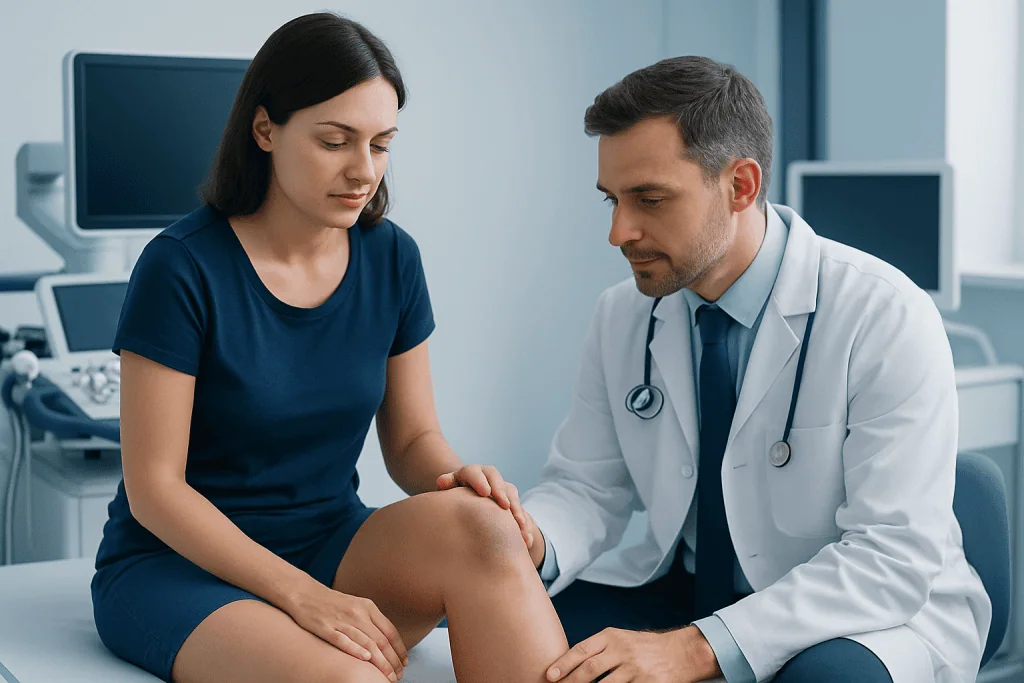
A superficial knee bruise may be sore to touch and appear red, purple, blue, brown, or darker than the surrounding skin. On darker skin tones, color changes may be subtle or less visible. Tenderness, mild swelling, stiffness, and discomfort when bending or kneeling are common. A bruise can spread slightly beyond the original point of impact because blood and fluid can move through tissue layers.
As healing progresses, the discoloration often fades through greenish, yellow, or brown shades. This color sequence varies from person to person and is not a precise way to determine when an injury happened. Many uncomplicated bruises improve noticeably within one to two weeks, although deeper bruises can remain tender or discolored longer.
Symptoms that suggest more than a simple superficial bruise include a large, tense swelling; pain deep inside the joint; a popping sensation at the time of injury; catching or locking; the feeling that the knee gives way; or inability to fully straighten it. These findings can occur with injuries that may need a focused examination, such as knee pain related to soft-tissue or joint damage.
Common Causes and Factors That Increase Bruising

Direct impact is the most common cause of knee bruises. This may happen during sports, a fall onto the knee, contact with furniture, a vehicle-related injury, or work that involves frequent kneeling. People can also bruise after a twist or fall that injures deeper structures, even if there was no obvious direct blow.
Age, thinning skin, and reduced protective tissue beneath the skin can make bruises easier to develop. Some medicines can also increase bruising, including anticoagulants, antiplatelet medicines, certain anti-inflammatory medicines, and long-term corticosteroids. A person should not stop prescribed medication because of bruising without speaking to the clinician who prescribed it.
Less commonly, frequent or unexplained bruising may be linked to a bleeding or platelet disorder, liver disease, nutritional deficiency, or another medical condition. A single bruise after a clear injury is usually not concerning. In contrast, repeated large bruises, bruises in unusual places, nosebleeds, bleeding gums, unusually heavy menstrual bleeding, or a family history of bleeding problems should be evaluated.
How Clinicians Assess a Knee Bruise
Healthcare professionals begin by asking how the injury occurred, when symptoms began, whether the person could continue walking, and whether there was swelling, a pop, numbness, or weakness. They also review medications and personal or family history that could affect bleeding. The pattern and force of injury are often as informative as the bruise itself.
During an examination, the clinician may check the skin, kneecap, joint line, range of motion, stability, circulation, sensation, and ability to bear weight. They may look for fluid inside the joint, which can make the knee look visibly swollen or feel tight. A careful assessment helps distinguish a skin or soft-tissue contusion from injuries involving bone, ligament, tendon, meniscus, or the joint surface.
Imaging is not needed for every bruise. An X-ray may be recommended when there is significant pain over a bone, inability to bear weight, deformity, or concern for a fracture. Ultrasound, magnetic resonance imaging, or blood tests may be appropriate in selected situations, such as suspected tendon or ligament injury, a persistent unexplained lump, or unexplained bruising elsewhere on the body.
Evidence-Based Care in the First Days
For a minor knee bruise, early care is aimed at comfort and limiting additional swelling. Relative rest means avoiding activities that clearly increase pain, such as running, jumping, deep squatting, or kneeling on the affected knee. Complete immobility is usually unnecessary for a mild injury; gentle movement within a comfortable range can help prevent stiffness.
A cold pack wrapped in a cloth may be applied for short periods at a time during the first day or two. It should not be placed directly on the skin, as this can cause cold injury. Elevating the leg when resting may reduce swelling. A light elastic compression bandage can be useful for some people, but it should not cause numbness, tingling, increasing pain, color change in the foot, or a cold sensation.
Simple pain relief may be considered when it is safe for the individual, but the choice depends on medical history, allergies, kidney or liver conditions, stomach problems, pregnancy, and other medicines. A pharmacist or clinician can help identify an appropriate option. In the first 24 to 48 hours, deep massage, aggressive stretching, alcohol excess, and returning to impact activity too early may worsen discomfort or bleeding into the tissues.
Once pain and swelling begin to settle, gradual return to normal daily activity is reasonable. If a person has a confirmed structural injury or ongoing functional limitation, a clinician may recommend physical therapy and rehabilitation to restore movement, strength, balance, and confidence in the knee.
Recovery, Prevention, and Useful Self-Care
Recovery depends on the depth of the bruise and whether other tissues were injured. A small skin-level bruise may settle within days, whereas a deeper contusion can take several weeks. Improvement should be gradual: pain should lessen, movement should become easier, and the area should become less tender. A bruise that becomes increasingly painful after initially improving should be reviewed.
Returning to sport or physically demanding work is safest when the person can walk normally, fully bend and straighten the knee comfortably, and perform activity-specific movements without pain, swelling, limping, or a feeling of instability. Protective knee pads can reduce the chance of direct-impact injuries during appropriate sports, gardening, construction, flooring work, or other kneeling tasks.
Fall prevention is also important, particularly for older adults and people with balance, vision, nerve, or muscle problems. Supportive footwear, adequate lighting, clear walking paths, and treatment of dizziness or mobility concerns can lower risk. Maintaining leg strength and balance through suitable regular activity may provide further protection.
It is not necessary to use creams, supplements, or home remedies marketed to “dissolve” a bruise. Evidence for many such products is limited, and some may irritate the skin or interact with medication. Time, protection from reinjury, and sensible symptom management remain the mainstays of care for uncomplicated knee bruises.
When to Seek Medical Care
Medical assessment is advisable if knee pain is severe, the person cannot take four steps or bear weight normally, the knee looks deformed, or swelling develops rapidly after an injury. Prompt care is also needed for a knee that is locked, gives way repeatedly, cannot be straightened, or has a large open wound. These symptoms can indicate an injury beyond a simple bruise.
Urgent evaluation is important if the foot becomes pale, blue, cold, numb, weak, or increasingly painful, as circulation or nerve problems need timely attention. A person should also seek immediate advice after a high-energy injury, such as a road traffic collision, or if they take blood-thinning medication and develop major swelling or extensive bruising after trauma.
A non-urgent appointment is appropriate for bruising that appears without a known injury, occurs frequently, fails to improve over two to three weeks, or is accompanied by other bleeding symptoms. Fever, spreading redness, warmth, or drainage near an injured knee should also be assessed, particularly if there has been a cut or procedure. Acibadem International’s multidisciplinary specialists at JCI-accredited hospitals can assess knee injuries and related concerns for international patients.
Frequently asked questions
How long do knee bruises take to heal?
Many minor knee bruises improve within one to two weeks. A deeper bruise, a larger collection of blood, or a bruise combined with another knee injury can take several weeks or longer. The overall trend should be gradual improvement rather than worsening pain or swelling.
Can a knee be bruised without turning blue or purple?
Yes. A deep bruise may cause tenderness and swelling with little visible discoloration, especially early after the injury. Bruise colors can also be harder to see on some skin tones, so function and pain are important signs to monitor.
Should a person use heat or ice for a bruised knee?
Cold packs wrapped in cloth are commonly used for short periods during the first day or two to ease pain and swelling. After the early stage, gentle warmth may feel comfortable for some people if swelling is settling, but it should be avoided if it increases throbbing or swelling. Heat should not be applied to numb skin or used long enough to burn the skin.
Is it safe to exercise with a bruised knee?
Gentle movement is often reasonable if it does not increase pain, swelling, or limping. Running, jumping, heavy lifting, deep knee bends, and contact sport should wait until normal movement and strength are returning. A clinician should assess the knee before exercise is resumed if there is instability, locking, or difficulty bearing weight.
Why does a knee bruise change color?
The color changes as the body breaks down and clears blood that leaked into the tissue. Red and purple tones are common early on, followed by green, yellow, or brown tones as healing continues. The exact sequence and duration differ among individuals.
When is unexplained knee bruising concerning?
A single bruise may occur after a minor bump that was not noticed. However, recurrent or large bruises without injury, bruising with nosebleeds or bleeding gums, or bruising while taking medicines that affect clotting should be discussed with a healthcare professional. Assessment may include a medication review and, when appropriate, blood tests.
This article is for general information only and is not a substitute for professional medical advice. Please consult a qualified doctor about your individual situation.
Joint and spine care in Turkey — expert assessment & treatment
JCI-accredited · board-certified surgeons · reply within 24h
Add us as a Preferred Source to see more of our trusted health content across Google Search, AI Overviews and Discover.

More from the Health Library

Pedal Pulse: What Patients Need to Know

Nomophobia: A Complete Medical Overview

Low Glycemic Fruits: A Complete Medical Overview

Inside Ear: An Evidence-Based Guide for Patients

Hyperpigmentation: A Complete Medical Overview

Stevia and Diabetes — Explained by Medical Evidence, Not Myths
Physical Medicine & Rehabilitation Specialists at Acibadem

Büşra Zeybek
Physical Medicine & Rehabilitation
Fzt. Çağlar Dal
Physical Medicine & Rehabilitation
Assoc. Prof. Dr. Çağrı Örs
Orthopedic Surgery & Traumatology
Fzt. Canberk Altan
Physical Medicine & Rehabilitation