Knee Exercises: A Complete Medical Overview

Knee exercises are most effective when they strengthen the muscles around the knee, hip, and core rather than focusing on the knee alone. Low-impact, controlled movements are usually better tolerated than high-impact exercise during periods of pain or recovery.
Key Takeaways
- Knee exercises are most effective when they strengthen the muscles around the knee, hip, and core rather than focusing on the knee alone.
- Low-impact, controlled movements are usually better tolerated than high-impact exercise during periods of pain or recovery.
- Pain that is sharp, worsening, or associated with swelling, locking, or instability should be assessed by a doctor.
- Warm-up, correct technique, and gradual progression reduce the risk of irritation or overuse.
- Exercise plans should be adapted for conditions such as arthritis, tendon irritation, ligament injury, or after surgery.
Knee exercises can help support the joint, improve strength and mobility, and reduce strain during daily activities when they are matched to a person’s needs. The safest plan usually combines gentle mobility work, muscle strengthening, balance training, and gradual progression, especially if knee pain or a past injury is present.
Overview: what knee exercises do and who may benefit
Knee exercises are movements designed to improve the way the knee joint functions by supporting strength, flexibility, balance, and movement control. In many people, the greatest benefit comes not only from working the knee itself, but from strengthening the quadriceps, hamstrings, gluteal muscles, calves, and core. These muscle groups help absorb force and keep the leg aligned during walking, climbing stairs, standing up, and sports.
People may use knee exercises for different reasons. Some want to stay active and protect joint health as they age. Others need a structured program because of knee pain, stiffness after inactivity, recovery after injury, or reduced confidence in the joint. Exercises can also be part of rehabilitation for conditions such as knee pain, overuse injuries, or after procedures recommended by an orthopedic specialist.
Not every exercise suits every knee. A person with arthritis may need a different approach from someone recovering from a ligament sprain or trying to return to running. That is why the most helpful knee exercise plan is usually individualized, starting with movements that are comfortable and stable, then progressing slowly as symptoms and function improve.
How the knee works during exercise
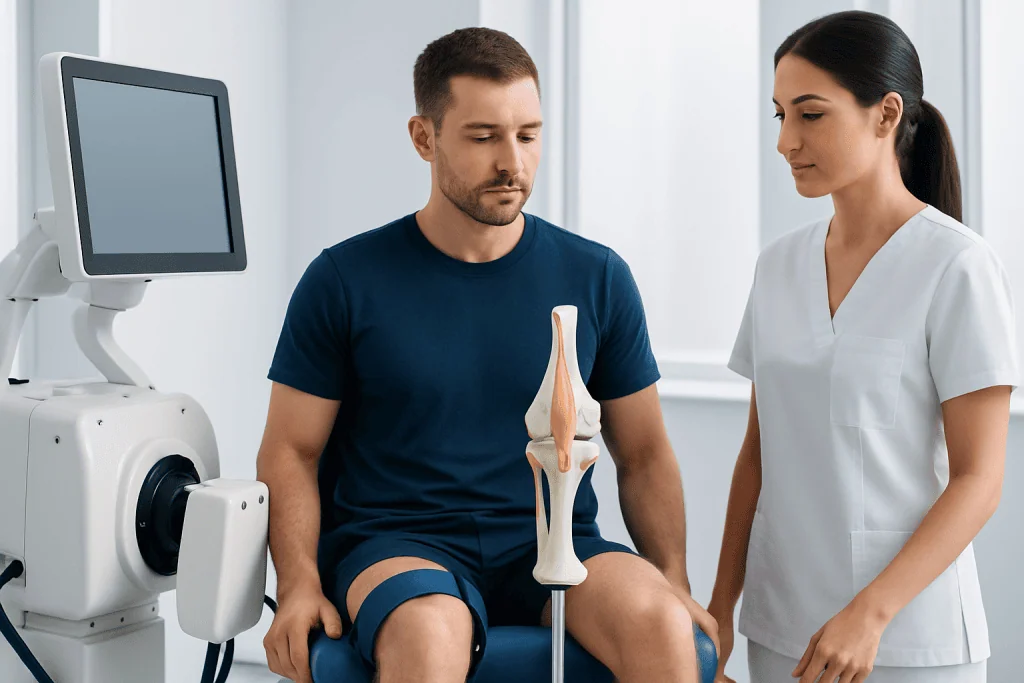
The knee is a hinge-like joint formed by the thigh bone, shin bone, and kneecap. It bends and straightens, but it also relies on coordinated movement from the hip and ankle. Cartilage, ligaments, tendons, and surrounding muscles all contribute to stability and smooth motion. If one part of this system is weak, stiff, or irritated, the knee may experience extra stress.
During exercise, the knee often responds best to controlled loading. This means applying force in a measured way so the tissues can adapt over time. Completely avoiding movement may lead to more stiffness and muscle weakness, while doing too much too soon may aggravate pain. The goal is a balanced program that improves joint tolerance without exceeding it.
Good alignment matters. When the hip muscles are weak, the knee may move inward during activities such as squatting or stepping down. When the ankle is stiff, extra stress may also shift to the knee. For this reason, many evidence-based programs include exercises for the entire lower limb rather than isolated knee motions alone.
Types of knee exercises commonly recommended
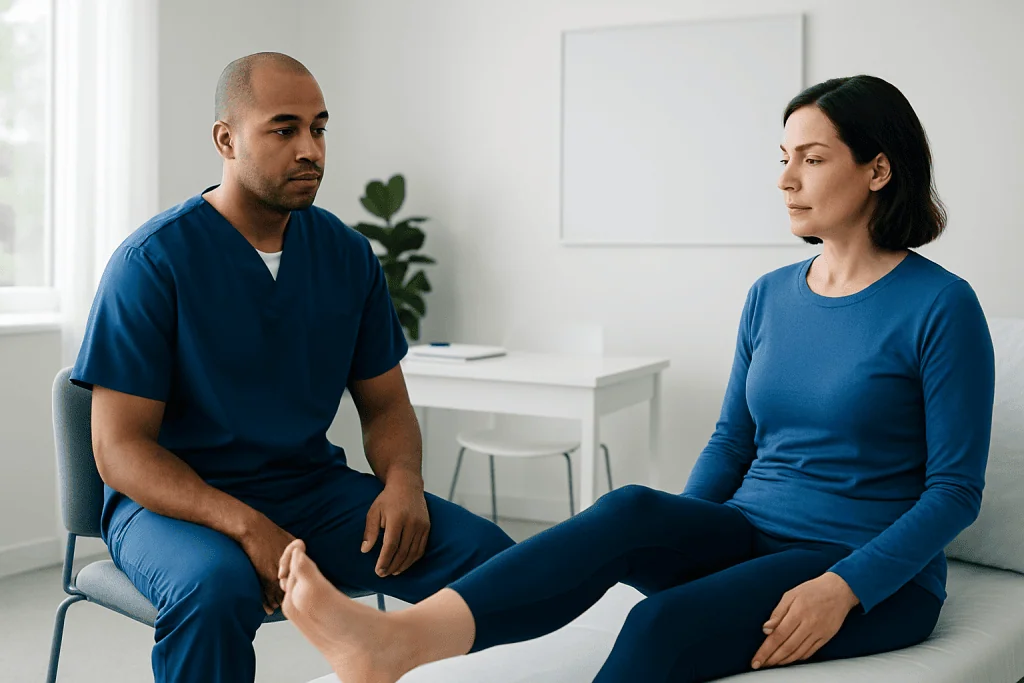
Knee exercise programs usually combine several categories. Mobility exercises help reduce stiffness and improve range of motion. Strengthening exercises improve support around the joint. Balance and control exercises help the body respond better during walking, turning, and uneven surfaces. Aerobic activity supports circulation, endurance, and weight management, which can reduce knee load over time.
Examples of commonly used exercises include straight-leg raises, seated knee extensions, heel slides, mini squats, sit-to-stand practice, step-ups, calf raises, and gentle hamstring or calf stretches. Many people also benefit from low-impact activities such as walking on level ground, cycling with light resistance, or water-based exercise. These options can maintain fitness while being easier on painful or stiff knees.
A typical plan may include:
- Mobility: heel slides, gentle knee bends, calf stretching
- Strength: quadriceps sets, straight-leg raises, bridges, mini squats
- Balance: single-leg stance with support, controlled step-downs
- Low-impact cardio: walking, cycling, swimming, or pool exercise
The right mix depends on the cause of symptoms, baseline fitness, age, and goals. Someone with advanced arthritis may start with chair-based movements and water exercise, while an athlete may focus more on control, power, and return-to-sport progression.
Benefits and limitations of knee exercises
When chosen appropriately, knee exercises can improve muscle strength, joint confidence, coordination, and daily function. Many people find that climbing stairs, getting out of a chair, or walking for longer periods becomes easier. In people with mild to moderate degenerative change, regular exercise is often a core part of management and may reduce pain by improving load distribution across the joint.
Exercise can also support recovery after injury or treatment. Rehabilitation may be recommended after strains, meniscal irritation, patellofemoral pain, or surgery such as knee replacement when indicated. Supervised therapy can help restore range of motion, muscle activation, and safe movement patterns. In some cases, people with severe structural problems may require evaluation for orthopedic care before beginning or progressing an exercise program.
At the same time, exercise is not a universal solution for every knee problem. If pain is caused by a fracture, active infection, major ligament rupture, inflammatory disease flare, or significant joint locking, exercise alone is unlikely to be enough. It can also be unhelpful if the chosen movements repeatedly provoke symptoms because they do not match the underlying issue.
The most realistic view is that knee exercises are a tool. They often form a central part of treatment, but they work best alongside an accurate diagnosis, appropriate activity modification, weight management when relevant, footwear advice, and medical review if symptoms are persistent or severe.
How to exercise safely with knee pain or stiffness
Safety starts with selecting movements that the joint can tolerate. Mild muscular effort or temporary discomfort can be normal when starting a new routine, but sharp pain, giving way, locking, or marked swelling are warning signs. A helpful rule is to begin with low-impact, controlled movements and increase intensity gradually rather than pushing through significant pain.
A simple warm-up often makes exercise more comfortable. This may include five to ten minutes of easy walking, stationary cycling, or gentle range-of-motion work. After warming up, a person can perform strengthening exercises slowly, focusing on alignment of the hip, knee, and foot. Cool-down stretching may help with flexibility, although it should be gentle rather than forced.
People with knee symptoms often tolerate these practical adjustments better:
- Use a smaller range of motion at first, such as mini squats instead of deep squats
- Prefer low-impact surfaces and supportive footwear
- Hold onto a chair or rail during balance tasks
- Alternate harder and easier days to avoid overuse
- Stop and reassess if pain increases during or after exercise
If there has been a recent injury, surgery, or recurring swelling, professional guidance is important. A rehabilitation specialist may tailor the program and, when needed, coordinate care with physical therapy and rehabilitation services to improve recovery while protecting healing tissues.
Common situations that affect exercise choice
Different knee conditions respond to different exercise strategies. In osteoarthritis, the emphasis is often on low-impact aerobic activity, quadriceps and hip strengthening, and maintaining range of motion without overloading the joint. In patellofemoral pain, attention may be placed on hip control, step mechanics, and avoiding repeated deep knee flexion until symptoms improve. For tendon-related pain, controlled loading is usually progressed gradually rather than avoided completely.
After sports injuries, the plan depends on which structure is involved. A minor sprain may improve with temporary activity modification and progressive strengthening. A meniscal problem, persistent instability, or suspected ligament injury may need orthopedic assessment and imaging. In some circumstances, doctors may investigate more complex conditions related to the knee joint before giving exercise advice.
Body weight, age, fitness level, and general health also matter. Older adults may need more focus on balance and fall prevention. People with obesity may find water exercise, cycling, or seated strengthening more comfortable at first. Those returning to sport usually need a staged plan that includes landing control, agility, and endurance before full participation.
When to seek medical care
Medical assessment is advisable if knee pain lasts more than a few weeks, interferes with walking or sleep, or continues to return despite rest and exercise modification. A doctor should also evaluate symptoms that seem out of proportion to usual exercise soreness, especially if the knee is swelling repeatedly or losing motion.
Prompt care is important after a significant twist, fall, direct impact, or sports injury if the knee feels unstable, cannot fully straighten, or becomes rapidly swollen. Urgent assessment is also needed for fever with a hot, red joint, severe pain that prevents weight-bearing, or calf swelling and shortness of breath, which can indicate more serious problems.
In specialist centers, evaluation may include physical examination, X-ray, ultrasound, or MRI depending on the suspected cause. Near the end of the care pathway, some international patients may seek multidisciplinary assessment at Acibadem International, where JCI-accredited hospitals diagnose and treat knee conditions through orthopedic, radiology, and rehabilitation teams.
Building a sustainable routine for long-term knee health
The best knee exercise program is one a person can continue safely over time. Consistency is usually more important than intensity. Short sessions performed several times a week often work better than occasional hard workouts that leave the joint irritated. Tracking symptoms, activity level, and recovery can help identify the amount of exercise the knee tolerates best.
Many people benefit from combining home exercises with everyday movement habits. Taking regular walks, reducing long periods of sitting, using stairs within comfort, and maintaining healthy body weight can all support knee function. Strength training for the hips and legs should ideally continue even after symptoms improve, because this helps protect the joint during future activity.
If uncertainty remains about technique or exercise selection, professional input can be valuable. A clinician can identify whether the issue is mainly weakness, stiffness, poor movement control, or a specific joint disorder. From there, the person can follow a safer, more effective plan based on their diagnosis and goals rather than relying on one generic list of exercises.
Frequently asked questions
What are the best knee exercises for beginners?
Beginners often do best with low-impact, controlled movements such as heel slides, straight-leg raises, quadriceps sets, sit-to-stand practice, and short walks. These exercises help build strength and movement confidence without placing excessive stress on the joint. The best choice depends on the cause of symptoms and the person’s starting fitness level.
Should knee exercises hurt?
Mild effort or slight temporary discomfort can occur, especially when muscles are weak or stiff. However, sharp pain, worsening pain, giving way, locking, or significant swelling are not expected and should prompt stopping the exercise and seeking medical advice. Pain that lingers or increases the next day may mean the activity was too much.
Can knee exercises help arthritis?
Yes, knee exercises are commonly recommended for osteoarthritis because they can improve strength, mobility, and daily function. Low-impact activity and muscle strengthening may also reduce stress on the joint. The program should be adjusted during flare-ups and guided by a clinician if symptoms are advanced or complex.
How often should someone do knee exercises?
Frequency depends on the goal and the person’s condition, but many home programs are done several times per week rather than all at once. Gentle range-of-motion work may be performed more regularly, while strengthening sessions often need rest days between harder efforts. A doctor or physical therapist can help set a safe schedule.
Are squats bad for the knees?
Squats are not automatically bad for the knees. When done with good form, appropriate depth, and suitable progression, they can strengthen the muscles that support the joint. They may need to be modified or temporarily avoided if they trigger pain or if a specific knee condition is present.
Is walking a good exercise for knee pain?
Walking is often a good low-impact option, especially on flat surfaces and at a comfortable pace. It can support joint mobility, circulation, and general fitness. If walking causes increasing pain, swelling, or limping, the distance or speed may need adjustment and medical review may be helpful.
References
- American Academy of Orthopaedic Surgeons
- National Institute of Arthritis and Musculoskeletal and Skin Diseases
- American Physical Therapy Association
- Arthritis Foundation
- National Health Service
This article is for general information only and is not a substitute for professional medical advice. Please consult a qualified doctor about your individual situation.
Joint and spine care in Turkey — expert assessment & treatment
JCI-accredited · board-certified surgeons · reply within 24h
Add us as a Preferred Source to see more of our trusted health content across Google Search, AI Overviews and Discover.

More from the Health Library

Teebaum Oil: An Evidence-Based Guide for Patients

My Back Neck: What Patients Need to Know

Methylprednisolone Alcohol: An Evidence-Based Guide for Patients

Foamy Poop: A Complete Medical Overview

Zafemy — Explained by Medical Evidence, Not Myths

Icu nurse: Symptoms, Causes, and Treatment — Complete Patient Guide
Orthopedic Surgery & Traumatology Specialists at Acibadem

Fzt. A.Sercan Soyarslan
Physical Medicine & Rehabilitation
Dr. Abdullah Yener İnce
Orthopedic Surgery & Traumatology
Dr. Adnan Abbasoğlu
Orthopedic Surgery & Traumatology
Prof. Dr. Ahmet Alanay
Orthopedic Surgery & Traumatology