Knee Kinesio: A Complete Medical Overview

Knee kinesio is a flexible tape used to support the knee without fully restricting motion. It may help reduce mild pain, swelling, or strain when combined with exercise and medical advice.
Key Takeaways
- Knee kinesio is a flexible tape used to support the knee without fully restricting motion.
- It may help reduce mild pain, swelling, or strain when combined with exercise and medical advice.
- Results vary, and taping should not replace a proper diagnosis for ongoing or severe knee symptoms.
- Correct skin preparation and application technique are important to reduce irritation and improve comfort.
- Persistent pain, instability, locking, or major swelling should be assessed by a doctor.
Knee kinesio refers to elastic therapeutic tape applied around the knee to support movement, reduce discomfort, and improve body awareness during activity or recovery. It may help some people as part of a broader care plan, but it does not treat the underlying cause of knee pain on its own.
Overview: what knee kinesio is and what it can do
Knee kinesio is a type of elastic therapeutic tape placed on or around the knee to provide light support while allowing movement. People often use it for sports, exercise, recovery after strain, or day-to-day knee discomfort. Unlike rigid athletic tape, kinesio tape stretches with the skin and is designed to move with the joint rather than hold it completely still.
The main goals of knee kinesio are to improve comfort, support soft tissues, and increase awareness of knee position during movement. Some people feel that the tape makes walking, climbing stairs, or exercising easier, especially when the knee feels mildly sore or unstable. Research suggests that benefits can be modest and may differ from person to person, which is why taping is usually considered an adjunct rather than a stand-alone treatment.
Knee kinesio can be used in a range of situations, such as overuse-related discomfort, mild swelling, muscle strain, or support during rehabilitation. It may also be used alongside physiotherapy, activity modification, strengthening exercises, and other treatments for conditions such as knee pain or sports-related knee problems. A clinician can help decide whether taping is appropriate and which pattern best matches the person’s symptoms.
How knee kinesio works
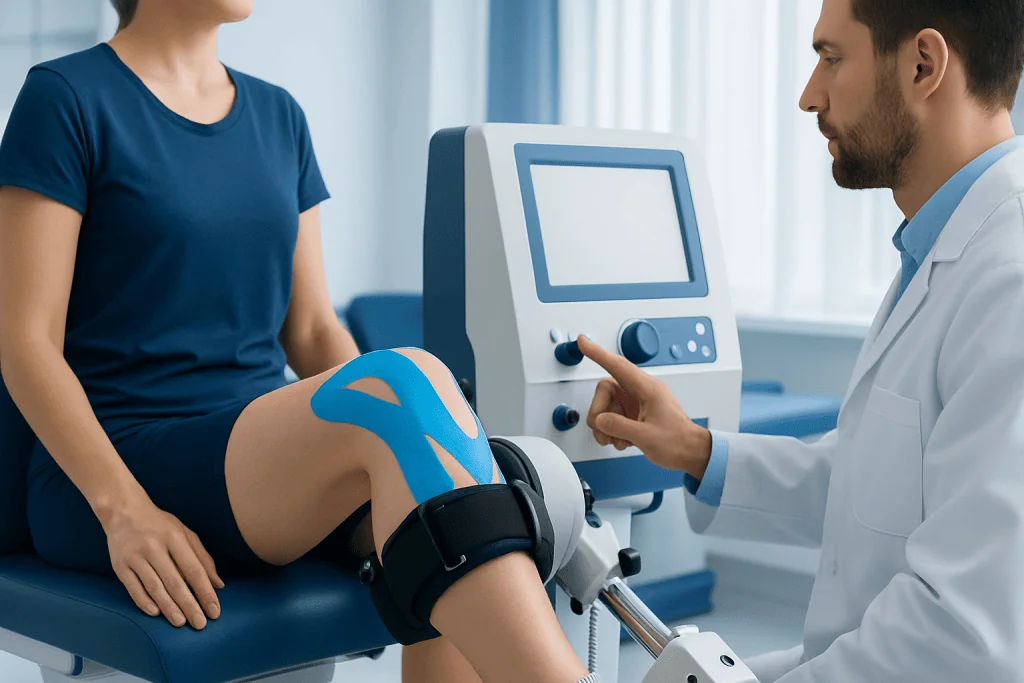
Kinesio tape is thought to work through several mechanisms. By lifting the skin very slightly, it may reduce pressure on sensitive tissues and help some people feel less discomfort. The tape can also enhance sensory feedback from the skin, which may improve the body’s awareness of knee alignment and movement.
Another possible benefit is support for movement patterns. While the tape does not strengthen muscles directly, it may encourage more confident motion during activity or rehabilitation exercises. For example, taping may help a person feel more stable during squats, walking, or return to sports after a mild injury.
It is important to understand the limits of taping. Knee kinesio does not repair a torn ligament, reverse arthritis, or replace muscle conditioning. When used well, it can be one part of a practical care plan, especially if the person also addresses the underlying issue through rest, exercise, weight management, footwear changes, or medical treatment.
When knee kinesio may be used

Knee kinesio is commonly used for mild to moderate symptoms related to overuse, exercise, or recovery. People may try it when the knee feels sore after running, strained after a workout, or mildly swollen after repetitive activity. Some athletes and active adults also use it during rehabilitation to support confidence in movement.
Healthcare professionals may consider taping for issues such as patellofemoral pain, tendon irritation, muscle overload, or soft-tissue strain around the knee. It can also be considered in some people with chronic conditions, including knee arthritis, if the goal is to make movement more comfortable during exercise or daily tasks. However, success depends on the diagnosis, the taping method, and how the knee is being used.
Common situations where knee kinesio may be helpful include:
- Mild anterior knee pain around the kneecap
- Symptoms triggered by running, stair climbing, or squatting
- Recovery from a minor strain or overuse injury
- Support during guided rehabilitation exercises
- A feeling of mild instability without a major acute injury
Taping is less likely to help if symptoms are due to a structural injury that needs targeted treatment, such as a significant meniscus tear, severe ligament injury, or advanced joint damage. In these cases, proper medical assessment is more important than temporary symptom relief.
How knee kinesio is applied safely
Safe application starts with clean, dry skin. Lotions and oils should be avoided before taping because they reduce adhesion. Hair may need to be trimmed, and the skin should be checked for cuts, rash, sunburn, or irritation. Tape should not be placed over broken skin or areas with known adhesive allergy unless a clinician has advised otherwise.
The exact taping pattern depends on the reason for use. Some techniques aim to support the kneecap, while others target the quadriceps, patellar tendon, or swelling around the joint. A trained physiotherapist or sports medicine professional can choose the correct direction, amount of stretch, and placement. Self-application is possible, but poor technique may reduce comfort or provide little benefit.
General safety tips include avoiding excessive stretch, rubbing the tape gently after application to activate the adhesive, and removing it slowly if itching or discomfort occurs. The tape is usually worn for a short period rather than indefinitely. If numbness, skin blistering, increased pain, or color changes in the leg develop, the tape should be removed and medical advice should be sought.
Benefits, limitations, and possible side effects
The main potential benefits of knee kinesio are comfort, flexibility, and ease of use. Because it allows movement, many people prefer it to more rigid taping when they want light support without feeling restricted. It may also be useful as a temporary aid while beginning a rehabilitation program or returning gradually to physical activity.
At the same time, the effects of kinesio tape are not the same for everyone. Some people notice reduced pain or improved confidence with movement, while others feel little change. The benefit can depend on the diagnosis, taping technique, skin sensitivity, and whether the person is also doing strengthening or mobility exercises. For this reason, clinicians usually frame it as a supportive tool rather than a primary treatment.
Possible side effects are usually mild and skin-related. They include itching, redness, irritation, or discomfort from the adhesive, especially in people with sensitive skin. Overstretching the tape or wearing it too long can increase these problems. If symptoms are severe, persistent, or accompanied by major swelling, joint locking, or inability to bear weight, a fuller medical evaluation is needed.
Diagnosis and treatment beyond taping
When knee pain lasts more than a short time, keeps returning, or limits daily life, the most important step is identifying the cause. A doctor or physiotherapist will usually ask about the location of pain, recent injuries, exercise habits, swelling, clicking, locking, and any feeling that the knee gives way. The physical examination may assess alignment, range of motion, tenderness, stability, and muscle strength.
Additional tests are sometimes needed. X-rays can help assess bone and joint changes, while MRI may be useful when soft-tissue injury is suspected. If symptoms suggest a structural problem, a clinician may recommend rehabilitation, bracing, medication guidance, injections, or further orthopedic assessment. In selected cases, care may include physical therapy and rehabilitation or orthopedic surgery depending on the diagnosis and severity.
For many people, the most effective long-term treatment is not tape alone but a combination of approaches. These may include strengthening the quadriceps and hip muscles, improving flexibility, adjusting training loads, wearing supportive footwear, and managing inflammation or body weight when appropriate. If symptoms are related to cartilage or meniscal injury, a specialist may discuss treatments such as knee arthroscopy when conservative care has not been enough.
Self-care and prevention strategies
Whether or not tape is used, self-care plays an important role in knee health. A gradual warm-up before exercise, balanced leg strengthening, and attention to movement technique can all help reduce strain on the joint. Building strength in the hips, thighs, and core may improve knee control and lower the risk of recurring discomfort.
People who are active should increase training intensity gradually rather than making sudden jumps in distance, speed, or resistance. Cross-training, rest days, and proper recovery can reduce overuse injuries. Supportive shoes, appropriate exercise surfaces, and sport-specific guidance may also be helpful, especially for runners and jumping athletes.
Weight management can make a meaningful difference for people with chronic knee symptoms because excess body weight increases load through the joint. At home, simple measures such as relative rest, cold packs after activity, and avoiding movements that sharply worsen pain may ease short-term flare-ups. If symptoms continue despite these steps, a doctor should reassess the knee rather than relying on repeated taping alone.
When to seek medical care
Knee kinesio may be reasonable for mild symptoms, but certain signs should prompt medical assessment. A person should seek care if knee pain is severe, follows a clear injury, or makes it hard to stand or walk. Rapid swelling, visible deformity, or a feeling that the knee is unstable also deserves prompt attention.
Medical advice is also important when the knee locks, cannot fully bend or straighten, or symptoms keep returning despite rest and home care. Fever, redness, warmth, or unexplained swelling may point to a condition that needs urgent evaluation rather than taping. Children, older adults, and people with chronic inflammatory disease may need earlier review.
For persistent or complex knee problems, specialist assessment can help guide the next steps. Near the end of the care pathway, patients may benefit from a multidisciplinary approach involving orthopedics, sports medicine, radiology, and rehabilitation. Acibadem International’s multidisciplinary specialists and JCI-accredited hospitals diagnose and treat knee conditions for international patients when more advanced evaluation or treatment is needed.
Frequently asked questions
What is knee kinesio used for?
Knee kinesio is used to provide light support, reduce discomfort, and improve awareness of knee movement. It is often used during sports, exercise recovery, or rehabilitation for mild knee symptoms.
Does knee kinesio really work?
It may help some people, especially when symptoms are mild and the tape is applied correctly. However, results vary, and it works best as part of a broader plan that may include exercise, rest, and medical guidance.
Can knee kinesio replace a knee brace?
Not usually. Kinesio tape offers flexible, light support, while a brace may provide more structure and stability for certain injuries or conditions. A clinician can advise which option is more suitable for a specific problem.
Is it safe to put kinesio tape on the knee every day?
Some people use it regularly for short periods, but daily use is not ideal if it causes skin irritation or delays proper evaluation of ongoing pain. The skin should be monitored closely, and persistent symptoms should be reviewed by a healthcare professional.
When should someone avoid knee kinesio?
It should be avoided on broken, infected, or irritated skin and used cautiously in people with adhesive allergies or very sensitive skin. It is also not a substitute for medical care after a major injury, severe swelling, or inability to bear weight.
How long should kinesio tape stay on the knee?
This depends on the product, the person’s skin, and the reason for use, but it is generally intended for temporary wear. If itching, burning, increased pain, or skin redness develops, the tape should be removed sooner and the area checked.
This article is for general information only and is not a substitute for professional medical advice. Please consult a qualified doctor about your individual situation.
Joint and spine care in Turkey — expert assessment & treatment
JCI-accredited · board-certified surgeons · reply within 24h
Add us as a Preferred Source to see more of our trusted health content across Google Search, AI Overviews and Discover.

More from the Health Library

What is doa? A Doctor-Reviewed Answer

Radioallergosorbent Test: What Patients Need to Know

Antihistamine anti itch: Symptoms, Causes, and Treatment — Complete Patient Guide

Otoconia — Explained by Medical Evidence, Not Myths

Red blood cell: Symptoms, Causes, and Treatment — Complete Patient Guide

Nivolumab: An Evidence-Based Guide for Patients
Physical Medicine & Rehabilitation Specialists at Acibadem

Prof. Dr. Cihan Aksoy
Physical Medicine & Rehabilitation
Fzt. Cihan Seyyah
Physical Medicine & Rehabilitation
Prof. Dr. Cihangir Tetik
Orthopedic Surgery & Traumatology
Dr. Coşkun Akalın
Physical Medicine & Rehabilitation