Knee Replacement Surgery: Candidacy, Procedure Steps, and Recovery Timeline

Knee replacement surgery is usually considered when severe pain, stiffness, and reduced mobility persist despite medicines, physical therapy, injections, or activity changes. The procedure removes damaged cartilage and bone from the knee joint and replaces them with artificial components designed to improve alignment and movement.
Key Takeaways
- Knee replacement surgery is usually considered when severe pain, stiffness, and reduced mobility persist despite medicines, physical therapy, injections, or activity changes.
- The procedure removes damaged cartilage and bone from the knee joint and replaces them with artificial components designed to improve alignment and movement.
- Most people begin standing and walking with support soon after surgery, but full recovery and strength gains usually continue for several months.
- Benefits often include pain relief and better function, while risks include infection, blood clots, stiffness, and implant wear over time.
- A careful evaluation helps determine whether total or partial knee replacement is appropriate and whether the person is medically ready for surgery.
Knee replacement surgery is a common procedure used to reduce long-term knee pain and improve movement when joint damage is severe and non-surgical treatment is no longer enough. It involves replacing worn joint surfaces with artificial components, followed by structured rehabilitation over several weeks to months.
Overview: What knee replacement surgery is and how it works
Knee replacement surgery is a procedure that treats severe damage inside the knee joint, most often from osteoarthritis, inflammatory arthritis, or long-standing injury. It is generally recommended when pain becomes persistent, daily activities are limited, sleep is disrupted, and non-surgical treatments no longer provide enough relief. For many people, the goal is not simply pain control but also safer movement, better independence, and improved quality of life.
During the operation, the surgeon removes damaged cartilage and a small amount of bone from the ends of the thigh bone and shin bone, and sometimes from the back of the kneecap. These surfaces are then replaced with artificial components made from metal and durable plastic. The new joint surfaces are designed to reduce friction, improve alignment, and allow smoother movement.
There are different types of knee replacement surgery. A total knee replacement replaces the main joint surfaces throughout the knee, while a partial knee replacement treats only one damaged compartment when the rest of the knee is still in relatively good condition. The best option depends on the pattern of joint damage, the stability of the ligaments, the person’s activity level, and overall health.
Because severe knee damage is often linked with knee osteoarthritis, evaluation usually includes a close look at symptoms, physical examination findings, and imaging results. In many cases, surgery is considered only after simpler measures have been tried and have not given lasting relief.
Who may be a candidate for knee replacement surgery
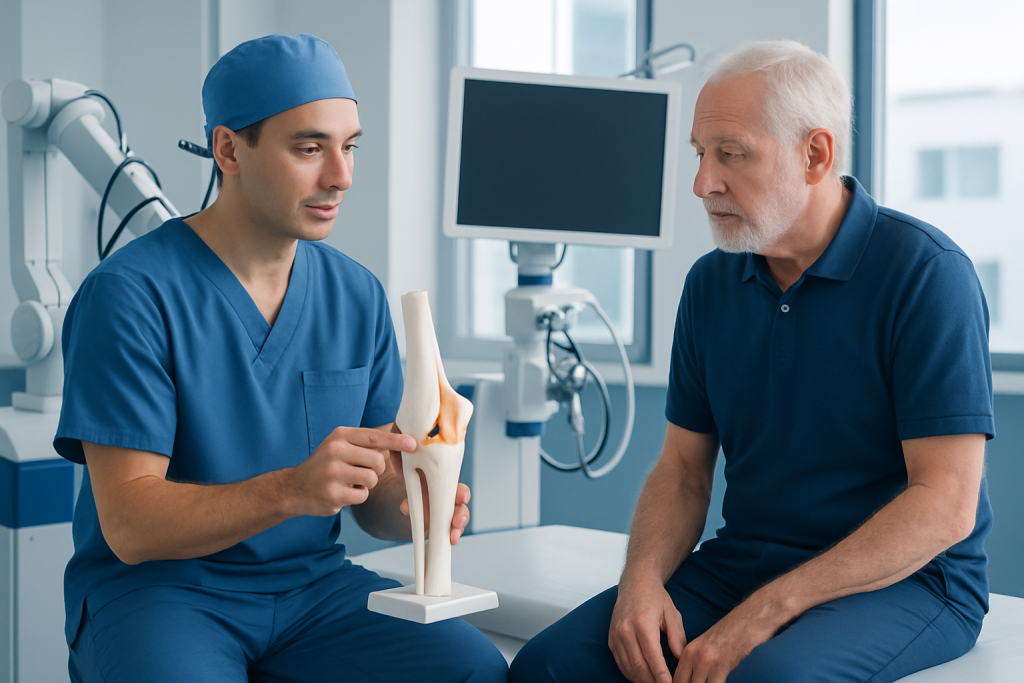
Not everyone with knee pain needs surgery. Good candidates for knee replacement surgery usually have advanced joint damage along with symptoms that interfere with daily life. This may include difficulty walking, climbing stairs, standing from a chair, or performing routine tasks because of pain, stiffness, or joint instability.
Doctors usually look at both symptom severity and the response to prior treatment. Surgery may be considered if measures such as pain-relieving medicines, supervised exercise, weight management, supportive bracing, walking aids, and injections have not provided enough improvement. Imaging findings also matter, but X-rays alone do not determine the decision; the person’s pain and functional limitations are equally important.
Age by itself is not the main deciding factor. Some younger adults with major joint damage may benefit from surgery, while some older adults may do well if they are otherwise medically stable. The surgeon also considers heart and lung health, diabetes control, body weight, smoking status, skin condition around the knee, and any active infection, because these factors can affect healing and complication risk.
In some situations, a person may not be an immediate candidate. Uncontrolled medical problems, active infection, severe circulation problems, or pain that is coming mainly from another source such as the hip or spine may need attention first. A thorough orthopedic assessment helps clarify whether knee replacement surgery is the most suitable next step.
Symptoms and conditions that commonly lead to surgery

The most common reason for knee replacement surgery is arthritis-related wear of the joint. Osteoarthritis gradually breaks down cartilage, leading to pain, swelling, stiffness, and reduced range of motion. In other cases, rheumatoid arthritis or post-traumatic arthritis after a fracture or ligament injury may cause progressive damage that eventually becomes severe enough to consider surgery.
Symptoms that often suggest advanced disease include pain with walking even short distances, pain at rest or at night, noticeable stiffness after sitting, grinding or catching in the joint, and a knee that bows inward or outward. Some people also develop repeated swelling, weakness around the knee, or a sense that the joint may give way.
Function is a key part of the decision. The need for surgery is often driven by what the person can no longer do comfortably, such as shopping, working, exercising, or caring for themselves at home. Pain that limits sleep or makes regular movement difficult can also be a strong sign that the joint problem has progressed.
Before surgery is chosen, doctors may also consider whether other orthopedic approaches could help. In selected patients, options such as physical therapy and rehabilitation or targeted orthopedic treatment may still improve function enough to delay or avoid surgery, especially when damage is not yet advanced.
Diagnosis and preoperative planning
Assessment for knee replacement surgery begins with a detailed medical history and physical examination. The doctor asks about pain patterns, stiffness, walking distance, prior injuries, current medicines, and the effect of symptoms on work, exercise, and daily activities. Examination focuses on alignment, swelling, range of motion, strength, tenderness, and ligament stability.
X-rays are the main imaging test used to evaluate joint space loss, bone changes, deformity, and the extent of arthritis. In some cases, additional imaging such as MRI or CT may be used to clarify anatomy or support planning, especially if prior surgery, bone loss, or unusual alignment is present. Blood tests and other preoperative checks help make sure the person is medically prepared for anesthesia and recovery.
Planning also includes deciding between total and partial knee replacement, selecting implant size and positioning, and discussing the expected recovery path. The care team may review home arrangements, mobility aids, support from family or friends, and any barriers that could affect rehabilitation. This step is important because recovery starts with preparation, not only with the operation itself.
People are often advised to optimize their health before surgery. This may include stopping smoking, improving diabetes control, treating dental or skin infections, strengthening leg muscles, and learning postoperative exercises in advance. Good preparation can support a safer procedure and smoother rehabilitation.
Procedure steps: what happens during knee replacement surgery
On the day of surgery, the patient is admitted and prepared for anesthesia, which may be general anesthesia or a regional technique such as spinal anesthesia, depending on medical factors and the care team’s plan. Antibiotics are commonly given around the time of the operation to reduce the risk of infection, and the surgical team confirms the correct knee and procedure details before starting.
The surgeon makes an incision over the knee and moves aside the tissues needed to reach the joint. Damaged cartilage and a thin layer of underlying bone are removed from the femur and tibia, and sometimes the undersurface of the patella is reshaped. The bone surfaces are carefully measured and prepared so that the artificial components fit securely and allow the knee to move in balanced alignment.
Trial components are often used first to check motion, stability, and fit. Once the surgeon is satisfied, the final implant components are fixed in place, commonly using bone cement, though some designs may allow bone to grow into the implant surface. A plastic spacer is inserted between the metal parts to create a smooth gliding surface. The surgeon then checks alignment and movement again before closing the tissues and dressing the wound.
The operation itself is only one part of treatment. Soon afterward, the team begins pain management, circulation support, and early mobilization. Depending on the case and local practice, some patients go home the same day or after a short hospital stay, while others remain longer if they need closer monitoring or additional rehabilitation support.
Recovery timeline, rehabilitation, benefits, and risks
Recovery after knee replacement surgery happens in stages rather than all at once. Many people stand and take a few steps with assistance on the day of surgery or the next day. In the first several weeks, the main goals are to control pain and swelling, protect the wound, regain knee motion, and safely increase walking and basic activities. Exercises and guided rehabilitation are central to this process.
During the first two to six weeks, most patients gradually improve their ability to walk, sit, stand, and manage stairs. A walker or crutches may be needed at first, followed later by a cane or unaided walking, depending on strength and balance. Swelling, warmth, and temporary stiffness are common during early healing. Many people can resume lighter daily activities within weeks, but recovery pace varies.
Over the following months, strength, flexibility, and confidence continue to improve. Full recovery may take several months, and the final result depends partly on preoperative function, overall health, and commitment to rehabilitation. The main benefits are reduced pain, better function, improved alignment, and greater participation in daily life. High-impact sports are usually discouraged to help protect the implant.
Like any major operation, knee replacement surgery has risks. These may include infection, blood clots, bleeding, wound problems, nerve or blood vessel injury, stiffness, persistent pain, and implant loosening or wear over time. Doctors work to reduce these risks through careful planning, sterile technique, early mobilization, and follow-up care. If rehabilitation is slow or additional support is needed, robotic rehabilitation or structured rehabilitation programs may be considered in selected settings.
Prevention, self-care, and living well before or after surgery
Not all knee joint damage can be prevented, but several steps may help reduce strain on the knee and support joint health. Maintaining a healthy body weight lowers pressure on the joint during walking and stairs. Regular low-impact exercise, such as walking, cycling, swimming, or strengthening work guided by a professional, can help maintain mobility and support the muscles around the knee.
People with knee arthritis often benefit from practical self-care strategies. These may include pacing activities, using supportive footwear, modifying high-impact exercise, applying ice after activity, and following a doctor’s advice on medicines or injections. When pain is progressing, early assessment can help identify options before function declines further.
After surgery, self-care remains important. Patients are usually advised to follow wound care instructions, take prescribed medicines correctly, continue exercises, and attend follow-up visits. Safe movement at home, fall prevention, and gradual return to activity are all part of successful recovery. Sudden overexertion can increase pain and swelling, so progress is usually made step by step.
Near the end of the treatment journey, some international patients seek care in centers that combine orthopedic surgery, imaging, anesthesia, and rehabilitation services in one pathway. Acibadem International’s multidisciplinary specialists and JCI-accredited hospitals diagnose and treat knee conditions for international patients, including assessment and recovery planning when surgery is appropriate.
When to seek medical care
Medical assessment is appropriate when knee pain lasts for weeks, keeps returning, or begins to interfere with walking, work, sleep, or everyday activities. A doctor should also evaluate swelling, stiffness, reduced range of motion, deformity, or a feeling that the knee is unstable. Early evaluation can help confirm the cause and identify non-surgical or surgical options based on the degree of joint damage.
Urgent medical attention is needed if there is sudden severe swelling, inability to bear weight after an injury, fever with a hot and painful joint, calf pain or swelling, chest pain, or shortness of breath. These symptoms can have different causes, some of which require prompt treatment.
After knee replacement surgery, patients should contact their care team if they notice increasing redness, drainage, severe worsening pain, persistent fever, trouble moving the leg, or new swelling in the calf. These symptoms do not always mean a serious complication, but they should be assessed without delay so that treatment can begin if needed.
Frequently asked questions
How long does it take to recover from knee replacement surgery?
Initial recovery often begins within days, with walking support and early exercises started soon after surgery. Many people improve noticeably over the first six weeks, but full recovery, strength, and confidence can continue to develop over several months.
Who is a good candidate for knee replacement surgery?
A good candidate usually has severe knee pain and limited function caused by advanced joint damage, most often arthritis, and has not improved enough with non-surgical treatment. The decision also depends on overall health, imaging results, and whether the person is medically ready for surgery and rehabilitation.
Is knee replacement surgery very painful?
Some pain and soreness are expected after the operation, especially in the early recovery period. However, pain is typically managed with a structured treatment plan, and most patients improve as healing progresses and rehabilitation continues.
What is the difference between total and partial knee replacement?
A total knee replacement treats damage affecting most or all of the knee joint surfaces. A partial knee replacement is used when damage is limited to one part of the knee and the remaining structures, including important ligaments, are still functioning well.
How long does a knee replacement last?
A knee replacement can last many years, but lifespan varies based on the implant, surgical technique, body weight, activity level, and overall joint health. Over time, some implants may loosen or wear, which is why long-term follow-up is important.
What are the main risks of knee replacement surgery?
The main risks include infection, blood clots, bleeding, stiffness, wound problems, and ongoing pain. Less commonly, there may be injury to nearby nerves or blood vessels, or later wear and loosening of the implant.
References
- American Academy of Orthopaedic Surgeons
- National Institute of Arthritis and Musculoskeletal and Skin Diseases
- National Health Service
- MedlinePlus
- Arthritis Foundation
This article is for general information only and is not a substitute for professional medical advice. Please consult a qualified doctor about your individual situation.
Joint and spine care in Turkey — expert assessment & treatment
JCI-accredited · board-certified surgeons · reply within 24h
Add us as a Preferred Source to see more of our trusted health content across Google Search, AI Overviews and Discover.

More from the Health Library



Related Specialists

Dr. Fatih Çelik
Emergency Service
Dr. Enes Cansız
Emergency Service
Dt. Alen Palancıoğlu
Oral Dental & Maxillofacial Surgery
Dr. Nadire Sevda İdil
Gynecology & Obstetrics