Knee to Chest Stretch — Explained by Medical Evidence, Not Myths
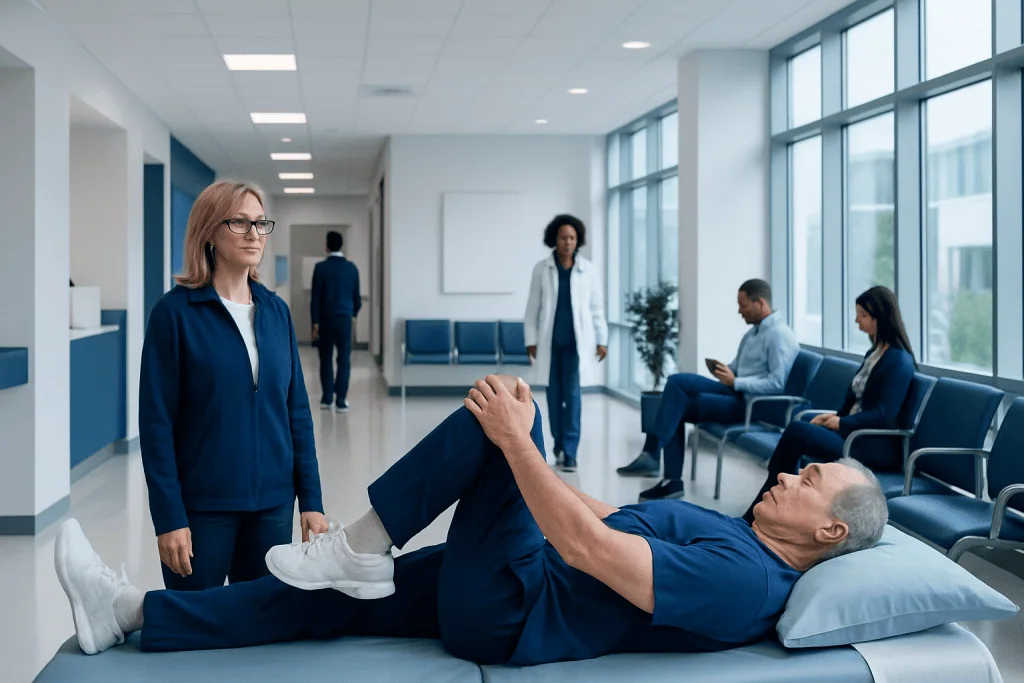
The knee to chest stretch is a gentle exercise that mainly targets the low back, hips, and buttock muscles. It may help relieve stiffness and improve comfort, especially after prolonged sitting or mild muscular tightness.
Key Takeaways
- The knee to chest stretch is a gentle exercise that mainly targets the low back, hips, and buttock muscles.
- It may help relieve stiffness and improve comfort, especially after prolonged sitting or mild muscular tightness.
- Good technique matters: the movement should feel like a light stretch, not sharp or radiating pain.
- It should be avoided or modified during some injuries, recent surgery, or when symptoms suggest nerve compression.
- Persistent, severe, or unexplained back pain should be assessed by a qualified clinician.
The knee to chest stretch is a simple flexibility exercise commonly used to reduce feelings of tightness in the lower back, hips, and gluteal area. Medical evidence suggests it may help some people feel more comfortable and move more easily, but it is not the right exercise for every cause of pain.
What the knee to chest stretch does
The knee to chest stretch is a gentle movement in which one knee, or both knees, are drawn toward the chest while lying on the back. In practical terms, it can help reduce a sensation of tightness in the lower back, hips, and buttocks. For many people, especially those who sit for long periods, it feels relieving because it places the lower spine and surrounding soft tissues in a flexed, supported position.
From a medical perspective, this stretch is best understood as a comfort and mobility exercise rather than a cure. It may temporarily improve range of motion, reduce muscular guarding, and make movement feel easier. However, it does not treat every source of pain, and its effect can vary depending on whether symptoms come from muscle tension, joint irritation, disc-related pain, or nerve involvement.
This matters because online advice often presents one stretch as universally helpful. Evidence-based care takes a more careful view: a knee to chest stretch may be useful for some people with mild, mechanical low back discomfort, but it may aggravate others. If pain is persistent or linked to a condition such as a herniated disc, exercise choice should be individualized.
Who may benefit from this stretch
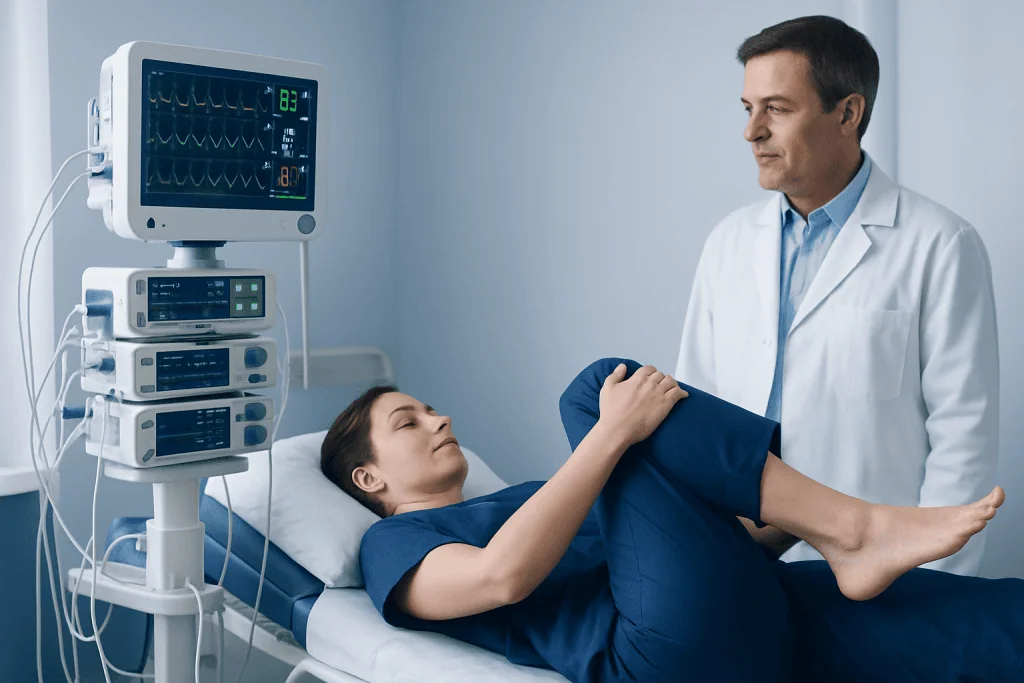
The knee to chest stretch is often recommended in rehabilitation and self-care programs for people who report stiffness rather than instability. It may be especially helpful after long periods of sitting, reduced activity, mild muscle tension, or a feeling of low back tightness on waking or after travel. Some people also find it soothing as part of a warm-up before a gentle walk or as a cool-down after light activity.
It can also be included in broader programs for non-specific low back pain, meaning back pain without a single clear structural cause. In these cases, symptom relief usually comes not from one exercise alone but from a combination of movement, gradual activity, posture awareness, and recovery strategies. A stretch can be useful if it helps the person move more comfortably and remain active.
At the same time, benefit depends on individual response. If the stretch reduces tightness and feels controlled, it may be a good option. If it causes pinching, increased pain, tingling, or symptoms extending down the leg, it may not be suitable and another approach may be better, such as a guided physical therapy and rehabilitation program.
How to do the knee to chest stretch correctly
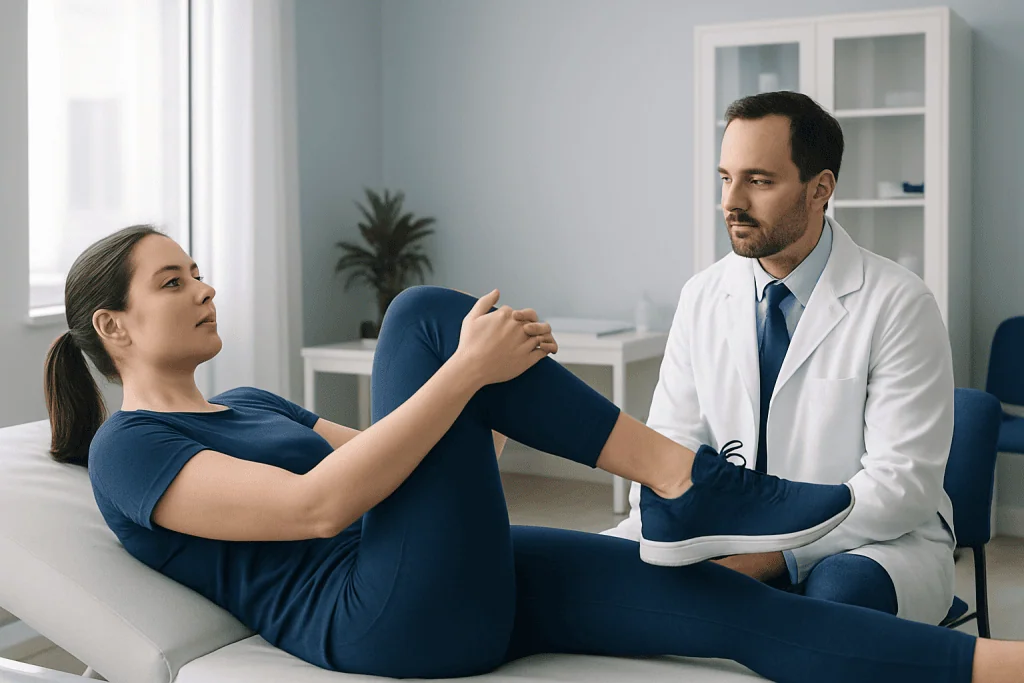
Correct form is important because the goal is gentle mobility, not forcing the body into an extreme position. A person usually begins lying flat on the back on a firm but comfortable surface, with both knees bent and the feet resting on the floor. The head and shoulders stay relaxed, and breathing should remain steady throughout.
For a single-knee version, one knee is brought toward the chest while the other foot stays on the floor or the leg remains bent for comfort. The hands can be placed behind the thigh or over the shin, depending on comfort and flexibility. The position is held briefly with smooth breathing, then the leg is returned to the starting position and repeated on the other side.
The double-knee version brings both knees toward the chest at the same time. This can feel stronger and is not necessary for everyone. Useful form cues include:
- Move slowly and stop at a mild, comfortable stretch.
- Keep the neck, jaw, and shoulders relaxed.
- Avoid bouncing or pulling sharply on the knees.
- Do not hold the breath.
- Return to the starting position in a controlled way.
If there is limited flexibility in the hips or knees, a towel or strap behind the thigh may feel more comfortable than gripping the shin. A clinician may also suggest modifications if there is coexisting sciatica or hip pain.
What body areas it stretches and why it may feel relieving
The knee to chest stretch mainly affects the lower back region, the gluteal area, and parts of the posterior hip. By flexing the hip and lower spine, it can lengthen some soft tissues and reduce the feeling of compression or stiffness that develops after inactivity. For many people, the sense of relief is related as much to gentle movement and reduced muscle guarding as to the stretch itself.
It is also a low-load exercise, which means it does not require much strength or balance. That makes it accessible for many adults, including those beginning a mobility routine after a period of reduced activity. In rehabilitation settings, low-load movements are often used to help restore confidence in movement while symptoms are settling.
Still, a comfortable stretch does not automatically mean it is correcting a structural problem. The lower back is influenced by the hips, abdominal muscles, posture, activity level, sleep, and stress. When symptoms keep returning, a more complete assessment may be needed to identify contributing factors and whether other options, such as orthopedic rehabilitation, are appropriate.
When the knee to chest stretch may not be a good idea
This stretch is not ideal for everyone. It may worsen symptoms in some people with acute disc irritation, severe nerve root compression, certain spinal conditions, or painful hip problems. If drawing the knee in causes sharp low back pain, pain that shoots down the leg, numbness, tingling, or increasing weakness, the exercise should be stopped and medical advice should be sought.
Recent surgery, a fresh injury, fracture, osteoporosis-related concerns, inflammatory conditions, or severe knee or hip arthritis may also require caution or a modified program. Pregnant individuals, older adults with balance or joint limitations, and people recovering from a medical procedure should ask a clinician which version is safest for them.
As a general rule, discomfort from stretching should be mild and brief. Pain that lingers, intensifies, or changes the usual symptom pattern is a sign to reassess. In some cases, an evaluation with a specialist in orthopedics or rehabilitation can help determine which exercises support recovery and which should be avoided.
Using it as part of an evidence-based back care plan
The best results usually come when the knee to chest stretch is part of a broader plan rather than the only strategy. Current clinical thinking for common low back pain emphasizes staying as active as tolerated, avoiding prolonged bed rest, and using movement to gradually restore normal function. Gentle walking, position changes, and individualized strengthening often matter as much as stretching.
A balanced self-care routine may include several components:
- Short bouts of daily movement instead of long periods of sitting.
- Gentle stretching only if it reduces stiffness rather than increasing pain.
- Strengthening of the trunk, hips, and legs when advised by a professional.
- Attention to sleep position, lifting habits, and workstation setup.
- Gradual return to normal activities rather than complete avoidance.
If back pain is recurring, structured exercise supervised by a clinician can be more useful than repeatedly trying random stretches. The aim is to match treatment to the cause of symptoms. Acibadem International’s multidisciplinary specialists and JCI-accredited hospitals diagnose and treat musculoskeletal conditions for international patients when further evaluation is needed.
When to seek medical care
Medical care is appropriate if low back or hip pain is severe, does not improve, keeps returning, or interferes with walking, sleep, work, or daily activities. A person should also seek assessment if pain follows a fall, accident, sports injury, or lifting event, especially if movement becomes very limited.
Urgent medical attention is needed for warning signs such as new weakness in the leg, loss of bladder or bowel control, numbness around the groin or buttocks, fever with back pain, unexplained weight loss, or pain that is constant and not relieved by rest. These symptoms can signal a more serious condition and should not be managed with stretching alone.
In children, older adults, and people with a history of cancer, osteoporosis, infection risk, or immune suppression, a lower threshold for medical review is sensible. A qualified doctor or physiotherapist can help determine whether the knee to chest stretch is appropriate, whether imaging is needed, or whether another diagnosis should be considered.
Frequently asked questions
Is the knee to chest stretch good for lower back pain?
It can be helpful for some types of mild, non-specific lower back pain, especially when stiffness is a main symptom. It is less likely to help if pain is caused by certain nerve, disc, or structural problems. If symptoms worsen during the stretch, it should be stopped and reviewed by a clinician.
How long should a knee to chest stretch be held?
There is no single required time for every person, but it is generally performed as a gentle hold rather than a forceful pull. The stretch should feel mild and controlled, with steady breathing. A doctor or physiotherapist can suggest the most suitable routine for the person's symptoms and fitness level.
Should one knee or both knees be brought to the chest?
The single-knee version is often easier and better tolerated, especially for beginners or people with more sensitive backs. Bringing both knees in can create a stronger flexion movement and may feel too intense for some. The choice depends on comfort, symptoms, and professional advice.
Can the knee to chest stretch make sciatica worse?
Yes, in some people it can aggravate sciatic symptoms, particularly if bending the spine increases nerve irritation. If the stretch causes pain down the leg, tingling, or numbness, it is not the right exercise at that time. Sciatica should be assessed individually because different causes respond to different movements.
Is it normal to feel hip tightness during the stretch?
A mild sense of pulling in the hip or buttock can be normal, especially if those areas are stiff. However, pinching in the front of the hip, sharp groin pain, or pain that lingers afterward is not a good sign. That may mean the technique needs to be modified or another exercise would be safer.
Can older adults do the knee to chest stretch safely?
Many older adults can do a modified version safely, particularly if the movement is slow and supported. Safety depends on joint health, balance, osteoporosis risk, and any recent injuries or surgeries. If there is uncertainty, supervised guidance from a healthcare professional is the safest approach.
This article is for general information only and is not a substitute for professional medical advice. Please consult a qualified doctor about your individual situation.
Joint and spine care in Turkey — expert assessment & treatment
JCI-accredited · board-certified surgeons · reply within 24h
Add us as a Preferred Source to see more of our trusted health content across Google Search, AI Overviews and Discover.

More from the Health Library
White Pimples on Testis — Explained by Medical Evidence, Not Myths
Heberden’s Nodes: An Evidence-Based Guide for Patients

Eating Happiness: An Evidence-Based Guide for Patients

Axial Skeleton: What Patients Need to Know

Occupational Health: A Complete Medical Overview

Black Widow Spider — Explained by Medical Evidence, Not Myths
Orthopedic Surgery & Traumatology Specialists at Acibadem

Dr. Berhan Bayram
Orthopedic Surgery & Traumatology
Assoc. Prof. Dr. Berkin Toker
Orthopedic Surgery & Traumatology
Assoc. Prof. Dr. Bertan Cengiz
Orthopedic Surgery & Traumatology
Dr. Betül Toygar
Physical Medicine & Rehabilitation