Kyphosis: Diagnosis, Outlook, and Modern Treatment Approaches

Kyphosis means an increased forward curve of the upper spine, but not every rounded back is the same condition. The outlook depends on the underlying cause, the degree of curvature, symptoms, and whether the curve is progressing.
Key Takeaways
- Kyphosis means an increased forward curve of the upper spine, but not every rounded back is the same condition.
- The outlook depends on the underlying cause, the degree of curvature, symptoms, and whether the curve is progressing.
- Doctors diagnose kyphosis with a physical exam and imaging, usually starting with X-rays.
- Many people improve with posture support, physiotherapy, monitoring, and symptom relief rather than surgery.
- Prompt medical review is important if kyphosis is painful, worsening, or causing breathing, balance, or nerve symptoms.
Kyphosis is an exaggerated forward rounding of the upper back that can range from mild postural change to a structural spinal condition. Diagnosis focuses on the type of curve, the person’s age, symptoms, and whether the spine or nerves are affected, while treatment may include observation, exercise-based care, bracing, pain management, or surgery in selected cases.
What kyphosis is and what it means for outlook
Kyphosis is a condition in which the upper spine curves forward more than expected, creating a rounded or hunched appearance of the back. A small natural kyphotic curve is normal, but when the curve becomes more pronounced it may affect posture, comfort, movement, and in some cases breathing or nerve function. The outlook is often good when the cause is identified early and the spine is monitored appropriately.
Kyphosis is not a single disease. It is a descriptive term for spinal shape, and it can develop for different reasons, including posture-related changes, growth-related structural conditions, age-related degeneration, osteoporosis-related fractures, congenital differences present at birth, or neuromuscular disorders. Because the causes differ, treatment is tailored to the individual rather than based on the curve alone.
In many people, kyphosis is mild and manageable with observation, exercise-based care, and symptom relief. More significant curves, especially those that worsen over time or cause pain, stiffness, fatigue, or neurologic symptoms, need closer assessment. A specialist may also check for related spinal conditions such as scoliosis, since some patients have more than one type of spinal curvature.
Signs and symptoms of kyphosis
The most noticeable sign of kyphosis is a rounded upper back or a forward-stooped posture. Some people also have uneven shoulders, a head that sits forward relative to the shoulders, tight hamstrings, or a feeling that standing fully upright is difficult. In children and teenagers, parents may first notice a posture change during growth spurts.
Symptoms vary widely. Mild kyphosis may cause no symptoms beyond cosmetic concern, while more pronounced curves can lead to back pain, muscle fatigue, stiffness, or reduced flexibility. Some people feel discomfort after prolonged sitting or standing, and others report a sense of imbalance or strain in the neck and lower back as the body compensates for the spinal curve.
When kyphosis is severe, it may reduce chest space and contribute to shortness of breath, especially during activity. Numbness, tingling, weakness, changes in walking, or bowel and bladder symptoms are not typical of simple postural rounding and may suggest spinal cord or nerve involvement. These symptoms need prompt medical evaluation.
- Rounded upper back or hunched posture
- Back pain or stiffness
- Muscle fatigue
- Reduced flexibility
- Breathing difficulty in severe cases
- Nerve-related symptoms such as weakness or numbness in rare but important cases
Causes and types: why kyphosis happens
One useful way to understand kyphosis is to divide it into postural and structural forms. Postural kyphosis is common in adolescents and adults and is often linked to muscle imbalance, prolonged slouching, and poor postural habits. The spine itself is usually flexible, and the curve may improve when the person consciously stands straight or works on posture and core strength.
Structural kyphosis means the bones of the spine, discs, or supporting tissues have changed shape. A well-known example in teenagers is Scheuermann kyphosis, where several vertebrae develop a wedge shape during growth, creating a more rigid curve. In older adults, degenerative disc disease, arthritis, or compression fractures related to osteoporosis can lead to progressive forward curvature. Congenital kyphosis develops because the spine does not form normally before birth.
Other causes include spinal injury, infection, inflammatory disorders, previous spinal surgery, certain neuromuscular conditions, and rarely tumors affecting the spine. Risk factors depend on age and cause but may include rapid growth, poor bone density, advancing age, chronic steroid use, and previous vertebral fracture. Understanding the cause is important because it guides both treatment and long-term monitoring.
How kyphosis is diagnosed
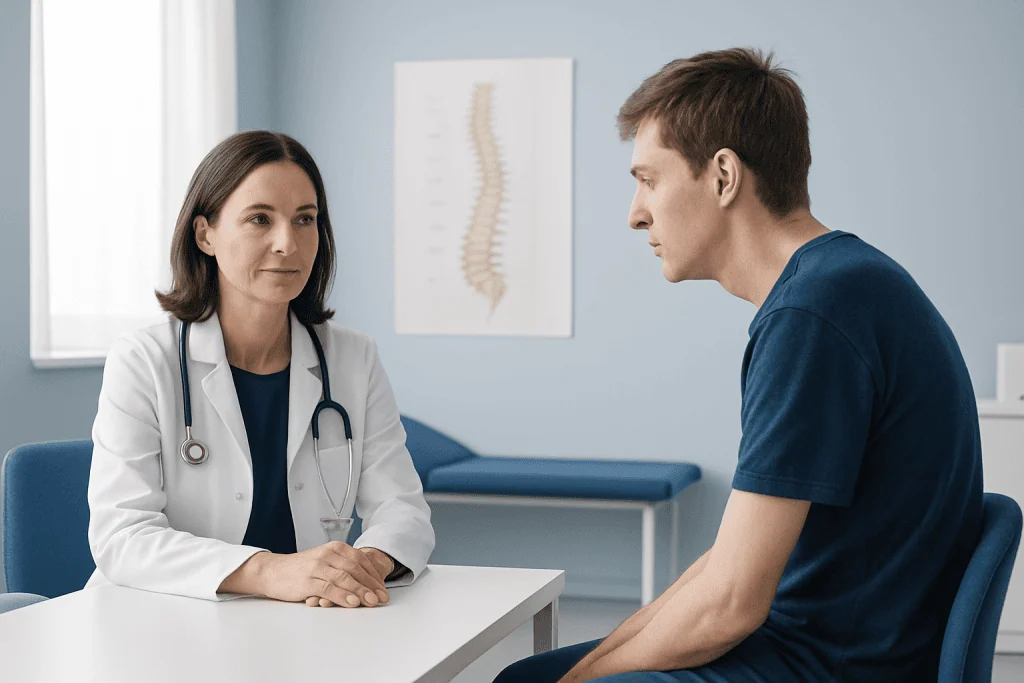
Diagnosis begins with a careful history and physical examination. The doctor asks when the curve was first noticed, whether it is changing, and whether there is pain, stiffness, fatigue, breathing trouble, or nerve symptoms. In children and adolescents, growth pattern matters. In adults, the evaluation often focuses on pain, fracture history, bone health, and age-related spinal changes.
During the exam, the clinician looks at posture from the side and back, checks spinal flexibility, and examines muscle strength, reflexes, sensation, and walking. They may ask the person to bend forward or try to stand upright to see whether the curve is flexible or rigid. This helps distinguish postural kyphosis from a more structural form.
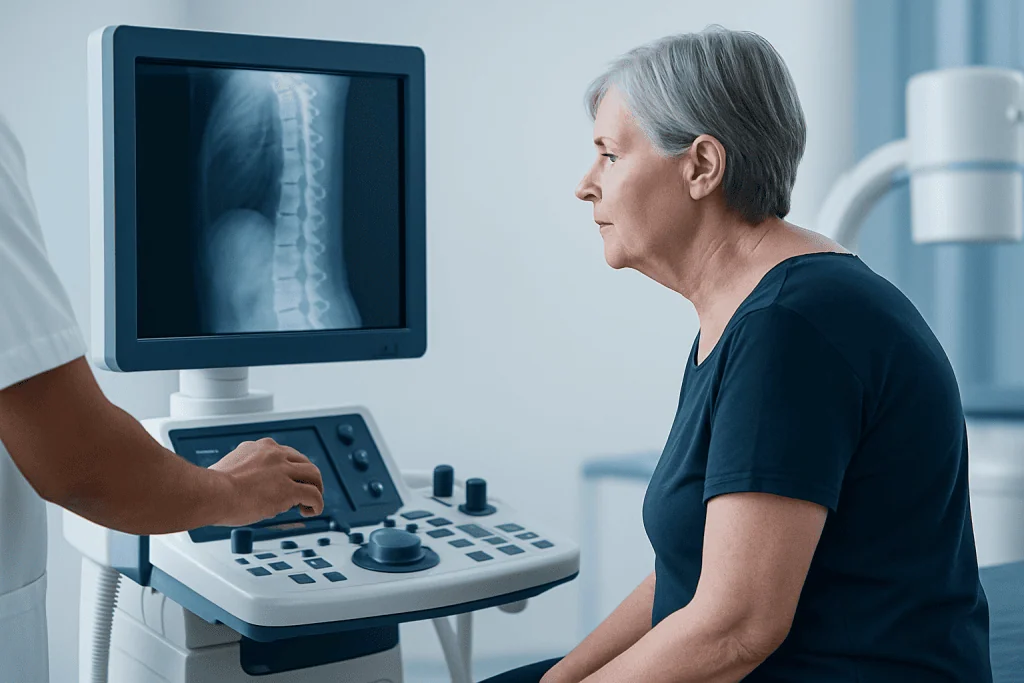
X-rays are the main imaging test because they show the shape of the vertebrae and allow the spinal curve to be measured. Depending on the situation, additional imaging such as MRI may be used to assess the spinal cord, discs, or other soft tissues, especially if there are nerve symptoms or concern about an underlying condition. Bone density testing can be helpful in older adults or anyone at risk of fracture. The goal is not only to confirm kyphosis but also to determine its type, severity, and whether the curve is stable or progressing.
Modern treatment approaches for kyphosis
Treatment for kyphosis depends on the cause, the person’s age, the size and flexibility of the curve, symptoms, and whether the condition is getting worse. Mild, symptom-free curves may only need regular follow-up. When pain, functional limitation, or progression is present, treatment usually starts with non-surgical options. These may include posture education, targeted exercises, physiotherapy, and pain relief strategies.
Exercise-based care often focuses on strengthening the back extensors, abdominal muscles, and shoulder girdle, while improving flexibility in tight muscle groups. A structured program may help reduce discomfort and improve posture control, although it cannot reverse every structural curve. In growing children or teenagers with progressive structural kyphosis, a specialist may recommend bracing to support the spine while growth continues. Adults with fracture-related kyphosis may need assessment and treatment of bone health to reduce future collapse.
Surgery is usually reserved for selected cases, such as severe or progressive curves, persistent pain that does not improve with conservative care, significant deformity, or neurologic compromise. Surgical planning is individualized and may involve spinal correction and stabilization, often within a wider spine surgery pathway. The decision balances expected benefit against recovery time and potential risks. In some people, rehabilitation and non-operative care remain the most appropriate long-term strategy.
If kyphosis is linked to another spinal problem, doctors may also treat associated pain generators or instability. Supportive care can include physical therapy and rehabilitation to improve movement and endurance, especially after injury, surgery, or prolonged pain. A multidisciplinary approach can be especially helpful when the condition affects function, breathing, or quality of life.
Daily management, prevention, and self-care
Self-care cannot correct every type of kyphosis, but it can play an important role in comfort, posture, and overall spinal health. Practical steps include regular movement, avoiding long periods of slouching, setting up workstations at a comfortable height, and using exercise programs that improve postural awareness and core strength. Supportive habits are particularly helpful for postural kyphosis and for reducing strain in the neck and lower back.
Bone health matters, especially in older adults. Adequate calcium and vitamin D intake, weight-bearing activity when appropriate, and medical evaluation for osteoporosis can reduce the risk of vertebral fractures that worsen kyphosis. People who smoke may benefit from stopping, since smoking is associated with poorer bone and disc health. Falls prevention can also be important in those with balance issues or fragile bones.
Self-care should not replace medical assessment when the curve is increasing or symptoms are significant. Stretching and exercise should be tailored to the person’s condition, because some positions may not be suitable in severe osteoporosis or after spinal fracture. A clinician or physiotherapist can advise on safer activities and realistic goals.
When to seek medical care
Medical assessment is recommended if a new rounded back develops, if posture seems to be worsening, or if kyphosis is associated with ongoing pain, stiffness, or loss of function. Children and teenagers with a noticeable curve should be assessed during growth, since some structural forms can progress relatively quickly. Adults, especially older adults, should seek review if kyphosis appears after a fall, lifting injury, or sudden onset of back pain.
Urgent medical attention is important when kyphosis is accompanied by weakness, numbness, changes in walking, severe pain, fever, unexplained weight loss, or bowel or bladder changes. These features may point to a more serious spinal problem rather than a simple postural issue. Breathing difficulty also needs timely evaluation.
For people seeking specialist assessment, Acibadem International’s multidisciplinary teams in JCI-accredited hospitals evaluate and treat spinal conditions for international patients, including advanced imaging and surgical care when needed. Depending on the findings, evaluation may involve orthopedics and traumatology together with rehabilitation, radiology, and other specialties.
Frequently asked questions
Is kyphosis always a serious condition?
No. Many cases are mild and mainly affect posture, especially postural kyphosis in adolescents and adults. It becomes more concerning when the curve is worsening, painful, rigid, or associated with breathing or nerve symptoms.
Can kyphosis be corrected without surgery?
Often, yes. Non-surgical care such as monitoring, posture training, physiotherapy, exercise, bracing in selected growing children, and pain management can be effective for many patients. Structural curves may not fully reverse, but symptoms and function can still improve.
What is the difference between kyphosis and poor posture?
Poor posture can cause a flexible rounded back that improves when a person stands upright, which is often called postural kyphosis. Structural kyphosis involves changes in the vertebrae or spinal tissues and tends to be more rigid. A medical examination and X-rays help distinguish the two.
Does kyphosis get worse with age?
It can, but not always. Progression depends on the cause, spinal growth in children, bone quality, degenerative changes, and whether fractures occur. Regular follow-up is useful when there is a risk of worsening.
Can kyphosis cause breathing problems?
Severe kyphosis can reduce the space available for the chest to expand and may contribute to shortness of breath. This is more likely with larger curves or complex spinal deformity. Breathing symptoms should be assessed by a doctor.
When is surgery considered for kyphosis?
Surgery is generally considered when the curve is severe or progressive, when pain remains significant despite conservative treatment, or when there is neurologic compromise or major functional limitation. The decision is individualized after imaging, clinical assessment, and discussion of benefits and risks.
References
- American Academy of Orthopaedic Surgeons
- National Institute of Arthritis and Musculoskeletal and Skin Diseases
- Scoliosis Research Society
- National Health Service
- American Association of Neurological Surgeons
This article is for general information only and is not a substitute for professional medical advice. Please consult a qualified doctor about your individual situation.
Joint and spine care in Turkey — expert assessment & treatment
JCI-accredited · board-certified surgeons · reply within 24h
Add us as a Preferred Source to see more of our trusted health content across Google Search, AI Overviews and Discover.