Large Intestinal Polyp — Explained by Medical Evidence, Not Myths
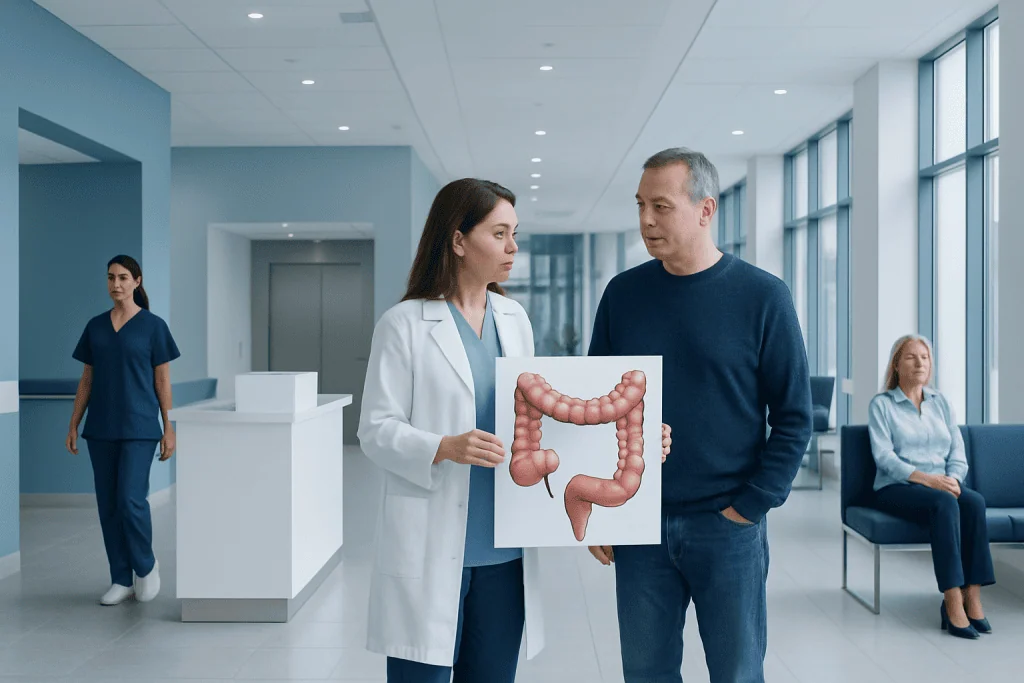
A large intestinal polyp may not cause symptoms and is often found during screening. Size matters: larger polyps have a higher chance of containing precancerous or cancerous changes.
Key Takeaways
- A large intestinal polyp may not cause symptoms and is often found during screening.
- Size matters: larger polyps have a higher chance of containing precancerous or cancerous changes.
- Colonoscopy is the main test used to detect, remove, and examine polyps.
- Most polyps can be treated safely with endoscopic removal rather than major surgery.
- Regular screening and follow-up help prevent colorectal cancer.
A large intestinal polyp is a growth on the inner lining of the colon or rectum. Many are benign, but larger polyps are more likely to contain abnormal cells or develop into cancer over time, so proper evaluation and removal are often recommended.
What a large intestinal polyp means
A large intestinal polyp is an abnormal growth that develops on the inner lining of the large intestine, which includes the colon and rectum. In simple terms, it is extra tissue that projects into the bowel. Many polyps are not cancer, but doctors pay close attention to larger ones because they are more likely to contain precancerous changes or, less commonly, an early cancer.
The term “large” does not describe one single diagnosis. It usually refers to a polyp that is big enough to raise concern because of its size, shape, location, or microscopic features. Some are attached by a stalk, while others are flatter and spread along the lining. Flat or broad-based polyps can be harder to detect and remove completely, which is one reason specialist assessment matters.
Large intestinal polyps are important because colorectal cancer often begins as a polyp that changes gradually over years. Removing the polyp can interrupt that process. This is why screening tests and follow-up colonoscopy play such a central role in prevention, even when a person feels completely well.
Symptoms and signs to know
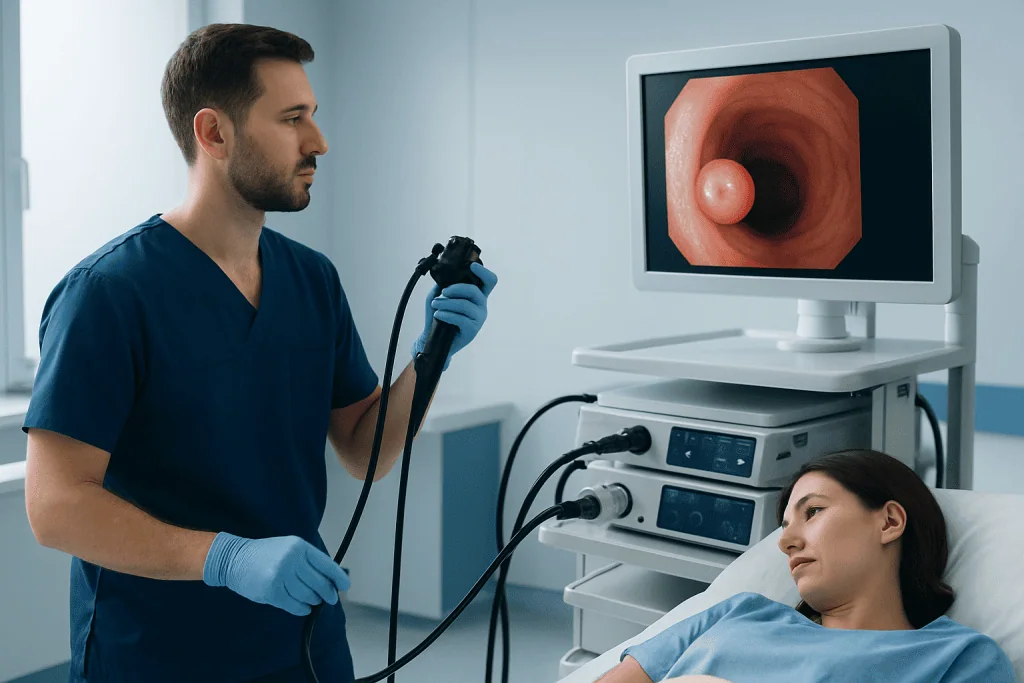
Many people with a large intestinal polyp have no symptoms at all. The growth may be found during routine colorectal screening or when a colonoscopy is performed for another reason. This symptom-free pattern is one reason screening can be so valuable, especially after midlife or in people with a family history of bowel disease.
When symptoms do occur, they can be subtle and may overlap with many other digestive conditions. Possible symptoms include:
- Blood in the stool or on toilet paper
- A change in bowel habits, such as constipation or diarrhea that persists
- Mucus in the stool
- Abdominal discomfort, cramping, or a feeling of incomplete emptying
- Iron deficiency anemia, which may cause tiredness or weakness
Symptoms do not reliably show whether a polyp is harmless, precancerous, or cancerous. For example, rectal bleeding may come from hemorrhoids, but it can also be related to a polyp or another bowel disorder. Because of this, persistent or unexplained symptoms deserve medical attention rather than guesswork.
Why polyps develop and who is at higher risk
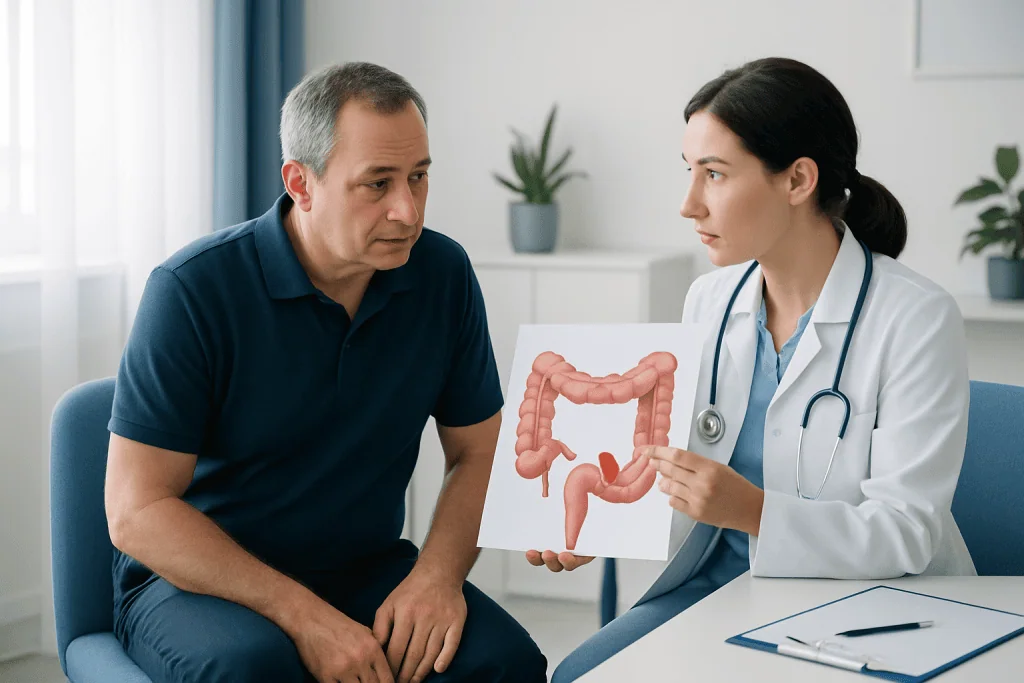
Polyps form when cells in the bowel lining grow in an abnormal way. This can happen as part of the natural aging process, but genetics, inflammation, and lifestyle factors also play a role. Doctors classify polyps by type because some have a higher cancer risk than others. Adenomatous polyps and certain serrated polyps are especially important because they can become malignant over time.
Several factors can increase the chance of developing a large intestinal polyp:
- Age, especially after 45 to 50 years
- A personal or family history of colon polyps or colorectal cancer
- Inherited syndromes such as familial adenomatous polyposis or Lynch syndrome
- Inflammatory bowel disease, including Crohn’s disease and ulcerative colitis
- Obesity, smoking, heavy alcohol use, and low physical activity
- Diets high in processed or red meat and low in fiber
- Type 2 diabetes or metabolic risk factors
Not every large intestinal polyp is dangerous, and not every person with risk factors will develop one. Still, risk helps guide screening and follow-up. A doctor may advise earlier or more frequent colonoscopy if there is a family history, prior polyps, or other conditions linked to colorectal cancer.
How doctors evaluate a large intestinal polyp
The most important test for a suspected large intestinal polyp is colonoscopy. During this procedure, a flexible tube with a camera is used to examine the inside of the colon and rectum. Colonoscopy allows the doctor not only to see the polyp, but often to remove it or take tissue samples during the same procedure. This makes it both a diagnostic and a therapeutic tool.
Doctors assess several features when deciding how concerning a polyp may be. These include its size, shape, location, whether it has a stalk, whether it appears flat or depressed, and whether there are signs that it could already contain invasive cancer. Special imaging techniques during endoscopy can help define the surface pattern and blood vessels more clearly.
After removal or biopsy, the tissue is examined by a pathologist under a microscope. This pathology result is essential because it shows the exact type of polyp, whether dysplasia is present, and whether cancer cells are found. If a very large or complex lesion is seen, patients may be referred for advanced colonoscopy techniques or for additional imaging and specialist review.
Treatment options and what removal involves
In many cases, treatment means removing the large intestinal polyp completely. This is usually done endoscopically during colonoscopy, without the need for open surgery. Smaller lesions may be removed with a snare, while larger or flatter lesions may require more advanced techniques to lift and resect the tissue safely in one piece or in sections.
For some complex polyps, specialist endoscopic methods can reduce the need for surgery. These may include techniques used in advanced gastroenterology units, especially for broad-based or difficult-to-reach lesions. The best approach depends on whether the polyp appears benign, precancerous, or suspicious for deeper invasion into the bowel wall.
Surgery may be recommended if the polyp is too large for safe endoscopic removal, if cancer is already present, or if pathology suggests a risk that abnormal cells have spread beyond the superficial layer. In that setting, treatment planning may overlap with care for colon cancer. Near the end of the care pathway, some international patients choose evaluation at centers such as Acibadem International, where multidisciplinary specialists in JCI-accredited hospitals assess complex bowel polyps and related conditions.
After removal, follow-up is not optional. Even when treatment is successful, repeat colonoscopy is often advised because new polyps can form later, and occasionally a large lesion needs surveillance to confirm complete clearance. The timing depends on the number, size, type, and pathology of the polyp.
Prevention, screening, and self-care after diagnosis
No method can prevent every polyp, but screening and healthy habits can lower risk and improve early detection. Screening is especially important because many polyps cause no symptoms. General recommendations vary by country and personal risk, but average-risk adults are commonly advised to begin colorectal cancer screening around age 45. People with family history or inherited syndromes may need earlier testing.
Helpful lifestyle measures include maintaining a healthy weight, being physically active, not smoking, limiting alcohol, and eating a balanced diet rich in vegetables, fruit, legumes, and whole grains. A doctor may also review medications and medical history, since some people need individualized guidance based on bleeding risk, prior polyps, or bowel disease.
Self-care after a polyp is found mainly involves following the recommended surveillance plan. It is understandable to feel anxious after hearing that a polyp is “large,” but size alone does not confirm cancer. The clearest answers come from pathology results, discussion with a gastroenterologist, and keeping all follow-up appointments, including any recommended endoscopy or repeat colonoscopy.
When to seek medical care
Medical care should be sought promptly for rectal bleeding that is new, persistent, or heavy; unexplained anemia; ongoing changes in bowel habits; or abdominal pain that does not improve. These symptoms do not always mean a serious disease is present, but they should be assessed rather than ignored. Early evaluation helps clarify whether the cause is a polyp, inflammation, hemorrhoids, or another condition.
Urgent medical attention is appropriate if there is severe abdominal pain, fainting, black or maroon stools, significant weakness, or heavy bleeding. People who have recently had a polyp removed should also contact their healthcare team if they develop fever, worsening abdominal pain, or ongoing bleeding after the procedure.
Anyone told they have a large intestinal polyp should ask clear questions about the pathology result, whether removal was complete, and when follow-up testing is needed. A second opinion may be helpful when the polyp is very large, difficult to access, or associated with possible early cancer. In complex cases, referral to an experienced specialist center can support safe treatment planning.
Frequently asked questions
Is a large intestinal polyp always cancer?
No. Many large intestinal polyps are benign or precancerous rather than cancerous. However, larger polyps are more likely than small ones to contain abnormal cells, so they should be evaluated and usually removed.
Can a large intestinal polyp cause pain?
Often it causes no pain at all. Some people may notice abdominal discomfort, cramping, bloating, or changes in bowel habits, but these symptoms are not specific and can happen with many digestive conditions.
How is a large intestinal polyp removed?
Most are removed during colonoscopy using special endoscopic tools. If the polyp is very large, flat, or suspicious for deeper cancer, advanced endoscopic techniques or surgery may be recommended.
What happens after the polyp is removed?
The tissue is sent to a pathology lab to determine the exact type of polyp and whether precancerous or cancerous changes are present. Based on the result, the doctor recommends a surveillance plan, which often includes repeat colonoscopy after a set interval.
Can large intestinal polyps come back?
A completely removed polyp may not return, but new polyps can develop elsewhere in the colon or rectum over time. That is why follow-up screening is important, especially for people who have had large or multiple polyps.
Who should be screened for colon polyps?
Average-risk adults are generally advised to start colorectal screening around age 45, although recommendations vary by country and individual risk. People with a family history of colorectal cancer, inherited syndromes, or inflammatory bowel disease may need earlier and more frequent screening.
References
- World Health Organization
- National Cancer Institute
- American Cancer Society
- U.S. National Institute of Diabetes and Digestive and Kidney Diseases
- American Society for Gastrointestinal Endoscopy
This article is for general information only and is not a substitute for professional medical advice. Please consult a qualified doctor about your individual situation.
Persistent digestive symptoms? Get evaluated in Turkey
JCI-accredited · board-certified surgeons · reply within 24h
Add us as a Preferred Source to see more of our trusted health content across Google Search, AI Overviews and Discover.