Laryngotracheal Reconstruction: Procedure, Recovery and Results

Laryngotracheal reconstruction is used to treat narrowing in the larynx, subglottis or upper trachea. The procedure may use a cartilage graft, airway expansion, scar removal or staged reconstruction with a temporary tracheostomy tube.
Key Takeaways
- Laryngotracheal reconstruction is used to treat narrowing in the larynx, subglottis or upper trachea.
- The procedure may use a cartilage graft, airway expansion, scar removal or staged reconstruction with a temporary tracheostomy tube.
- Most patients need close monitoring after surgery, and recovery commonly includes several weeks of activity restrictions and follow-up airway assessments.
- Breathing often improves when reconstruction heals well, although more than one procedure may sometimes be needed.
- New or worsening breathing difficulty, noisy breathing, fever, bleeding or trouble swallowing after surgery requires prompt medical advice.
Laryngotracheal reconstruction is a specialist airway operation that enlarges or rebuilds the area below the voice box and upper windpipe when narrowing makes breathing difficult. Recovery varies with the extent of reconstruction, the underlying cause, age and overall health, but careful follow-up is essential to support safe healing and long-term airway function.
Overview: what is laryngotracheal reconstruction?
Laryngotracheal reconstruction is surgery that widens or rebuilds a narrowed section of the airway involving the larynx (voice box), the subglottis just beneath it, or the upper trachea (windpipe). The aim is to create a more stable airway so that air can move in and out more freely. It may be performed in children or adults, depending on the cause and location of the narrowing.
Airway narrowing is often called stenosis. It can result from prolonged intubation, a previous tracheostomy, injury, inflammation, autoimmune disease, infection, prior radiation treatment or a congenital difference in airway development. In some people, it develops without an identifiable cause. Reconstruction is considered when symptoms are significant or when less invasive treatments have not provided lasting improvement.
The operation is individualized. Some patients need a relatively limited expansion of the airway, while others require removal of scarred tissue, placement of a cartilage graft, or reconstruction performed in stages. The surgical team balances the need to improve breathing with the need to protect voice and swallowing function.
How laryngotracheal reconstruction works and who may benefit
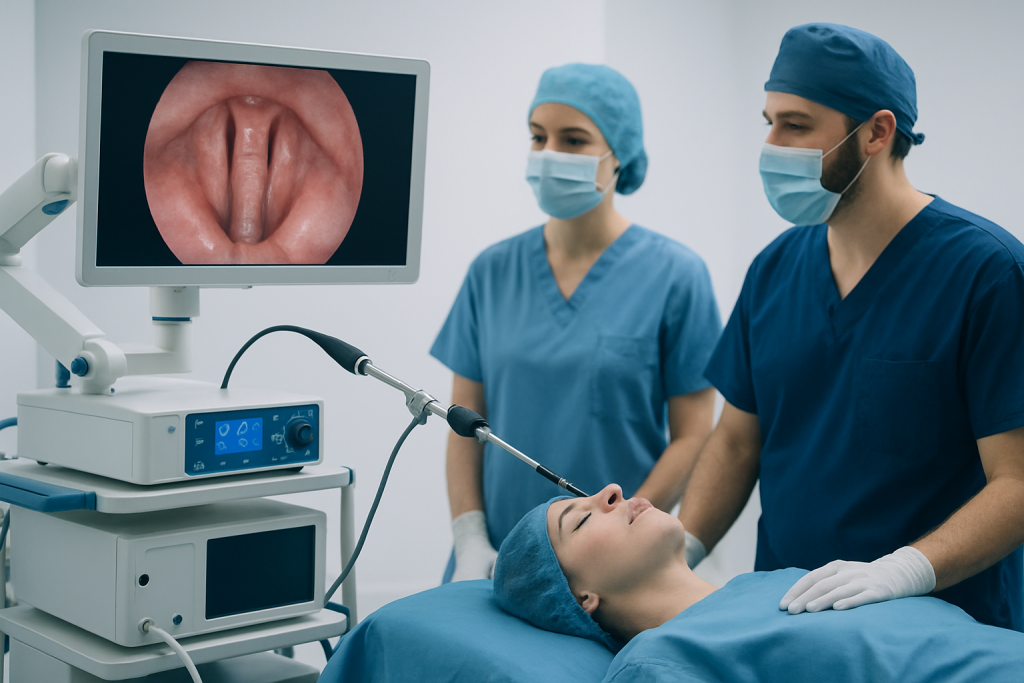
During reconstruction, the surgeon makes more space within the narrowed airway or replaces a damaged segment. A common technique uses a small piece of the patient’s own cartilage, often taken from the rib or ear, as a graft to support and expand the airway. In selected cases, scar tissue is removed and the healthy ends of the trachea are joined together; this is known as tracheal resection and anastomosis.
Potential candidates include people with symptomatic subglottic or tracheal stenosis, those who remain dependent on a tracheostomy tube because of a fixed narrowing, and patients whose airway obstruction has returned after endoscopic dilation. Symptoms that prompt assessment may include exertional breathlessness, persistent noisy breathing (stridor), repeated chest infections, reduced exercise tolerance or difficulty being decannulated from a tracheostomy.
Not every airway narrowing needs open reconstruction. Mild disease may be monitored or treated through endoscopic approaches such as dilation, laser treatment or steroid injection. A specialist ENT, airway or thoracic surgery team considers the length and severity of narrowing, tissue quality, vocal cord movement, swallowing safety, lung health and the person’s previous procedures before recommending treatment.
- Open reconstruction may be performed as a single-stage procedure or a staged procedure.
- A staged approach may involve a temporary stent or tracheostomy while the reconstructed airway heals.
- Children and adults have different airway sizes and causes of stenosis, so surgical planning is age-specific.
What happens during the procedure?

Laryngotracheal reconstruction is carried out under general anesthesia. Before surgery, patients usually undergo airway imaging and direct endoscopic examination, called laryngoscopy and bronchoscopy, to map the narrowed segment. The team may also assess voice, swallowing, lung function and medical conditions that can affect anesthesia or wound healing.
In a typical expansion reconstruction, the surgeon reaches the airway through an incision in the neck. The narrowed portion is opened carefully and widened with a cartilage graft or other reconstructive technique. If a longer segment of trachea is severely scarred, the surgeon may remove it and reconnect the remaining healthy airway. The precise approach depends on where the stenosis is located and how much airway is affected.
Some patients wake with a breathing tube for a short period, while others need a tracheostomy tube temporarily or continue using one that was already in place. A stent may occasionally be used to support the new airway shape during early healing. Hospital teams monitor breathing, pain, hydration, swallowing and wound healing closely, with decisions about tubes made individually.
Because airway reconstruction involves several functions at once, care may include ENT surgeons, thoracic surgeons, anesthesiologists, pulmonologists, speech and language therapists, intensive care clinicians and nursing teams. Acibadem International’s multidisciplinary specialists at JCI-accredited hospitals evaluate and treat airway conditions for international patients when appropriate.
Benefits, limitations and possible risks
The principal benefit of laryngotracheal reconstruction is improved airway patency. This can reduce noisy breathing and breathlessness, improve activity tolerance and, for some people with a tracheostomy, make eventual removal of the tube possible. Successful surgery can also reduce the need for repeated airway dilations, although this depends on the cause and severity of stenosis.
Results are not identical for every person. Scar tissue can reform, inflammation can persist, or the reconstructed area may require additional endoscopic treatment. Voice may remain different when the disease or surgery affects the larynx, and swallowing may need to be assessed during recovery. People should discuss realistic goals, including breathing, speaking and tracheostomy outcomes, with their surgeon before choosing surgery.
Possible risks include bleeding, infection, airway swelling, wound problems, pneumonia, changes in voice, swallowing difficulty, aspiration, restenosis and the need for further procedures. Rare but serious complications can affect breathing and may require urgent airway support. The surgical team explains individual risks based on the planned technique, previous operations and other health conditions.
How long does it take to recover from laryngotracheal reconstruction surgery?
Initial hospital recovery commonly lasts several days to one or two weeks, but the exact stay depends on the complexity of surgery, the need for ventilation or a tracheostomy tube, and how comfortably the patient can breathe and swallow. The early period focuses on protecting the airway reconstruction, controlling pain and watching for swelling, infection or secretion buildup.
Many adults need several weeks away from strenuous work, heavy lifting and vigorous exercise. Full tissue healing and assessment of the final airway result often take several months. Follow-up may include repeat laryngoscopy or bronchoscopy, as well as voice and swallowing review when needed.
Recovery is often longer after staged surgery or if a tracheostomy tube remains in place. The care team gives individualized instructions about neck position, wound care, diet, speaking, medications and when it is safe to resume normal activities. Attending planned follow-up appointments is an important part of recovery because early scar recurrence may be treatable.
What should I expect after laryngectomy surgery?
Laryngectomy is different from laryngotracheal reconstruction. A laryngectomy removes part or all of the larynx, most often because of laryngeal cancer, while laryngotracheal reconstruction preserves and repairs the airway structure whenever possible. Recovery expectations therefore differ substantially.
After a partial laryngectomy, temporary changes in voice, swallowing and breathing are common, and rehabilitation may include speech and swallowing therapy. After a total laryngectomy, the airway is permanently redirected through a neck opening called a stoma, and the person uses a form of alaryngeal communication, such as a voice prosthesis, electrolarynx or esophageal speech.
Anyone recovering from laryngectomy should receive individualized guidance from the surgical and rehabilitation teams. Persistent swallowing problems, coughing during meals, increasing breathlessness, stoma concerns, fever or wound changes should be discussed promptly with a clinician.
How long does it take to recover from a tracheal resection?
Tracheal resection removes a narrowed or damaged section of windpipe and reconnects the healthy ends. Hospital recovery is often about one week, although it can be longer if there are complications, other medical conditions or more extensive surgery. Early recovery usually includes pain management, airway monitoring and measures to reduce tension on the surgical connection.
For several weeks, patients are commonly asked to avoid strenuous activity and heavy lifting while the trachea heals. Some surgeons recommend specific neck-position precautions after surgery; these instructions should be followed exactly because they are based on the individual repair. Gradual return to daily activities is usually guided by symptoms and follow-up examinations.
Most healing occurs over the first several weeks, but long-term follow-up may continue for months to confirm that the airway remains open. Breathlessness, stridor, fever, worsening cough, neck swelling or new difficulty swallowing after discharge should be assessed without delay.
How long does it take to recover from larynx surgery?
Recovery from larynx surgery depends on why the operation was needed and whether it was performed endoscopically, through an external neck incision, or as a partial or total laryngectomy. Small endoscopic procedures may allow return to many usual activities within days to a few weeks, while major reconstruction or cancer surgery requires a longer recovery and more rehabilitation.
Voice rest or reduced voice use may be advised after some laryngeal procedures. Hoarseness, throat discomfort and fatigue can improve gradually, but recovery of the voice is variable, particularly when surgery involves the vocal cords or extensive scar tissue. A speech and language therapist can help patients protect and optimize voice and swallowing function.
Patients should avoid smoking and secondhand smoke, stay well hydrated if allowed, follow dietary advice and use prescribed medicines only as directed. Reflux management may also be part of care, since reflux can irritate the upper airway and affect healing in some people.
When to seek medical care
Before surgery, medical assessment is important for persistent noisy breathing, breathlessness that limits usual activity, repeated episodes of airway obstruction, unexplained wheeze that does not respond as expected to asthma treatment, or difficulty managing a tracheostomy. These symptoms can have several causes, and airway evaluation helps identify the correct treatment.
After reconstruction, urgent medical attention is needed for severe or rapidly worsening trouble breathing, blue or gray lips or skin, heavy bleeding, inability to clear secretions, chest pain, confusion or loss of consciousness. These symptoms may indicate an emergency; local emergency services should be contacted immediately.
Patients should contact their surgical team promptly for fever, increasing redness or drainage from an incision, new neck swelling, worsening stridor, persistent vomiting, difficulty swallowing liquids or medications, or a change in tracheostomy tube function. Early review can help address problems before they become more serious.
Frequently asked questions
Is laryngotracheal reconstruction a major surgery?
Yes. Laryngotracheal reconstruction is a major airway operation performed under general anesthesia and requires careful postoperative monitoring. The extent of surgery varies from a limited airway expansion to a more complex staged reconstruction or combined tracheal procedure.
Will laryngotracheal reconstruction improve breathing?
The purpose of surgery is to widen a narrowed airway and improve airflow. Many appropriately selected patients experience less noisy breathing and breathlessness, but results depend on the cause, length and severity of stenosis and the healing response.
Can a tracheostomy tube be removed after laryngotracheal reconstruction?
For some patients, reconstruction is performed to make tracheostomy removal possible. The timing depends on airway healing, endoscopic findings, breathing ability and whether swallowing is safe; it is not guaranteed for every patient.
Will my voice change after laryngotracheal reconstruction?
Voice changes are possible, especially when narrowing or reconstruction involves the larynx and vocal cords. Some people notice temporary hoarseness, while others may have longer-term voice differences; voice therapy can be helpful when recommended.
How painful is recovery after airway reconstruction?
Throat and neck discomfort are common after surgery, but pain is managed with an individualized plan from the hospital team. Patients should report pain that is worsening, not controlled by prescribed treatment, or accompanied by breathing difficulty, fever or neck swelling.
Can laryngotracheal stenosis return after surgery?
Yes, scar tissue or inflammation can sometimes lead to recurrent narrowing. Regular follow-up allows the team to monitor the airway and consider medical treatment, endoscopic procedures or further surgery if needed.
References
- American Academy of Otolaryngology–Head and Neck Surgery
- American Thoracic Society
- National Institutes of Health
- Mayo Clinic
- Merck Manual Consumer Version
This article is for general information only and is not a substitute for professional medical advice. Please consult a qualified doctor about your individual situation.
Explore treatments in Turkey — costs, top hospitals & a free quote
JCI-accredited · board-certified surgeons · reply within 24h
Add us as a Preferred Source to see more of our trusted health content across Google Search, AI Overviews and Discover.