Lateral Collateral Ligament Sprain: An Evidence-Based Guide for Patients
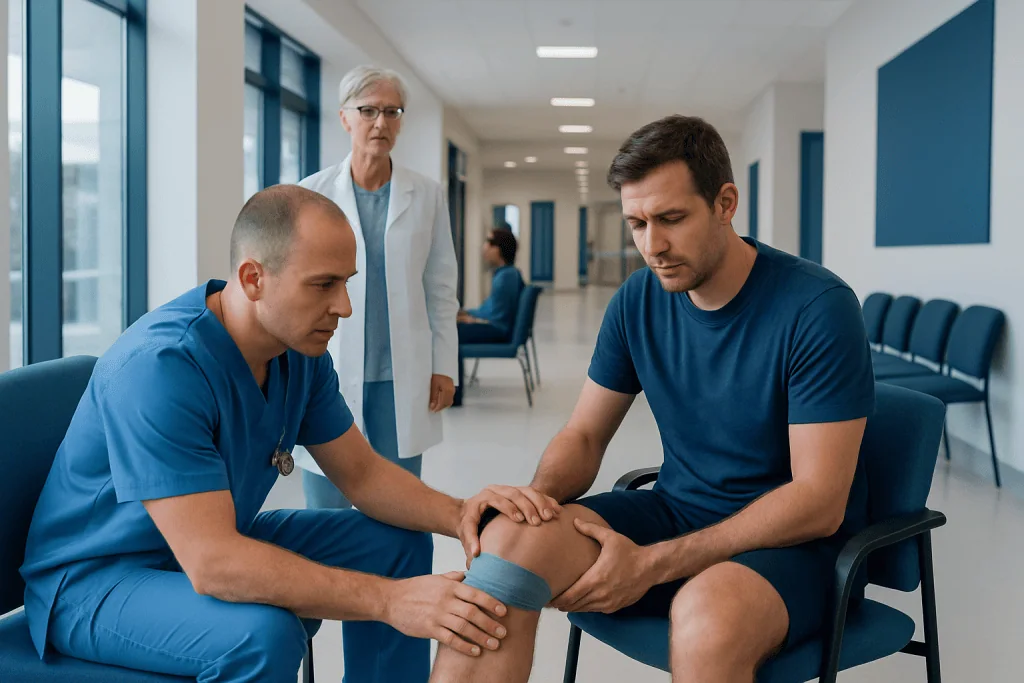
The lateral collateral ligament (LCL) supports the outside of the knee and helps prevent excessive outward bending. LCL sprains often follow a force to the inside of the knee, a twist, or a sports-related impact.
Key Takeaways
- The lateral collateral ligament (LCL) supports the outside of the knee and helps prevent excessive outward bending.
- LCL sprains often follow a force to the inside of the knee, a twist, or a sports-related impact.
- Symptoms can include outer-knee pain, tenderness, swelling and a feeling that the knee may give way.
- A clinical examination and, when needed, imaging help identify the injury grade and associated damage.
- Most mild to moderate isolated LCL sprains are managed without surgery using bracing and rehabilitation.
- Severe tears or combined knee-ligament injuries may need specialist treatment and sometimes surgery.
A lateral collateral ligament sprain affects the strong band of tissue on the outside of the knee. Many isolated injuries improve with appropriate protection and rehabilitation, but prompt assessment is important when the knee feels unstable, is severely swollen, or cannot bear weight.
Overview: what is a lateral collateral ligament sprain?
A lateral collateral ligament sprain is an overstretching or tearing injury of the lateral collateral ligament, commonly called the LCL. This ligament runs along the outside of the knee, from the thighbone (femur) to the smaller lower-leg bone (fibula). It helps keep the knee stable, especially against forces that push the knee outward.
Sprains range from a mild stretch of ligament fibers to a complete tear. In everyday language, a “sprain” may describe any of these degrees of injury, while clinicians may also use the term LCL tear for more substantial damage. The right treatment depends on injury severity, knee stability, activity needs and whether other structures were injured at the same time.
The LCL is part of the complex outer-back corner of the knee, sometimes called the posterolateral corner. Because injuries in this area can occur with damage to other ligaments, cartilage or nerves, a careful assessment is valuable rather than assuming that all outer-knee pain is an isolated LCL sprain.
How an LCL sprain feels and what symptoms may occur
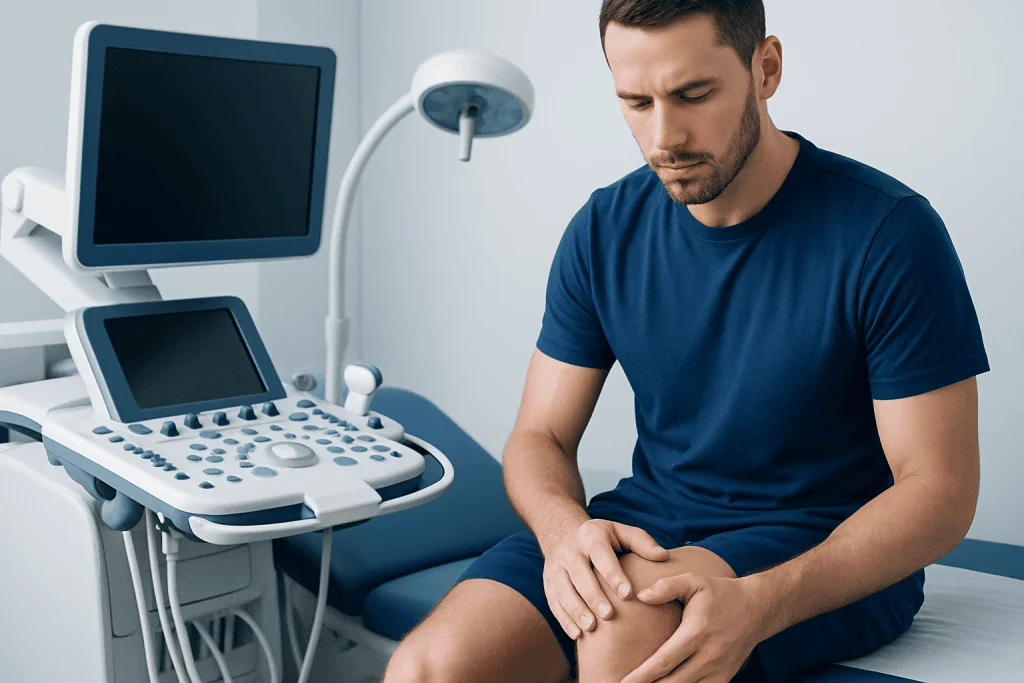
Pain and tenderness on the outside of the knee are common. Symptoms may start immediately after an impact or twist, or become more noticeable over the following day as swelling and stiffness develop. Some people recall a pop at the time of injury, although a pop does not by itself confirm a ligament tear.
Other possible features include pain while walking, turning, squatting or going down stairs; reduced range of motion; bruising; and swelling around the outer knee. Swelling can be mild in an isolated LCL injury, but marked or rapid swelling may suggest additional injury inside the joint.
With a more significant tear, the knee may feel unstable or as though it will buckle during weight-bearing or direction changes. Numbness, tingling or weakness in the foot is less common but important, because a nerve near the fibular head can be affected in some lateral knee injuries.
- Grade 1: ligament fibers are stretched, with localized pain but little or no looseness of the knee.
- Grade 2: a partial tear causes more pain, swelling and some instability.
- Grade 3: a complete tear creates substantial instability and may occur alongside other knee injuries.
Common causes and factors that increase risk
An LCL sprain often occurs when a force strikes the inner side of the knee and pushes it outward. This can happen in contact sports, a fall, a collision or an accident. A sudden pivot or awkward landing can also strain the ligament, particularly when the foot is planted and the knee twists.
Sports involving rapid changes of direction, jumping or contact may raise the chance of knee ligament injury. However, an LCL sprain can also happen during ordinary activities, such as slipping, stepping off a curb awkwardly or falling onto the side of the leg.
Previous knee injuries, reduced muscle control around the hip and knee, fatigue, poorly managed return to sport and unsuitable footwear or playing surfaces may contribute to risk. These factors do not mean an injury is inevitable, but they can be useful targets during recovery and prevention planning.
How clinicians diagnose an LCL injury
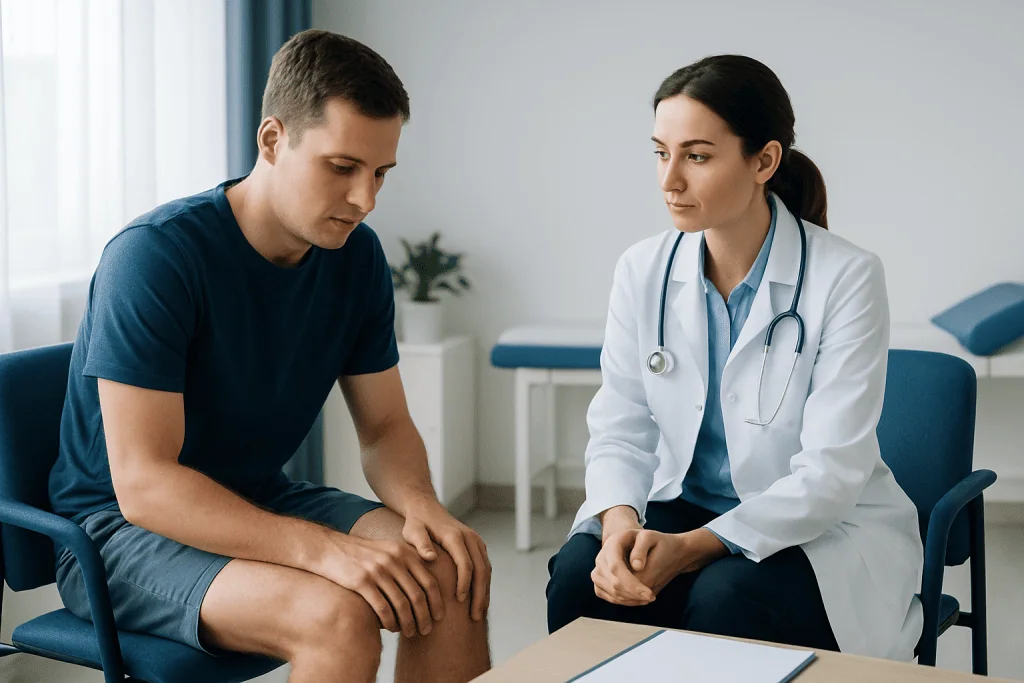
Diagnosis begins with a discussion of how the injury happened, current symptoms, past knee problems and activity goals. A clinician examines the knee for tenderness, swelling, range of motion and stability. Specific gentle stress tests help assess the LCL and other ligaments, although examination can be difficult soon after an injury if pain and swelling are substantial.
X-rays do not show ligaments directly, but they may be used to rule out a fracture or a small bone avulsion near the ligament attachment. Magnetic resonance imaging (MRI) may be recommended when the diagnosis is unclear, symptoms suggest a high-grade injury, or there is concern for damage to the cruciate ligaments, meniscus, cartilage or posterolateral corner.
It is important to distinguish an LCL sprain from other causes of lateral knee pain, including a meniscus tear, tendon problems or osteoarthritis. An accurate diagnosis supports an appropriate recovery plan and helps prevent an unstable knee from being returned to demanding activity too soon.
Treatment options and rehabilitation
Most isolated grade 1 and grade 2 LCL sprains are treated without surgery. Early care commonly includes temporarily reducing painful activities, using ice wrapped in cloth for short periods, compression if advised, and elevating the leg when resting. A clinician may recommend pain-relief medicine when it is suitable for the individual’s health history.
A hinged knee brace may be used to protect the ligament while walking, particularly for a moderate sprain. Crutches can reduce strain when weight-bearing is painful or the knee feels unstable. Complete rest for an extended period is usually not the goal; gradual, supervised movement and strengthening help restore function once it is safe to do so.
Rehabilitation typically focuses on recovering knee motion, then building strength in the quadriceps, hamstrings, hip and core muscles. Balance, walking mechanics and sport-specific movements are added progressively. physical therapy and rehabilitation can help tailor exercises and return-to-activity decisions to the injury and the person’s goals.
Grade 3 tears, combined ligament injuries and injuries causing ongoing instability may require assessment by an orthopedic knee specialist. Surgery is not routine for an isolated LCL sprain, but repair or reconstruction may be considered when the ligament injury is severe or part of a more complex knee injury. knee ligament surgery may be discussed after clinical examination and imaging when appropriate.
Recovery, return to activity and preventing another injury
Recovery time varies considerably. A mild sprain may settle over several weeks, while partial or complete tears can require a longer rehabilitation period, especially when other structures are affected. Return to sport or physically demanding work should be based on function rather than the calendar alone.
Before returning to pivoting, running or contact activity, the person should usually have minimal or no pain and swelling, full or near-full movement, stable walking and sufficient strength and control for their activity. A clinician or physiotherapist may use functional exercises, such as controlled single-leg tasks and change-of-direction drills, to guide this process.
To reduce recurrence risk, it can help to build lower-limb and hip strength, practice landing and turning technique, increase training loads gradually and use recommended protective equipment for the sport. A warm-up that includes movement preparation and neuromuscular control exercises may also be useful. Continuing selected rehabilitation exercises after symptoms improve can support lasting knee control.
When to seek medical care
Medical assessment is recommended after a knee injury that causes significant outer-knee pain, swelling, bruising, difficulty walking or a sensation of instability. It is especially important to seek timely care after a direct blow to the knee, a high-energy injury, or a twisting injury followed by a pop and rapid swelling.
Urgent medical care is appropriate if the knee looks deformed, a person cannot bear weight, the foot becomes cold or pale, or there is numbness, tingling or new weakness in the foot or ankle. These symptoms can indicate injuries that need prompt evaluation.
People should also arrange review if pain, swelling or giving-way does not improve as expected with initial care. Acibadem International’s multidisciplinary specialists and JCI-accredited hospitals diagnose and treat knee injuries for international patients, with care plans based on the individual injury and recovery needs.
Frequently asked questions
Can a lateral collateral ligament sprain heal without surgery?
Many isolated mild and moderate LCL sprains heal without surgery with activity modification, protection, progressive exercise and rehabilitation. The recovery plan should be guided by the injury grade and knee stability. Severe tears or combined injuries may require specialist assessment and, in selected cases, surgery.
Where is LCL sprain pain located?
LCL sprain pain is usually felt along the outer side of the knee, often near the joint line or toward the top of the fibula. The area may be tender to touch and painful during turning, bending or weight-bearing. Pain on the outside of the knee can have other causes, so an examination is helpful after an injury.
How long does an LCL sprain take to heal?
A mild sprain may improve within a few weeks, while a more significant partial or complete injury can take months to recover fully. Healing time is influenced by the severity of injury, whether other knee structures are involved and adherence to rehabilitation. Returning to sport should follow restoration of stability, strength and function rather than symptoms alone.
Should a person walk on an LCL sprain?
Some people with a mild injury can walk carefully, but walking should not cause substantial pain, limping or instability. A clinician may advise a brace or crutches for a period of time when the sprain is more significant. Continuing to walk on an unstable knee can increase the risk of further injury.
Is an LCL sprain the same as an ACL tear?
No. The LCL is located on the outside of the knee and mainly resists outward bending forces, while the ACL is inside the knee and helps control forward movement and rotation of the shinbone. Both can cause instability, but their mechanisms, examination findings and treatment plans may differ.
What should be avoided after an LCL injury?
In the early stage, people should avoid painful twisting, pivoting, contact sports, deep bending under load and activities that make the knee give way. They should not try to test knee stability through forceful movements. A gradual return to these activities should be planned with a qualified clinician or physiotherapist.
References
- American Academy of Orthopaedic Surgeons
- OrthoInfo
- National Institute of Arthritis and Musculoskeletal and Skin Diseases
- Mayo Clinic
- American Orthopaedic Society for Sports Medicine
This article is for general information only and is not a substitute for professional medical advice. Please consult a qualified doctor about your individual situation.
Joint and spine care in Turkey — expert assessment & treatment
JCI-accredited · board-certified surgeons · reply within 24h
Add us as a Preferred Source to see more of our trusted health content across Google Search, AI Overviews and Discover.

More from the Health Library

Bcba: What Patients Need to Know

Proximal Phalanx — Explained by Medical Evidence, Not Myths

Hand Sanitizer and: What Patients Need to Know

Bentyl — Explained by Medical Evidence, Not Myths

Emetophobia: An Evidence-Based Guide for Patients
Wash in Hand: What Patients Need to Know
Orthopedic Surgery & Traumatology Specialists at Acibadem

Fzt. A.Sercan Soyarslan
Physical Medicine & Rehabilitation
Dr. Abdullah Yener İnce
Orthopedic Surgery & Traumatology
Dr. Adnan Abbasoğlu
Orthopedic Surgery & Traumatology
Prof. Dr. Ahmet Alanay
Orthopedic Surgery & Traumatology