

Left Breast Radiation and Heart Damage: How It Works, Results and What to Expect

Left-sided breast radiation may increase long-term heart risk when heart tissue receives radiation, but individual risk varies. Modern techniques such as deep inspiration breath hold can move the heart farther from the treatment field.
Key Takeaways
- Left-sided breast radiation may increase long-term heart risk when heart tissue receives radiation, but individual risk varies.
- Modern techniques such as deep inspiration breath hold can move the heart farther from the treatment field.
- Radiation planning is personalized using imaging, dose calculations and repeated positioning checks.
- The benefits of radiation in reducing breast cancer recurrence often outweigh the potential cardiac risks.
- People with existing heart disease or cardiovascular risk factors may need closer coordination between oncology and cardiology teams.
Left breast radiation can expose a small portion of the heart to radiation because of its location behind the left breast. Modern radiation planning, positioning and heart-sparing techniques substantially reduce this exposure while preserving the benefits of breast cancer treatment.
Overview: Can Left Breast Radiation Affect the Heart?
Left breast radiation and heart damage are linked because the heart lies behind and slightly beneath the left breast. During radiation therapy for left-sided breast cancer, a small amount of radiation may reach nearby heart tissue, particularly when lymph nodes near the chest are also treated. Radiation-related heart effects are usually delayed and may develop years after treatment rather than during therapy.
Importantly, modern breast radiation is designed to protect the heart as much as possible. CT-based planning, carefully shaped radiation beams, treatment positioning and breath-holding techniques can greatly limit the dose reaching the heart. For many people, radiation remains an important part of treatment because it lowers the risk of breast cancer returning in the breast or nearby area.
The likelihood of a heart effect depends on the dose received by the heart, the area requiring treatment, previous cancer therapies and a person’s underlying cardiovascular health. The radiation oncology team reviews these factors individually and discusses the expected benefits and possible risks before treatment begins.
How Radiation Therapy Works and Why Heart Exposure Can Occur
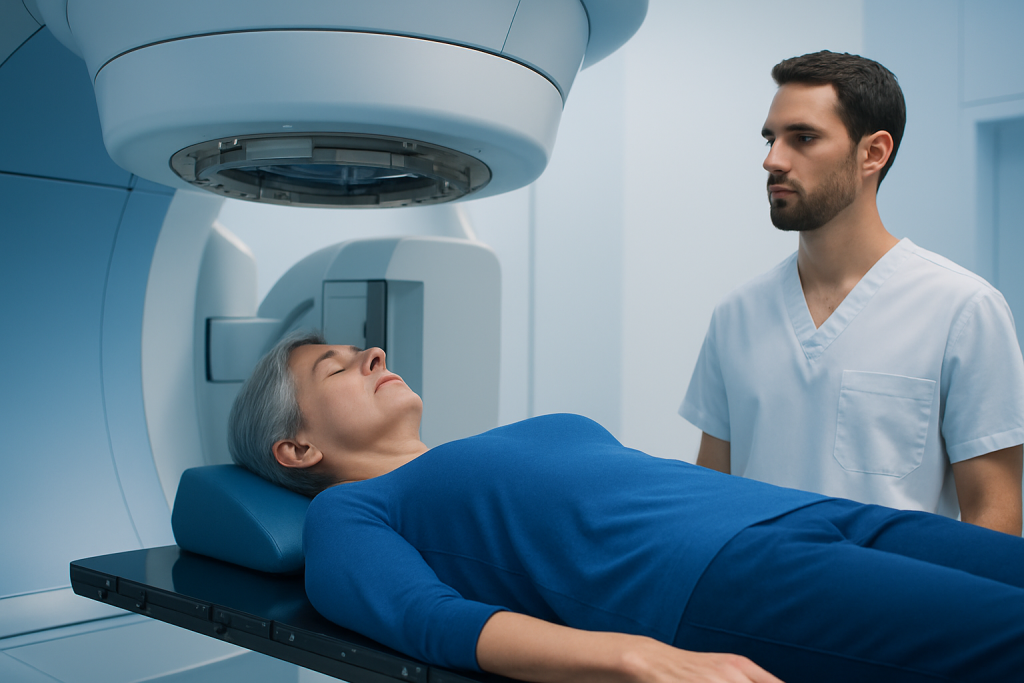
Radiation therapy uses high-energy beams to damage the DNA of cancer cells that may remain after surgery. Cancer cells are less able than healthy cells to repair this damage, so they gradually stop dividing and die. After breast-conserving surgery, radiation is commonly used to reduce the risk of cancer returning in the treated breast. It may also be recommended after mastectomy in selected situations.
For cancer in the left breast, the treatment field may sit close to the heart, especially for tumors located toward the inner part of the breast or when regional lymph nodes need treatment. The left anterior descending coronary artery, which supplies blood to part of the heart muscle, can be near this area. Radiation is delivered from outside the body and is planned to target the breast or chest wall while minimizing exposure to surrounding organs.
Radiation does not usually cause immediate heart symptoms. When cardiac effects occur, they are thought to result from inflammation and gradual changes in small blood vessels or heart structures. Possible late effects include coronary artery disease, changes in heart muscle function, valve disease or inflammation of the lining around the heart. These outcomes are uncommon with contemporary heart-sparing approaches, but they remain part of informed treatment planning.
Who May Need Extra Cardiac Assessment Before Treatment

Most people with left-sided breast cancer can receive radiation safely. The treatment recommendation is based on the cancer stage, tumor biology, surgical procedure, lymph node involvement and expected benefit from local treatment. The radiation oncologist balances these cancer-related factors with the anatomy seen on planning scans and the achievable heart dose.
Additional attention may be appropriate for people who have coronary artery disease, heart failure, irregular heart rhythms, high blood pressure, diabetes, high cholesterol or a history of smoking. A family history of early heart disease and prior radiation to the chest may also be relevant. Some systemic cancer treatments, including certain chemotherapy medicines and targeted therapies, can affect the heart as well.
Depending on the situation, the oncology team may involve a cardiologist or cardio-oncology specialist before or during treatment. This does not necessarily mean radiation cannot be given. It helps establish a baseline, optimize blood pressure and cholesterol management, and create an appropriate follow-up plan. Information about breast cancer can also help patients understand how radiation fits into a wider treatment pathway.
Step by Step: Planning and Delivery of Left Breast Radiation
Radiation treatment begins with a planning appointment, often called simulation. The patient lies in the treatment position on a dedicated table while a CT scan is taken. The arms are usually supported above the head, and small skin marks or tattoos may be used to reproduce the same position accurately at each visit.
For many people receiving left-sided treatment, the team assesses deep inspiration breath hold (DIBH). During a deep breath in, the lungs expand and can increase the distance between the heart and chest wall. The patient may practice holding the breath for short, comfortable intervals while a monitoring system confirms consistent positioning. Not everyone needs or can use DIBH, but it is a valuable heart-sparing option for many suitable patients.
After simulation, the radiation oncologist and medical physics team contour the breast, chest wall, lymph node areas and nearby organs on the CT images. They create a plan that delivers the prescribed dose to the target while applying dose limits to the heart and lungs. Modern methods may include three-dimensional conformal radiation therapy, intensity-modulated radiation therapy or other carefully planned approaches. This is part of radiation therapy for breast cancer.
At each treatment visit, radiographers help the patient into position and use imaging or surface-guidance systems to verify alignment. The actual radiation delivery is painless and generally lasts only a few minutes, although the appointment may take longer because careful setup is essential. Treatment is commonly given on weekdays over a schedule determined by the cancer type, surgery and treatment plan.
Benefits, Risks and Ways to Protect the Heart
The principal benefit of breast radiation is improved local cancer control. It can destroy microscopic cancer cells that surgery cannot detect or remove, reducing the likelihood of recurrence in the breast, chest wall or nearby lymph node regions. For appropriately selected patients, this benefit can be clinically meaningful and is considered alongside all other cancer treatments.
Short-term side effects most often affect the skin and treated area rather than the heart. They can include redness or darkening of the skin, dryness, itching, breast swelling, tiredness and temporary discomfort. These effects usually build gradually during treatment and improve in the weeks afterward. The care team can recommend skin care and symptom-relief measures tailored to the individual.
Potential late effects involving the heart are influenced by the mean heart dose, exposure of coronary arteries, existing cardiovascular health and other therapies. The goal is not simply to use radiation, but to use the lowest heart exposure that still provides effective cancer treatment. DIBH, prone positioning for selected patients, beam shaping, image guidance and individualized planning are among the methods used to lower risk.
- Ask whether a heart-sparing technique such as DIBH is appropriate.
- Tell the team about past heart conditions, chest radiation and all cancer medicines.
- Keep routine appointments for blood pressure, cholesterol and diabetes care.
- Avoid smoking and seek support to stop if needed.
- Discuss the planned heart dose and how it is being minimized.
Recovery Timeline and Long-Term Follow-Up
Most patients continue their usual light daily activities during radiation, although fatigue may increase as treatment progresses. Skin reactions often become most noticeable toward the end of therapy or in the first one to two weeks after it finishes. The radiation team monitors these changes and provides practical guidance, including recommendations about gentle skin care, clothing and sun protection for the treated area.
In the following weeks, skin and energy levels generally recover gradually. Breast swelling, firmness or sensitivity can persist for longer in some people, particularly after surgery. Follow-up visits with the breast cancer team are used to assess recovery, review any ongoing treatment such as endocrine therapy, and plan surveillance appropriate to the person’s diagnosis.
Heart monitoring after radiation is individualized rather than identical for every patient. A person with no cardiac history and a low planned heart dose may only need regular primary care cardiovascular prevention. Someone with established heart disease, significant risk factors or potentially cardiotoxic systemic therapy may benefit from more structured cardiology follow-up. Healthy eating, physical activity suited to recovery, sleep, weight management and control of blood pressure, cholesterol and blood sugar support both general and heart health.
When to Seek Medical Care
During radiation, patients should contact their radiation oncology team if skin discomfort becomes difficult to manage, if there is blistering or broken skin, if swelling or pain is worsening, or if fatigue is preventing basic daily activities. The team can advise whether an assessment is needed and help distinguish expected treatment effects from problems that require care.
Urgent medical assessment is appropriate for new chest pressure or pain, unexplained shortness of breath, fainting, a rapid or irregular heartbeat, sudden marked swelling of the legs, or severe weakness. These symptoms can have many causes and do not automatically mean radiation-related heart damage, but they should not be ignored. Emergency services should be used for severe, sudden or persistent symptoms.
Regular review is also important for new cardiovascular symptoms that develop months or years after breast cancer treatment. Acibadem International’s multidisciplinary specialists and JCI-accredited hospitals can coordinate breast oncology, radiation oncology and cardiac evaluation for international patients when needed. Patients may also wish to discuss broader breast cancer treatment planning with their specialist.
Frequently asked questions
Does left breast radiation always cause heart damage?
No. Left breast radiation does not always cause heart damage, and modern planning aims to keep heart exposure as low as reasonably achievable. The risk depends on the dose reaching the heart, the treatment area and personal cardiovascular health.
How does deep inspiration breath hold protect the heart?
During deep inspiration breath hold, the patient takes and holds a deep breath while radiation is delivered. The expanded lungs can move the heart farther from the chest wall, reducing the amount of heart tissue in the treatment field.
What symptoms might suggest a heart problem after radiation?
Chest pain or pressure, shortness of breath, palpitations, fainting and unexplained swelling should be assessed by a clinician. These symptoms have many possible causes, so they do not by themselves prove a radiation-related effect.
Can a person with heart disease have radiation for left breast cancer?
Often, yes. The radiation oncologist may use heart-sparing techniques and coordinate with a cardiologist to optimize cardiovascular care. The decision is individualized according to the expected cancer benefit and achievable radiation plan.
How long after left breast radiation can heart effects appear?
Potential radiation-related heart effects are generally considered late effects and may appear years after treatment. Current techniques have reduced heart exposure compared with older methods, but maintaining long-term cardiovascular prevention and routine medical care remains important.
Should heart scans be done after left breast radiation?
Not every person needs routine heart imaging solely because they received radiation. Follow-up is based on cardiovascular history, symptoms, other cancer treatments and the treatment plan, with testing arranged when clinically appropriate.
References
- American Society for Radiation Oncology
- European Society for Radiotherapy and Oncology
- American Heart Association
- National Cancer Institute
- European Society of Cardiology
This article is for general information only and is not a substitute for professional medical advice. Please consult a qualified doctor about your individual situation.
Oncology care in Turkey — second opinion and treatment plan
JCI-accredited · board-certified surgeons · reply within 24h
Add us as a Preferred Source to see more of our trusted health content across Google Search, AI Overviews and Discover.
Check your numbers in seconds
BMI, calories, due date, blood pressure and 30+ more clinical calculators — free, instant, doctor-reviewed ranges.

More from the Health Library



Related Specialists

Dr. Munara Bolatkhan
Inpatient Clinic Physicians Clinical Service
Dr. Özlem Çakmak Yılmaz
Pediatrics
Assoc. Prof. Dr. Fahrettin Kılıç
Radiology
Fzt. Mert Vural
Physical Medicine & Rehabilitation