

Left vs right brain: How to Tell the Difference and When It Matters
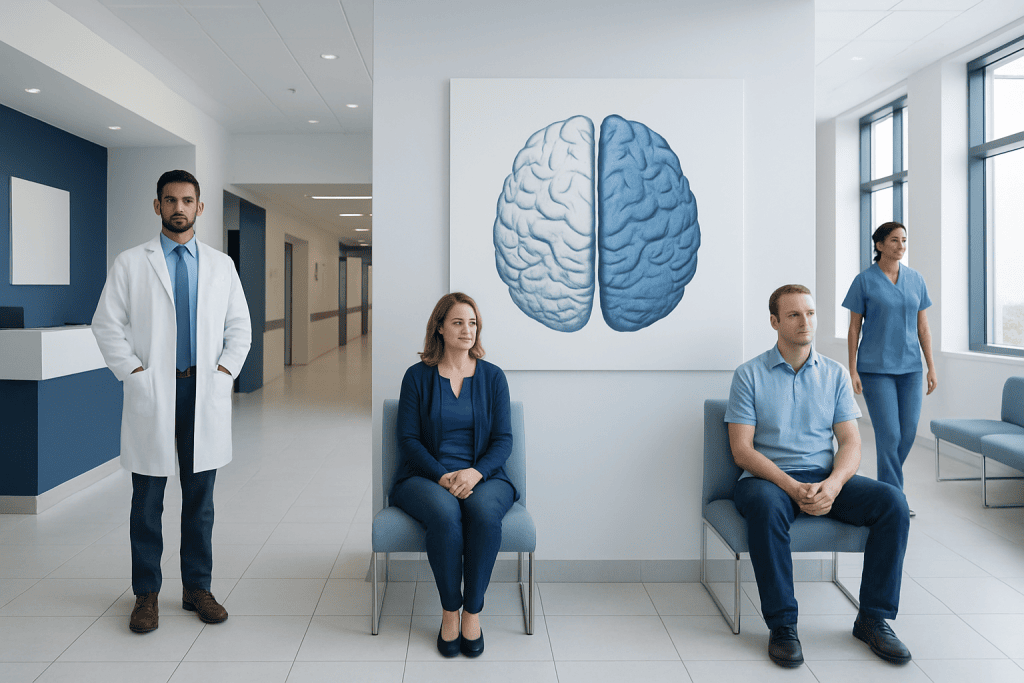
The left and right brain hemispheres work together, but each tends to handle certain functions more strongly. Left-sided brain problems more often affect language in right-handed people, while right-sided problems more often affect spatial awareness and attention.
Key Takeaways
- The left and right brain hemispheres work together, but each tends to handle certain functions more strongly.
- Left-sided brain problems more often affect language in right-handed people, while right-sided problems more often affect spatial awareness and attention.
- Doctors tell the difference through the pattern of symptoms, the neurological exam, and brain imaging.
- Sudden symptoms such as weakness, facial droop, confusion, trouble speaking, or vision loss need urgent medical care because they may signal stroke.
- Treatment depends on the cause, such as stroke, head injury, tumor, seizure, or infection, rather than the side alone.
Left vs right brain differences are real in medicine, but not in the popular sense that a person is simply “left-brained” or “right-brained.” What matters clinically is that the two brain hemispheres tend to specialize in different functions, so symptoms can look different depending on which side is affected.
Overview: left vs right brain at a glance
When people ask about left vs right brain, they are often thinking of personality labels such as “logical” versus “creative.” In medicine, the question is more practical. The brain has two hemispheres that communicate constantly, but certain functions are more likely to be centered on one side than the other.
The left hemisphere often plays a larger role in language, reading, writing, and parts of calculation, especially in right-handed adults. The right hemisphere often contributes more to visual-spatial skills, attention to the surrounding environment, face recognition, and interpreting tone, emotion, and context in communication. These are tendencies, not strict rules, and many tasks use both sides at once.
What matters clinically is that a problem affecting one hemisphere can cause a recognizable pattern of symptoms. For example, a stroke in the left hemisphere may make speaking or understanding words difficult, while a stroke in the right hemisphere may cause neglect of one side of space or poor awareness of the deficit itself. Doctors use these patterns to decide what tests and treatment are needed.
Here is a simple side-by-side comparison:
- Left hemisphere: language production and comprehension, reading, writing, naming, stepwise sequencing, and control of the right side of the body.
- Right hemisphere: spatial awareness, visual attention, interpreting facial expression and tone, recognizing patterns and faces, and control of the left side of the body.
- Both hemispheres: memory, movement, sensation, emotion, and thinking depend on networks across both sides.
How the differences show up in real life
A left-sided brain problem may be noticed when a person suddenly struggles to find words, speaks in short or incorrect phrases, cannot understand what is being said, or has trouble reading and writing. There may also be weakness or numbness on the right side of the face, arm, or leg. In some people, simple calculations or following a sequence of steps becomes unexpectedly hard.
A right-sided brain problem often looks different. A person may ignore the left side of their body or surroundings, bump into objects on the left, have trouble judging distance, or seem unaware that anything is wrong. Speech may remain fluent, but the person may miss emotional tone, have difficulty understanding visual layouts, or show changes in attention and insight. Weakness or numbness often affects the left side of the body.
These patterns are helpful, but they are not perfect. Brain organization varies between individuals, especially in people who are left-handed or who have had developmental differences, prior strokes, or neurological conditions. Symptoms also depend on the exact area involved, not only whether it is on the left or right.
It is also important to separate hemisphere function from myth. Most healthy people do not think mainly with one half of the brain. Creative work, problem-solving, language, movement, emotion, and decision-making all depend on highly connected brain networks.
How clinicians tell left-sided from right-sided brain problems
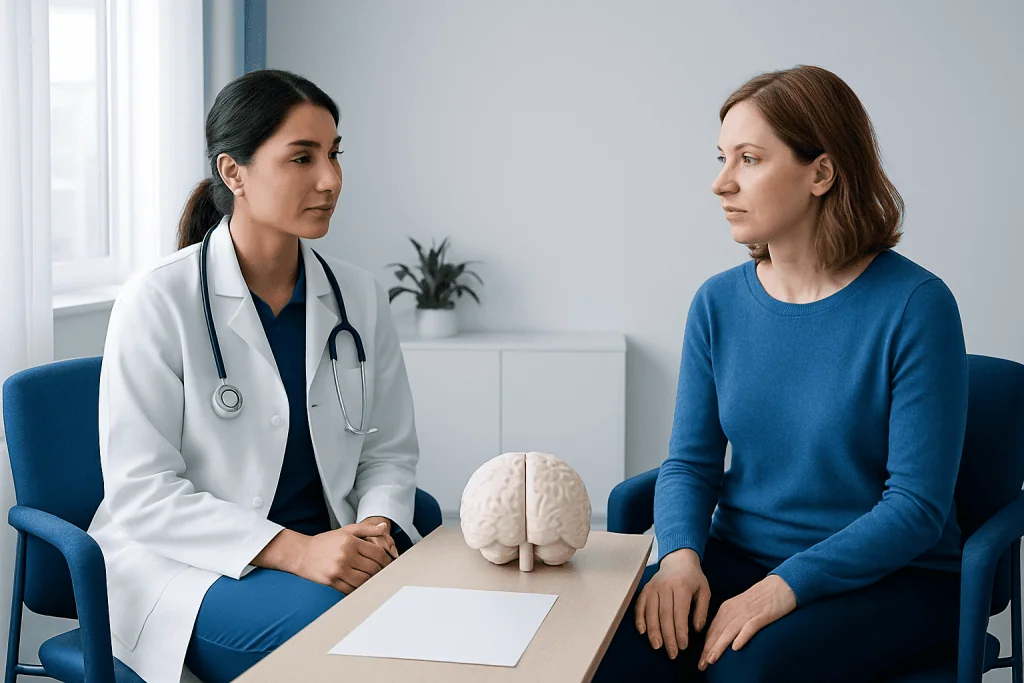
Doctors do not rely on stereotypes about personality. They look at the pattern, timing, and combination of symptoms. A detailed neurological exam checks speech, comprehension, vision, eye movements, facial strength, arm and leg strength, sensation, coordination, balance, and attention to both sides of space.
Language testing is often especially useful. If a person cannot name common objects, repeat phrases, follow verbal commands, or read aloud, the left hemisphere may be affected. If the person ignores people or objects on one side, draws only half of a figure, or has poor spatial judgment, the right hemisphere may be involved.
Brain imaging confirms what the exam suggests. A CT scan is commonly used first in urgent settings to quickly look for bleeding or a major stroke. MRI can show more detail and may identify smaller strokes, inflammation, tumors, infection, or changes from prior injury. Depending on the situation, doctors may also use blood tests, EEG for seizures, or vascular imaging to examine blood flow.
Because symptoms can overlap, self-diagnosis is not reliable. Sudden changes in speech, strength, vision, walking, confusion, or awareness can be caused by stroke, seizure, migraine, low blood sugar, head trauma, or infection. A prompt medical assessment helps identify the real cause and lowers the risk of delayed treatment.
What conditions can affect one side of the brain
The most time-sensitive cause is stroke. A stroke happens when blood flow to part of the brain is blocked or when a blood vessel bleeds. Because each hemisphere controls the opposite side of the body and has somewhat different specializations, the signs can differ depending on whether the left or right side is involved.
Other causes include head injury, brain tumors, infections, inflammation, seizures, and complications of vascular disease. Sometimes symptoms come and go, such as with focal seizures or a transient ischemic attack. In other cases, they develop gradually, as can happen with a tumor or some inflammatory conditions. Brain tumors can affect speech, movement, personality, vision, or balance depending on their location.
Degenerative and developmental disorders can also produce more subtle side-dominant effects. For example, some forms of dementia begin with language difficulty, while others first affect spatial orientation or visual processing. However, these disorders usually involve broader networks over time rather than only one hemisphere.
The key point is that “left brain” or “right brain” is not a diagnosis. It is a clue that helps doctors map symptoms to brain anatomy and then determine the underlying condition.
What to do for each case: treatment depends on the cause
Treatment is guided by the diagnosis, the exact brain area involved, and how quickly symptoms started. Sudden symptoms need urgent evaluation because stroke treatments are most helpful when given promptly. In emergency settings, care may include rapid imaging, medicines to restore blood flow in selected cases, or procedures that remove a clot. For some patients, doctors may consider thrombectomy or stereotactic radiosurgery when a structural brain problem is being treated in a carefully selected setting.
If the cause is not stroke, treatment may involve anti-seizure medicines, antibiotics or antivirals for infection, medicines to reduce inflammation, or surgery for bleeding, pressure, or certain tumors. Some patients with tumors or other structural problems may need brain tumor surgery after specialist review.
Rehabilitation is often an important part of recovery. Speech and language therapy can help after left-hemisphere injury. Occupational therapy may improve dressing, writing, and daily tasks, while physical therapy supports balance, walking, and strength. People with right-hemisphere injury may benefit from training that improves visual scanning, attention, and awareness of the neglected side.
Recovery differs from person to person. It depends on the cause, the size and location of the injury, overall health, and how quickly treatment begins. A neurologist, rehabilitation physician, speech therapist, and other specialists often work together to create an individualized plan.
Prevention and self-care
Not all one-sided brain problems can be prevented, but many stroke risks can be reduced. Managing blood pressure, diabetes, cholesterol, and heart rhythm disorders is important. Avoiding tobacco, limiting alcohol, staying physically active, maintaining a healthy weight, and following prescribed treatment all support brain and vascular health.
Protecting the head also matters. Wearing seat belts, using helmets when appropriate, and making homes safer for older adults can lower the risk of traumatic brain injury. Good sleep, regular medical care, and treatment of infections or chronic conditions also support overall neurological health.
For someone already recovering from a brain condition, self-care often includes medication adherence, follow-up visits, rehabilitation exercises, and home strategies. Examples include placing important items on the stronger visual side at first, using reminder tools, reading aloud with guidance from a speech therapist, and adapting activities to reduce fatigue.
Near the end of the care pathway, some people seek specialist review for diagnosis, treatment planning, or rehabilitation. Acibadem International’s multidisciplinary specialists and JCI-accredited hospitals diagnose and treat neurological conditions for international patients when advanced assessment is needed.
When to seek medical care
Immediate medical care is needed for sudden symptoms that could suggest stroke or another acute brain problem. These include facial droop, weakness or numbness on one side, trouble speaking or understanding, sudden vision loss, severe dizziness, sudden confusion, a new severe headache, seizure, or sudden loss of balance. It is safest to call emergency services rather than wait to see if symptoms pass.
Urgent medical review is also important for new but gradually worsening symptoms such as increasing headaches, repeated falls, personality change, new difficulty reading or writing, progressive memory or spatial problems, or unexplained weakness. Symptoms that come and go should not be ignored, because a transient episode can still signal a serious problem.
A routine appointment may be appropriate for long-standing concerns about attention, learning style, or the popular idea of being “left-brained” or “right-brained,” especially if there are no new neurological symptoms. A clinician can help separate common myths from signs that deserve testing. If there is concern about stroke risk or a known neurological disorder, follow-up with a qualified doctor is recommended.
In some cases, specialists may recommend advanced imaging or interventional treatment through services such as stroke treatment after urgent evaluation and diagnosis.
Frequently asked questions
Is the left brain logical and the right brain creative?
This popular idea is an oversimplification. Some functions are more likely to involve one hemisphere than the other, but everyday thinking and creativity use networks across both sides of the brain. Most healthy people are not dominated by only one side.
Which side of the brain controls speech?
In many right-handed people, and in many left-handed people as well, the left hemisphere has a larger role in speech and language. However, brain organization varies. That is why doctors use examination and imaging rather than assumptions alone.
Does a right-sided brain problem affect the left side of the body?
Often, yes. Each hemisphere mainly controls movement and sensation on the opposite side of the body, so a right-brain problem can cause left-sided weakness, numbness, or neglect. The exact symptoms depend on the specific area involved.
Can you tell left vs right brain problems from symptoms alone?
Symptoms can provide strong clues, but they are not enough to confirm a diagnosis. Several conditions can mimic each other, including stroke, seizure, migraine, infection, and low blood sugar. A medical exam and brain imaging are usually needed.
When does left vs right brain matter most medically?
It matters most when a person develops new neurological symptoms, especially suddenly. The side affected can help explain why someone has language trouble, spatial neglect, or weakness on one side, and it helps doctors localize the problem quickly.
Can someone recover after damage to one side of the brain?
Many people improve with timely treatment and rehabilitation. Recovery depends on the cause, the location and size of the injury, age, general health, and how soon care begins. Speech, physical, and occupational therapy can all play important roles.
References
- National Institute of Neurological Disorders and Stroke
- American Stroke Association
- National Institute on Deafness and Other Communication Disorders
- Centers for Disease Control and Prevention
- World Health Organization
This article is for general information only and is not a substitute for professional medical advice. Please consult a qualified doctor about your individual situation.
Explore treatments in Turkey — costs, top hospitals & a free quote
JCI-accredited · board-certified surgeons · reply within 24h
Add us as a Preferred Source to see more of our trusted health content across Google Search, AI Overviews and Discover.

More from the Health Library



Related Specialists

Prof. Dr. Arzu Tatlipinar
Otorhinolaryngology
Prof. Dr. Gülfer Mehtap Yazicioğlu
Pediatric Allergy
Assoc. Prof. Dr. İlker Özgür Koska
Radiology
Dr. Aylin Tatlıadım
Gynecology & Obstetrics