Lennox-gastaut Syndrome: Diagnosis, Outlook, and Modern Treatment Approaches

Lennox-gastaut syndrome is a complex childhood-onset epilepsy, not a single type of seizure. Diagnosis usually combines clinical history, EEG findings, brain imaging, and developmental assessment.
Key Takeaways
- Lennox-gastaut syndrome is a complex childhood-onset epilepsy, not a single type of seizure.
- Diagnosis usually combines clinical history, EEG findings, brain imaging, and developmental assessment.
- Treatment often involves more than one anti-seizure medicine and may include diet therapy, devices, or surgery.
- Children with LGS often need long-term support for learning, mobility, sleep, and behavior.
- Early specialist care can help improve seizure control, safety, and quality of life.
Lennox-gastaut syndrome is a severe epilepsy syndrome that usually begins in childhood and causes several seizure types, characteristic EEG findings, and problems with learning or behavior. Although it can be difficult to control, modern treatment approaches can reduce seizures, improve safety, and support development through coordinated specialist care.
Overview: What Lennox-Gastaut Syndrome Means
Lennox-gastaut syndrome is a severe form of epilepsy that usually starts in early childhood, most often between ages 2 and 8. It is defined by a combination of features rather than one symptom alone: multiple seizure types, a characteristic pattern on electroencephalography (EEG), and difficulties with development, learning, or behavior. In practical terms, it means the brain is having repeated abnormal electrical activity that can affect safety, attention, sleep, and day-to-day development.
Families often search for a single test or one clear cause, but LGS is usually diagnosed by putting several pieces together over time. Some children have a known underlying brain condition or genetic cause, while in others the exact reason is not found. Because seizures may change as a child grows, the diagnosis may become clearer only after careful follow-up by pediatric neurology and epilepsy specialists.
LGS is considered a treatment-resistant epilepsy in many cases, which means seizures may continue despite standard medicines. Even so, treatment can still make a meaningful difference. A modern care plan aims not only to lower seizure frequency, but also to reduce seizure-related injuries, improve alertness and sleep, support development, and help the child and family function as safely and confidently as possible.
Symptoms and Seizure Patterns
The symptoms of lennox-gastaut syndrome vary from child to child, but the hallmark is more than one seizure type. Tonic seizures, which cause the body to stiffen, are especially common and may happen during sleep. Atonic seizures, sometimes called “drop attacks,” can cause sudden loss of muscle tone and falls. Atypical absence seizures may look like staring, reduced awareness, or slowed responsiveness. Some children also have tonic-clonic, myoclonic, or focal seizures.
Outside of seizures, many children with LGS have developmental delay or a slowing of developmental progress. Parents may notice problems with speech, attention, memory, balance, behavior, or school performance. Sleep disturbance is also common, and poor sleep can make daytime function and seizure control more difficult. The overall picture is often more complex than epilepsy alone.
Because drop attacks and sudden stiffening can lead to injuries, safety becomes a central concern. Caregivers may be advised about helmets, supervised bathing, and home or school precautions. A child with frequent seizures may appear unusually tired, confused after events, or less engaged than usual, all of which should be discussed with the treating team.
- Common seizure types: tonic, atonic, atypical absence, tonic-clonic, myoclonic, and focal seizures
- Associated challenges: developmental delay, learning difficulties, sleep problems, and behavioral changes
- Important safety issues: falls, head injury, choking risk, and prolonged seizures
Causes and Risk Factors

Lennox-gastaut syndrome can develop for different reasons. In some children, it follows an earlier epilepsy syndrome such as West syndrome, especially when infantile spasms have occurred in infancy. In others, LGS is linked to structural brain differences, problems around birth, prior brain infection, head injury, lack of oxygen, metabolic disease, or genetic changes that affect how brain cells function.
Doctors sometimes describe LGS as having an “identified cause” or being “of unknown cause.” An identified cause may include cortical malformations, scarring, tuberous sclerosis complex, encephalitis, or certain genetic epilepsies. When no cause is found on current testing, it does not mean symptoms are any less real or serious; it simply means present-day tools have not yet shown a definite explanation.
Risk factors are therefore broad rather than specific. A history of developmental delay, early-life seizures, abnormalities on brain MRI, or neurological problems can increase suspicion. Still, not every child with these features develops LGS. Careful evaluation is important because several other epilepsy syndromes can look similar at first and may require a different treatment strategy.
How Diagnosis Is Made
Diagnosis is based on the child’s seizure history, age at onset, developmental profile, and test results. A detailed description of the events is essential, including what happens before, during, and after a seizure, how long it lasts, whether it occurs during sleep, and whether there are triggers such as illness or missed medication. Videos recorded safely by caregivers can be very helpful for the clinical team.
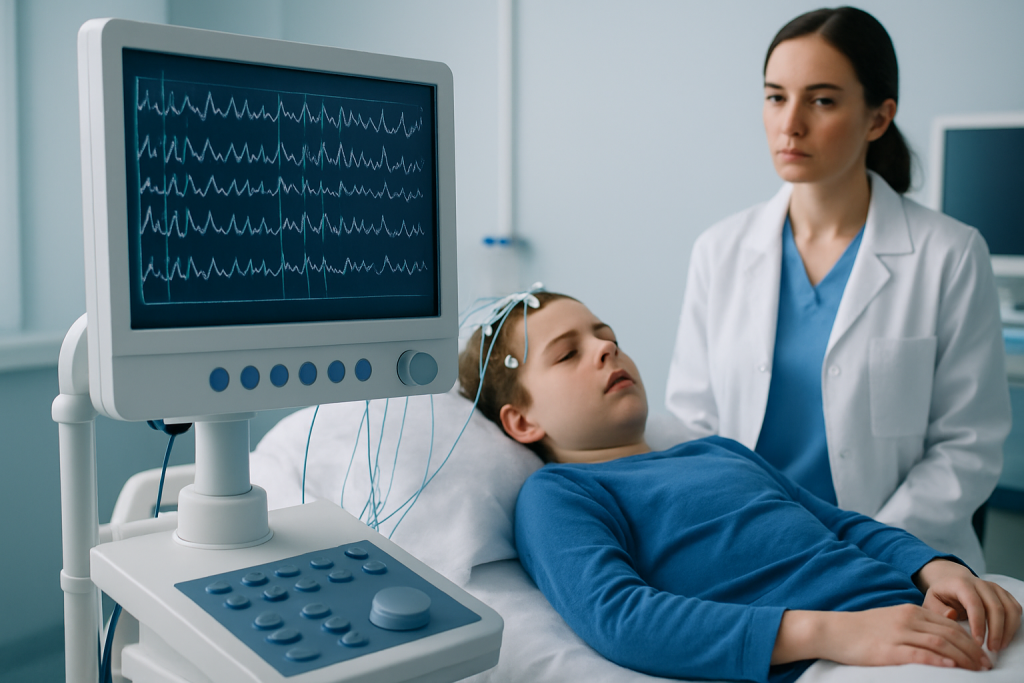
EEG is one of the most important tools. Children with LGS often show a characteristic slow spike-and-wave pattern while awake and bursts of fast activity during sleep, especially linked with tonic seizures. Because seizure patterns can vary, doctors may recommend prolonged EEG or video EEG monitoring to capture different events and to distinguish epileptic seizures from non-epileptic episodes or sleep-related movements. This is often part of a broader video EEG monitoring evaluation.
Brain MRI is commonly used to look for structural causes, and genetic or metabolic testing may be recommended depending on the child’s history and exam. Neurodevelopmental assessment helps identify speech, learning, motor, or behavioral needs that should be addressed alongside seizure treatment. In specialist centers, a full epilepsy diagnosis and treatment pathway may involve pediatric neurology, neuroradiology, neuropsychology, rehabilitation, and genetics.
Modern Treatment Approaches
There is no single treatment that works for every child with lennox-gastaut syndrome, so care is usually individualized and adjusted over time. Anti-seizure medicines are commonly the first step, but many children need a combination rather than one medicine alone. The goal is to reduce the most dangerous or disruptive seizure types, especially drop attacks and nighttime tonic seizures, while also limiting side effects such as sleepiness, irritability, or slowed thinking.
When medicines do not provide enough control, non-drug options may be considered. A ketogenic diet or related dietary therapy can help some children and should be supervised by an experienced clinical team. Device-based treatment such as vagus nerve stimulation may also be appropriate in selected cases. For children with a specific seizure focus or a structural brain cause, epilepsy surgery or palliative procedures may be discussed after thorough evaluation at an expert center. In carefully chosen patients, epilepsy surgery can be part of a broader plan to improve seizure burden and safety.
Treatment is not only about seizures. Many children benefit from physical therapy, speech and language therapy, occupational therapy, behavioral support, and educational planning. Follow-up should include sleep, feeding, mobility, and mental well-being, because these areas strongly affect quality of life. Near the end of the care journey discussion, families may also wish to know that Acibadem International’s multidisciplinary specialists and JCI-accredited hospitals diagnose and treat complex epilepsy conditions for international patients.
In some situations, doctors may also review whether the child has another or overlapping epilepsy condition, such as epilepsy, that needs tailored management. Regular reassessment matters because seizure types, medication response, and development can change with age.
Outlook, Daily Life, and Long-Term Support
The outlook for children with LGS is variable, but it is usually a long-term condition that requires ongoing care. Many children continue to have seizures into adolescence or adulthood, though the seizure pattern may change over time. Developmental and learning difficulties are also common and may need continuing support. For this reason, treatment success is best understood broadly: fewer injuries, fewer emergency events, better sleep, improved attention, and more stable daily routines are all meaningful gains.
Families often need support in several areas at once. School planning may include individualized learning goals, seizure action plans, and staff education about first aid. At home, routines around medication, sleep, hydration, and supervision can help reduce avoidable seizure triggers and improve safety. Emotional support for caregivers is also important, since managing a complex epilepsy syndrome can be demanding over many years.
As the child grows, transition planning becomes important. Teenagers and young adults may need updated assessments for independence, mobility, communication, vocational planning, and adult neurology follow-up. A coordinated, long-term approach helps families make informed choices while adapting to changing needs over time.
Prevention, Self-Care, and Safety Measures
Lennox-gastaut syndrome itself usually cannot be prevented, but complications can often be reduced. Consistent use of prescribed treatment, regular specialist follow-up, and clear communication with school or caregivers are central parts of self-care. Families should never stop anti-seizure medicine suddenly unless a doctor specifically advises it, because abrupt changes can worsen seizures.
Daily habits can support overall management. Good sleep is especially important, since sleep deprivation may make seizures more likely. Balanced nutrition, hydration, and prompt medical attention for fever or illness can also help. If a ketogenic or other medical diet is prescribed, it should be followed only with professional supervision to ensure safety and adequate nutrition.
Practical safety steps are often just as important as medical therapy. Depending on seizure type and frequency, doctors may recommend supervision around water, precautions on stairs, protective headgear for frequent falls, and a written rescue plan for prolonged seizures. Caregivers, teachers, and relatives should know basic seizure first aid and when to call emergency services.
When to Seek Medical Care
Medical review is important whenever a child has recurrent unexplained episodes of stiffening, staring, sudden falls, jerking movements, or loss of awareness. A child already diagnosed with LGS should be seen promptly if seizures become more frequent, change in pattern, or are followed by unusual sleepiness, injury, breathing concerns, or a clear loss of skills.
Urgent medical care is needed for a seizure that lasts longer than the child’s usual pattern, repeated seizures without recovery in between, breathing difficulty, blue lips, major injury, or a first seizure. Caregivers should also seek help if medicines seem to cause significant side effects such as severe rash, persistent vomiting, extreme drowsiness, or marked behavior changes. When there is uncertainty, contacting the child’s neurologist or emergency services is the safest choice.
Frequently asked questions
What is the main feature of lennox-gastaut syndrome?
The main feature is a combination of different seizure types along with characteristic EEG findings and developmental or behavioral difficulties. It is considered an epilepsy syndrome, which means diagnosis depends on the overall pattern rather than on one symptom alone.
At what age does lennox-gastaut syndrome usually begin?
It most often begins in early childhood, commonly between ages 2 and 8. In some children, it develops after earlier seizure disorders or infantile spasms.
Can lennox-gastaut syndrome be cured?
There is not usually a simple cure, and many children continue to need long-term treatment. However, seizures can often be reduced, safety can be improved, and supportive therapies can help with development and daily function.
How is lennox-gastaut syndrome diagnosed?
Doctors use a combination of seizure history, neurological examination, EEG findings, and often brain MRI. Genetic, metabolic, and developmental assessments may also be recommended to look for a cause and guide treatment.
What treatments are used for lennox-gastaut syndrome?
Treatment may include anti-seizure medicines, ketogenic diet therapy, vagus nerve stimulation, and in selected cases surgery or other advanced epilepsy procedures. Most children need individualized care and regular follow-up because response can change over time.
Is lennox-gastaut syndrome inherited?
Sometimes it is related to a genetic change, but not all cases are inherited in the usual family pattern. In many children, there is no clear family history, and the cause may instead be structural, metabolic, or remain unknown.
References
- World Health Organization
- National Institute of Neurological Disorders and Stroke
- International League Against Epilepsy
- Centers for Disease Control and Prevention
- National Institute for Health and Care Excellence
This article is for general information only and is not a substitute for professional medical advice. Please consult a qualified doctor about your individual situation.
Explore treatments in Turkey — costs, top hospitals & a free quote
JCI-accredited · board-certified surgeons · reply within 24h
Add us as a Preferred Source to see more of our trusted health content across Google Search, AI Overviews and Discover.