Leprosy Images — Explained by Medical Evidence, Not Myths

Leprosy images may show skin and nerve changes, but photos alone cannot diagnose leprosy. The most important warning signs are persistent skin patches with reduced feeling, numbness, or nerve symptoms.
Key Takeaways
- Leprosy images may show skin and nerve changes, but photos alone cannot diagnose leprosy.
- The most important warning signs are persistent skin patches with reduced feeling, numbness, or nerve symptoms.
- Leprosy is caused by Mycobacterium leprae and is treatable with multidrug antibiotic therapy.
- Early diagnosis helps prevent nerve damage, disability, and eye or limb complications.
- Leprosy is not spread by casual brief contact, and stigma often causes more harm than the infection itself.
Leprosy images can help people recognize patterns such as light or reddish skin patches, nodules, swelling, or hand and foot changes, but they cannot confirm a diagnosis on their own. Leprosy, also called Hansen's disease, is a treatable bacterial infection, and medical evidence matters more than myths, fear, or appearance alone.
What leprosy images can and cannot tell you
Leprosy images usually show visible effects of Hansen’s disease on the skin, face, hands, feet, or eyes. These pictures may include pale or reddish patches, dry or hairless areas of skin, bumps or nodules, thickened earlobes, or changes caused by long-term nerve damage. For many people searching online, the main question is whether a photo can help identify the disease.
The answer is partly yes and partly no. Images can help someone understand what doctors mean by terms such as skin lesion, numb patch, or deformity due to nerve damage. However, many other conditions can look similar, including eczema, fungal infections, vitiligo, psoriasis, peripheral neuropathy, or other inflammatory skin disorders. Because of this overlap, medical evidence is more reliable than visual comparison alone.
Modern leprosy care focuses on early recognition, testing, and treatment rather than dramatic images from the past. Historically, many widely shared photographs showed advanced untreated disease, which can create unnecessary fear and stigma. Today, many people are diagnosed earlier, and treatment can stop the infection and greatly reduce the risk of complications.
How leprosy may appear on the skin and nerves
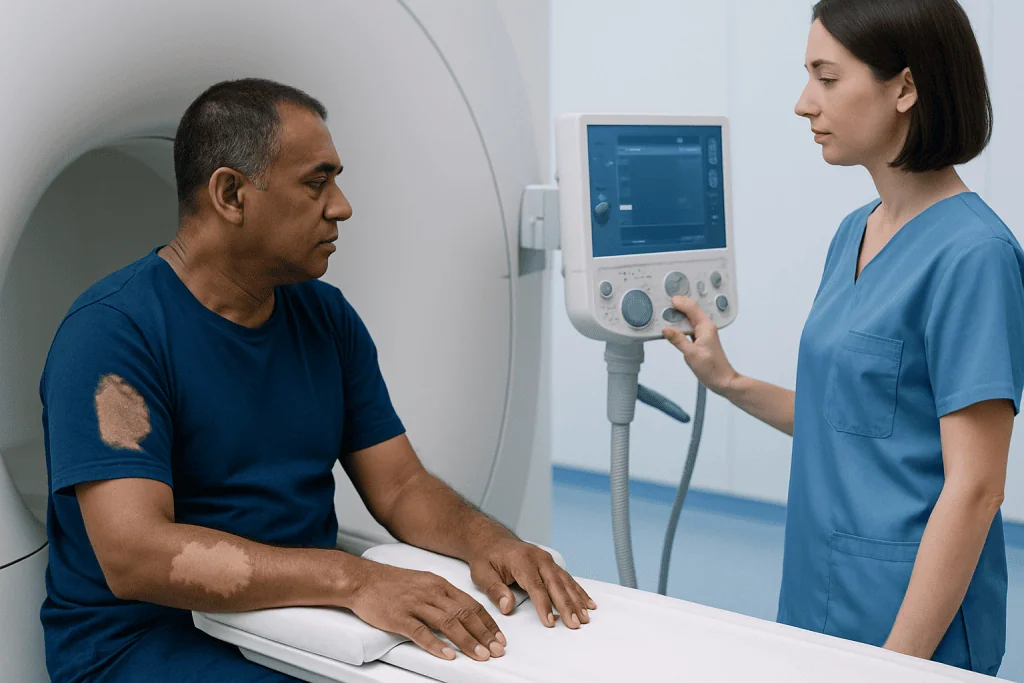
Leprosy most often affects the skin and peripheral nerves. In images, early disease may appear as one or more patches that are lighter than the surrounding skin, reddish, or slightly raised. These areas may look dry, have less sweating, or show reduced hair growth. A key feature is that the patch may have decreased sensation to light touch, temperature, or pain.
As the disease progresses, some people develop multiple lesions, plaques, or nodules. The face, ears, arms, buttocks, and legs may be involved. In some forms, the skin may appear diffusely thickened rather than showing only a few separate spots. Swelling, tenderness, or redness can also happen during inflammatory episodes called leprosy reactions, which need prompt medical care.
Nerve involvement is especially important, even when skin changes seem mild. Images cannot show numbness directly, but they may suggest it through secondary changes such as burns, wounds, muscle wasting, clawing of the fingers, foot drop, or ulcers on pressure points. These problems happen because damaged nerves reduce feeling and weaken muscles. When skin changes occur together with numbness or tingling, a clinician may consider conditions such as peripheral neuropathy in the broader evaluation.
- Single or multiple pale, reddish, or copper-colored patches
- Reduced sensation over the patch
- Dry, less sweaty, or hairless skin areas
- Nodules, plaques, or skin thickening
- Numbness, tingling, or weakness in hands and feet
- Non-healing wounds caused by loss of feeling
Why images are often misunderstood

Leprosy is one of the most stigmatized diseases in history, so online images are often viewed through myths rather than medical facts. Some people assume every visible hand or facial change means active infection. In reality, severe deformities usually reflect late complications from untreated nerve damage, not what most treated patients look like today.
Another misunderstanding is that all cases are obvious on sight. Many are not. Early lesions can be subtle, especially on darker skin tones or in people with only a few patches. A person may notice numbness before they notice anything unusual in a mirror or photograph. This is one reason a normal-looking image does not rule out disease, while a concerning-looking image does not prove it.
Leprosy images also vary because the disease exists on a spectrum. Doctors classify it in different ways based on the number of lesions, bacterial burden, and immune response. Two people can both have leprosy and still look very different clinically. That is why diagnosis relies on the full picture: symptoms, nerve examination, skin findings, and laboratory support when needed.
What causes leprosy and who is at risk
Leprosy is caused mainly by Mycobacterium leprae, and more rarely by Mycobacterium lepromatosis. It affects the skin, peripheral nerves, upper respiratory tract lining, and sometimes the eyes. The disease develops slowly, and symptoms may appear years after exposure. This long incubation period is one reason diagnosis can be delayed.
Transmission is thought to happen mainly through prolonged, close contact with untreated infection, likely through respiratory droplets. It is not usually spread by a brief handshake, sitting next to someone, or ordinary casual contact. Most people have natural immunity and do not develop the disease even if they are exposed. Understanding this helps correct the harmful misconception that leprosy is highly contagious.
Risk is higher in people living in or traveling for long periods in areas where leprosy remains more common, and in household contacts of untreated cases. Limited access to healthcare can also delay recognition. Conditions that affect the skin or nerves may resemble Hansen’s disease, so doctors may compare it with other causes of sensory loss or chronic skin changes before confirming the diagnosis.
How doctors diagnose leprosy
Doctors do not diagnose leprosy from images alone. The diagnosis usually begins with a medical history and physical examination, especially of the skin and peripheral nerves. A clinician looks for characteristic skin lesions together with reduced sensation, enlarged peripheral nerves, or weakness in the muscles supplied by affected nerves.
Testing may include a skin smear or skin biopsy to look for bacteria or tissue changes. In some settings, additional laboratory methods may support the diagnosis. Sensory testing and neurological examination are also important because nerve involvement can be present even when skin findings are limited. If weakness or nerve compression is significant, a specialist may recommend electromyography (EMG) or related nerve studies to assess nerve function more closely.
Diagnosis also includes evaluating for complications such as eye involvement, hand dysfunction, ulcers, and inflammatory reactions. In some cases, doctors may use imaging or other tests to assess damage or to rule out look-alike conditions. A structured diagnostic approach is essential because some diseases that resemble leprosy require very different treatment.
Treatment and long-term outlook
Leprosy is treatable, and treatment can cure the infection. Standard care uses multidrug therapy, usually a combination of antibiotics taken for a defined period based on the type of disease. Treatment kills the bacteria and helps stop transmission. It is important to start therapy as early as possible because antibiotics can cure the infection, but they cannot always reverse established nerve damage.
Some patients also need treatment for inflammation, pain, or nerve reactions during the course of illness. Doctors monitor for worsening numbness, weakness, eye symptoms, and new skin inflammation. Wound care, protective footwear, splints, and rehabilitation may be recommended if sensation or muscle function has been affected. When nerve complications are prominent, a multidisciplinary approach that may include dermatology, infectious diseases, neurology, rehabilitation, and physical therapy and rehabilitation can be helpful.
The long-term outlook is generally good when leprosy is recognized and treated early. Follow-up remains important because nerve injury and inflammatory reactions can occur before, during, or after antibiotic treatment. Near the end of the care journey, some international patients may choose centers such as Acibadem International, where multidisciplinary specialists in JCI-accredited hospitals evaluate infectious, neurologic, and skin-related complications in a coordinated way.
Prevention, self-care, and reducing stigma
There is no single self-test based on appearance, but there are practical steps people can take. Anyone with persistent skin patches that feel numb, repeated unnoticed burns or injuries, tingling, hand weakness, or non-healing foot wounds should arrange a medical assessment. People already diagnosed with leprosy should take medication exactly as prescribed and attend follow-up visits to protect nerve function.
Self-care often focuses on areas with reduced feeling. Daily inspection of the hands and feet can help identify cuts, blisters, burns, or pressure sores early. Moisturizing dry skin, using protective shoes, avoiding extreme heat, and caring for wounds promptly can reduce complications. If weakness or deformity develops, rehabilitation and assistive devices may help preserve mobility and independence.
Reducing stigma is also part of prevention because fear can delay diagnosis and treatment. Leprosy is a medical condition, not a sign of poor character, and it is curable with proper care. Family members and close contacts may sometimes need clinical advice or screening depending on local guidelines and exposure history.
When to seek medical care
Medical care is advisable if a skin patch lasts for weeks to months and has reduced feeling, especially if it does not behave like a typical rash. Care is also important for numbness in the hands or feet, unexplained muscle weakness, repeated injuries that were not felt, eye irritation, or foot ulcers. These symptoms do not always mean leprosy, but they should be assessed by a qualified doctor.
Urgent review is needed if there is sudden worsening numbness, new weakness, severe pain along a nerve, rapid swelling or redness of lesions, or difficulty closing the eyes. These may suggest an inflammatory reaction or progressing nerve injury that needs prompt treatment to reduce permanent damage. If nerve symptoms are part of the evaluation, doctors may also consider broader causes of neuropathy while confirming the diagnosis.
People who have lived in or traveled for long periods in regions where leprosy is more common should mention this history during evaluation. Early assessment is reassuring because many skin conditions are not leprosy, and when Hansen’s disease is present, timely treatment is effective.
Frequently asked questions
Can leprosy images confirm that someone has Hansen's disease?
No. Leprosy images can show patterns that raise suspicion, such as numb skin patches or nodules, but diagnosis requires a medical examination and sometimes laboratory tests. Many common skin and nerve conditions can look similar in photos.
What do early leprosy lesions usually look like?
Early lesions may appear as pale, reddish, or slightly raised patches of skin. The most important clue is often reduced sensation over the patch rather than color alone. The area may also feel dry or have less hair growth.
Is leprosy highly contagious?
No, it is not usually spread by brief casual contact. Transmission is thought to require prolonged close contact with an untreated person, and most people have natural immunity. Once treatment starts, the risk of transmission falls significantly.
Can leprosy be cured?
Yes. Leprosy is treated with multidrug antibiotic therapy, which cures the infection. Early treatment is important because it helps prevent long-term nerve damage and disability.
Why do some leprosy images show severe hand or facial deformities?
These images often reflect advanced untreated disease or old nerve damage rather than the typical appearance of a person diagnosed and treated early today. Nerve injury can lead to weakness, ulcers, and deformity over time. Modern treatment aims to prevent these complications.
When should a person see a doctor about possible leprosy?
A doctor should evaluate persistent skin patches with numbness, tingling, weakness in the hands or feet, or repeated injuries that go unnoticed. Prompt assessment is also important for eye symptoms, ulcers, or suddenly worsening nerve pain. Many cases turn out to be other conditions, but medical review is the safest approach.
References
- World Health Organization
- Centers for Disease Control and Prevention
- National Institute of Allergy and Infectious Diseases
- DermNet
- MedlinePlus
This article is for general information only and is not a substitute for professional medical advice. Please consult a qualified doctor about your individual situation.
Hair transplant in Turkey — costs, graft counts & a free assessment
JCI-accredited · board-certified surgeons · reply within 24h
Add us as a Preferred Source to see more of our trusted health content across Google Search, AI Overviews and Discover.