Lesions: What Patients Need to Know

A lesion is a general medical term for abnormal tissue, not a diagnosis by itself. Lesions may be caused by injury, infection, inflammation, benign growths, or cancer.
Key Takeaways
- A lesion is a general medical term for abnormal tissue, not a diagnosis by itself.
- Lesions may be caused by injury, infection, inflammation, benign growths, or cancer.
- Doctors evaluate lesions based on location, appearance, symptoms, and sometimes imaging or biopsy.
- Many lesions are treatable, but the right treatment depends on the underlying cause.
- New, changing, painful, bleeding, or non-healing lesions should be assessed by a doctor.
Lesions are areas of tissue that look or behave differently from the surrounding area. They can appear on the skin or inside the body, and while many are harmless, some need medical evaluation to identify the cause and guide treatment.
What lesions are and why they matter
Lesions are areas of tissue that are abnormal compared with the tissue around them. The term is broad and can refer to changes on the skin, in the mouth, in organs, or in the brain and other internal tissues. A lesion may look like a spot, lump, sore, ulcer, patch, cyst, or area of swelling, depending on where it forms and what is causing it.
Importantly, a lesion is not a specific disease. It is a descriptive term used by doctors when they notice a tissue change. Some lesions are temporary and harmless, such as a blister from friction or a pimple from blocked pores. Others may be a sign of infection, chronic inflammation, autoimmune disease, or in some cases cancer.
Because the word can sound concerning, it helps to know that many lesions are benign. What matters most is the lesion’s cause, how long it has been present, whether it is changing, and whether it is causing symptoms. Careful medical assessment helps distinguish common, low-risk problems from lesions that need prompt treatment.
Common types of lesions
Lesions are often grouped by where they occur and what they look like. Skin lesions are the most familiar. These include moles, rashes, blisters, cysts, ulcers, warts, and scaly patches. Some are present from birth, while others appear later because of sun exposure, aging, allergies, infection, or irritation.
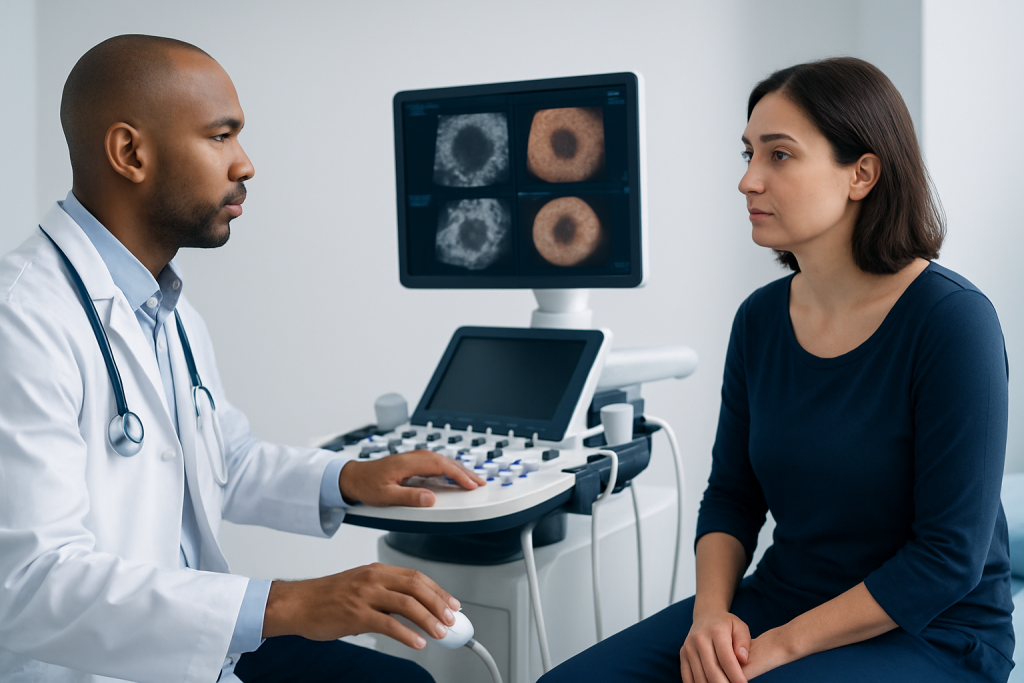
Lesions can also affect internal tissues. For example, imaging scans may show liver lesions, brain lesions, lung lesions, or bone lesions. These findings can represent many different conditions, from harmless cysts to inflammation or tumors. Their meaning depends on the organ involved, the person’s symptoms, and the scan features.
Doctors may also describe lesions by their behavior. A benign lesion does not invade nearby tissue or spread to other parts of the body. A premalignant lesion shows changes that could develop into cancer over time. A malignant lesion is cancerous. This is why the same word, lesion, can refer to conditions with very different levels of seriousness.
- Primary lesions: the first visible change, such as a papule, plaque, vesicle, or nodule
- Secondary lesions: changes that develop later, such as crusting, scaling, erosion, or ulceration
- External lesions: found on the skin or visible mucous membranes
- Internal lesions: found in organs or tissues during scans or endoscopy
Symptoms and signs that can happen with lesions

The symptoms of lesions vary widely. Some cause no symptoms at all and are found by chance during a skin exam or imaging test. Others may itch, hurt, burn, bleed, ooze, crust over, or fail to heal. Internal lesions may cause organ-specific symptoms, such as headaches, abdominal discomfort, cough, or changes in function, depending on where they are located.
Visual changes are often the first clue with skin lesions. A lesion may become darker or lighter, develop an irregular border, increase in size, or change texture. It may feel firm, tender, scaly, or raised. A sore inside the mouth may interfere with eating, while a lesion near a joint may be irritated by movement or clothing.
Doctors pay close attention to a lesion’s pattern over time. A stable lesion that has looked the same for years is often less worrisome than one that is new or changing. Concerning features can include rapid growth, spontaneous bleeding, repeated crusting, persistent ulceration, or a lesion that does not improve with basic care.
Skin lesions can sometimes be related to specific skin disorders such as psoriasis or skin cancer. In these cases, the lesion is one part of a broader condition, and diagnosis depends on the full clinical picture rather than appearance alone.
Causes and risk factors
Lesions can develop for many reasons. Common causes include minor trauma, pressure, friction, allergic reactions, insect bites, acne, clogged glands, and infections caused by viruses, bacteria, fungi, or parasites. Inflammatory and autoimmune conditions can also lead to skin or internal lesions by triggering an abnormal immune response in the body’s tissues.
Sun exposure is a major risk factor for some skin lesions, especially those related to premature aging and skin cancer. Repeated ultraviolet exposure can damage skin cells over time, increasing the chance of actinic keratoses and malignant changes. Tanning beds can have similar effects. People with lighter skin tones, a history of frequent sunburns, or outdoor work may have higher risk, though any skin type can be affected.
Some lesions are linked to chronic medical conditions. Diabetes, circulation problems, inflammatory bowel disease, neurological disease, and immune suppression can influence how lesions form or heal. Family history may also matter, especially for certain pigmented lesions, inherited skin conditions, or cancers.
Internal lesions may be associated with cysts, benign growths, abscesses, vascular changes, scarring, or tumors. Because imaging findings can overlap, doctors often interpret them alongside blood tests, symptoms, and sometimes tissue sampling. The cause cannot usually be determined from the word lesion alone.
How doctors diagnose lesions
Diagnosis starts with a medical history and physical examination. A doctor will ask when the lesion appeared, whether it has changed, and whether there are symptoms such as pain, itching, bleeding, fever, weight loss, or fatigue. They will also consider medications, sun exposure, family history, and any recent illness or injury.
For skin lesions, the examination includes the lesion’s size, color, shape, border, texture, and distribution on the body. A dermatoscope, a special magnifying light, may help the doctor examine pigmented spots in more detail. If the lesion is suspicious or uncertain, a biopsy may be recommended. This means removing a small sample or the entire lesion so a pathologist can examine it under a microscope.
Internal lesions are often found using ultrasound, X-ray, CT, MRI, or endoscopy. In some situations, blood tests help look for infection, inflammation, or organ dysfunction. If imaging does not clearly show what a lesion is, doctors may suggest follow-up scans over time or a biopsy to confirm the diagnosis.
When a lesion may be related to an underlying cancer, specialist evaluation is important. Depending on the location, assessment may involve biopsy, advanced imaging, or referral for oncology care. Diagnosis is usually stepwise and designed to avoid both unnecessary alarm and unnecessary delay.
Treatment options depend on the cause
There is no single treatment for lesions because treatment is based on the underlying diagnosis. Some lesions need only observation, especially if they are harmless, stable, and not causing symptoms. Others improve with simple measures such as avoiding friction, keeping the area clean, reducing sun exposure, or stopping an irritating product.
Medication may be used for infectious or inflammatory lesions. Depending on the cause, this could include topical creams, oral medicines, or other targeted therapies. For example, bacterial infections may need antibiotics, fungal lesions may need antifungal treatment, and inflammatory skin conditions may be treated with prescription anti-inflammatory medicines.
Procedures may be helpful when a lesion is painful, persistent, cosmetically bothersome, or suspicious. These can include drainage of a cyst or abscess, freezing, laser treatment, excision, or biopsy. If a lesion is cancerous or precancerous, treatment may involve surgery and, in some cases, radiotherapy or other specialist therapies.
For lesions affecting the skin, diagnosis and management may involve a dermatology evaluation when appearance alone is not enough to identify the problem. Acibadem International’s multidisciplinary specialists and JCI-accredited hospitals diagnose and treat lesion-related conditions for international patients when specialist care is needed.
Self-care and prevention
Not all lesions can be prevented, but some practical steps can lower risk and support healing. Protecting the skin from sun damage is especially important. This includes using broad-spectrum sunscreen, wearing protective clothing, seeking shade during peak sun hours, and avoiding tanning beds. Regular self-checks can help people notice new or changing spots early.
Good skin care also matters. Keeping the skin clean, avoiding harsh products, and treating minor cuts or blisters gently may reduce irritation and infection. Picking, squeezing, or scratching lesions can worsen inflammation and lead to delayed healing or scarring. Foot care is particularly important in people with diabetes or reduced circulation.
General health habits can support the body’s ability to heal. These include not smoking, eating a balanced diet, managing chronic diseases, and seeking treatment for recurrent infections or inflammatory conditions. If a lesion has already been assessed and a doctor has recommended monitoring, it is important to follow the plan and report any changes promptly.
When to seek medical care
A doctor should assess any lesion that is new, changing, painful, repeatedly bleeding, or not healing. Medical review is also important if a lesion grows quickly, has uneven borders, changes color, forms an ulcer, or is associated with fever, swollen glands, unexplained weight loss, or significant fatigue. These features do not always mean something serious, but they deserve evaluation.
Urgent care may be needed for lesions with spreading redness, pus, severe pain, rapidly increasing swelling, or signs of a significant allergic reaction. Lesions in the eye, mouth, genital area, or on the feet of a person with diabetes should also be checked sooner rather than later because complications can develop more easily in these locations.
Patients do not need to decide on their own whether a lesion is harmless or dangerous. Taking a clear photo, noting when it started, and observing how it changes can be helpful before an appointment. Early assessment often makes diagnosis simpler and can lead to more effective treatment if care is needed.
Frequently asked questions
Are lesions always cancerous?
No. A lesion is a general term for abnormal tissue and many lesions are benign, such as cysts, warts, bruises, or inflammatory spots. The main question is not whether it is called a lesion, but what is causing it.
What is the difference between a lesion and a rash?
A rash usually refers to a broader change in the skin, often with redness, irritation, or multiple spots over an area. A lesion can be a single abnormal area or one part of a rash, and it may occur on the skin or inside the body.
Can lesions go away on their own?
Some do. Minor lesions caused by irritation, acne, or small injuries may improve without specific treatment. Others persist or worsen, so medical advice is important if a lesion changes, bleeds, hurts, or does not heal.
How do doctors know whether a lesion is serious?
Doctors look at the lesion’s size, shape, color, texture, location, and how it has changed over time. If needed, they may use imaging, a dermatoscope, or a biopsy to identify the exact cause.
Should a painless lesion still be checked?
Yes, sometimes. Not all serious lesions are painful, especially early on. A painless lesion should be assessed if it is new, growing, changing color, bleeding, or not healing.
Can internal lesions be found by accident?
Yes. Many internal lesions are discovered incidentally during scans done for another reason. Once found, doctors interpret them based on imaging features, symptoms, and sometimes further tests.
References
- American Academy of Dermatology
- National Cancer Institute
- MedlinePlus
- Mayo Clinic
- World Health Organization
This article is for general information only and is not a substitute for professional medical advice. Please consult a qualified doctor about your individual situation.
Persistent digestive symptoms? Get evaluated in Turkey
JCI-accredited · board-certified surgeons · reply within 24h
Add us as a Preferred Source to see more of our trusted health content across Google Search, AI Overviews and Discover.