Lice Treatment: Symptoms, Causes, and Treatment Options

Head lice are small parasitic insects that live on the scalp and feed on blood. The most common symptom is scalp itching, but some people have few or no symptoms at first.
Key Takeaways
- Head lice are small parasitic insects that live on the scalp and feed on blood.
- The most common symptom is scalp itching, but some people have few or no symptoms at first.
- Effective lice treatment often combines medicated products with fine-tooth combing and practical household cleaning.
- Lice spread mainly through direct head-to-head contact, not because hair is dirty.
- A doctor should review persistent lice, skin infection, very young children, or treatment failure.
Lice treatment usually involves a topical medicine, careful combing to remove nits, and steps to reduce reinfestation at home. Head lice are common, do not reflect poor hygiene, and can usually be managed effectively with the right approach.
Overview
Lice treatment is used to remove head lice and their eggs, called nits, from the hair and scalp. In most cases, treatment includes a medicated lotion, shampoo, or cream rinse, along with repeated combing using a fine-tooth nit comb. Good results depend on following product instructions carefully and repeating treatment when advised.
Head lice are common, especially in school-aged children, but they can affect anyone. They do not mean a person is unclean, and they are not a sign of poor parenting or poor hygiene. Lice survive by feeding on small amounts of blood from the scalp, and they spread most often through close head-to-head contact.
Many families worry that lice are dangerous, but head lice usually cause discomfort rather than serious illness. The main problems are itching, irritation, sleep disturbance, and the stress of dealing with reinfestation. Early recognition and consistent treatment can help control the problem and reduce spread to others.
Symptoms and what lice look like
The most common symptom of head lice is itching of the scalp. This happens because the skin reacts to lice bites. Itching may be mild at first and can become more noticeable over time. Some people also feel a tickling or crawling sensation in the hair, especially around the scalp, neck, or ears.
Lice are tiny insects, usually grayish or tan, and they move quickly. Nits are small oval eggs attached firmly to the hair shaft close to the scalp. Unlike dandruff or hair product residue, nits do not brush away easily. They are often seen behind the ears or at the back of the neck, where the environment is warm.
Not everyone has obvious symptoms. Some people discover lice only after seeing live insects or nits during a routine check. Scratching can sometimes lead to red bumps, irritated skin, or a secondary bacterial skin infection. If the scalp becomes very sore, swollen, crusted, or oozing, a doctor should assess it. For related skin concerns, clinicians may also evaluate conditions such as eczema or other causes of scalp irritation.
Causes, spread, and risk factors
Head lice are caused by infestation with a tiny parasite called Pediculus humanus capitis. Lice cannot jump or fly. They crawl from one head to another, so direct head-to-head contact is the main route of spread. This is why outbreaks are common among children who play closely together or share spaces at school, daycare, camps, and sleepovers.
Less often, lice may spread through shared personal items such as hats, scarves, hair accessories, pillows, or brushes. However, lice do not live long away from the human scalp, so household spread through objects is less common than many people think. Pets do not carry human head lice, so family dogs and cats do not need treatment for this problem.
Anyone can get head lice. Risk is higher in settings with close contact and in households where one person already has lice. Hair length, hair cleanliness, and bathing habits do not reliably prevent infestation. Understanding this helps families focus on effective treatment rather than blame.
How lice are diagnosed
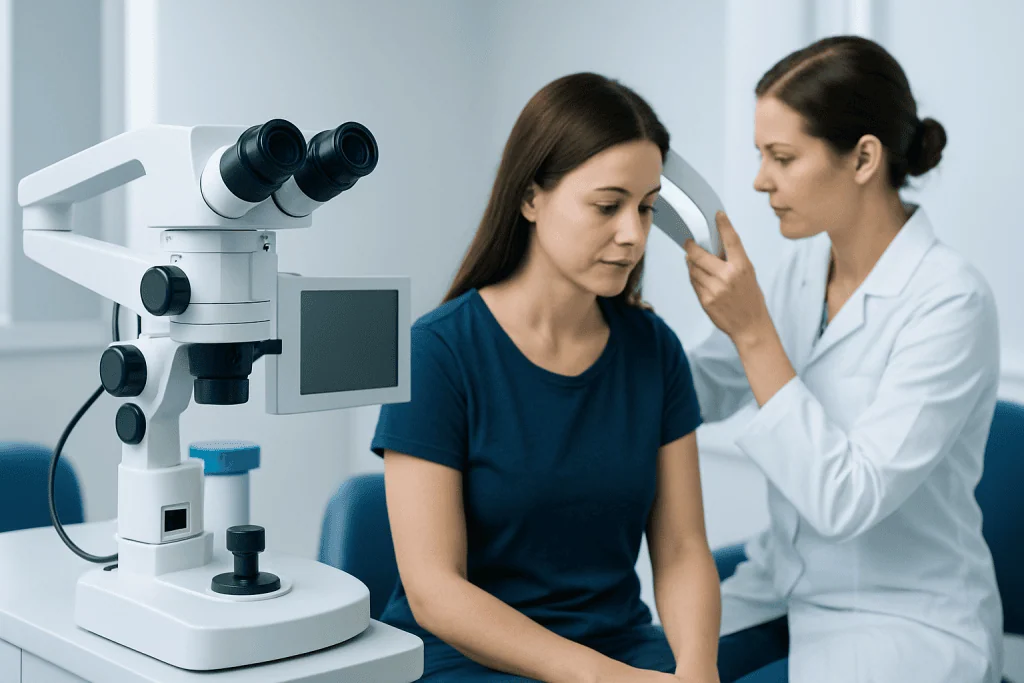
Head lice are usually diagnosed by examining the scalp and hair closely under good light. Finding a live louse is the clearest sign of active infestation. A nit comb can help detect moving lice and remove eggs attached near the scalp. Seeing only old, empty egg cases farther down the hair does not always mean there is an active problem.
Because itching can have many causes, diagnosis matters. Dry scalp, dandruff, allergic reactions, and some skin conditions can look similar. A clinician may recommend review by a skin specialist if the picture is unclear or if the scalp is inflamed. In selected cases, a dermatologist may help confirm the diagnosis and discuss dermatology care for persistent scalp symptoms.
It is often helpful to check close household contacts if one person is diagnosed. This does not mean everyone needs immediate treatment. In general, treatment is reserved for people with confirmed live lice or strong evidence of active infestation, based on local guidance and a clinician’s advice.
Lice treatment options
The best lice treatment depends on a person’s age, scalp sensitivity, prior treatments, and whether live lice are still present. Common first-line options include over-the-counter or prescription topical medicines designed to kill lice. Some products also affect eggs, while others mainly kill live lice and require a second application after several days to target newly hatched insects.
Wet combing is an important part of care. Using a fine-tooth nit comb on damp, conditioned hair can help remove lice and nits section by section. This process can be time-consuming, but it improves treatment success and helps monitor whether live lice remain. Many families repeat combing every few days for one to two weeks, following medical guidance and the product instructions.
It is important to use lice products exactly as directed and avoid combining multiple treatments unless a doctor recommends it. More product is not always better, and overuse can irritate the scalp without improving results. If a treatment seems not to work, the reason may be incorrect use, reinfestation, or resistance to a particular medicine. A clinician can advise whether a different prescription option is more suitable, sometimes in coordination with pediatric dermatology for children or infectious diseases care when repeated infestations are difficult to control.
Shaving the head is not usually necessary. Home remedies such as kerosene, gasoline, or unapproved chemical products should never be used because they can be dangerous. If there is uncertainty about which treatment is safe for a young child, a pregnant person, or someone with asthma or skin disease, professional advice is recommended before starting treatment.
Prevention and self-care at home
Successful lice treatment includes practical steps at home to lower the chance of reinfestation. Wash recently used pillowcases, hats, towels, and clothing in hot water when appropriate for the fabric, then dry on a hot setting if possible. Items that cannot be washed can be sealed in a plastic bag for a period advised by local public health guidance. Combs and brushes can be cleaned in hot water after use.
Heavy household spraying, fumigation, or deep cleaning is not usually needed. Because lice survive poorly away from the scalp, attention should focus on items used in the previous day or two and on checking close contacts. Vacuuming upholstered furniture, carpets, and car seats may be reasonable, but extreme cleaning measures are usually unnecessary.
To help prevent spread, family members should avoid sharing hats, hairbrushes, hair ties, helmets, and bedding during an active infestation. Children do not need to feel embarrassed. Calm, matter-of-fact communication can reduce anxiety and improve cooperation with combing and treatment.
- Check hair in good light, especially behind the ears and at the nape of the neck.
- Follow treatment instructions exactly and repeat when indicated.
- Use a nit comb regularly after treatment to remove eggs and monitor progress.
- Inform close contacts or school staff according to local policies and common-sense discretion.
When to seek medical care
Medical advice is useful if lice treatment does not seem to work after proper use, if live lice are still seen after the expected treatment schedule, or if the scalp becomes very red, painful, swollen, or crusted. A doctor should also be consulted for infants, very young children, people who are pregnant, or anyone with significant skin disease or allergies before using certain lice medicines.
Professional review is also important when the diagnosis is uncertain. Persistent itching does not always mean active lice, and another scalp condition may be responsible. In some cases, broader evaluation may be needed to distinguish lice from other skin disorders, including psoriasis.
At Acibadem International, multidisciplinary specialists and JCI-accredited hospitals diagnose and treat scalp and skin conditions for international patients. Expert assessment can help confirm whether symptoms are due to active lice, skin irritation, or another condition that needs a different treatment plan.
Frequently asked questions
What is the fastest way to get rid of head lice?
The quickest effective approach is usually a recommended lice medicine combined with careful nit combing. Speed depends on using the product exactly as directed and repeating treatment when needed. Household contacts should also be checked to reduce the chance of reinfestation.
Can lice go away without treatment?
Head lice may persist if they are not treated because they continue to live and lay eggs on the scalp. Some infestations may seem quieter for a time, but that does not mean the lice are gone. Active treatment is usually needed to clear them effectively.
Do lice mean poor hygiene?
No. Head lice can affect people with clean or dirty hair. They spread mainly through close contact, not because someone does not wash enough.
How do I know if it is dandruff or lice?
Dandruff flakes usually brush off easily, while nits are attached firmly to the hair shaft. Live lice may also be seen moving quickly on the scalp. If there is doubt, a doctor or pharmacist can help confirm the diagnosis.
Should everyone in the house be treated?
Not necessarily. Usually, only people with live lice or strong evidence of active infestation need treatment. However, close household contacts should be checked carefully, because finding and managing additional cases helps prevent the lice from coming back.
Can pets spread head lice?
No. Human head lice live on people and do not infest dogs, cats, or other household pets. Pets do not need lice treatment for a family member’s head lice.
References
- Centers for Disease Control and Prevention
- American Academy of Dermatology
- National Health Service
- World Health Organization
This article is for general information only and is not a substitute for professional medical advice. Please consult a qualified doctor about your individual situation.
Hair transplant in Turkey — costs, graft counts & a free assessment
JCI-accredited · board-certified surgeons · reply within 24h
Add us as a Preferred Source to see more of our trusted health content across Google Search, AI Overviews and Discover.