Lipodermatosclerosis: Diagnosis, Outlook, and Modern Treatment Approaches

Lipodermatosclerosis usually affects the lower legs and is closely linked to chronic venous insufficiency. Common signs include pain, skin tightening, discoloration, swelling, and an inverted-bottle shape of the lower leg in long-standing cases.
Key Takeaways
- Lipodermatosclerosis usually affects the lower legs and is closely linked to chronic venous insufficiency.
- Common signs include pain, skin tightening, discoloration, swelling, and an inverted-bottle shape of the lower leg in long-standing cases.
- Diagnosis often requires evaluation of the leg veins, commonly with duplex ultrasound, to find the underlying circulation problem.
- Treatment focuses on compression, movement, skin care, weight management, and when appropriate, treatment of abnormal veins.
- Early assessment is important because lipodermatosclerosis can resemble cellulitis, blood clot, or other skin conditions.
Lipodermatosclerosis is a chronic inflammatory and scarring change of the lower leg skin and fat, most often caused by long-term problems with blood flow in the leg veins. Diagnosis usually combines a physical examination with testing for venous disease, and modern treatment focuses on improving circulation, easing symptoms, and preventing ulcers or recurrence.
Overview
Lipodermatosclerosis is a long-term condition in which the skin and the layer of fat beneath it become inflamed, hardened, and scarred, usually around the lower legs and ankles. It is most often related to chronic venous insufficiency, a problem in which leg veins do not return blood effectively back toward the heart. Over time, the increased pressure in these veins can trigger swelling, inflammation, skin discoloration, and tissue damage.
For many people, the condition develops gradually. The affected area may first feel tender or appear red-brown, then later become firm, tight, and indented. In more advanced cases, the lower leg may narrow above the ankle while the calf remains wider, creating the classic “inverted champagne bottle” appearance.
Lipodermatosclerosis is not contagious and it is not a cancer. However, it can be uncomfortable and may signal significant underlying vein disease that needs medical attention. Early recognition matters because treatment aimed at the venous cause can improve symptoms and reduce the risk of complications such as venous ulcers.
How lipodermatosclerosis appears and feels
The condition may present in an acute phase or a chronic phase. In the acute phase, the lower leg can become painful, warm, red, and swollen, sometimes over just a few days. Because these symptoms can resemble infection or a blood clot, medical evaluation is important, especially if the change is new or affects only one leg.
In the chronic phase, the skin usually becomes darker, firmer, and less flexible. Some people describe a feeling of tightness, burning, itching, or aching that worsens after long periods of standing. The skin may look shiny or feel woody, and swelling often becomes more noticeable later in the day.
Common features include:
- Pain or tenderness in the lower leg
- Swelling around the ankle or calf
- Red, brown, or purple discoloration
- Hardening or thickening of the skin and fat
- Tight, tapered lower leg shape above the ankle
- Associated varicose veins, eczema, or skin dryness
- In severe cases, open sores known as venous leg ulcers
Symptoms usually affect the area above the ankles and may involve one or both legs, though both legs are often affected to some degree when chronic venous disease is present.
Why it happens: causes and risk factors
The main driver of lipodermatosclerosis is long-standing high pressure in the veins of the lower legs. Normally, tiny valves inside the veins help blood move upward against gravity. When these valves weaken or the veins become damaged, blood can pool in the legs. This raises venous pressure and allows fluid and inflammatory substances to leak into nearby tissues, which can lead to swelling, inflammation, fibrosis, and skin change.
The condition is therefore strongly associated with varicose veins and chronic venous insufficiency. It may also occur after a previous deep vein thrombosis if the clot has damaged the venous system. In some people, more than one venous problem is present at the same time.
Risk factors include:
- Older age
- Long periods of standing or sitting
- Obesity or excess body weight
- Previous leg vein thrombosis
- Varicose veins
- Reduced mobility
- Pregnancy history
- Family history of venous disease
Not everyone with venous insufficiency develops lipodermatosclerosis, but persistent swelling and untreated vein disease increase the likelihood. The condition may be more difficult to control if a person also has lymphedema, limited walking ability, or poor skin care due to pain and dryness.
Diagnosis and tests
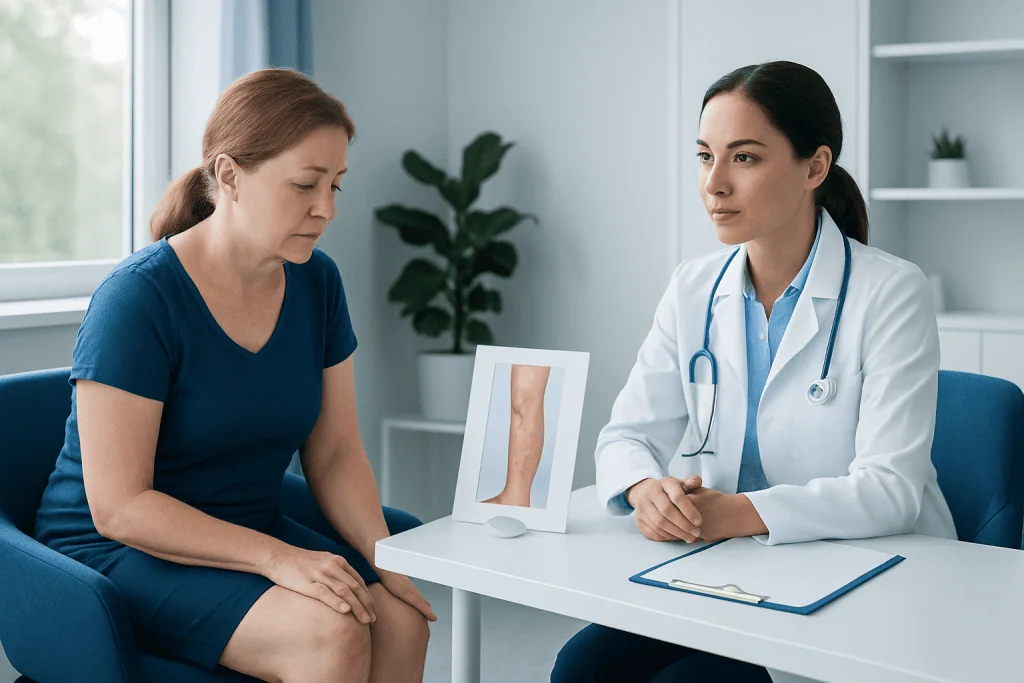
Diagnosis begins with a clinical assessment. A doctor will ask about symptoms, how long they have been present, whether swelling changes through the day, and any history of varicose veins, leg ulcers, or blood clots. The skin’s color, texture, temperature, and distribution help distinguish lipodermatosclerosis from other causes of a painful lower leg.
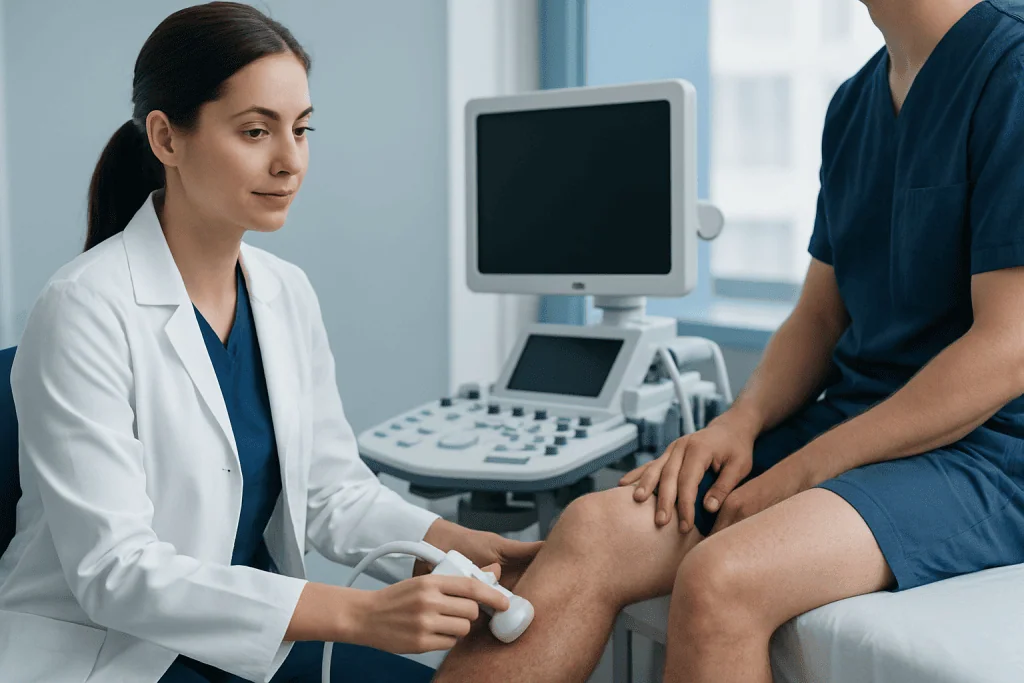
The most useful test is usually duplex ultrasound of the leg veins. This noninvasive scan can show whether the superficial or deep veins are refluxing, blocked, or damaged. Identifying the venous pattern is important because it guides treatment decisions and helps determine whether a procedure may be helpful in addition to conservative care.
Doctors may also consider other conditions that can look similar, including cellulitis, deep vein thrombosis, contact dermatitis, vasculitis, and lymphedema. Blood tests are not diagnostic for lipodermatosclerosis itself, but they may be used if infection, inflammation, or another medical condition is suspected.
A skin biopsy is not routinely needed, and in venous disease it may be avoided unless the diagnosis is unclear. Biopsy can sometimes heal slowly in damaged lower-leg skin, so it is generally reserved for selected cases where another diagnosis must be ruled out.
Modern treatment approaches
Treatment works best when it addresses both the skin changes and the underlying venous problem. Compression therapy is a cornerstone of care for many patients. Compression stockings or bandaging can help reduce swelling, improve blood return, and ease discomfort. A clinician should confirm that arterial circulation is adequate before strong compression is started, especially in older adults or those with peripheral artery disease risk factors.
Movement also matters. Regular walking activates the calf muscles, which act as a pump for venous blood. Elevating the legs when resting can reduce pressure and swelling. Skin care is equally important: gentle cleansing, regular moisturizing, and treatment of venous eczema help protect the skin barrier and lower the risk of breakdown.
In some situations, medications may be used to support symptom control, such as pain relief or treatment for associated skin inflammation. If there is concern for infection, this should be evaluated carefully because lipodermatosclerosis itself can look red and warm without being cellulitis. Open ulcers need wound care and ongoing venous management.
When abnormal veins are a major cause, doctors may recommend targeted vein treatment. Depending on the anatomy, this can include varicose veins treatment or minimally invasive endovenous ablation to improve venous reflux. If a venous ulcer develops, structured wound care may be part of the treatment plan. Care is often shared between dermatology, vascular surgery, interventional radiology, and wound care specialists.
Outlook and long-term management
The outlook for lipodermatosclerosis is often good when the underlying venous disease is recognized and managed consistently. Symptoms such as pain, heaviness, and swelling may improve over weeks to months, while skin thickening and discoloration can take longer to soften or may not disappear completely. Long-standing fibrosis may leave some permanent change even after circulation improves.
The condition tends to behave like a chronic venous disorder rather than a one-time illness. This means that long-term habits, especially regular use of compression when advised, staying active, and managing swelling, are important for maintaining results. If the venous cause is not treated, symptoms may return or slowly worsen over time.
Some people develop complications, including venous eczema, recurrent inflammation, or leg ulcers. These problems are more likely if swelling remains uncontrolled. Follow-up with a qualified clinician can help monitor healing, adjust compression, and decide whether further vein treatment is needed.
For international patients who need coordinated evaluation, Acibadem International’s multidisciplinary specialists in JCI-accredited hospitals diagnose and treat venous and skin complications related to lipodermatosclerosis as part of a personalized care plan.
Prevention, self-care, and when to seek medical care
People who have venous disease or chronic leg swelling can often lower their risk of lipodermatosclerosis progression with practical daily measures. These include maintaining a healthy weight, walking regularly, avoiding long periods of standing still, elevating the legs when possible, and wearing properly fitted compression garments if prescribed. Good skin care with fragrance-free moisturizer can reduce dryness, cracking, and eczema.
Self-care should not replace medical assessment, especially if symptoms are new. A doctor should be consulted if there is persistent lower-leg swelling, new skin hardening, increasing discoloration, or pain that does not improve. Evaluation is also important if varicose veins are becoming more prominent or if the skin starts to itch, weep, or break down.
Urgent medical attention is needed if one leg suddenly becomes much more swollen or painful, if there is rapid redness with fever, if breathing symptoms occur, or if an open wound develops. These signs may point to a blood clot, infection, or another condition that needs prompt treatment.
Because several disorders can mimic lipodermatosclerosis, seeking care early can help avoid delays and support the most effective management plan.
Frequently asked questions
Is lipodermatosclerosis serious?
Lipodermatosclerosis is not usually life-threatening, but it is a sign of chronic venous disease that should be assessed. Without treatment, it can lead to ongoing pain, swelling, skin damage, and sometimes venous ulcers.
Can lipodermatosclerosis be reversed?
Some symptoms, especially swelling, pain, and inflammation, may improve significantly with proper treatment. Long-standing skin thickening or discoloration may improve more slowly and may not fully disappear in every case.
How is lipodermatosclerosis different from cellulitis?
Cellulitis is a bacterial skin infection, while lipodermatosclerosis is usually an inflammatory and scarring reaction related to venous insufficiency. Both can cause redness, warmth, and tenderness, so a medical examination is important to tell them apart.
Do all patients need surgery or a vein procedure?
No. Many patients start with compression, walking, leg elevation, and skin care. A vein procedure is considered when testing shows treatable venous reflux or when symptoms, swelling, or ulcers persist despite conservative treatment.
Will compression stockings help?
Compression stockings often play a central role in treatment because they help reduce venous pressure and swelling. They should be selected and used under professional guidance, especially if there is any concern about poor arterial circulation.
Can lipodermatosclerosis cause leg ulcers?
Yes. If venous pressure remains high over time, the skin can become fragile and break down, leading to venous leg ulcers. Early treatment of swelling and vein disease helps reduce this risk.
References
- National Health Service
- American Academy of Dermatology
- Society for Vascular Surgery
- National Institute for Health and Care Excellence
- DermNet
This article is for general information only and is not a substitute for professional medical advice. Please consult a qualified doctor about your individual situation.
Persistent digestive symptoms? Get evaluated in Turkey
JCI-accredited · board-certified surgeons · reply within 24h
Add us as a Preferred Source to see more of our trusted health content across Google Search, AI Overviews and Discover.