Liposuction Cost: What Patients Really Pay

There is no single price for liposuction. The total depends on how many areas are treated, the technique, anesthesia type, surgeon and facility fees, and follow-up care. Ask for an individualized written estimate that lists exactly what is included, and compare estimates only when the treatment plans are similar.
Key Takeaways
- Liposuction is a body-contouring procedure, not a treatment for obesity or a substitute for weight management.
- The total liposuction cost can include professional, anesthesia, facility, garment, laboratory and follow-up expenses.
- Appropriate candidates are generally healthy adults with localized fat deposits and realistic expectations.
- Swelling and bruising are common during recovery, and final contour changes develop gradually.
- Choosing a qualified plastic surgeon and an appropriately accredited surgical setting supports informed, safer decision-making.
You see a price on a website, then you sit down for a consultation and the number looks different. That gap confuses a lot of people, and it is worth understanding why it happens.
There is no single fixed figure for liposuction. The total depends on the areas treated, how complex the procedure is, anesthesia, operating-facility services, your surgeon’s expertise and the follow-up care you receive afterwards. If you want to compare options safely, look at what is included in a personalized written estimate — not just the advertised procedure price.
Liposuction Cost: Understanding the Full Estimate
Liposuction cost varies from person to person because no two treatment plans are identical. The overall estimate may reflect the number and size of body areas being treated, the amount and type of fat removal planned, the technique used, the length of surgery, the qualifications of the surgical team, and the location and standards of the facility. So a low advertised figure often is not what you end up paying.
A clear consultation should result in an individualized written estimate. Patients can ask whether it includes the surgeon’s professional fee, anesthesia, operating-room or clinic fees, preoperative tests, compression garments, medications, pathology when needed, scheduled follow-up appointments, and potential costs related to an overnight stay or additional care. Travel, accommodation, time away from work and help at home can also be meaningful parts of financial planning for people receiving treatment away from home.
Compare like with like. An estimate for one small area under local anesthesia simply is not the same thing as an estimate for several areas that need general anesthesia. Safety, clinical suitability, transparent communication and continuity of postoperative care are important considerations alongside cost. Patients can learn more about the procedure through liposuction treatment information.
What Liposuction Is Designed to Do
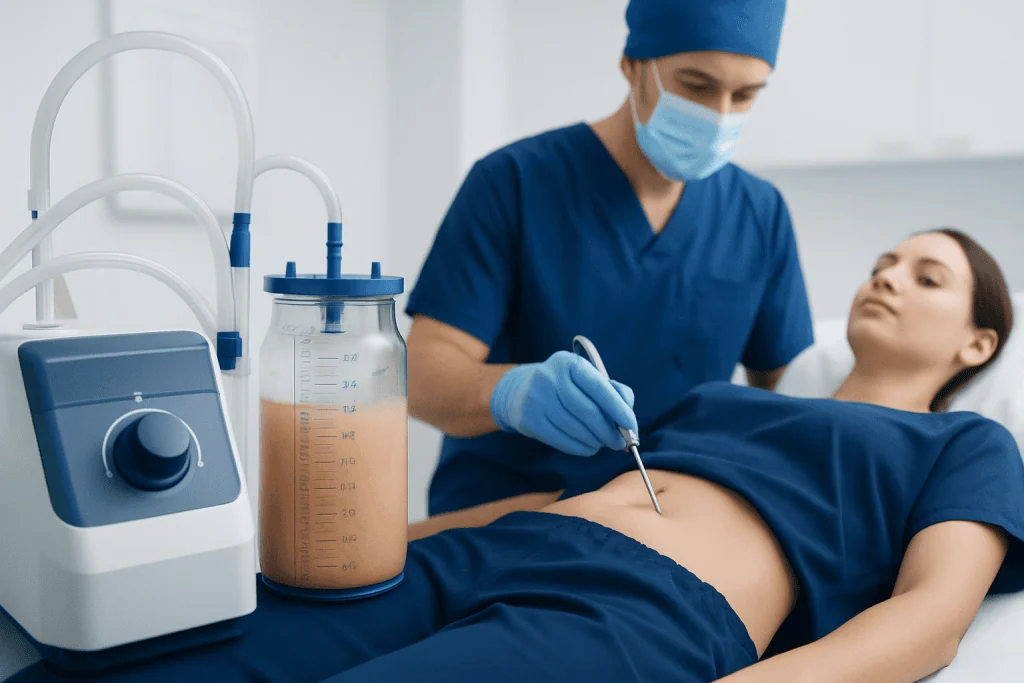
Liposuction is a surgical body-contouring procedure that removes localized deposits of fat through a thin tube called a cannula. It may be used in areas such as the abdomen, flanks, thighs, hips, upper arms, back, neck or under the chin. The aim is to improve proportion and contour in selected areas rather than to produce a particular body weight or clothing size.
The procedure does not treat obesity, and it does not replace balanced nutrition, physical activity or medical weight-management care when these are needed. Liposuction also cannot reliably correct loose skin, prominent cellulite or every type of body-shape concern. In some situations, a surgeon may discuss whether another procedure, such as skin-tightening surgery, would better address the person’s goals.
Fat cells removed during liposuction are permanently removed from the treated location. However, remaining fat cells can enlarge with significant weight gain, and body shape can change over time. Maintaining a stable weight and sustainable health habits helps preserve the contour achieved after surgery.
Who May Be a Candidate for Liposuction

Suitable candidates are usually adults who are near a stable weight and have localized fat deposits that have not responded as hoped to lifestyle measures. Good skin elasticity can help the skin adapt to the new contour, although age alone does not determine eligibility. A consultation evaluates the person’s anatomy, skin quality, medical history and desired outcome.
Surgeons also consider whether a person is healthy enough for anesthesia and surgery. Conditions such as uncontrolled diabetes, significant heart or lung disease, bleeding disorders, impaired wound healing or active infection may require treatment, additional assessment or a different approach. Smoking and nicotine use can increase wound-healing and clotting risks, so patients are commonly advised to stop before and after surgery according to their clinician’s instructions.
Expectations matter as much as anatomy. A qualified surgeon should tell you plainly what liposuction can and cannot achieve, that asymmetry or contour irregularities are possible, and whether treating in stages makes more sense for you. People considering surgery after major weight loss may benefit from discussing broader body-contouring options and their individual goals.
How the Procedure Is Performed
Before surgery, the surgeon reviews the treatment plan, takes a medical history, examines the target areas and may mark the skin while the patient is standing. Preoperative instructions may cover fasting, medications and supplements to avoid, arrangements for transportation home, and the need for a responsible adult to assist during the first part of recovery.
On the day of the procedure, anesthesia may be local anesthesia with sedation, regional anesthesia or general anesthesia, depending on the extent of treatment and the patient’s needs. Small incisions are made in discreet locations. A fluid solution is often introduced to reduce bleeding and help loosen fat, after which the cannula is moved carefully through the fatty layer to remove fat using suction.
Once the planned contour is achieved, the incisions are closed or managed as appropriate and a compression garment is applied. Many procedures are completed as day surgery, but this depends on the extent of surgery, anesthesia and the patient’s health. The surgical team provides individualized instructions for wound care, activity, pain control, garments and follow-up visits.
Recovery Timeline and Expected Results
Recovery varies with the number of treated areas, the volume of treatment, the technique used and the individual’s health. In the first days, soreness, swelling, bruising, fluid drainage and temporary numbness can occur. Compression garments are often recommended to help support healing and reduce swelling; the duration of use should follow the surgeon’s advice.
Many people can return to light daily activities after a short recovery period, while physically demanding work and strenuous exercise usually need to wait until the surgical team confirms it is safe. Short walks are often encouraged as directed because gentle movement supports circulation. Patients should avoid driving while taking sedating pain medicines or before they can comfortably make emergency movements.
Your new shape appears slowly. Early swelling hides the result, and small changes keep happening as the tissues settle over the following weeks and months. Follow-up appointments allow the team to monitor healing, address questions and identify concerns promptly. Attending all planned reviews is an important part of recovery.
Benefits, Risks and Safe Decision-Making
For appropriately selected patients, liposuction can improve the contour of specific body areas and may make clothing fit differently. Satisfaction is more likely when patients have a clear understanding of the expected degree of change, accept that healing takes time and follow postoperative guidance closely.
Like any surgery, liposuction carries risks. These can include bleeding, infection, anesthesia-related complications, fluid accumulation, persistent swelling, changes in skin sensation, scarring, uneven contours, skin discoloration and asymmetry. Less common but serious complications, including blood clots, injury to deeper tissues or complications from fluid shifts, require urgent medical attention. Risk may increase when extensive treatment is performed, when recovery instructions are not followed or when surgery occurs in an unsuitable setting.
Patients can support a safer decision by choosing a properly qualified surgeon, sharing all medical conditions and medicines honestly, and ensuring the procedure is performed in an appropriately regulated and equipped facility. They should be cautious about pressure to make a rapid decision or offers that do not clearly explain who will provide anesthesia, where surgery will occur and how postoperative complications will be managed.
- Ask which areas will be treated and why the chosen technique is recommended.
- Request an itemized estimate and ask what costs may arise outside the initial quote.
- Discuss expected scars, recovery restrictions and the plan for follow-up care.
- Ask who to contact after hours if unexpected symptoms occur.
When to Seek Medical Care
Before liposuction, patients should seek medical advice if they have new symptoms, an active illness, a possible pregnancy, a change in medications or a history of problems with anesthesia, bleeding or blood clots. These details can affect whether surgery should proceed and how it should be planned. A clinician should also evaluate persistent concerns about weight, body image or eating patterns so that care addresses the person’s overall wellbeing.
After liposuction, the surgical team should be contacted promptly for worsening pain, increasing redness or warmth, fever, foul-smelling drainage, persistent bleeding, rapidly increasing swelling or a wound that appears to open. Emergency medical care is needed for symptoms such as chest pain, shortness of breath, fainting, confusion, or sudden swelling and pain in one leg, as these may indicate a serious complication.
At Acibadem International, our multidisciplinary specialists and JCI-accredited hospitals care for patients needing aesthetic and postoperative treatment, including those travelling from abroad. A consultation before surgery can tell you whether liposuction is right for you and give you a personalized plan for treatment, recovery and follow-up.
Frequently asked questions
What is included in liposuction cost?
A complete liposuction estimate may include the surgeon’s fee, anesthesia, operating-facility services, preoperative assessments, garments, medications and follow-up appointments. Inclusions differ between treatment plans and facilities, so patients should request an itemized written quote. Travel and recovery-related expenses may be separate.
Why do liposuction estimates differ between patients?
Estimates differ because treatment areas, surgical complexity, anesthesia needs, procedure time and facility requirements vary. Surgeon experience and local regulatory or operating costs may also affect the estimate. Comparing itemized plans is more meaningful than comparing a single advertised number.
Is liposuction covered by health insurance?
Liposuction performed for cosmetic contouring is commonly considered elective and may not be covered by standard health insurance. Coverage rules vary by insurer, country and the medical reason for treatment. Patients should confirm coverage and authorization requirements directly with their insurer before scheduling surgery.
Is liposuction a weight-loss procedure?
No. Liposuction is intended to contour localized areas of fat and is not designed as a primary treatment for obesity or for significant weight loss. People seeking weight-management support should speak with a qualified healthcare professional about suitable medical, nutritional and lifestyle options.
How long does recovery after liposuction take?
Initial recovery often involves bruising, swelling and soreness that improve over time, but the exact timeline varies by the extent of surgery and the individual. Light activities may resume relatively soon when approved by the surgeon, while strenuous activity generally takes longer. Final contour results emerge gradually as swelling resolves.
What questions should patients ask during a liposuction consultation?
Patients can ask whether they are a suitable candidate, which areas can be treated, what anesthesia is planned, and what recovery will involve. They should also ask about the surgeon’s qualifications, facility standards, possible risks, expected results and all items included in the written estimate. Clear answers support informed consent and realistic expectations.
This article is for general information only and is not a substitute for professional medical advice. Please consult a qualified doctor about your individual situation.
Explore treatments in Turkey — costs, top hospitals & a free quote
7 JCI-accredited hospitals · board-certified surgeons · reply within 24h
Add us as a Preferred Source to see more of our trusted health content across Google Search, AI Overviews and Discover.

Medically reviewed by the Acıbadem International Medical Board — August 24, 2026
See our medical review board →
References (2)
- Liposuction — NHS — www.nhs.uk
- Obesity — MedlinePlus — medlineplus.gov
Aesthetic Plastic & Reconstructive Surgery Specialists at Acibadem

Assoc. Prof. Dr. Ahmet Küçükçelebi
Aesthetic Plastic & Reconstructive Surgery
Dr. Ayşe İrem İskenderoğlu
Aesthetic Plastic & Reconstructive Surgery
Asst. Prof. Dr. Berkhan Yılmaz
Aesthetic Plastic & Reconstructive Surgery
Prof. Dr. Bülent Saçak
Aesthetic Plastic & Reconstructive Surgery
Dr. Burak Sercan Erçin (m)
Aesthetic Plastic & Reconstructive SurgeryMore from the Health Library

Treating Seasonal Allergies With Medicines and Immunotherapy

Cancer screening Before & After: What Realistic Results Look Like

How Doctors Plan Treatment for a Gastrointestinal Tumor

Intersection Syndrome: Symptoms, Causes, and Treatment Options

Cervical Screening Uses HPV and Pap Tests to Find Changes Early