Liquid Biopsy vs Tissue Biopsy: When Is Each Test More Useful?

A tissue biopsy removes cells or a small piece of a tumor, while a liquid biopsy usually looks for tumor-related material in blood. Tissue biopsy remains the standard test for confirming many cancers because it shows the tumor directly under a microscope.
Key Takeaways
- A tissue biopsy removes cells or a small piece of a tumor, while a liquid biopsy usually looks for tumor-related material in blood.
- Tissue biopsy remains the standard test for confirming many cancers because it shows the tumor directly under a microscope.
- Liquid biopsy can be especially helpful when tissue is hard to reach, when repeat testing is needed, or when doctors want to monitor treatment over time.
- Neither test is automatically better in every case; usefulness depends on the cancer type, stage, and the clinical question.
- Doctors often use liquid biopsy and tissue biopsy as complementary tests rather than true alternatives.
Liquid biopsy and tissue biopsy are important tools in modern cancer care, but they do not provide exactly the same information. In many cases, one test is better suited to a specific question, and doctors may use both together to guide diagnosis, treatment, and follow-up.
Overview: What Is the Difference?
Biopsy means collecting a sample from the body so it can be examined for disease. A tissue biopsy involves removing a small amount of tissue from a suspicious area, such as a lump, organ, or lymph node. A pathologist then studies the sample under a microscope and may perform additional laboratory tests to help confirm whether cancer is present and what type it is.
A liquid biopsy is different. Instead of taking tissue directly from the tumor, it usually analyzes a blood sample for signs of cancer, such as circulating tumor DNA, tumor cells, or other tumor-related markers. Because it is less invasive, it can often be repeated more easily than a tissue biopsy.
The key point is that these tests answer overlapping but not identical questions. Tissue biopsy is often best for making the initial diagnosis and understanding the tumor’s structure. Liquid biopsy can be very useful for finding certain genetic changes, tracking how cancer changes over time, and checking for signs that treatment is or is not working.
For many patients, the choice is not “either-or.” Doctors may start with a tissue biopsy and then add a liquid biopsy later, especially in cancer care where treatment decisions increasingly depend on molecular details.
When Tissue Biopsy Is Usually More Useful
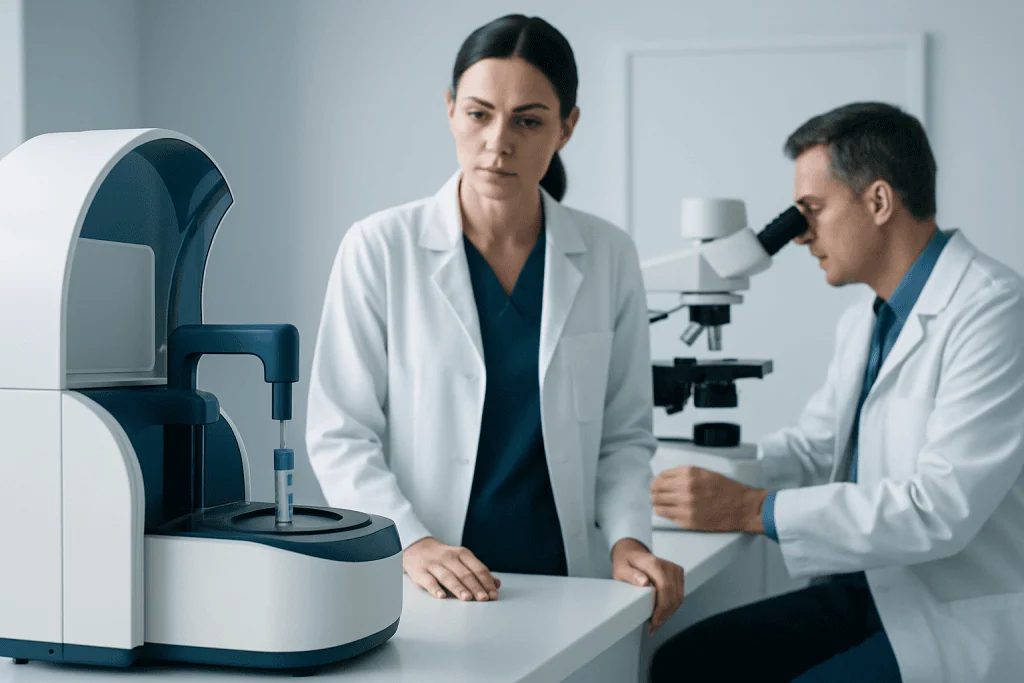
Tissue biopsy is still considered the standard method for diagnosing many cancers. It allows doctors to see the actual cells, how they are arranged, and whether they show features of malignancy. This level of detail is essential when the main question is, “Is this cancer, and if so, what kind?”
It is also especially useful when doctors need to evaluate the tumor’s grade, its exact subtype, and markers that require intact tissue architecture. In some cancers, treatment planning depends not only on genetic changes but also on how the cells look under the microscope and how they interact with nearby tissue.
Tissue biopsy may be more useful in situations such as:
- Confirming a new cancer diagnosis
- Distinguishing cancer from infection, inflammation, or a benign growth
- Classifying the exact tumor type and subtype
- Performing tests that require enough tumor cells in a preserved sample
Even when molecular testing is planned, doctors often prefer to obtain tissue first if it can be done safely. This is because a tissue sample may support multiple kinds of analysis, including pathology, immunohistochemistry, and targeted genetic testing. If a suspicious lesion is accessible, a procedure such as biopsy may provide the most complete initial information.
When Liquid Biopsy Is Usually More Useful

Liquid biopsy can be especially helpful when obtaining tissue is difficult, risky, or likely to delay care. Some tumors are located deep in the body, near major blood vessels, or in areas where repeat procedures may be uncomfortable or unsafe. In these cases, a blood-based test may provide valuable molecular information with less burden on the patient.
It is also useful when doctors want to look for genetic mutations that may guide targeted therapy, particularly if the original tissue sample is too small or no longer available. Because liquid biopsy can be repeated, it may help reveal how a tumor evolves over time or whether new resistance mutations appear after treatment.
Common situations where liquid biopsy may be particularly useful include:
- When a tumor is hard to reach safely
- When tissue samples are insufficient for more testing
- When repeat monitoring is needed during or after treatment
- When doctors suspect the cancer has developed new molecular changes
Liquid biopsy may also offer a broader snapshot of cancer activity from more than one tumor site, because tumor DNA can enter the bloodstream from different areas of disease. In selected patients, this can support more personalized care, often alongside genetic testing and other precision medicine tools.
Limitations of Each Test
Although liquid biopsy is promising and increasingly used, it has important limits. Not all tumors shed enough genetic material into the bloodstream to be detected. This means a negative liquid biopsy does not always rule out cancer or rule out a specific mutation. Small tumors, certain tumor types, and cancers confined to one area may be less likely to produce detectable signals in blood.
Tissue biopsy also has limitations. It is an invasive procedure, and depending on the tumor location, it may cause discomfort, bleeding, or other procedure-related risks. In some cases, the tissue sample may be too small, may not contain enough tumor cells, or may reflect only one part of a cancer that is biologically mixed.
Another challenge is timing. Tissue biopsy results can take time, especially when specialized molecular studies are needed. Liquid biopsy may sometimes provide faster access to certain genetic information, but speed should not be confused with completeness. A quicker test is not always the best stand-alone test.
For these reasons, doctors interpret both tests within the larger clinical picture, including imaging, symptoms, physical examination, and pathology findings. The most useful strategy often combines methods rather than relying on a single result.
How Doctors Decide Which Test to Use
The decision depends on what question needs to be answered. If the goal is to confirm whether a suspicious mass is cancer, tissue biopsy is usually the first choice. If the diagnosis is already known and the goal is to find treatment-related mutations or monitor response, liquid biopsy may be very helpful.
Doctors also consider the patient’s overall health, where the suspected tumor is located, whether enough tissue has already been collected, and how urgently information is needed. A person with an accessible tumor may benefit from tissue sampling first, while someone with a hard-to-reach lesion may need a different approach.
In modern oncology, test selection is often guided by a multidisciplinary team that may include oncologists, radiologists, pathologists, surgeons, and molecular specialists. Their shared goal is to gather accurate information while minimizing unnecessary procedures and delays.
Imaging and laboratory tools can also shape the decision. For example, doctors may use scans to locate the safest area for tissue sampling and then add molecular blood testing later. This type of coordinated evaluation may involve PET-CT or other advanced diagnostic methods when clinically appropriate.
How the Tests Work Together in Cancer Care
Rather than replacing tissue biopsy, liquid biopsy often adds another layer of information. Tissue confirms the diagnosis and shows the tumor’s histology, while liquid biopsy can help detect molecular changes that may not be captured in one small tissue sample. This is particularly important because cancers can change over time, especially after treatment.
For example, a patient may have a tissue biopsy at diagnosis and later undergo liquid biopsy if the cancer stops responding as expected. The blood test may identify new mutations linked to treatment resistance, which can help doctors consider a different targeted therapy or clinical strategy.
Liquid biopsy may also be used during follow-up in selected settings to monitor for minimal residual disease or early molecular relapse, although its role varies by cancer type and local practice. It is generally one part of surveillance, not a replacement for clinical review and imaging.
This complementary approach reflects the broader move toward personalized oncology care, where treatment decisions are based on the specific biology of a patient’s tumor as well as the person’s overall condition and goals.
What Patients Can Expect Before and After Testing
A tissue biopsy may be done with a needle, an endoscope, or a minor surgical procedure, depending on the location of the abnormal area. The patient may need local anesthesia, sedation, or short-term observation afterward. Recovery is often straightforward, but the experience varies according to the body site and the technique used.
A liquid biopsy is usually much simpler from the patient’s perspective. It generally requires a blood draw, similar to other laboratory tests. Because it is minimally invasive, it may be easier to repeat over time if the care team wants to monitor molecular changes.
Results from either test should always be discussed with a qualified doctor. A positive, negative, or inconclusive finding may mean different things depending on the cancer type and the stage of evaluation. Patients often benefit from asking what the test is expected to show, what its limits are, and whether additional testing may still be needed.
Near the end of the diagnostic journey, some people seek care at centers with broad oncology and molecular testing expertise. Acibadem International’s multidisciplinary specialists and JCI-accredited hospitals diagnose and treat cancer for international patients, using appropriate biopsy methods as part of individualized evaluation.
Frequently asked questions
Is liquid biopsy replacing tissue biopsy?
No. Tissue biopsy remains essential in many cases, especially for confirming a new cancer diagnosis and identifying the exact tumor type. Liquid biopsy is often used alongside tissue biopsy rather than as a full replacement.
Why might a doctor order both tests?
Each test provides different information. Tissue shows the tumor directly, while liquid biopsy can reveal genetic changes in blood and may help monitor how cancer evolves over time.
Can a liquid biopsy detect all cancers?
No. Some cancers do not shed enough tumor material into the bloodstream to be detected reliably. A negative result does not always rule out cancer, which is why doctors may still recommend tissue biopsy or imaging.
Is a liquid biopsy less painful than a tissue biopsy?
Usually yes, because it is typically done through a standard blood draw. Tissue biopsy can involve a needle procedure, endoscopy, or minor surgery, so the level of discomfort depends on where the sample is taken from.
Which test gives faster results?
This varies by hospital, laboratory, and the type of analysis requested. Liquid biopsy may sometimes provide certain molecular results more quickly, but tissue biopsy often offers more complete diagnostic information.
When is tissue biopsy especially important?
It is especially important when the main goal is to confirm whether a suspicious lesion is cancer and to classify the tumor accurately. It may also be needed when pathology details or specialized tissue-based markers are necessary for treatment planning.
Should patients ask about molecular testing after a biopsy?
Yes, especially in cancers where targeted therapies may be considered. A doctor can explain whether molecular testing is appropriate, whether tissue is sufficient, and whether a liquid biopsy could add useful information.
References
- National Cancer Institute
- American Society of Clinical Oncology
- European Society for Medical Oncology
- World Health Organization
- College of American Pathologists
This article is for general information only and is not a substitute for professional medical advice. Please consult a qualified doctor about your individual situation.
Oncology care in Turkey — second opinion and treatment plan
JCI-accredited · board-certified surgeons · reply within 24h
Add us as a Preferred Source to see more of our trusted health content across Google Search, AI Overviews and Discover.

More from the Health Library



Related Specialists

Prof. Dr. Mustafa Çetiner
Hematology
Prof. Dr. Volkan Özben
General Surgery
Prof. Dr. Cengiz Canpolat
Pediatrics & Pediatric Oncology
Gizem Karaoğlan
Physical Medicine & Rehabilitation