Liver Biopsy — Explained by Medical Evidence, Not Myths

A liver biopsy helps confirm or clarify liver disease when other tests are not enough. The sample can show inflammation, fat buildup, fibrosis, cirrhosis, infection, or abnormal cells.
Key Takeaways
- A liver biopsy helps confirm or clarify liver disease when other tests are not enough.
- The sample can show inflammation, fat buildup, fibrosis, cirrhosis, infection, or abnormal cells.
- Most liver biopsies are done with imaging guidance to improve accuracy and safety.
- Pain and bleeding are the main short-term risks, but serious complications are uncommon.
- Preparation often includes blood tests and temporarily stopping certain medicines that increase bleeding risk.
- Recovery usually involves a few hours of observation and avoiding heavy activity for a short period.
A liver biopsy is a medical test in which a doctor removes a very small sample of liver tissue and examines it under a microscope. It is used when blood tests, imaging, or symptoms do not fully explain a liver problem, and it can help diagnose inflammation, scarring, fatty liver disease, infection, autoimmune conditions, or cancer.
What a Liver Biopsy Is and Why It Matters
A liver biopsy is a procedure that removes a tiny piece of liver tissue so it can be examined in a laboratory. This direct look at the liver can answer questions that blood tests and scans cannot fully resolve. In practical terms, it helps doctors move from suspicion to diagnosis, or from a broad label such as “abnormal liver tests” to a clearer explanation of what is happening inside the liver.
Medical evidence shows that a liver biopsy is not needed for every liver condition. Many people can be diagnosed with blood tests, ultrasound, CT, MRI, and noninvasive fibrosis assessments. However, biopsy still has an important role when the cause of liver disease is unclear, when the stage of damage needs confirmation, or when treatment decisions depend on seeing the tissue pattern directly.
This tissue sample may reveal inflammation, fat accumulation, fibrosis, cirrhosis, infection, autoimmune damage, medication-related injury, or cancer cells. For example, a doctor may consider biopsy when evaluating fatty liver disease, unexplained hepatitis, or a suspicious liver lesion. Rather than being a routine test for everyone, it is usually chosen because the result is expected to change diagnosis, monitoring, or treatment planning.
When Doctors Recommend a Liver Biopsy
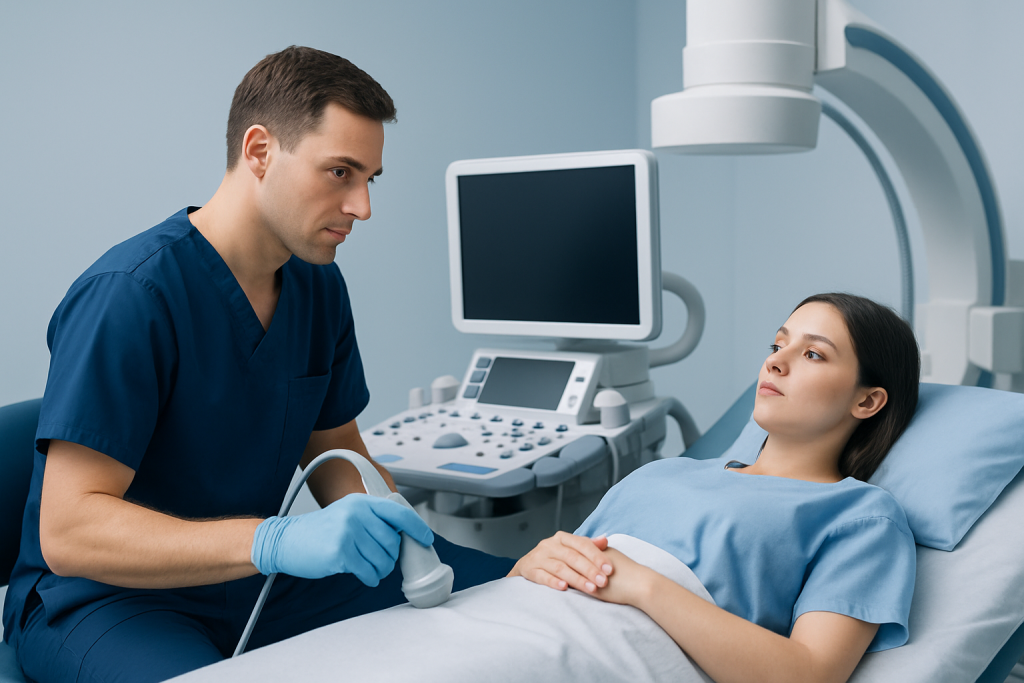
Doctors recommend a liver biopsy when they need more certainty than noninvasive tests can provide. One common reason is persistently abnormal liver enzyme tests without a clear explanation. Another is to measure the degree of liver injury or scarring when this information will affect treatment, prognosis, or the need for closer follow-up.
Biopsy may also be used to investigate suspected autoimmune liver disease, certain infections, inherited metabolic disorders, drug-related liver injury, or abnormal findings seen on ultrasound, CT, or MRI. In some cases, a tissue sample helps distinguish between different causes of hepatitis or assesses whether a liver mass may represent benign tissue, inflammation, or cancer.
People being evaluated for advanced liver disease may hear about biopsy alongside imaging, elastography, and specialized blood tests. If there is concern about long-term damage such as cirrhosis, the doctor weighs whether biopsy will add useful information beyond safer noninvasive methods. The decision is individualized and usually based on the question that still needs answering.
- To clarify unexplained abnormal liver tests
- To confirm or stage fatty liver disease and fibrosis
- To investigate hepatitis, autoimmune disease, or drug injury
- To evaluate a liver mass or abnormal imaging finding
- To guide treatment decisions or monitor certain conditions
How the Procedure Is Performed
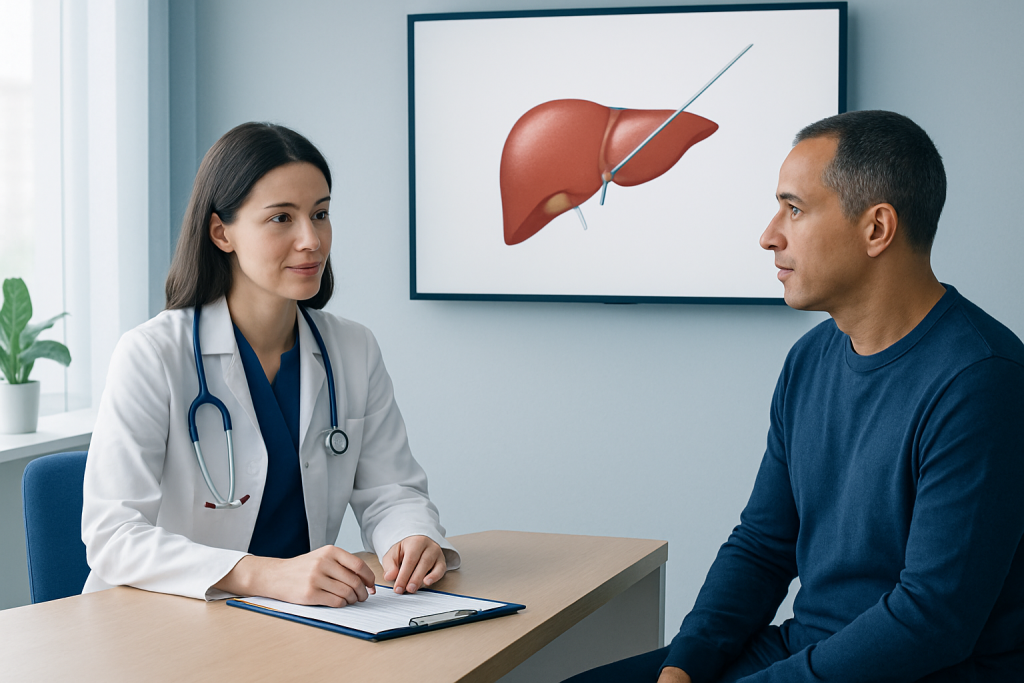
There is more than one way to perform a liver biopsy. The most common type is a percutaneous liver biopsy, in which a needle is passed through the skin into the liver to obtain the sample. This is often done with ultrasound guidance so the doctor can choose a safe path and target the right area. In selected cases, the biopsy may be done through a vein in the neck, known as a transjugular biopsy, especially when bleeding risk or fluid in the abdomen makes the standard approach less suitable.
Before the procedure, the medical team reviews medications, allergies, and past medical history. Blood tests are usually checked to assess clotting and platelet levels, because the liver is a blood-rich organ. Patients are often asked to avoid eating for a period beforehand and may need to stop blood thinners or certain supplements temporarily, but only under the guidance of the prescribing clinician.
During a percutaneous biopsy, the skin is cleaned and numbed with local anesthetic. Some patients also receive medication to help them relax. The biopsy needle is inserted for a brief moment, often during a breath hold, and one or more small samples are collected. Imaging support may be provided through interventional radiology when precise guidance is needed, especially in more complex cases.
Afterward, the patient is observed for several hours. Nurses monitor blood pressure, pulse, pain, and signs of bleeding. Most people go home the same day if they remain stable, though someone else may need to drive them home depending on the medicines used.
What the Results Can Show
The tissue from a liver biopsy is examined by a pathologist, a doctor trained to diagnose disease under the microscope. The report may describe how much inflammation is present, whether fat has built up in liver cells, and whether scar tissue is mild, moderate, or advanced. It can also show patterns that suggest autoimmune disease, viral hepatitis, cholestatic disorders, storage diseases, medication effects, or cancer.
One important strength of a liver biopsy is that it does not simply say whether the liver is abnormal. It can also help show the type and pattern of injury. For example, biopsy may distinguish active inflammation from established scarring, or identify whether fatty liver has progressed beyond simple fat accumulation into a more damaging form of liver injury.
Results are interpreted together with symptoms, blood tests, scans, and medical history. A biopsy is a powerful diagnostic tool, but it is only one part of the full clinical picture. In people with masses or lesions, tissue findings may be discussed with specialists in oncology or gastroenterology to decide on next steps in care.
Risks, Side Effects, and Safety
A liver biopsy is generally considered safe when performed for the right reason and with proper precautions. The most common side effect is pain or soreness at the biopsy site or in the right shoulder, usually temporary and manageable with recommended pain relief. Brief observation after the procedure is important because most complications, if they occur, appear within the first several hours.
The main serious risk is bleeding. Because the liver has a strong blood supply, doctors carefully review clotting tests and medications in advance. Rarely, a patient may develop internal bleeding that requires hospital treatment, blood transfusion, or another procedure. Very uncommon risks include infection, injury to nearby structures, or a collapsed lung if the biopsy site is close to the chest area.
Safety is improved by using ultrasound or other imaging guidance, choosing the correct biopsy method, and avoiding the procedure when the bleeding risk is too high. A transjugular approach may be safer for some patients with abnormal clotting or significant abdominal fluid. The medical team balances the value of the information against the procedure risk before recommending it.
- Common: temporary pain or tenderness
- Less common: low blood pressure, dizziness, nausea
- Uncommon but important: internal bleeding
- Rare: infection or injury to nearby organs
Recovery, Self-Care, and Practical Questions
Recovery after a liver biopsy is usually straightforward. Patients typically rest under observation for a few hours and then return home the same day if they are well. It is common to be advised to avoid strenuous activity, heavy lifting, and intense exercise for a short period, often about a day or two, though the exact instructions may vary depending on the biopsy type and the individual’s health.
Mild soreness can happen, but severe or worsening pain is not expected. Patients should follow the discharge instructions carefully, including when to restart medicines that were temporarily paused. It is also sensible to avoid alcohol until the doctor says it is appropriate, especially if the biopsy is being done to investigate liver inflammation or injury.
Many patients wonder whether a liver biopsy spreads cancer, “damages” the liver, or always causes major pain. These are common myths. In routine practice, the procedure removes only a tiny amount of tissue, the liver usually heals well, and serious complications are uncommon when the biopsy is appropriately planned. The purpose is to improve accuracy, not to replace other tests or expose someone to unnecessary risk.
When to Seek Medical Care
Medical attention is important if a person develops severe abdominal pain, increasing right shoulder pain, fainting, shortness of breath, fever, heavy bleeding, black stools, or marked weakness after a liver biopsy. These symptoms can have different causes, but they should be reported promptly because they may signal a complication that needs urgent assessment.
People should also seek medical advice before the biopsy if they take blood thinners, have a known bleeding disorder, are pregnant or may be pregnant, or have allergies to medicines or contrast agents. Clear communication before the procedure helps the team reduce avoidable risks and choose the safest method.
If questions remain about whether biopsy is truly necessary, it is reasonable to ask what decision the result will guide and whether noninvasive tests could provide enough information instead. In complex cases, multidisciplinary evaluation can be helpful. Acibadem International’s multidisciplinary specialists in JCI-accredited hospitals diagnose and treat liver conditions for international patients, including cases that require advanced imaging, biopsy, and coordinated follow-up.
Frequently asked questions
Is a liver biopsy painful?
Most people feel pressure or brief discomfort rather than severe pain during the procedure because the skin is numbed with local anesthetic. Mild soreness afterward is common and usually short-lived. The medical team monitors pain and can recommend appropriate relief.
How long does it take to recover from a liver biopsy?
Most patients are observed for a few hours and go home the same day. Light activity is usually possible soon after, but heavy lifting and strenuous exercise are often avoided for a short period. The exact recovery advice depends on the biopsy type and the patient's overall health.
Why would someone need a liver biopsy if scans and blood tests were already done?
Blood tests and imaging can suggest liver disease, but they do not always identify the exact cause or amount of inflammation and scarring. A biopsy allows direct examination of liver tissue under a microscope. This can confirm a diagnosis and help guide treatment decisions.
What conditions can a liver biopsy diagnose?
A liver biopsy can help diagnose fatty liver disease, hepatitis, fibrosis, cirrhosis, autoimmune liver disorders, infections, medication-related liver injury, and some cancers. It may also help assess how advanced a known liver condition is. The results are interpreted together with other test findings.
What are the main risks of a liver biopsy?
The most common issue is temporary pain at the biopsy site or in the shoulder. The most important serious risk is bleeding, which is why clotting tests and medication review are done beforehand. Serious complications are uncommon, but patients are monitored closely after the procedure.
Can a liver biopsy be avoided?
Sometimes yes. Noninvasive blood tests, elastography, ultrasound, CT, and MRI may provide enough information for diagnosis and monitoring in many patients. A biopsy is usually recommended only when it is expected to answer an important question that other tests cannot resolve reliably.
References
- National Institute of Diabetes and Digestive and Kidney Diseases
- American Association for the Study of Liver Diseases
- European Association for the Study of the Liver
- American College of Gastroenterology
- Merck Manual Professional Edition
This article is for general information only and is not a substitute for professional medical advice. Please consult a qualified doctor about your individual situation.
Oncology care in Turkey — second opinion and treatment plan
JCI-accredited · board-certified surgeons · reply within 24h
Add us as a Preferred Source to see more of our trusted health content across Google Search, AI Overviews and Discover.
Check your numbers in seconds
BMI, calories, due date, blood pressure and 30+ more clinical calculators — free, instant, doctor-reviewed ranges.

More from the Health Library

Carrageenan: An Evidence-Based Guide for Patients

TIA Stroke — Explained by Medical Evidence, Not Myths
Renal Colic: What Patients Need to Know
Radiation Therapist: A Complete Medical Overview
Knee Gel Injections Cost: An Evidence-Based Guide for Patients