Locked in Syndrome Recovery: A Week-by-Week Timeline
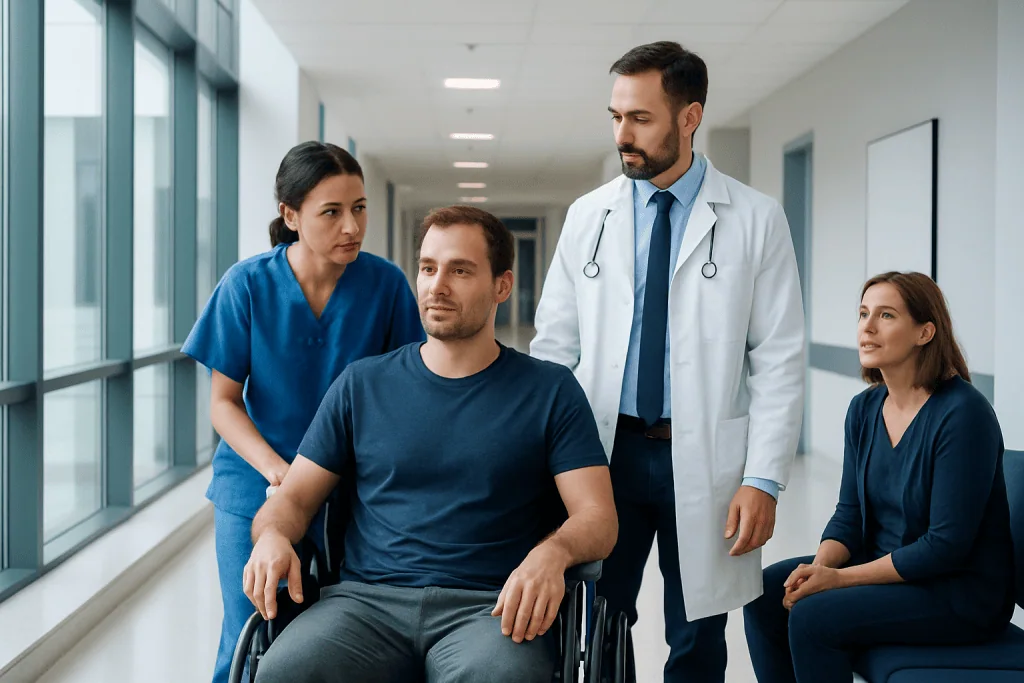
Locked-in syndrome causes near-complete paralysis while awareness is usually preserved. The first days and weeks focus on medical stabilization, communication, nutrition, breathing support and prevention of complications.
Key Takeaways
- Locked-in syndrome causes near-complete paralysis while awareness is usually preserved.
- The first days and weeks focus on medical stabilization, communication, nutrition, breathing support and prevention of complications.
- Recovery may include small but meaningful gains in eye movements, speech, swallowing, head control or limb movement over time.
- Early, coordinated rehabilitation can support function, comfort, communication and participation in care.
- The outlook depends mainly on the cause, location and extent of brain injury, complications and the person's overall health.
Locked in syndrome recovery is highly individual and usually unfolds over months or longer, rather than following a fixed weekly schedule. Early priorities are stabilizing the underlying brain injury, establishing reliable communication and starting rehabilitation as soon as medically appropriate.
Overview: What Locked In Syndrome Recovery Can Look Like
Locked-in syndrome is a rare neurological condition in which a person is awake and usually able to think, understand and feel, but has severe paralysis affecting most voluntary muscles. It most often results from injury to the lower part of the brainstem, called the pons. People may be unable to speak, move their limbs or breathe independently, while vertical eye movements and blinking may remain possible.
Locked in syndrome recovery does not follow one predictable timetable. Some people regain limited movement, speech or swallowing ability during the first weeks and months, while others have lasting, severe disability. Even when physical recovery is limited, reliable communication technology, skilled rehabilitation and supportive care can help a person express choices, maintain relationships and take part in decisions about their treatment.
It is important to distinguish locked-in syndrome from coma, unresponsive wakefulness syndrome and minimally conscious state. In classic locked-in syndrome, consciousness is preserved, but the person may not initially be able to demonstrate this. Careful neurological assessment, repeated examinations and appropriate testing are therefore essential.
How the Condition Happens and Who May Need Intensive Care
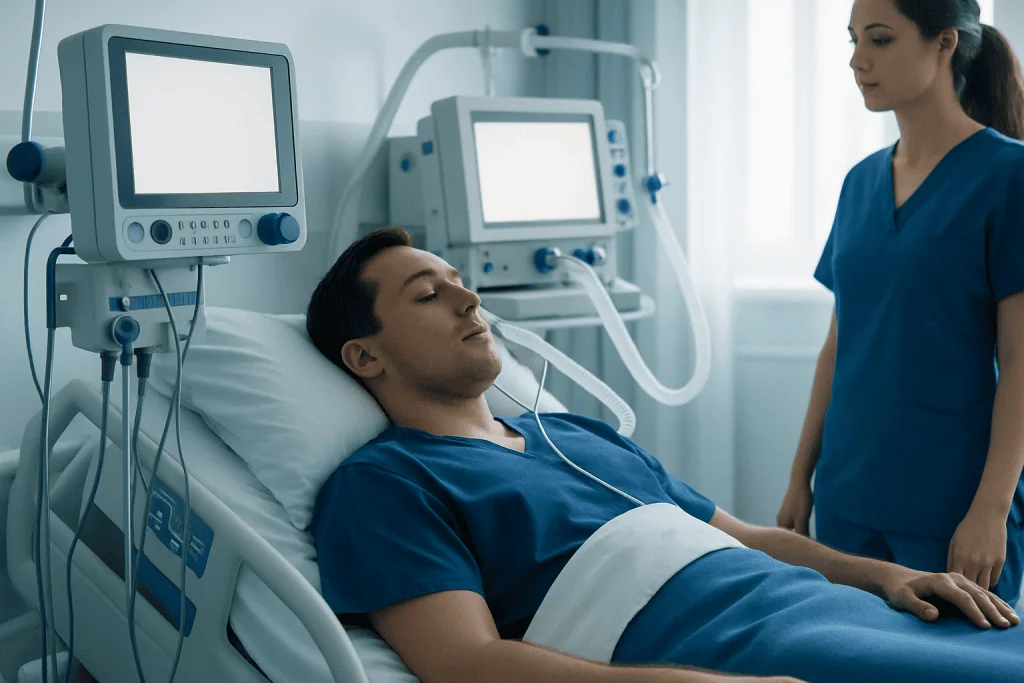
The most common cause of locked-in syndrome is a stroke affecting the brainstem, particularly a blockage or bleeding involving the basilar artery or pons. Other possible causes include traumatic brain injury, tumors, severe central nervous system infection, inflammatory disorders and certain metabolic conditions. The specific cause strongly influences both urgent treatment and longer-term recovery.
People with sudden brainstem symptoms need emergency assessment. Warning signs can include abrupt weakness on both sides of the body, trouble speaking or swallowing, double vision, reduced alertness, severe dizziness, loss of coordination or abnormal breathing. A person who appears unresponsive may still be aware and unable to move, so relatives and clinicians should not assume lack of consciousness from immobility alone.
Acute treatment depends on the underlying problem. For selected patients with an ischemic stroke caused by a large-vessel blockage, rapid stroke treatment may include clot-dissolving medicine or an endovascular procedure to restore blood flow. Brain hemorrhage may require intensive monitoring, blood-pressure management, treatment of the cause and, in some cases, neurosurgical care.
Assessment, Communication and the First Week
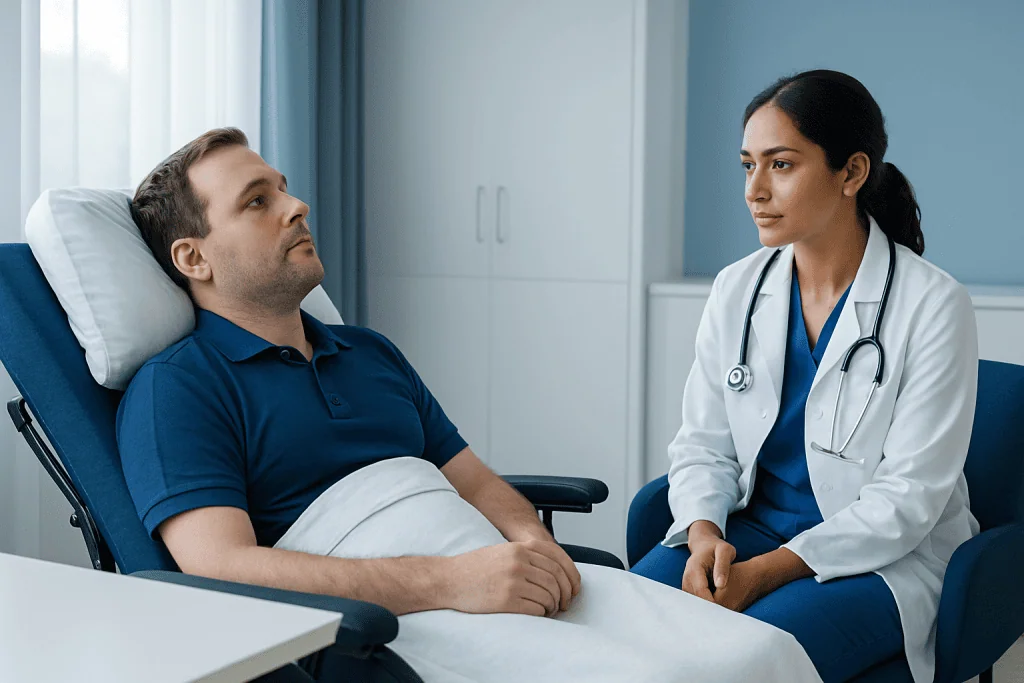
During the first 24 hours to 7 days, the clinical team focuses on preserving life and limiting further brain injury. Care may include airway and breathing support, circulation management, treatment of stroke-related complications, prevention of blood clots and pressure injuries, nutrition planning and infection surveillance. Brain imaging, such as CT or MRI, helps identify the location and cause of injury.
Clinicians repeatedly assess consciousness and look for intentional eye movements, blinking or other small responses. Simple yes-or-no communication may be established by asking the person to look up or blink once for yes and twice for no. It can take time to confirm that a response is consistent, especially when fatigue, eyelid weakness, sedation or medical instability are present.
Family members can support communication by speaking calmly, allowing extra time for answers and assuming the person may hear what is being said unless the care team advises otherwise. Familiar voices, orientation to the day and place, and respectful inclusion in conversations may be meaningful. However, relatives should not place pressure on the person to respond or interpret every movement as purposeful.
Weeks 2 to 6: Early Rehabilitation and Preventing Complications
Once medically stable, rehabilitation begins with realistic, individualized goals. A rehabilitation physician, neurologist, nurses, physiotherapists, occupational therapists, speech and language therapists, dietitians, respiratory therapists and psychologists may all be involved. The first goals are often comfort, joint protection, positioning, breathing support, safe nutrition and dependable communication rather than walking or speaking.
Physiotherapy may include passive range-of-motion exercises, careful positioning and gradual sitting or standing where safe. These measures can help reduce stiffness, pain, pressure sores and loss of conditioning. Occupational therapy may address seating, hand splints, environmental controls and strategies that increase independence in daily routines.
Speech and language therapy is important even when speech is not yet possible. Therapists assess communication, cognition and swallowing, and may introduce low-tech letter boards, eye-gaze systems or computer-based assistive technology. A swallowing evaluation helps determine when oral intake may be safe and whether tube feeding remains necessary.
- Small, consistent improvements in eye control can substantially improve communication.
- Recovery may be interrupted by infections, fatigue, sleep disruption, breathing difficulties or mood changes.
- Progress should be reviewed regularly, as needs and abilities can change over time.
Months 2 to 12: Recovery, Adaptation and Long-Term Planning
From approximately 2 months onward, recovery may become more apparent, although the pace is often uneven. Some people regain facial movement, head control, finger movement, swallowing, speech or limited movement in the arms and legs. Others may have little motor recovery but improve their ability to communicate through eye movements and assistive devices. Meaningful progress can continue beyond the first year.
Rehabilitation plans should be adjusted to the person’s goals, endurance and medical needs. Therapy may focus on mobility, wheelchair positioning, communication devices, self-care tasks, swallowing rehabilitation and return to social roles. Psychological support is equally important for the person and family, since anxiety, depression, grief and caregiver strain can occur after a sudden, life-changing neurological injury.
Long-term care planning may involve home adaptations, caregiver training, community rehabilitation, nursing support and regular follow-up with neurology and rehabilitation teams. People affected by brainstem stroke may also benefit from information about stroke prevention, including management of blood pressure, diabetes, cholesterol, heart rhythm disorders and smoking where relevant.
How Long Does It Take to Recover From Left Side Paralysis?
Left side paralysis, also called left hemiplegia or hemiparesis, can occur after a stroke or other brain injury affecting the right side of the brain. Recovery varies greatly. Some improvement may appear within days or weeks, especially as brain swelling settles, while further gains often occur over the first 3 to 6 months and may continue for years with rehabilitation and practice.
The amount of recovery depends on the cause and size of the injury, the person’s health before the event, sensation and cognition, early medical complications and access to rehabilitation. Early return of some voluntary movement is generally encouraging, but it does not guarantee a particular outcome. A rehabilitation specialist can reassess progress and tailor therapy over time.
Left-sided weakness is different from locked-in syndrome, which usually involves paralysis of nearly all voluntary muscles due to brainstem injury. Nonetheless, principles such as prompt stroke assessment, safe mobility work, prevention of contractures and individualized therapy are important in both situations.
How Long Does It Take to Regain Consciousness After a Brain Hemorrhage?
After a brain hemorrhage, some people remain awake while others have reduced consciousness due to bleeding, swelling, pressure on surrounding brain tissue, seizures, hydrocephalus or sedating medicines used in intensive care. There is no single timeline for regaining consciousness. Improvement can occur over hours to days as urgent problems are treated, but severe injuries may require weeks or longer to assess clearly.
Doctors use repeated neurological examinations and brain imaging to understand the cause of reduced responsiveness. They also review medication effects, oxygen levels, infection, seizures and metabolic problems, because these can affect wakefulness. When sedation is medically necessary, the care team may reduce it gradually when safe to better evaluate neurological function.
Families can ask the treating team what factors are currently affecting consciousness, what observations are reassuring or concerning, and when another assessment is planned. Prognosis is most accurate when based on serial examinations over time rather than a single early evaluation.
What Is the Average Life Expectancy After a Frontal Lobe Stroke?
There is no reliable single average life expectancy for a person after a frontal lobe stroke. Outcomes differ according to the type and severity of stroke, age, pre-existing medical conditions, treatment received, rehabilitation, complications and control of future stroke risks. Many people live for years after a stroke, particularly when they receive follow-up care and preventive treatment.
A frontal lobe stroke can affect movement, attention, planning, personality, judgment, speech or emotional regulation, but effects vary with the exact area involved. Ongoing care may include neurological follow-up, rehabilitation, assessment of cognitive or behavioral changes, and support for family members. Preventing another stroke is an important part of long-term outlook.
Clinicians can provide more individualized information after reviewing imaging, functional recovery, heart and blood vessel risks, and the person’s response to treatment. Broad life-expectancy estimates found online cannot predict an individual outcome.
Is It Normal to Not Wake Up From an Induced Coma?
An induced coma usually refers to deep sedation used in intensive care to protect the brain, support breathing treatment or manage severe agitation, seizures or raised pressure inside the skull. It is possible for a person not to wake immediately after sedating medicine is reduced or stopped. The timing depends on the medicines used, duration of treatment, kidney and liver function, illness severity and the underlying brain injury.
Delayed awakening does not automatically mean that recovery is impossible. Doctors assess whether medication is still affecting the person and look for other factors, such as seizures, infection, metabolic imbalance, hydrocephalus or further brain injury. Neurological examinations, imaging and sometimes electroencephalography may be used to guide assessment.
Families should ask the intensive care team whether sedation has been fully reduced, what the current neurological findings show and what evaluations are planned. Prognosis should be discussed carefully and revisited as the person’s condition evolves.
When to Seek Medical Care
Emergency medical care is needed immediately for sudden facial drooping, weakness or numbness, difficulty speaking, severe new headache, loss of balance, vision changes, confusion, collapse, seizure or reduced consciousness. These symptoms can signal stroke or brain hemorrhage, and urgent treatment may reduce disability in some cases. Emergency services should be contacted rather than waiting to see if symptoms improve.
After a diagnosis of locked-in syndrome or severe stroke, urgent medical review is also needed for new breathing difficulty, fever, chest pain, choking, repeated vomiting, seizures, sudden severe headache, new loss of function, marked drowsiness or signs of a pressure injury. These may indicate complications that require timely treatment.
For international patients, Acibadem International’s multidisciplinary specialists and JCI-accredited hospitals can assess neurological conditions, coordinate rehabilitation and support ongoing care planning. Follow-up should remain individualized and led by qualified clinicians who know the person’s medical history.
Frequently asked questions
Can a person with locked-in syndrome recover fully?
Complete recovery is uncommon, but some people regain varying degrees of movement, speech, swallowing or independence. The outcome depends on the cause and extent of brainstem injury, complications and rehabilitation. Communication support remains valuable regardless of the level of physical recovery.
Is someone with locked-in syndrome conscious?
In classic locked-in syndrome, the person is generally conscious and able to understand language and surroundings. Severe paralysis prevents them from showing this in usual ways. Eye movements or blinking may provide an important route for communication.
When does rehabilitation start after locked-in syndrome?
Rehabilitation planning often starts in intensive care, even before the person can actively exercise. Early care may include positioning, preventing stiffness and pressure injuries, supporting breathing and developing a communication method. More active therapy expands as medical stability and endurance improve.
Can people with locked-in syndrome communicate?
Many people can communicate using blinking, eye movements, letter boards or eye-gaze technology. The best method depends on vision, eye control, fatigue, cognition and available equipment. Speech and language therapists can help identify and train the most reliable method.
What are the biggest risks during recovery from locked-in syndrome?
Potential complications include pneumonia, blood clots, pressure injuries, muscle stiffness, malnutrition, urinary infections and emotional distress. Skilled nursing, respiratory care, nutrition support and rehabilitation can reduce these risks. New symptoms should always be discussed promptly with the medical team.
Does recovery stop after six months?
No. Although many neurological improvements occur in the first months, recovery and adaptation can continue beyond six months and sometimes beyond a year. Later gains may include better communication, comfort, endurance or ability to participate in daily activities, even if major motor recovery is limited.
References
- National Institute of Neurological Disorders and Stroke
- American Stroke Association
- World Stroke Organization
- Mayo Clinic
- Merck Manual Professional Edition
This article is for general information only and is not a substitute for professional medical advice. Please consult a qualified doctor about your individual situation.
Explore treatments in Turkey — costs, top hospitals & a free quote
JCI-accredited · board-certified surgeons · reply within 24h
Add us as a Preferred Source to see more of our trusted health content across Google Search, AI Overviews and Discover.

More from the Health Library



Related Specialists

Prof. Dr. Metin Ertem
General Surgery
Dr. Nevin Sarıgüzel
Infectious Diseases & Clinical Microbiology
Assoc. Prof. Dr. Elif Şenocak Taşçı
Medical Oncology
Prof. Dr. Ömer Fatih Ölmez
Medical Oncology