Long Term Dizziness after Cataract Surgery: Procedure, Recovery and Results

Brief dizziness after cataract surgery can occur as vision and depth perception adjust, especially after surgery in one eye. Dizziness that lasts months is not considered a typical recovery effect and should be evaluated rather than simply endured.
Key Takeaways
- Brief dizziness after cataract surgery can occur as vision and depth perception adjust, especially after surgery in one eye.
- Dizziness that lasts months is not considered a typical recovery effect and should be evaluated rather than simply endured.
- Blurred vision, unequal spectacle prescriptions, dry eye, residual refractive error and posterior capsule opacification can affect visual comfort and balance.
- Sudden vision loss, severe eye pain, marked redness, new flashes or floaters, weakness, speech difficulty or a severe headache require urgent medical care.
- Most cataract procedures are outpatient operations with a gradual visual recovery over days to weeks.
Long term dizziness after cataract surgery is uncommon. Mild imbalance or disorientation may occur briefly while the brain adapts to clearer or differently focused vision, but dizziness continuing for weeks or months deserves an eye examination and, when needed, assessment for inner-ear, medication, neurological or cardiovascular causes.
Overview: long term dizziness after cataract surgery
Long term dizziness after cataract surgery is not usually a normal part of healing. Some people feel briefly off-balance, light-sensitive or visually disoriented as the operated eye adjusts to clearer vision and a new optical focus. This often improves over several days or weeks, particularly once both eyes work together comfortably and any needed glasses prescription is updated.
When dizziness continues for months, becomes more severe, or starts after an initially comfortable recovery, it is important to look beyond cataract surgery alone. An ophthalmologist can check whether a visual issue is contributing, while a primary care clinician or relevant specialist can assess other common causes such as an inner-ear disorder, medication effects, low blood pressure, migraine or a neurological condition.
Cataract surgery replaces the cloudy natural lens with a clear artificial intraocular lens. It is one of the most commonly performed eye procedures and usually improves clarity, glare and day-to-day visual function. Although the operation itself does not directly affect the balance organs in the inner ear, sudden changes in vision can temporarily influence a person’s sense of spatial orientation.
How cataract surgery works, who may benefit and what happens
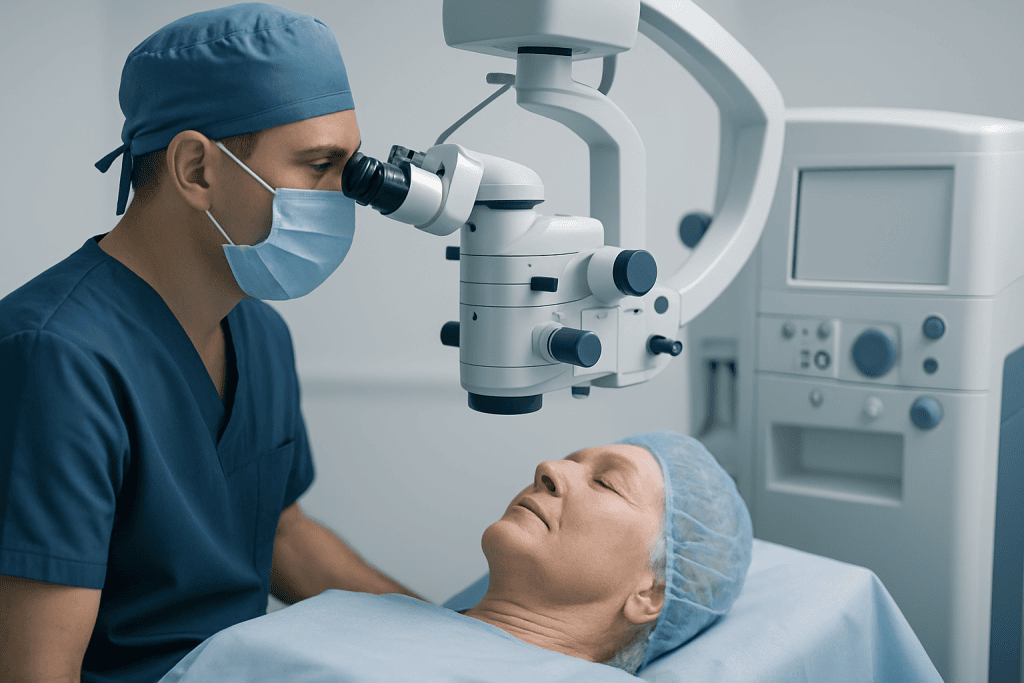
A cataract is clouding of the eye’s natural lens. It may make vision hazy, reduce contrast, cause glare around lights and make reading, driving or recognizing faces more difficult. Surgery may be considered when these changes interfere with daily activities and cannot be adequately managed with glasses or other measures.
Before surgery, the ophthalmology team measures the eye and discusses lens options, visual goals, current eye health and general medical history. People with conditions such as glaucoma, retinal disease, corneal disease, diabetes or previous eye surgery can still be candidates, but their expected visual outcome and follow-up plan may differ. The decision is individualized and should include discussion of the benefits, limits and alternatives.
During the procedure, the eye is numbed with drops or local anesthesia. The surgeon makes a very small opening, breaks up and removes the cloudy lens using ultrasound energy or another appropriate technique, then places an intraocular lens in the lens capsule. Cataract surgery is generally performed as an outpatient procedure, and the patient usually goes home the same day with protective and medication instructions.
For patients considering lens replacement for visually significant cataracts, cataract surgery evaluation and treatment can help determine the most suitable approach and lens plan.
Is it normal to feel dizzy months after cataract surgery?

No. Feeling dizzy months after cataract surgery is not generally expected as a routine recovery symptom. It does not automatically mean there is a serious eye problem, but it warrants a clinical review because persistent dizziness can increase the risk of falls and may have a cause unrelated to the operation.
Visual factors may contribute when the two eyes have noticeably different focus, magnification or image quality. This can happen if surgery has been completed in one eye but not the other, if glasses are no longer appropriate, or if there is residual refractive error. Some people also need time to adapt to multifocal or extended-depth-of-focus lenses, which can create halos, glare or altered contrast under certain lighting conditions.
An eye examination can check the implanted lens position, eye pressure, corneal clarity, retinal health and the need for refractive correction. If the examination does not identify a visual cause, the clinician may recommend assessment for vestibular, cardiovascular, metabolic, medication-related or neurological explanations. Avoid driving, using ladders or walking on uneven ground alone if dizziness affects balance.
How long does it take to recover from cataract surgery?
Many people notice clearer vision within a few days after cataract surgery, but complete stabilization is not identical for everyone. Vision may fluctuate early on because of mild inflammation, dryness, swelling of the cornea, healing of the incision and adjustment to the new lens. Follow-up visits allow the ophthalmologist to confirm that the eye is healing as expected.
In the first day or two, mild scratchiness, tearing, blurred vision, sensitivity to light or a feeling that colors look unusually bright can occur. Most people can return to light activities relatively soon, but they should follow their surgeon’s advice about eye drops, avoiding eye rubbing, swimming, heavy lifting and exposure to dust or contaminated water. Driving should wait until vision meets safe legal and practical standards.
A final glasses prescription, if needed, is commonly determined after the eye has settled. Recovery can take longer in people with pre-existing retinal disease, glaucoma, dry eye, corneal conditions or complications such as cystoid macular edema. The surgical team can provide the most accurate timeline based on the individual eye and procedure.
How long does post-surgery dizziness last?
When dizziness is linked to early visual adaptation after cataract surgery, it is often short-lived and improves over days to a few weeks. It may be more noticeable when walking outdoors, using stairs, changing between bright and dim areas, or adjusting to different vision between the eyes. Rest, good lighting, careful movement and using prescribed glasses can make this period easier.
There is no single normal duration because dizziness may have several causes. A symptom that persists beyond the early healing period, repeatedly affects walking or daily activities, or fails to improve after vision has stabilized should be discussed with an ophthalmologist or doctor. Persistent symptoms should not be assumed to be caused by the intraocular lens without examination.
People should not stop prescribed eye drops or regular medications on their own because of dizziness. A clinician can review possible side effects, check blood pressure and blood sugar when relevant, and decide whether referral to an ear, nose and throat, neurology, cardiology or primary care service is appropriate.
What are some common visual problems after cataract surgery?
Temporary blurred vision, glare, halos around lights, dry-eye symptoms and light sensitivity are relatively common early after surgery. These often improve as inflammation settles and the eye surface heals. Artificial tears or other treatments may be recommended if dry eye is affecting comfort or visual quality.
Some visual concerns need review because they can require treatment. These include residual nearsightedness, farsightedness or astigmatism; swelling in the central retina; elevated eye pressure; infection; retinal tear or detachment; and displacement of the implanted lens. Another common later issue is posterior capsule opacification, sometimes called a “secondary cataract,” in which the thin capsule behind the implanted lens becomes cloudy. It can often be treated with a brief laser procedure when clinically appropriate.
People should report worsening vision rather than waiting for a scheduled appointment. New flashes of light, a sudden increase in floaters, a shadow or curtain in the field of vision, significant pain, increasing redness or discharge are not typical mild recovery symptoms and need prompt eye-care advice.
Benefits, risks and practical self-care
The main potential benefit of cataract surgery is improved vision affected by lens clouding. Many people experience sharper images, less glare and better ability to perform daily tasks. However, surgery cannot reverse vision loss caused by other eye conditions, such as advanced glaucoma, macular degeneration or diabetic retinal disease, so realistic expectations are an important part of preoperative planning.
As with any operation, cataract surgery has risks. These may include inflammation, infection, bleeding, changes in eye pressure, corneal swelling, retinal swelling, retinal detachment, lens-related problems and the need for additional treatment. Serious complications are uncommon, but early reporting of concerning symptoms helps protect vision.
During recovery, patients should use eye drops exactly as prescribed, attend follow-up appointments, protect the eye as instructed and avoid rubbing or pressing on it. If dizziness is present, practical fall-prevention steps include rising slowly from sitting or lying positions, keeping walkways clear, using handrails, wearing stable footwear and asking for help with tasks that require good balance.
When to seek medical care
Contact the eye surgeon or an urgent eye-care service promptly for worsening vision, severe or increasing eye pain, increasing redness, marked light sensitivity, nausea with eye pain, pus-like discharge, flashes, a sudden shower of floaters, or a dark curtain or shadow across vision. These symptoms can indicate an eye problem that requires timely assessment.
Seek urgent medical care for dizziness accompanied by fainting, chest pain, shortness of breath, new weakness or numbness, facial drooping, trouble speaking, confusion, severe headache or difficulty walking. These symptoms may signal a medical emergency unrelated to the eye surgery.
For non-urgent dizziness lasting more than a few weeks, recurring after the eye has healed, or interfering with confidence while walking, arrange an appointment with an ophthalmologist and primary care clinician. Acibadem International’s multidisciplinary specialists and JCI-accredited hospitals can assess cataract-related visual concerns and coordinate care for international patients when needed.
Frequently asked questions
Can cataract surgery cause vertigo?
Cataract surgery does not usually cause true vertigo, which is the sensation that a person or their surroundings are spinning. Temporary visual disorientation can occur while the brain adjusts to changed vision, but persistent spinning sensations should be assessed for inner-ear or other medical causes.
Why do I feel unsteady after cataract surgery in one eye?
When only one eye has been operated on, the two eyes may temporarily send images with different focus or magnification to the brain. This mismatch can affect depth perception and confidence on stairs or uneven surfaces. An eye specialist can check vision in both eyes and advise whether glasses, time for adaptation or additional treatment is needed.
Can new glasses help dizziness after cataract surgery?
They may help if dizziness is related to an outdated prescription, uncorrected astigmatism or an imbalance between the eyes. A prescription should be measured when the surgeon feels the eye has healed sufficiently. Glasses will not treat dizziness caused by an inner-ear, blood pressure, medication or neurological problem.
Is blurred vision normal after cataract surgery?
Mild blurred or fluctuating vision is common during the first days of healing. It should generally trend toward improvement. Blurring that worsens, persists unexpectedly or occurs with pain, redness, flashes or a curtain-like shadow needs prompt assessment.
Can a secondary cataract make me feel dizzy?
Posterior capsule opacification can make vision cloudy or glare-prone after an initially successful cataract operation. Reduced visual quality can contribute to feeling less secure while walking in some people. An ophthalmologist can confirm the cause and discuss whether laser treatment is appropriate.
What should I do if dizziness continues months after cataract surgery?
Arrange an ophthalmology review to assess vision, the intraocular lens, eye pressure and the retina. It is also sensible to discuss the symptom with a primary care clinician, especially if there are medication changes, hearing symptoms, palpitations, faintness or neurological symptoms. Seek urgent care if dizziness occurs with warning signs such as weakness, speech changes, chest pain or sudden vision loss.
References
- American Academy of Ophthalmology
- National Eye Institute
- National Health Service
- Mayo Clinic
This article is for general information only and is not a substitute for professional medical advice. Please consult a qualified doctor about your individual situation.
Cataract Surgery in Turkey — costs, top hospitals & a free quote
JCI-accredited · board-certified surgeons · reply within 24h
Add us as a Preferred Source to see more of our trusted health content across Google Search, AI Overviews and Discover.
Check your numbers in seconds
BMI, calories, due date, blood pressure and 30+ more clinical calculators — free, instant, doctor-reviewed ranges.

Ophthalmology
Comprehensive eye care from laser vision correction to retina, cornea and cataract surgery.
75 specialists in this unit