Lump at Clavicle — Explained by Medical Evidence, Not Myths

A lump near the clavicle may arise from lymph nodes, skin, soft tissue, bone, or the sternoclavicular joint. Many clavicle-area lumps are benign, but a new lump that persists or enlarges should be evaluated by a clinician.
Key Takeaways
- A lump near the clavicle may arise from lymph nodes, skin, soft tissue, bone, or the sternoclavicular joint.
- Many clavicle-area lumps are benign, but a new lump that persists or enlarges should be evaluated by a clinician.
- Doctors diagnose the cause using history, physical examination, and when needed imaging, blood tests, or biopsy.
- Warning signs include a hard fixed lump, unexplained weight loss, fever, night sweats, redness, severe pain, or trouble breathing or swallowing.
- Treatment depends entirely on the cause and may range from observation to medicines, drainage, or surgery.
A lump at clavicle can have several causes, including swollen lymph nodes, joint changes, cysts, lipomas, injury-related swelling, or less commonly a tumor. The most important next step is not guessing from appearance alone, but having the area assessed if it is persistent, growing, painful, hard, or accompanied by other symptoms.
What a Lump at Clavicle Usually Means
A lump at clavicle means there is a swelling, bump, or mass on or near the collarbone. In many cases, the cause is not dangerous. Common explanations include an enlarged lymph node after an infection, a benign fatty lump called a lipoma, a cyst under the skin, arthritis around the sternoclavicular joint, or swelling after an injury. However, because the clavicle area contains lymph nodes, joints, blood vessels, and bone, a persistent lump should not be diagnosed by appearance alone.
The clavicle, or collarbone, connects the breastbone to the shoulder. A lump may sit directly on the bone, above it, below it, or near either end of the collarbone. That location helps doctors narrow the cause. For example, a lump above the clavicle may be a lymph node, while a lump near the inner end may come from the sternoclavicular joint.
What matters most is the pattern over time. A soft, mobile lump that stays unchanged may be benign, while a hard, fixed, enlarging lump deserves prompt medical attention. Associated symptoms such as fever, cough, recent infection, skin redness, unexplained weight loss, or pain after trauma also guide evaluation.
Common and Less Common Causes
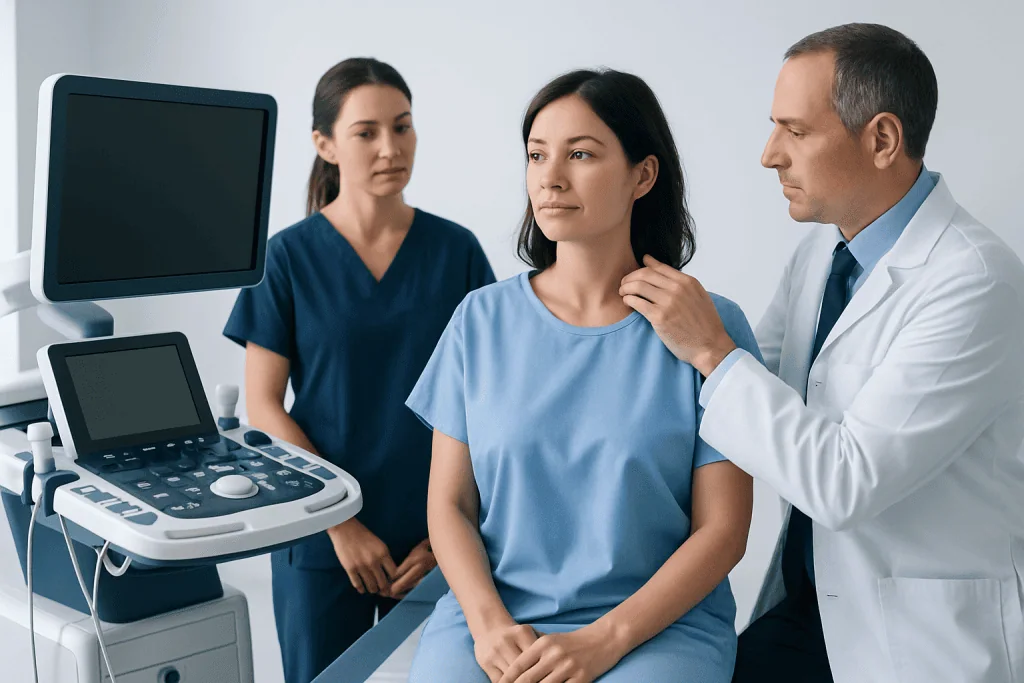
One of the most frequent causes of a clavicle-area lump is a swollen lymph node. Lymph nodes can enlarge temporarily when the body is fighting an infection, such as a sore throat, dental infection, chest infection, or viral illness. These lumps may feel tender and can shrink again over days to weeks once the infection settles.
Another common cause is a benign skin or soft tissue lump. Examples include a lipoma, which is a soft fatty growth under the skin, and epidermoid or sebaceous cysts, which can feel round and superficial. These are often movable and slow-growing. Some people also develop bony prominence or swelling after a previous fracture, repetitive strain, or age-related joint change near the collarbone.
Lumps can also come from the sternoclavicular joint, where the collarbone meets the breastbone. Osteoarthritis, inflammation, or rarely infection in this joint can cause visible fullness, tenderness, or pain with shoulder movement. In athletes or after trauma, sprain or dislocation may create a sudden bump.
Less commonly, a lump at clavicle may be related to a tumor involving lymph nodes, soft tissue, or bone. This can include lymphoma, spread from another cancer, or a primary bone lesion. Most lumps are not cancer, but the possibility is one reason clinicians take persistent supraclavicular or collarbone-area lumps seriously. If concern remains after examination, doctors may investigate for conditions such as lymphoma or other causes based on the person’s symptoms and test results.
Symptoms That Help Identify the Cause

Doctors do not rely only on the presence of a lump. They also assess how it feels and what symptoms come with it. A tender, warm, or red lump may suggest inflammation or infection. A soft, rubbery, and movable lump may fit with a benign lymph node or lipoma. A hard, irregular, or fixed lump raises more concern and needs careful assessment.
Timing is also important. A lump that appears suddenly after a fall, sports injury, or blow to the chest may reflect swelling, bruising, fracture, or joint displacement. If the area hurts when the arm moves, the sternoclavicular joint or nearby muscles may be involved. Ongoing or nighttime pain may need imaging to look more closely at bone or joint structures.
Symptoms elsewhere in the body can be especially helpful. Fever, sore throat, cough, skin infection, recent dental problems, or a cold may support a reactive lymph node. By contrast, night sweats, persistent fatigue, unexplained weight loss, or a lump that keeps enlarging may point to a more serious underlying problem. Shortness of breath, hoarseness, trouble swallowing, or swelling in the arm or neck should be assessed promptly.
- Tender and short-lived: often infection or inflammation
- Soft and mobile: often benign soft tissue lump
- Hard or fixed: needs medical evaluation
- After trauma: may be injury, fracture, or joint problem
- With whole-body symptoms: may need broader testing
How Doctors Diagnose a Clavicle Lump
Evaluation begins with a detailed history and physical examination. A clinician will ask when the lump appeared, whether it has changed in size, whether it is painful, and whether there has been recent infection, injury, or weight loss. They will examine the exact location, size, texture, mobility, and any nearby lymph nodes. This first step often gives strong clues about whether the lump comes from skin, soft tissue, lymphatic tissue, bone, or joint.
If the cause is not clear, imaging may help. Ultrasound is often useful for distinguishing a lymph node from a cyst or a soft tissue mass. X-rays may be ordered if the doctor suspects a clavicle or joint problem. More detailed imaging, such as MRI or CT scan, may be recommended when deeper structures, bone lesions, or chest-related causes need closer evaluation.
Blood tests may be used when infection, inflammation, or blood-related conditions are suspected. If a lump persists, is clearly abnormal on imaging, or has features concerning for malignancy, a tissue sample may be needed. This can be done with needle aspiration, core biopsy, or occasionally surgical removal for diagnosis. When a clavicle-area lump is clearly linked to enlarged nodes, doctors may also investigate whether there is an underlying infection, autoimmune disorder, or, more rarely, cancer such as lung cancer depending on the full clinical picture.
Treatment Depends on the Cause
There is no single treatment for a lump at clavicle because the lump itself is a sign, not a diagnosis. If the cause is a temporary enlarged lymph node from a mild infection, doctors may recommend observation and treatment of the infection if needed. Some lymph nodes gradually return to normal over several weeks. If the lump is due to a benign cyst or lipoma and is not bothersome, monitoring may be all that is required.
When pain, inflammation, or joint irritation is the issue, treatment may include rest, activity modification, and medications recommended by a physician. If the lump follows trauma, the doctor may check for fracture or joint injury and advise a sling or other orthopedic care. Infected cysts or abscesses may require drainage and antibiotics under medical supervision.
If tests suggest a tumor or another significant underlying disease, treatment is directed at that condition. This may involve surgery, oncology care, or specialist follow-up depending on the diagnosis. For selected masses, biopsy helps confirm exactly what the tissue is before planning treatment. In more complex cases, management may include input from radiology, orthopedics, general surgery, ENT, or oncology specialists.
Near the end of the care pathway, some patients benefit from multidisciplinary assessment, especially if imaging, surgery, and pathology all need to be coordinated. Acibadem International’s multidisciplinary specialists and JCI-accredited hospitals diagnose and treat this condition for international patients when further evaluation is needed.
Self-Care and What Not to Do
Self-care should be cautious and simple. It is reasonable to monitor a small lump for a short period if it appears after a minor infection and there are no red-flag symptoms. Keeping a note of the size, tenderness, and any related symptoms can help during a doctor visit. If the area is sore after minor strain or trauma, avoiding pressure and heavy lifting may reduce discomfort.
It is best not to repeatedly press, squeeze, or massage the lump. This can irritate the tissue and may worsen inflammation or tenderness. Trying to drain a cyst at home is unsafe and can lead to infection or scarring. Over-the-counter pain relief may be appropriate for some people, but medicine should be used according to a doctor’s or pharmacist’s guidance, especially in children, pregnant people, or those with other health conditions.
Because supraclavicular and collarbone-area lumps can occasionally reflect a problem deeper in the chest or neck, self-diagnosis from internet photos is unreliable. Even when a lump seems harmless, a clinician should assess it if it does not improve, keeps returning, or is associated with symptoms elsewhere in the body.
When to Seek Medical Care
A short period of observation may be reasonable for a small, tender lump that appears during a clear viral illness and then starts to improve. In most other situations, especially for adults with a new supraclavicular lump, medical review is advisable. Prompt assessment helps separate common benign causes from problems that need treatment.
A person should arrange medical care sooner if the lump lasts more than two to four weeks, becomes larger, feels hard or fixed, or causes ongoing pain. Medical attention is also important if there is fever, skin redness, drainage, recent significant trauma, night sweats, unexplained weight loss, or fatigue.
Urgent care is needed if the lump is associated with trouble breathing, chest pain, trouble swallowing, severe swelling, rapidly spreading redness, or signs of a major injury. Children with a clavicle lump should also be evaluated if the cause is uncertain, because the range of possible causes differs by age and recent infections or injuries.
Frequently asked questions
Is a lump at clavicle always a swollen lymph node?
No. A lump near the clavicle can come from a lymph node, but it can also be a cyst, lipoma, joint swelling, injury-related bump, or a bone or soft tissue lesion. The location and feel of the lump help doctors tell these apart.
When is a collarbone lump more concerning?
A lump is more concerning if it is hard, fixed, enlarging, or lasts longer than a few weeks. It also deserves prompt evaluation if it comes with fever, night sweats, unexplained weight loss, breathing symptoms, or trouble swallowing.
Can stress cause a lump at clavicle?
Stress itself does not usually create a physical lump at the clavicle. However, stress can make a person more aware of normal anatomy or of a lump that was already present. Any new or persistent lump should be examined rather than blamed on stress alone.
Can a clavicle lump be caused by injury?
Yes. A fall, sports impact, or strain can cause bruising, swelling, fracture, or sternoclavicular joint injury that appears as a bump near the collarbone. A painful lump after trauma should be checked, especially if shoulder movement is limited.
What tests are commonly used for a lump near the collarbone?
Doctors often start with a physical exam and may then use ultrasound, X-ray, CT, or MRI depending on the suspected cause. Blood tests can help if infection or inflammation is suspected, and a biopsy may be needed when the diagnosis remains uncertain.
Should a painless lump at clavicle still be checked?
Yes. Not all important causes are painful. A painless lump that persists, grows, or feels hard should still be assessed by a qualified doctor to identify the cause and decide whether any further tests are needed.
References
- Mayo Clinic
- National Health Service
- American Academy of Orthopaedic Surgeons
- National Cancer Institute
- Merck Manual Consumer Version
This article is for general information only and is not a substitute for professional medical advice. Please consult a qualified doctor about your individual situation.
Joint and spine care in Turkey — expert assessment & treatment
JCI-accredited · board-certified surgeons · reply within 24h
Add us as a Preferred Source to see more of our trusted health content across Google Search, AI Overviews and Discover.

More from the Health Library

App to Monitor Fertility — Explained by Medical Evidence, Not Myths

Phantom Kicks: A Complete Medical Overview

Antiandrogens: A Complete Medical Overview

Testicles: A Complete Medical Overview

Fencing Response: A Complete Medical Overview