Lump in Breast: A Complete Clinical Guide for Patients

A lump in breast may be caused by a cyst, hormonal change, infection, benign growth, or cancer. Many breast lumps are harmless, but a new or changing lump should not be ignored.
Key Takeaways
- A lump in breast may be caused by a cyst, hormonal change, infection, benign growth, or cancer.
- Many breast lumps are harmless, but a new or changing lump should not be ignored.
- Clinical examination and breast imaging are usually the first steps in diagnosis.
- Some lumps need only monitoring, while others require drainage, medication, or biopsy.
- Seek medical care sooner if a lump is hard, fixed, growing, painful with fever, or linked to skin or nipple changes.
A lump in breast can have many causes, and most are not cancer. Still, any new, persistent, or changing breast lump should be assessed by a qualified doctor so the cause can be identified and, if needed, treated promptly.
Overview: What a Lump in Breast May Mean
A lump in breast is a very common reason for seeking medical advice. In many cases, the cause is benign, such as a fluid-filled cyst, a fibroadenoma, normal nodular breast tissue, or changes related to the menstrual cycle. Even so, a new lump should be evaluated because breast lumps can feel similar on self-examination, while their underlying causes may be very different.
From a patient perspective, the most important point is that a breast lump is a sign, not a diagnosis. Some lumps are soft and movable, while others feel firm or fixed. Some are painful, and some are not. A doctor considers the person’s age, symptoms, menstrual status, family history, and imaging findings to understand what the lump is likely to represent.
Evaluation usually begins with a focused history and breast examination, followed by imaging such as ultrasound or mammography depending on age and clinical findings. If imaging does not clearly show a benign cause, a biopsy may be advised to confirm the diagnosis. This stepwise approach helps avoid both unnecessary alarm and unnecessary delay.
How a Breast Lump Can Feel and Other Symptoms to Notice
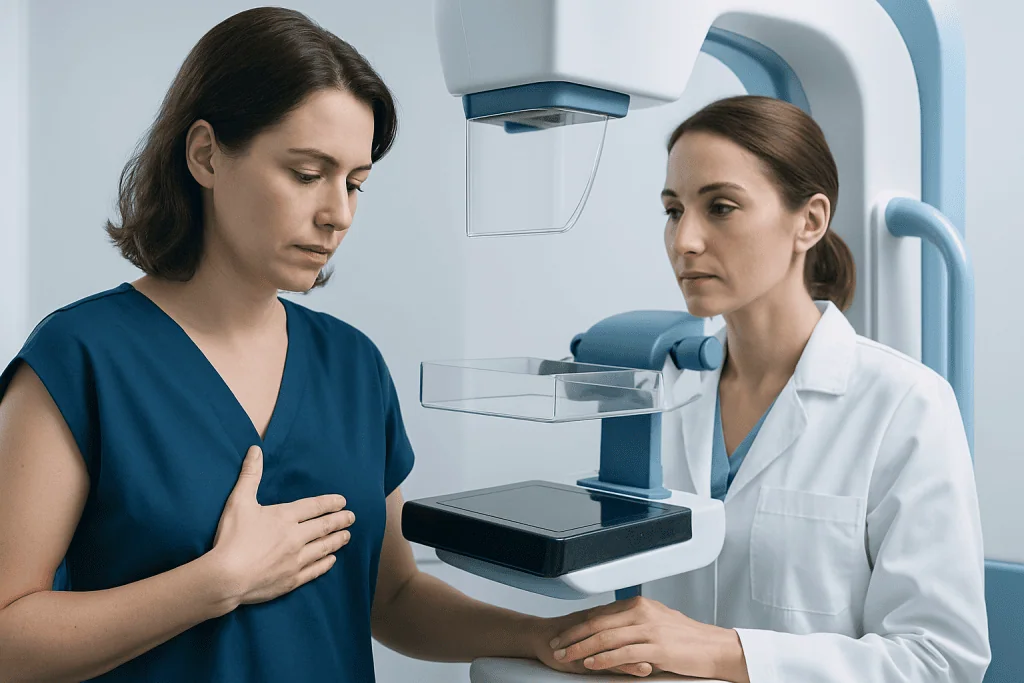
A breast lump may be found accidentally while dressing or showering, during self-awareness of the breasts, or on a routine clinical exam or screening test. Some people notice one distinct lump, while others feel generalized thickening or lumpiness in one area. The lump may stay the same, come and go with the menstrual cycle, or gradually change over time.
Symptoms that can occur with a lump include breast pain, tenderness, skin redness, warmth, nipple discharge, or a feeling of fullness. Hormone-related lumps may become more noticeable before a period and improve afterward. Infections may cause pain, swelling, and fever, while certain benign cysts may feel smooth, round, and mobile.
Features that deserve prompt medical attention include a hard lump, a lump that does not move easily, skin dimpling, nipple inversion that is new, bloody nipple discharge, swelling in the armpit, or a lump that continues to enlarge. These signs do not always mean cancer, but they do mean proper assessment is important.
- Soft or rubbery lumps are often benign, but still may need evaluation.
- Painful lumps can be caused by cysts, inflammation, or infection.
- Painless lumps can also be benign, but persistent ones should be checked.
- Changes in breast skin or the nipple add important diagnostic clues.
Common Causes and Risk Factors

There are several possible causes of a lump in breast. Common benign causes include cysts, fibroadenomas, fibrocystic breast changes, fat necrosis, and blocked milk ducts. In people who are breastfeeding, mastitis or a breast abscess may create a painful swollen area. After injury or surgery, scar tissue or fat necrosis can sometimes feel like a mass.
Cysts are fluid-filled sacs that can develop as breast tissue responds to hormonal changes. Fibroadenomas are solid benign growths that are more common in younger women and often feel smooth and mobile. Fibrocystic change is not a disease but a pattern of lumpy, sometimes tender breast tissue that may fluctuate with the menstrual cycle.
Malignant causes are less common than benign ones, but they must be considered, especially when a lump is new, firm, irregular, fixed, or associated with other warning signs. Breast cancer risk is influenced by age, personal history of breast disease, certain inherited gene changes, strong family history, prior chest radiation, and some reproductive and hormonal factors. Patients with concerning findings may need assessment for breast cancer as part of the diagnostic process.
Having risk factors does not mean a person will develop cancer, and having no known risk factors does not fully rule it out. That is why the lump itself, along with imaging and sometimes tissue sampling, guides decision-making more reliably than risk factors alone.
How Doctors Diagnose a Lump in Breast
Diagnosis begins with a detailed conversation about when the lump was first noticed, whether it changes with the menstrual cycle, whether it is painful, and whether there are associated symptoms such as discharge or skin changes. The doctor then performs a breast and underarm examination, checking the size, shape, texture, mobility, and location of the lump.
Imaging is usually the next step. Ultrasound is often used first, especially in younger patients or when a doctor wants to determine whether a lump is solid or fluid-filled. Mammography is commonly used in older patients and may be combined with ultrasound for a fuller picture. In selected situations, especially when findings remain unclear, breast MRI may be useful.
If imaging suggests a simple cyst or another clearly benign cause, monitoring may be all that is needed. If the findings are indeterminate or suspicious, a biopsy is recommended. A core needle biopsy is commonly used because it provides a tissue sample that can be examined under a microscope. When more detailed breast imaging is required, patients may also be referred for mammography or targeted breast ultrasound.
This process is often called triple assessment: clinical examination, imaging, and biopsy when indicated. It is a standard and reliable way to evaluate breast lumps, helping doctors identify benign conditions accurately while also detecting serious disease as early as possible.
Treatment Options and What Happens Next
Treatment depends entirely on the cause of the lump. A simple cyst that is not causing discomfort may only need observation. If a cyst is large or painful, it can sometimes be drained. Fibroadenomas may be monitored if imaging and biopsy confirm they are benign, although removal may be considered if they are growing, bothersome, or diagnostically uncertain.
If a lump is related to infection, treatment may include antibiotics, pain relief, and supportive care. A breast abscess may need drainage in addition to medication. Hormone-related breast tenderness or lumpiness may improve with practical measures such as a well-fitting bra, symptom tracking, and discussion with a doctor about possible triggers.
When biopsy shows cancer or a high-risk lesion, care is planned by a multidisciplinary team. This may include surgery, medical oncology, radiation oncology, and imaging specialists. Depending on the diagnosis, treatment could involve breast cancer treatment or surgery such as breast surgery. The exact plan depends on pathology results, imaging, overall health, and patient preferences.
Near the end of the diagnostic journey, many patients want coordinated support and clear explanations. Acibadem International’s multidisciplinary specialists and JCI-accredited hospitals diagnose and treat breast conditions for international patients, with care plans tailored to the individual diagnosis.
Self-care, Monitoring, and Prevention
There is no guaranteed way to prevent every breast lump because many are linked to normal breast tissue changes, age, hormones, or conditions that cannot be predicted. Still, breast awareness is helpful. Rather than aiming to perform a perfect self-exam, patients are encouraged to become familiar with how their breasts usually look and feel so they can notice changes more confidently.
Keeping track of symptoms can also help. It may be useful to note when the lump appears more prominent, whether it changes with the menstrual cycle, whether there is pain, and whether any discharge occurs. This information can support a more accurate medical assessment and may help distinguish cyclical changes from persistent abnormalities.
General breast health measures include attending age-appropriate screening appointments, maintaining a healthy lifestyle, limiting alcohol where appropriate, and discussing family history with a doctor. If a person has a strong family history or other high-risk factors, the doctor may recommend earlier or more intensive surveillance.
Self-care should not replace professional evaluation when a new lump appears. Home remedies, massage, or waiting for many weeks without guidance may delay diagnosis. If symptoms persist beyond one menstrual cycle, or if there are any concerning warning signs, medical review is the safest next step.
When to Seek Medical Care
A new lump in breast should be assessed by a healthcare professional, even if it seems small or painless. Prompt review is especially important when the lump persists after a menstrual period, is growing, or feels different from the surrounding tissue.
Medical care should be sought urgently if the breast is red, hot, and very painful, especially if fever is present, because infection or an abscess may need treatment. Care is also important if there is bloody nipple discharge, a new inverted nipple, skin dimpling, swelling in the armpit, or a hard irregular mass.
Patients who are pregnant, breastfeeding, postmenopausal, or at higher risk because of family history should not assume a lump is harmless. Most breast lumps turn out to be benign, but timely assessment helps identify the cause and allows treatment or reassurance without unnecessary delay.
Frequently asked questions
Is a lump in breast always cancer?
No. Many breast lumps are benign and may be caused by cysts, fibroadenomas, hormonal changes, or infection. However, a new or changing lump should still be evaluated so the cause can be confirmed.
Can a painful breast lump be harmless?
Yes. Painful lumps are often linked to benign conditions such as cysts, inflammation, or hormone-related breast changes. Even so, pain alone cannot determine the diagnosis, so medical assessment is still important if the lump is new or persistent.
What kind of doctor should check a breast lump?
A primary care doctor, gynecologist, breast specialist, or general surgeon with breast expertise can begin the evaluation. They may then arrange imaging and, if needed, referral for biopsy or specialist treatment.
How long should someone wait before getting a breast lump checked?
A new breast lump should be arranged for medical review without unnecessary delay. If the lump seems related to the menstrual cycle, some doctors may consider whether it changes after the next period, but persistent or concerning lumps should not be watched for long without advice.
Do all breast lumps need a biopsy?
No. If examination and imaging clearly show a simple cyst or another benign finding, biopsy may not be necessary. A biopsy is usually recommended when the imaging is unclear, the lump is solid, or there are suspicious features.
Can men get a lump in the breast too?
Yes. Men can develop breast lumps from gynecomastia, cysts, infection, or more rarely breast cancer. Any new breast lump in a man should also be medically assessed.
References
- World Health Organization
- American Cancer Society
- Centers for Disease Control and Prevention
- National Cancer Institute
- American College of Radiology
This article is for general information only and is not a substitute for professional medical advice. Please consult a qualified doctor about your individual situation.
Oncology care in Turkey — second opinion and treatment plan
JCI-accredited · board-certified surgeons · reply within 24h
Add us as a Preferred Source to see more of our trusted health content across Google Search, AI Overviews and Discover.