Lung Cancer: Symptoms, CT Screening, and Treatment Options

A persistent cough, coughing up blood, chest pain, shortness of breath, unexplained weight loss, and repeated chest infections should be discussed with a doctor. Low-dose CT screening can help detect lung cancer earlier in people at higher risk, especially those with a significant smoking history.
Key Takeaways
- A persistent cough, coughing up blood, chest pain, shortness of breath, unexplained weight loss, and repeated chest infections should be discussed with a doctor.
- Low-dose CT screening can help detect lung cancer earlier in people at higher risk, especially those with a significant smoking history.
- Diagnosis usually involves imaging, tissue biopsy, staging tests, and molecular testing to guide the most appropriate treatment.
- Treatment is personalized according to whether the cancer is non-small cell or small cell lung cancer, its stage, overall health, and tumor biomarkers.
- Stopping smoking at any age improves lung and overall health and can reduce the risk of developing another smoking-related illness.
Lung cancer is a common cancer that may not cause symptoms in its early stages, which is why awareness of risk factors and appropriate CT screening are important. Treatment depends on the cancer type, stage, and molecular features, and may include surgery, radiation therapy, chemotherapy, immunotherapy, targeted therapy, or combinations of these.
Overview
Lung cancer begins when cells in the lung develop abnormal changes that allow them to grow and multiply in an uncontrolled way. Over time, these cells can form a tumor and may spread to lymph nodes or other parts of the body. Lung cancer is often associated with smoking, but it can also occur in people who have never smoked.
There are two main categories: non-small cell lung cancer and small cell lung cancer. Non-small cell lung cancer is the more common group and includes adenocarcinoma, squamous cell carcinoma, and large cell carcinoma. Small cell lung cancer tends to grow and spread more quickly and is usually treated with systemic therapies such as chemotherapy and immunotherapy, often with radiation in selected cases.
Early-stage lung cancer may cause no symptoms, which can make timely diagnosis challenging. For people at higher risk, low-dose CT screening can identify small lung nodules before symptoms develop. When lung cancer is found earlier, more treatment options may be available, including surgery or focused radiation for localized disease.
Lung Cancer Symptoms
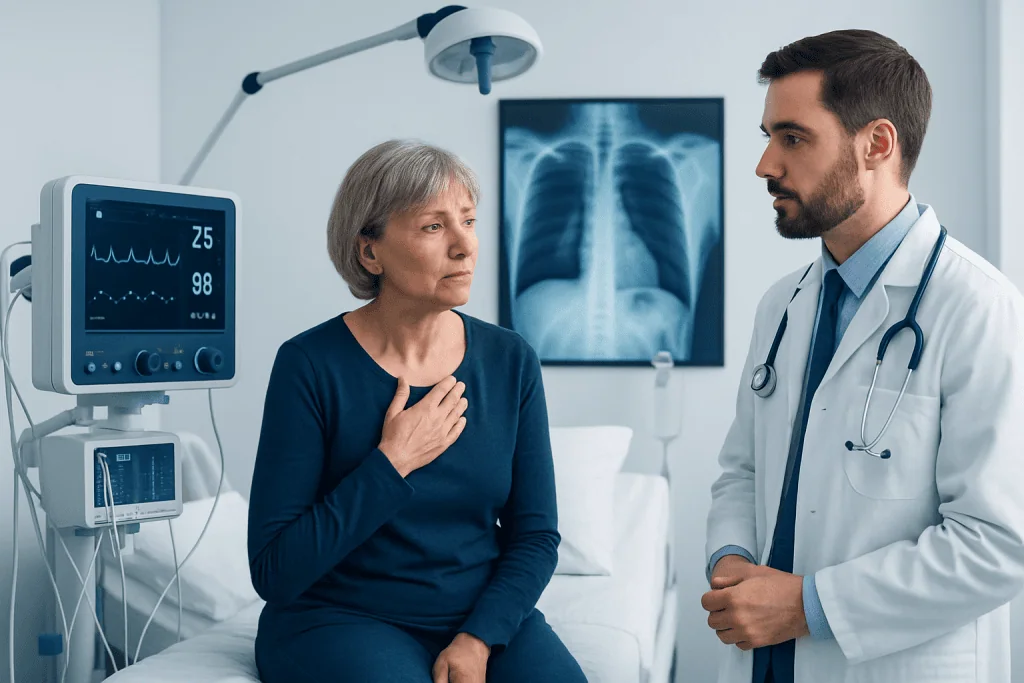
Lung cancer symptoms vary depending on the tumor’s size, location, and whether it has spread. Some symptoms are caused directly by a tumor in the lung or airway, while others may occur if cancer affects the lining of the lung, lymph nodes, bones, brain, liver, or other organs. Many symptoms can also be caused by non-cancer conditions, so medical evaluation is needed to understand the cause.
Common symptoms that should be checked include:
- A cough that does not go away or changes in a long-standing cough
- Coughing up blood or rust-colored sputum
- Chest, shoulder, or back pain that is persistent or worsens with deep breathing
- Shortness of breath, wheezing, or hoarseness
- Repeated bronchitis or pneumonia
- Unexplained weight loss, loss of appetite, or unusual fatigue
- Bone pain, headaches, dizziness, or weakness if cancer has spread
Symptoms such as sudden severe shortness of breath, significant coughing up of blood, chest pressure, fainting, or new weakness on one side of the body require urgent medical attention. For less urgent but persistent symptoms, a doctor can review risk factors, perform an examination, and decide whether a chest X-ray, CT scan, or other tests are appropriate.
Causes and Risk Factors
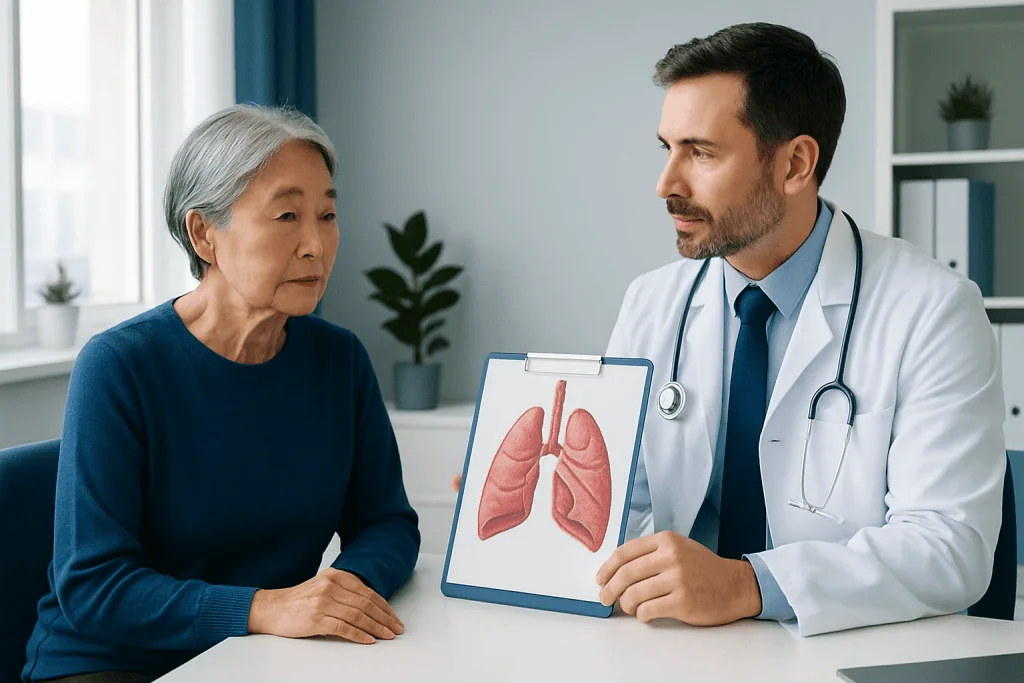
The most important risk factor for lung cancer is tobacco smoke. This includes cigarettes, cigars, pipes, and exposure to secondhand smoke. The risk generally increases with the amount and duration of smoking, but stopping smoking lowers risk over time and provides many immediate health benefits, including improved circulation and lung function.
Other risk factors can also contribute. Radon gas exposure in homes or workplaces, asbestos, silica, diesel exhaust, air pollution, and certain occupational chemicals may increase risk. A previous history of radiation therapy to the chest, chronic lung diseases such as chronic obstructive pulmonary disease, and a family history of lung cancer can also affect individual risk.
Lung cancer in never-smokers is an important medical reality. In these patients, genetic changes within tumor cells, environmental exposures, and other factors may play a role. These tumor changes are not usually inherited in a simple way; rather, they are often acquired changes found only in the cancer cells. This is why molecular testing of the tumor can be very important, especially in non-small cell lung cancer.
CT Screening for Lung Cancer
Low-dose computed tomography, often called low-dose CT or LDCT, is a screening test designed to look for early lung cancer in people who have no symptoms but are at higher risk. It uses a lower amount of radiation than a standard diagnostic CT scan and can detect small nodules that may not be visible on a chest X-ray. Screening is not intended for everyone; it is most useful when the chance of benefit is higher than the chance of harm.
Many international guidelines recommend discussing annual low-dose CT screening with adults in a defined higher-risk group, commonly based on age, current smoking, or having quit within recent years, and a significant smoking history measured in pack-years. Exact eligibility criteria can vary by country and guideline, so a doctor should review the person’s age, smoking history, general health, and willingness to undergo follow-up testing if something abnormal is found.
Screening has possible downsides. CT scans may find nodules that are not cancer, leading to repeat scans or procedures. Rarely, invasive testing can cause complications, and there is a small amount of radiation exposure. A shared decision-making discussion helps patients understand the expected benefits, limitations, and follow-up plan. Screening works best when combined with smoking cessation support for current smokers.
Diagnosis and Staging
If lung cancer is suspected, diagnosis usually begins with imaging. A chest X-ray may be performed first, but CT scanning provides more detailed information about the lungs, lymph nodes, and surrounding structures. Depending on the findings, doctors may recommend positron emission tomography combined with CT, brain MRI, or other imaging tests to check whether cancer has spread.
A definite diagnosis generally requires a tissue sample, called a biopsy. This may be obtained through bronchoscopy, CT-guided needle biopsy, endobronchial ultrasound-guided lymph node sampling, or, less commonly, surgery. A pathologist examines the sample to identify the cancer type and may perform additional tests for tumor markers or genetic changes.
Staging describes how far the cancer has grown or spread. In non-small cell lung cancer, staging considers the size and location of the tumor, whether lymph nodes are involved, and whether the cancer has spread to distant organs. Small cell lung cancer may be described as limited stage or extensive stage in many treatment discussions. Accurate staging is essential because it helps the medical team recommend treatment with the best balance of effectiveness, safety, and quality of life.
Treatment Options
Lung cancer treatment is individualized. The plan depends on the type of lung cancer, stage, tumor location, molecular test results, lung function, other medical conditions, and the patient’s preferences. Care is often planned by a multidisciplinary team that may include medical oncologists, thoracic surgeons, radiation oncologists, pulmonologists, radiologists, pathologists, oncology nurses, and supportive care specialists.
For early-stage non-small cell lung cancer, surgery may be recommended if the tumor can be safely removed and the patient’s lung function is adequate. Surgical approaches may include removing a lobe of the lung, a smaller segment, or, in selected cases, a whole lung. Some patients receive chemotherapy, immunotherapy, or targeted therapy before or after surgery to reduce the risk of recurrence. If surgery is not suitable, stereotactic body radiation therapy can be an effective local treatment for carefully selected early tumors.
For locally advanced disease, treatment may combine chemotherapy and radiation therapy, sometimes followed by immunotherapy depending on the cancer’s features and response. For metastatic non-small cell lung cancer, treatment often focuses on systemic therapy. Molecular testing may identify changes such as EGFR, ALK, ROS1, BRAF, MET, RET, NTRK, or others, for which targeted therapies may be available. Immunotherapy may also be used, alone or with chemotherapy, depending on factors such as PD-L1 expression and overall clinical context.
Small cell lung cancer is usually treated with chemotherapy and immunotherapy when it is extensive, and with chemotherapy plus radiation therapy for many limited-stage cases. Radiation therapy may also be used to relieve symptoms from tumors affecting the airway, bones, brain, or other areas. Palliative and supportive care are important at every stage; they help manage symptoms, treatment side effects, nutrition, breathing difficulties, emotional stress, and practical concerns.
Prevention and Self-Care
The most effective way to reduce lung cancer risk is to avoid tobacco smoke. For people who smoke, stopping is beneficial at any age and at any stage of health. Support may include counseling, nicotine replacement therapy, prescription medications when appropriate, and structured smoking cessation programs. People living with smokers can also benefit from a smoke-free home and car environment.
Reducing environmental and occupational risks is also important. Homes can be tested for radon, especially in areas where radon exposure is known to occur. Workers exposed to asbestos, silica, diesel exhaust, or other lung irritants should follow workplace safety measures and use protective equipment as recommended. Good control of chronic lung diseases, vaccination against respiratory infections when advised, and prompt treatment of infections can support lung health.
For people diagnosed with lung cancer, self-care means working closely with the care team rather than trying to manage alone. Helpful steps include reporting new symptoms early, attending scheduled scans and appointments, staying as active as safely possible, maintaining nutrition, and discussing pain, breathlessness, sleep problems, anxiety, or depression. Rehabilitation, breathing exercises, and supportive services may improve daily function and comfort.
When to See a Doctor
A person should make a medical appointment if they have a persistent cough, coughing up blood, unexplained weight loss, ongoing chest pain, repeated lung infections, or shortness of breath that is new or worsening. These symptoms do not always mean cancer, but they should not be ignored, especially in people with a history of smoking or other risk factors.
People who currently smoke, used to smoke, or have significant occupational or environmental exposures should ask a qualified doctor whether low-dose CT screening is appropriate. Screening decisions should be personalized, and follow-up should be organized so that any abnormal findings are interpreted correctly and safely.
Patients already diagnosed with lung cancer should contact their care team promptly for fever during treatment, increasing breathlessness, new neurological symptoms, uncontrolled pain, severe nausea or dehydration, or any sudden change in condition. Acibadem International’s multidisciplinary specialists and JCI-accredited hospitals diagnose and treat lung cancer for international patients, with care plans tailored to the individual’s medical findings and needs.
Frequently asked questions
Can lung cancer be present without symptoms?
Yes. Early lung cancer may not cause noticeable symptoms, which is one reason it can be diagnosed at a later stage. Low-dose CT screening is used for selected high-risk people to look for cancer before symptoms appear.
Who should consider low-dose CT screening for lung cancer?
Screening is generally considered for adults at higher risk because of age and a significant smoking history, including some former smokers. Exact criteria vary by guideline and country, so eligibility should be discussed with a doctor who can review personal risk and overall health.
Is a lung nodule on CT always cancer?
No. Many lung nodules are benign and may be related to old infections, inflammation, or scarring. Doctors assess the nodule’s size, shape, growth over time, and the patient’s risk factors to decide whether follow-up imaging, PET-CT, or biopsy is needed.
How is lung cancer confirmed?
Lung cancer is usually confirmed by examining a tissue sample under a microscope. The sample may be collected with bronchoscopy, a needle biopsy guided by imaging, lymph node sampling, or surgery, depending on where the abnormal area is located.
What is molecular testing in lung cancer?
Molecular testing looks for specific genetic or protein changes in cancer cells that may guide treatment. In some non-small cell lung cancers, these results can identify targeted therapies or help determine whether immunotherapy is likely to be part of the treatment plan.
Can lung cancer be treated if it has spread?
Yes. When lung cancer has spread, treatment may still help control the disease, relieve symptoms, and support quality of life. Options may include targeted therapy, immunotherapy, chemotherapy, radiation therapy, and supportive care, depending on the cancer type and test results.
Does quitting smoking still help after a lung cancer diagnosis?
Yes. Quitting smoking can improve breathing, support healing, reduce treatment complications, and lower the risk of other smoking-related diseases. Patients can ask their care team for practical smoking cessation support, including counseling and medications when appropriate.
References
- World Health Organization
- National Cancer Institute
- American Cancer Society
- European Society for Medical Oncology
- National Comprehensive Cancer Network
This article is for general information only and is not a substitute for professional medical advice. Please consult a qualified doctor about your individual situation.
Lung Cancer in Turkey — costs, top hospitals & a free quote
JCI-accredited · board-certified surgeons · reply within 24h
Add us as a Preferred Source to see more of our trusted health content across Google Search, AI Overviews and Discover.

Medical Oncology Department
Medical treatment of cancer with chemotherapy, immunotherapy and targeted therapies under a multidisciplinary tumor board.
60 specialists in this unit