Maisonneuve Fracture: A Complete Medical Overview
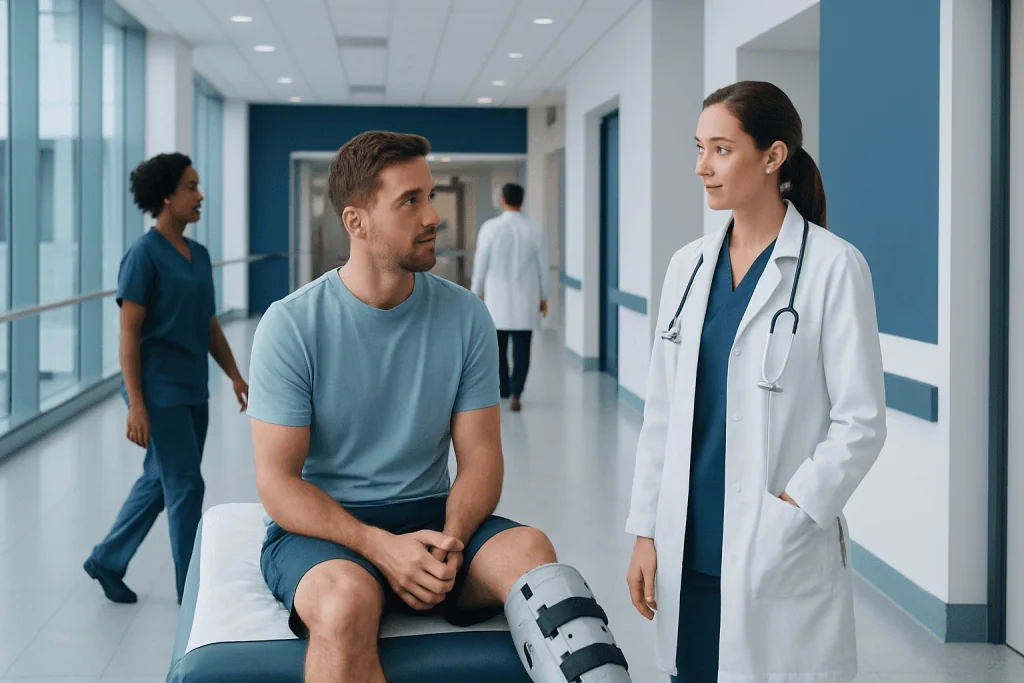
A Maisonneuve fracture usually follows a twisting injury to the ankle and lower leg. The injury involves the ankle syndesmosis, a group of ligaments that helps keep the lower leg bones stable at the ankle.
Key Takeaways
- A Maisonneuve fracture usually follows a twisting injury to the ankle and lower leg.
- The injury involves the ankle syndesmosis, a group of ligaments that helps keep the lower leg bones stable at the ankle.
- Pain and swelling may occur mainly at the ankle, even though the fibula fracture is near the knee.
- X-rays of the full lower leg and ankle are often needed to identify the complete injury pattern.
- Unstable injuries commonly need surgery to restore ankle alignment, followed by structured rehabilitation.
A Maisonneuve fracture is an injury pattern in which a fracture near the top of the fibula occurs alongside damage to the ligaments that stabilize the ankle. It can be missed because ankle pain may be much more noticeable than pain in the upper leg, so timely medical assessment is important.
Overview: What Is a Maisonneuve Fracture?
A Maisonneuve fracture is a distinctive and potentially unstable injury involving the ankle and lower leg. It typically includes a spiral fracture of the upper part of the fibula, the thinner bone on the outside of the lower leg, together with injury to the syndesmosis. The syndesmosis is a strong set of ligaments connecting the tibia and fibula just above the ankle joint.
This injury pattern is important because the fracture may be located close to the knee while the most obvious symptoms are at the ankle. In some cases, the medial ankle ligament, called the deltoid ligament, is also torn. Instead of a ligament tear, there may be a fracture of the medial malleolus, the bony prominence on the inner side of the ankle. These associated injuries can allow the ankle bones to move out of their normal relationship.
A Maisonneuve fracture is not simply a broken fibula. It is an ankle stability injury, and treatment decisions are based on the position and stability of the ankle joint as well as the fibular fracture itself. With accurate diagnosis, appropriate stabilization when needed, and rehabilitation, many people can return to daily activities and sport over time.
How the Injury Happens
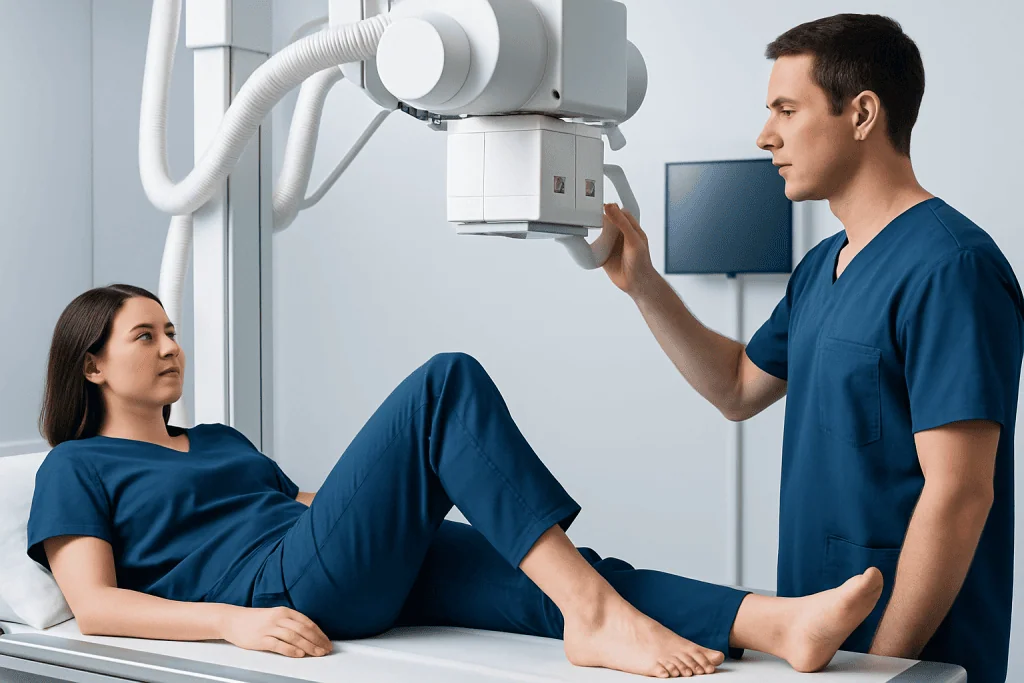
Most Maisonneuve fractures result from a forceful twisting mechanism. A common pattern is external rotation, in which the foot turns outward while the leg remains relatively fixed. This may happen during a fall, a misstep on uneven ground, a collision in contact sport, skiing, or a road traffic accident.
The rotating force may begin at the ankle and travel upward through the syndesmotic ligaments and the membrane between the tibia and fibula, called the interosseous membrane. The force can eventually cause the upper fibula to fracture. This explains why a person may not remember a direct blow to the outer upper leg.
Although it can occur in anyone, this injury is more likely during activities that involve sudden turns, falls, or high-energy impacts. It may also occur after a lower-energy fall in older adults or in people with reduced bone strength. The direction of the injury force and the associated ligament damage are usually more relevant than the apparent size of the initial accident.
Symptoms and Signs to Notice
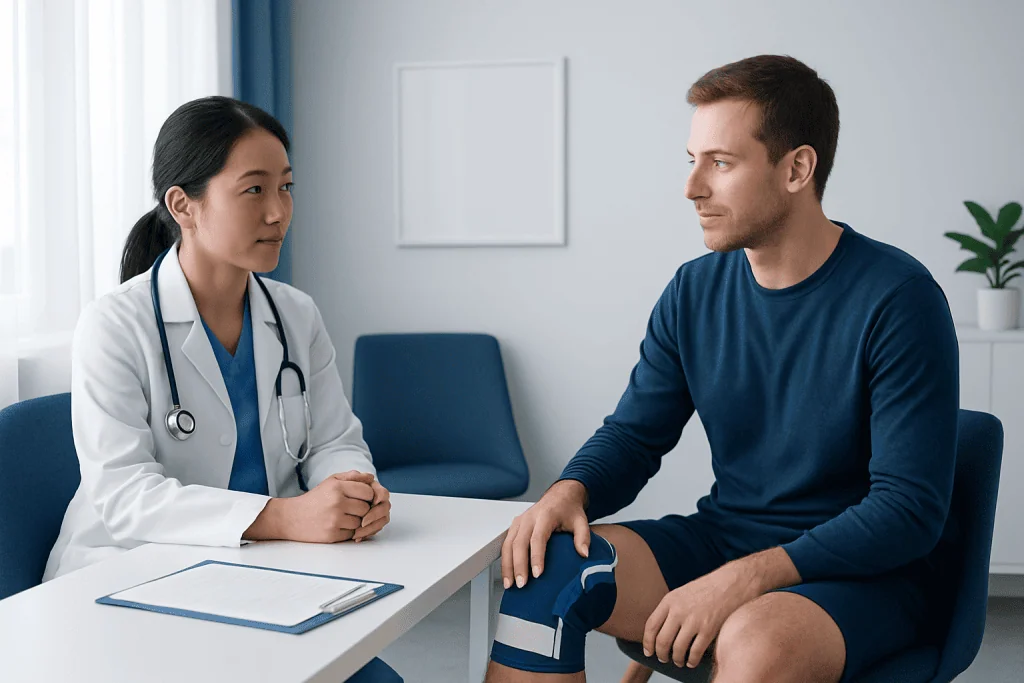
Symptoms often start with pain, swelling, and tenderness around the ankle. The inner ankle may be particularly sore if the deltoid ligament has been injured or if there is a medial malleolus fracture. Bruising, difficulty putting weight through the foot, and a feeling that the ankle is unstable are also possible.
Some people have pain or tenderness along the outside of the lower leg or near the upper fibula, just below the knee. However, this symptom can be mild or absent. For this reason, an ankle injury should not be assumed to be a simple sprain when there is substantial swelling, inability to walk normally, tenderness over the inner ankle, or pain higher up the leg.
Visible ankle deformity, marked swelling, numbness, tingling, a cold or pale foot, or worsening pain require urgent assessment. These signs can indicate a dislocation, circulation problem, nerve involvement, or another complication that needs prompt care. A person should avoid testing the ankle repeatedly or attempting to force it back into position.
Why Diagnosis Can Be Challenging
A Maisonneuve fracture can be overlooked if evaluation focuses only on the area of greatest pain. Standard ankle X-rays may show widening between the tibia and fibula, an inner ankle fracture, or subtle signs of instability. However, the upper fibula can remain outside the image unless the clinician examines the whole leg and requests full-length tibia-fibula X-rays.
During the examination, a clinician checks the ankle, lower leg, knee, skin, circulation, sensation, and ability to move the toes. Tenderness along the fibula and pain with certain carefully performed ankle stress maneuvers may raise concern for a syndesmotic injury. Clinicians also consider other injuries that may occur after twisting trauma, including a ankle sprain, but a suspected unstable injury needs more detailed assessment.
Imaging may include ankle and lower-leg X-rays taken from different angles. Weight-bearing or stress views may be used in selected cases to assess ankle stability. CT scans can provide a clearer view of small fractures and joint alignment, while MRI can help evaluate ligaments, cartilage, and the interosseous membrane when the diagnosis remains uncertain. The exact imaging plan depends on the injury and the person’s clinical examination.
Treatment Options and Recovery Planning
Initial treatment aims to protect the ankle and control discomfort. This may include a splint or boot, elevation, ice wrapped in a cloth for short periods, and pain relief recommended by a clinician. Weight-bearing should be avoided until the injury has been assessed and the care team advises that it is safe. If the ankle is dislocated, it may need urgent realignment before definitive treatment.
Management depends mainly on whether the ankle joint is stable and properly aligned. A small number of stable injuries without meaningful displacement may be managed without surgery, using immobilization and close follow-up imaging. However, many Maisonneuve fractures involve syndesmotic instability and require an operation to restore and maintain the normal relationship between the tibia and fibula at the ankle.
Surgery may involve fixation across the syndesmosis with screws or a flexible fixation device. Associated ankle fractures may also need fixation. The high fibula fracture itself often heals without direct surgery once the ankle is stabilized, although each injury is assessed individually. Orthopedic surgeons tailor the approach to the fracture pattern, soft-tissue condition, activity needs, and overall health of the patient.
Recovery generally includes a period of protection followed by progressive movement, strengthening, balance training, and walking rehabilitation. The time before weight-bearing and return to driving, work, or sport varies widely. Follow-up appointments and imaging help confirm that the ankle remains well aligned and that healing is progressing as expected.
Self-Care, Rehabilitation, and Preventing Further Injury
After diagnosis, the most helpful self-care step is following the treatment plan closely. This includes using crutches, a walker, a boot, or a cast as instructed; attending follow-up visits; and avoiding weight-bearing or high-impact activity until cleared. Keeping the leg elevated when resting may help reduce swelling, particularly in the early phase of recovery.
Rehabilitation is an important part of treatment. A physiotherapist may guide exercises to restore ankle range of motion, calf and leg strength, coordination, and balance. Progression should be gradual. Pushing through sharp pain, returning to pivoting sports too soon, or stopping support devices without medical advice can increase the risk of delayed healing or recurrent instability.
It is not possible to prevent every twisting injury, but supportive footwear, activity-specific training, strength and balance exercises, and a gradual return to sport may reduce risk. People with repeated ankle injuries may benefit from a professional assessment of movement patterns, footwear, and rehabilitation needs. Maintaining bone health through adequate nutrition, regular safe weight-bearing exercise, and management of conditions that affect bone density is also valuable.
When to Seek Medical Care
Anyone with significant ankle pain after a twist, fall, or collision should seek medical assessment if they cannot take several steps, have substantial swelling or bruising, or feel that the ankle is unstable. Assessment is particularly important when there is pain on the inner side of the ankle or tenderness along the outer leg near the knee, as these findings can occur with a Maisonneuve fracture.
Emergency care is appropriate for an obvious deformity, an open wound, severe or rapidly increasing pain, loss of sensation, weakness in the foot, or a foot that appears pale, blue, or unusually cold. Until help is available, the person should keep the leg still, avoid food or drink if surgery may be needed, and not attempt to straighten a deformed ankle.
Even if swelling improves, persistent ankle pain, difficulty walking, or a sense of giving way should be reviewed by a qualified clinician. Acibadem International’s multidisciplinary orthopedic specialists and JCI-accredited hospitals assess and treat complex bone and joint injuries for international patients.
Frequently asked questions
Can a Maisonneuve fracture be missed on an ankle X-ray?
Yes. The fibular fracture is usually near the knee, so it may not appear on ankle X-rays alone. When a syndesmotic injury is suspected, clinicians examine the full leg and may order X-rays of the tibia and fibula as well as additional ankle imaging.
Can a person walk with a Maisonneuve fracture?
Some people may still be able to take a few steps, particularly early after the injury. However, walking does not rule out a significant fracture or unstable ankle injury. Pain, swelling, or difficulty bearing weight after a twisting injury should be assessed by a healthcare professional.
Does every Maisonneuve fracture require surgery?
Not every case requires surgery, but many do because the syndesmotic ligaments and ankle alignment are often unstable. The decision is based on examination findings, imaging, fracture displacement, and whether the ankle remains properly aligned. An orthopedic specialist can explain the most suitable approach.
How long does recovery from a Maisonneuve fracture take?
Recovery time varies according to the severity of ligament injury, associated ankle fractures, treatment method, and rehabilitation progress. Bone and soft tissues need time to heal, and return to impact activity or sport may take longer than return to basic walking. Follow-up guidance from the treating team is important.
Where is the pain with a Maisonneuve fracture?
Pain is commonly felt around the ankle, often on the inner side, with swelling and bruising. Some people also have tenderness near the upper outer part of the lower leg, below the knee, where the fibula is fractured. Upper-leg pain may be subtle, which is one reason this injury can be overlooked.
What happens if a Maisonneuve fracture is not treated properly?
If ankle instability is not recognized and corrected, the ankle may heal in poor alignment. This can lead to ongoing pain, weakness, a feeling of instability, reduced function, and earlier wear of the joint cartilage. Prompt evaluation helps clinicians identify the injury and plan appropriate treatment.
This article is for general information only and is not a substitute for professional medical advice. Please consult a qualified doctor about your individual situation.
Joint and spine care in Turkey — expert assessment & treatment
JCI-accredited · board-certified surgeons · reply within 24h
Add us as a Preferred Source to see more of our trusted health content across Google Search, AI Overviews and Discover.

More from the Health Library

EKG: What Patients Need to Know

Nitroglycerin: An Evidence-Based Guide for Patients

Fever Blisters and Newborns: An Evidence-Based Guide for Patients

Pediatrician: A Complete Medical Overview

Night Sweats Men: What Patients Need to Know

Urea Cream — Explained by Medical Evidence, Not Myths
Orthopedic Surgery & Traumatology Specialists at Acibadem

Fzt. A.Sercan Soyarslan
Physical Medicine & Rehabilitation
Dr. Abdullah Yener İnce
Orthopedic Surgery & Traumatology
Dr. Adnan Abbasoğlu
Orthopedic Surgery & Traumatology
Prof. Dr. Ahmet Alanay
Orthopedic Surgery & Traumatology