Mca Stroke — Explained by Medical Evidence, Not Myths

An MCA stroke is a medical emergency because brain tissue is highly sensitive to interrupted blood flow. Typical symptoms are sudden and often affect the opposite side of the body from the injured brain hemisphere.
Key Takeaways
- An MCA stroke is a medical emergency because brain tissue is highly sensitive to interrupted blood flow.
- Typical symptoms are sudden and often affect the opposite side of the body from the injured brain hemisphere.
- Brain imaging helps clinicians distinguish a blockage from bleeding and guide time-sensitive treatment.
- Treatment may include clot-dissolving medicine, clot retrieval procedures and specialist stroke care, depending on the individual situation.
- Rehabilitation and prevention of another stroke begin early and are tailored to each person's needs.
An MCA stroke occurs when blood flow is blocked or, less commonly, bleeding develops in the middle cerebral artery, a major vessel supplying much of the outer brain. It can cause sudden facial drooping, arm weakness, speech problems, vision changes or neglect, and immediate emergency care is essential.
MCA Stroke: What It Means
An MCA stroke is a stroke involving the middle cerebral artery (MCA), one of the brain’s largest blood vessels. This artery supplies areas involved in movement, sensation, language, vision and attention. Most MCA strokes are ischemic, meaning a blood clot blocks blood flow. Less often, bleeding from a blood vessel causes a hemorrhagic stroke in the MCA territory.
The effects depend on which branch is affected, how quickly circulation is restored and which side of the brain is involved. A stroke in the left hemisphere commonly affects language, while a stroke in the right hemisphere may cause problems with attention to the left side of space. Stroke symptoms begin suddenly, and suspected stroke should always be treated as an emergency rather than watched at home.
An MCA stroke is not the same as a “mini-stroke,” although a transient ischemic attack (TIA) can produce similar symptoms that fully resolve. A TIA is also urgent because it can be a warning sign of a future stroke. Only a medical assessment and brain imaging can determine what has happened.
How an MCA Stroke Can Affect the Body and Mind
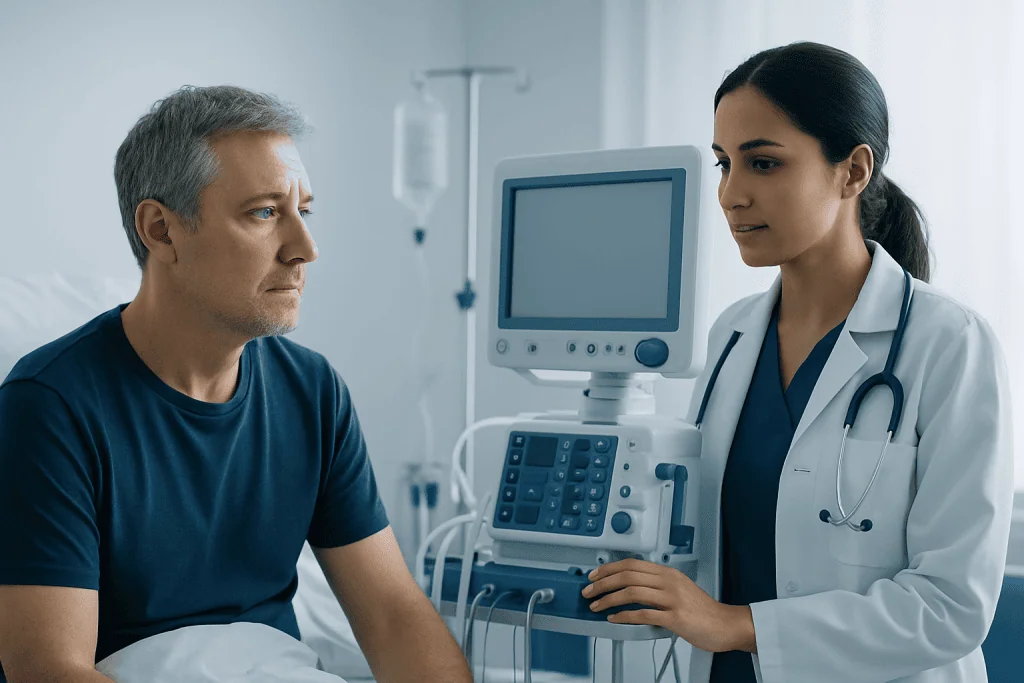
Because the MCA supplies a wide area of the brain, symptoms can vary. A common pattern is weakness or numbness of the face and arm on one side of the body, often more pronounced in the arm and face than in the leg. The affected side is usually opposite to the side of the brain where the stroke occurs; for example, a left-sided brain stroke may weaken the right side of the body.
Other possible symptoms include a suddenly uneven smile, difficulty speaking, slurred speech, trouble understanding words, loss of vision to one side, dizziness, poor coordination or a severe new headache. Some people with a right-hemisphere MCA stroke may not notice weakness on the left side or may neglect objects, people or even part of their own body on that side.
- F: Face drooping or numbness
- A: Arm weakness or drift
- S: Speech difficulty, confusion or trouble understanding
- T: Time to call emergency services immediately
Symptoms may be painless, mild at first or fluctuate, but this does not make them less important. It is safer not to drive the person to hospital independently unless emergency transport is unavailable; emergency teams can begin assessment and notify the stroke service while en route.
Why MCA Strokes Happen: Causes and Risk Factors

In an ischemic MCA stroke, a clot may form in a narrowed artery in the neck or brain, or travel to the brain from elsewhere in the body. A common source is the heart, particularly in people with atrial fibrillation, an irregular heart rhythm that can allow clots to form. Plaque in the carotid arteries, which carry blood to the brain, can also contribute.
Risk factors include high blood pressure, diabetes, high cholesterol, smoking, atrial fibrillation, obesity, physical inactivity, sleep apnea and excessive alcohol use. Risk rises with age, but stroke can occur in younger adults as well. Family history and certain inherited or inflammatory conditions may play a role for some people.
It is a myth that stroke only happens to people who are very old or visibly unwell. It is also inaccurate to assume that stress alone causes a stroke. Stress can affect sleep, blood pressure and health habits, but stroke prevention focuses on identifying and managing established vascular and heart-related risks with a qualified clinician.
Emergency Assessment and Diagnosis
In hospital, the clinical team first establishes when the person was last known to be well, reviews symptoms and checks vital signs, blood glucose and neurological function. Low blood glucose and some other conditions can mimic stroke symptoms, so rapid testing is important. A specialist examination helps identify the likely area of the brain involved.
A non-contrast CT scan is commonly performed urgently to look for bleeding. CT angiography or magnetic resonance imaging (MRI) may show a blocked artery, the size of the affected area and whether potentially salvageable brain tissue is present. These scans guide decisions about the safest and most appropriate treatment.
After initial care, tests may include heart rhythm monitoring, echocardiography, blood tests and imaging of the neck arteries. Finding the cause matters because prevention after a stroke differs when the cause is atrial fibrillation, carotid artery disease, small-vessel disease or another condition.
Treatment: Restoring Blood Flow and Protecting the Brain
Fast treatment can reduce disability after an ischemic MCA stroke. For eligible patients who arrive within the appropriate treatment timeframe, clinicians may use intravenous thrombolysis, a medicine intended to dissolve a clot. Eligibility depends on the timing of symptoms, scan findings, medical history, medications and the risk of bleeding.
When a large artery is blocked, some patients may benefit from mechanical thrombectomy. In this minimally invasive procedure, a specialist threads a catheter through an artery to remove the clot. Advanced imaging may identify selected people who could benefit even when the exact onset time is uncertain or more time has passed. Not every MCA stroke is suitable for this procedure.
Hemorrhagic stroke requires a different approach focused on controlling bleeding-related risks, blood pressure and complications, with neurosurgical or other specialist care when needed. In all forms of stroke, teams also monitor swallowing, oxygen levels, fever, hydration, blood sugar and pressure injuries. Swallowing should be assessed before food, drink or oral medicines are given, because a stroke can increase the risk of choking or aspiration.
Acibadem International’s multidisciplinary specialists and JCI-accredited hospitals diagnose and treat stroke for international patients, with care planned around the individual’s clinical needs.
Recovery, Rehabilitation and Preventing Another Stroke
Recovery after an MCA stroke is highly individual. Some people regain function quickly, while others need longer-term support for movement, speech, thinking, vision or emotional changes. Rehabilitation often starts in hospital once the person is medically stable. It may include physiotherapy, occupational therapy, speech and language therapy, swallowing support and neuropsychological assessment.
Rehabilitation is not limited to exercise. Occupational therapy may help a person return to dressing, cooking, work or hobbies safely. Speech and language therapy can address speaking, understanding, reading, writing and communication strategies. Family members and caregivers may also need practical education, as fatigue, mood changes and reduced concentration can affect daily life even when physical recovery is good.
Preventing a further stroke may include medicines to manage blood pressure, cholesterol, diabetes or abnormal heart rhythm, as well as antiplatelet or anticoagulant medicines when clinically appropriate. The exact medication plan should never be copied from another patient. Stopping smoking, limiting alcohol, eating a balanced diet, staying active within medical advice and attending follow-up appointments all support long-term vascular health.
When to Seek Medical Care
Call local emergency services immediately if anyone develops sudden facial drooping, weakness or numbness on one side, speech or understanding difficulty, sudden vision loss, severe imbalance, confusion or an unusual severe headache. Note the time the symptoms started, or the last time the person was known to be well. Do not wait to see whether symptoms improve.
Urgent assessment is also needed when symptoms disappear within minutes or hours. This may be a TIA, and it still requires prompt investigation to lower the risk of a completed stroke. A person should not eat, drink, take aspirin or take extra blood pressure medicine unless instructed by emergency professionals, since the type of stroke is not yet known.
People who have had a stroke should seek medical advice promptly for new or worsening symptoms, falls, swallowing difficulties, chest pain, severe headache, medication concerns or significant changes in mood. Follow-up care allows the healthcare team to review recovery, identify complications and adjust prevention plans safely.
Frequently asked questions
What is the difference between an MCA stroke and any other stroke?
An MCA stroke specifically affects the area supplied by the middle cerebral artery. It often causes face and arm weakness, speech difficulties or visual-attention problems because of the brain functions served by this artery. Other strokes affect different blood vessels and may produce different patterns of symptoms.
Can a person recover fully from an MCA stroke?
Some people make an excellent recovery, particularly when treatment is rapid and the stroke is small. Others have lasting changes in movement, language, vision, thinking or energy. Early rehabilitation, treatment of risk factors and ongoing support can help each person achieve the best possible function.
Which side is affected by an MCA stroke?
A stroke usually affects the opposite side of the body from the injured side of the brain. A left MCA stroke can cause right-sided weakness and language problems, while a right MCA stroke can cause left-sided weakness and reduced awareness of the left side. Individual symptoms vary with the exact location and size of the stroke.
Is an MCA stroke always caused by a blood clot?
No. Most MCA strokes are caused by a clot blocking blood flow, but bleeding in or around the brain can also affect the MCA territory. Brain imaging is essential because treatments for clot-related and bleeding-related strokes are different.
Can stroke symptoms come and go?
Yes. Temporary symptoms may indicate a transient ischemic attack, or TIA, but they can also occur early in an evolving stroke. Even if symptoms resolve completely, the person should receive urgent medical assessment because the risk of a further stroke may be increased.
What should family members do while waiting for emergency help?
They should keep the person safe and comfortable, note when symptoms began and gather information about medicines and medical conditions if possible. They should not give food, drinks or medications unless instructed by emergency professionals. If the person becomes unresponsive and is not breathing normally, emergency call handlers can provide immediate instructions.
References
- American Stroke Association
- National Institute of Neurological Disorders and Stroke
- Centers for Disease Control and Prevention
- World Stroke Organization
- National Health Service
This article is for general information only and is not a substitute for professional medical advice. Please consult a qualified doctor about your individual situation.
Explore treatments in Turkey — costs, top hospitals & a free quote
JCI-accredited · board-certified surgeons · reply within 24h
Add us as a Preferred Source to see more of our trusted health content across Google Search, AI Overviews and Discover.
Check your numbers in seconds
BMI, calories, due date, blood pressure and 30+ more clinical calculators — free, instant, doctor-reviewed ranges.