Medial Malleolus: A Complete Medical Overview
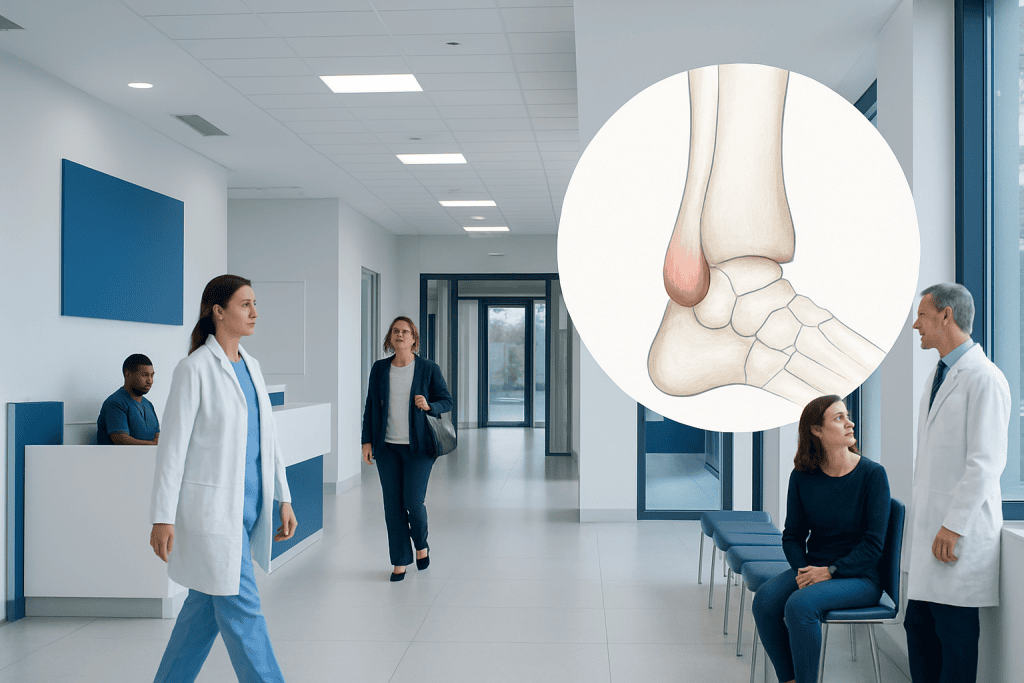
The medial malleolus is the inner ankle bone and an important stabilizer of the ankle joint. Pain, swelling, bruising, and difficulty bearing weight may suggest a sprain, fracture, or tendon injury around the medial malleolus.
Key Takeaways
- The medial malleolus is the inner ankle bone and an important stabilizer of the ankle joint.
- Pain, swelling, bruising, and difficulty bearing weight may suggest a sprain, fracture, or tendon injury around the medial malleolus.
- Diagnosis usually relies on a physical examination and imaging such as X-rays, with CT or MRI used in selected cases.
- Treatment depends on the cause and may include rest, bracing, physiotherapy, or surgery for unstable fractures.
- Prompt medical assessment is important if symptoms follow trauma or if walking is difficult.
The medial malleolus is the bony prominence on the inner side of the ankle, formed by the lower end of the tibia. It helps stabilize the ankle joint and is commonly involved in sprains, fractures, and overuse injuries that cause inner ankle pain, swelling, or difficulty walking.
Overview: what the medial malleolus is and why it matters
The medial malleolus is the rounded bony area on the inner side of the ankle. It is part of the tibia, or shinbone, and forms one side of the ankle joint. Although many people notice it only as the “inner ankle bone,” it plays a major role in ankle stability, weight transfer, and normal walking.
This area serves as an attachment point for strong ligaments, especially the deltoid ligament complex, which helps keep the ankle from rolling inward too far. Tendons and soft tissues also pass close to the medial malleolus, which means pain in this region does not always come from the bone itself. Injury may involve the bone, ligaments, cartilage, or nearby tendons.
Because the medial malleolus is exposed to twisting forces and direct impact, it is commonly affected during sports injuries, falls, and accidents. Problems can range from a mild soft-tissue strain to a displaced fracture that affects the alignment of the ankle joint. Understanding the anatomy helps explain why timely evaluation matters when symptoms are significant.
How medial malleolus problems happen
Injuries involving the medial malleolus often occur when the ankle twists suddenly, especially during a misstep, fall, or sports movement such as jumping and pivoting. A strong inward or outward force may strain the supporting ligaments, pull on the bone, or cause a fracture. Direct blows to the ankle can also injure this area.
Not every medial malleolus problem is a broken bone. Sometimes the pain comes from a sprain affecting the deltoid ligament, irritation of a tendon behind the inner ankle, inflammation after overuse, or bruising of the surrounding soft tissues. In other cases, an ankle fracture may involve the medial malleolus alone or as part of a more complex injury affecting both sides of the ankle.
Some injuries are obvious immediately, while others become clearer over the next several hours as swelling and bruising develop. In children, the growth plate can also be involved, so ankle injuries in younger patients deserve careful assessment even when the symptoms initially seem mild.
Symptoms and signs to watch for

The most common symptoms are pain on the inner side of the ankle, swelling, and tenderness when the area is touched. Some people also notice bruising, warmth, stiffness, or a feeling that the ankle is unstable. Pain may be mild with a simple sprain or severe enough to make standing difficult when a fracture is present.
Walking can become uncomfortable, and bearing weight may be limited. Range of motion may decrease because of pain or swelling. If the ankle joint is significantly injured, the shape of the ankle can appear altered, or the person may hear or feel a snap at the time of injury.
- Inner ankle pain after twisting, falling, or impact
- Swelling around the medial malleolus
- Bruising that spreads over the ankle or foot
- Tenderness directly over the bone
- Difficulty walking or putting weight on the foot
- A sense of ankle instability or locking
Symptoms that continue for several days, keep returning, or worsen with activity may suggest an undiagnosed fracture, ligament injury, tendon problem, or joint cartilage damage. Conditions such as ankle sprain can overlap with more serious injuries, so persistent pain should not be ignored.
Common causes and risk factors
The most common cause of medial malleolus pain is an ankle injury, particularly a twisting injury. However, the exact diagnosis can vary. A fracture means the bone itself has cracked or broken. A sprain means ligaments are overstretched or torn. Tendon inflammation or dysfunction, especially involving the posterior tibial tendon, can also cause pain near the inner ankle.
Risk factors include contact sports, running on uneven ground, poor footwear, previous ankle injuries, reduced balance, and weak supporting muscles. Bone health also matters. Older adults and people with osteoporosis may be more vulnerable to fractures after relatively minor falls.
Doctors also consider less common causes such as stress fracture, arthritis, infection, or referred pain from other parts of the foot and ankle. If symptoms develop gradually without a single injury, overuse or mechanical stress is often part of the picture. A full assessment helps distinguish these possibilities and guide treatment.
How doctors diagnose medial malleolus injuries
Diagnosis begins with a medical history and physical examination. The doctor usually asks how the injury happened, whether the person could walk afterward, and where the pain is felt most clearly. Examination focuses on swelling, bruising, tenderness over the bone, ankle stability, range of motion, and circulation and nerve function in the foot.
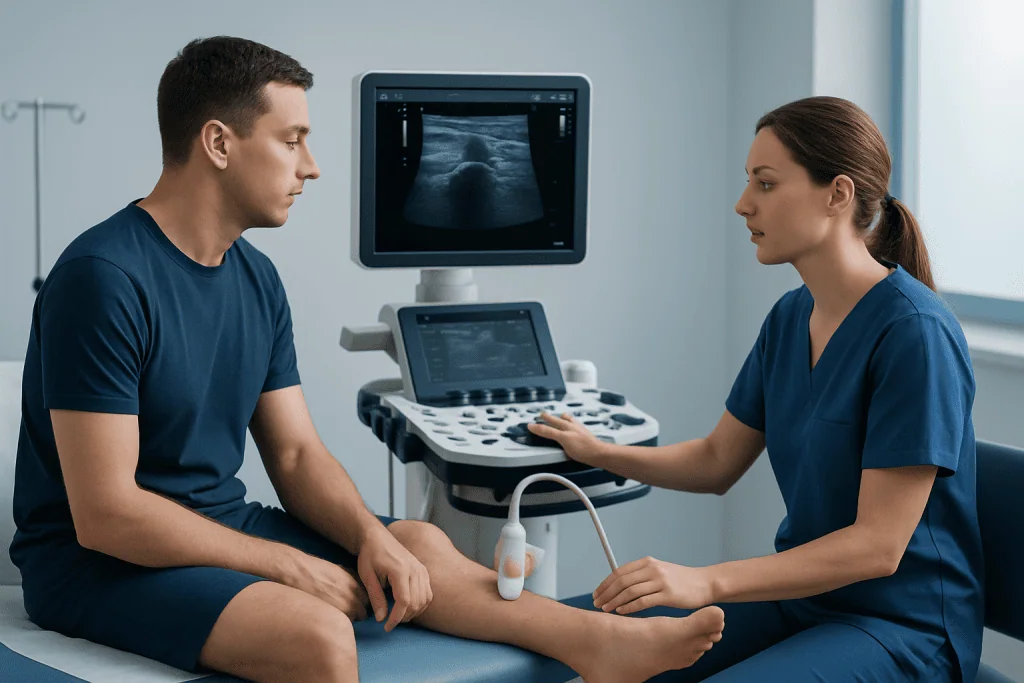
X-rays are the most common first test when a fracture is suspected. They help show whether the medial malleolus is broken and whether the ankle joint remains properly aligned. In more complex injuries, a CT scan may provide a clearer view of the fracture pattern, while MRI can be useful for ligament, cartilage, or tendon injuries that do not show well on standard X-rays.
Accurate diagnosis matters because treatment for a stable soft-tissue injury is very different from treatment for an unstable ankle fracture. In some cases, specialists may also assess whether the injury is isolated or part of a broader ankle fracture pattern involving the fibula or syndesmosis, the ligaments between the lower leg bones.
Treatment options and recovery
Treatment depends on the underlying injury and its severity. Minor soft-tissue injuries may improve with rest, ice, compression, elevation, and temporary activity modification. A brace, walking boot, or short period of protected weight-bearing may be recommended to support healing. Rehabilitation is often important to restore motion, strength, and balance and to reduce the risk of reinjury.
If there is a fracture but the bone pieces remain well aligned and the ankle is stable, non-surgical treatment may be possible. This often involves immobilization in a cast or boot, followed by gradual return to movement and weight-bearing under medical guidance. Follow-up imaging may be used to confirm that healing is progressing appropriately.
Displaced or unstable fractures may require surgery to restore the joint surface and ankle alignment. Procedures such as ankle fracture surgery use fixation devices to hold the bone in place while it heals. After surgery, structured physical therapy and rehabilitation can help improve mobility, strength, and confidence during recovery.
Recovery time varies depending on age, bone health, the type of injury, and whether surgery is needed. Some mild injuries improve in a few weeks, while fractures may take longer and need a staged rehabilitation plan. People with ongoing pain or stiffness may benefit from review by specialists experienced in orthopedic surgery and ankle care.
Self-care, prevention, and safe return to activity
After a minor injury, self-care may help control symptoms while waiting for medical advice. Resting the ankle, elevating it, and using ice packs for short intervals can help reduce swelling. Compression wraps or supportive braces may be useful when recommended by a healthcare professional. It is generally best to avoid forcing weight onto a painful ankle until a fracture has been ruled out.
Preventing future medial malleolus injuries often involves improving ankle strength and balance. Exercises for the calf, foot, and lower leg can support joint stability. Good footwear, careful warm-up before sports, and caution on uneven surfaces also help reduce risk. People who have had previous ankle injuries may benefit from a brace or taping during high-risk activities.
A gradual return to exercise is important. Pain, persistent swelling, or a limp can mean the ankle is not yet ready for full activity. Returning too soon may slow healing or increase the chance of another injury. For international patients who need specialist evaluation, Acibadem International’s multidisciplinary teams in JCI-accredited hospitals diagnose and treat foot and ankle conditions with coordinated orthopedic and rehabilitation care.
When to seek medical care
Medical assessment is recommended if inner ankle pain starts after a fall, twisting injury, sports impact, or other trauma and does not improve quickly. It is especially important to seek care if there is marked swelling, visible deformity, severe tenderness over the bone, or inability to bear weight. These features can suggest a fracture or a more significant ligament injury.
Urgent care is also appropriate if the foot feels numb, cold, weak, or if there is an open wound near the ankle. Fever, spreading redness, or pain that worsens without clear injury should also be checked, as these symptoms may point to less common causes that need prompt attention.
Even when symptoms seem manageable, a doctor should evaluate ankle pain that persists, repeatedly returns, or limits daily activity. Early diagnosis can help prevent chronic instability, poor healing, and long-term joint problems. A qualified healthcare professional can recommend the most suitable next steps based on examination and imaging findings.
Frequently asked questions
What is the medial malleolus?
The medial malleolus is the bony prominence on the inner side of the ankle. It is the lower part of the tibia and helps form and stabilize the ankle joint.
Can medial malleolus pain mean a fracture?
Yes, pain directly over the inner ankle bone can be caused by a fracture, especially after a twist, fall, or impact. However, ligament sprains, tendon problems, and bruising can cause similar symptoms, so a medical evaluation is often needed.
How is a medial malleolus fracture diagnosed?
Doctors usually diagnose it with a physical examination and ankle X-rays. In more complex or unclear cases, CT or MRI may be used to look more closely at the bone, ligaments, or cartilage.
Do all medial malleolus fractures need surgery?
No, not all fractures need surgery. Stable, well-aligned fractures may heal with immobilization and follow-up care, while displaced or unstable fractures are more likely to require surgical fixation.
How long does it take to recover from a medial malleolus injury?
Recovery depends on the type and severity of the injury. Mild soft-tissue injuries may improve in a few weeks, while fractures often take longer and may require rehabilitation over several weeks to months.
When should someone see a doctor for inner ankle pain?
A doctor should be seen if pain follows an injury, if walking is difficult, or if there is swelling, bruising, or tenderness over the bone. Persistent or recurrent inner ankle pain also deserves medical attention, even without major trauma.
References
- American Academy of Orthopaedic Surgeons
- National Institute of Arthritis and Musculoskeletal and Skin Diseases
- American College of Radiology
- MedlinePlus
- OrthoInfo
This article is for general information only and is not a substitute for professional medical advice. Please consult a qualified doctor about your individual situation.
Joint and spine care in Turkey — expert assessment & treatment
JCI-accredited · board-certified surgeons · reply within 24h
Add us as a Preferred Source to see more of our trusted health content across Google Search, AI Overviews and Discover.

More from the Health Library

Green Grapes — Explained by Medical Evidence, Not Myths

Dry Drowning: An Evidence-Based Guide for Patients

Pulseless Ventricular Tachycardia: An Evidence-Based Guide for Patients

Cures for low blood pressure: A Complete Medical Guide for Patients

Pruritus of the Neck: Common Causes of Itching