Medial Malleolus Fracture — Explained by Medical Evidence, Not Myths

A medial malleolus fracture affects the inner side of the ankle and may occur alone or with other ankle injuries. Pain, swelling, bruising, and difficulty bearing weight are common symptoms, but severity can vary.
Key Takeaways
- A medial malleolus fracture affects the inner side of the ankle and may occur alone or with other ankle injuries.
- Pain, swelling, bruising, and difficulty bearing weight are common symptoms, but severity can vary.
- Diagnosis usually includes a physical exam and imaging such as X-rays, and sometimes CT or MRI scans.
- Treatment depends on whether the fracture is stable and well aligned; some cases heal with immobilization while others need surgery.
- Early medical evaluation helps reduce the risk of poor healing, stiffness, chronic pain, or ankle instability.
A medial malleolus fracture is a break in the inner part of the ankle, where the lower end of the shinbone forms the inside ankle bump. It can range from a small stable crack to a more complex injury that affects ankle alignment, so prompt assessment helps guide the right treatment and recovery plan.
Overview
A medial malleolus fracture is a break in the bony prominence on the inner side of the ankle. This area is part of the tibia, or shinbone, and plays an important role in keeping the ankle joint stable. When this bone cracks or breaks, the injury can affect both movement and the way body weight is transmitted through the ankle.
Not every medial malleolus fracture is the same. Some are small, non-displaced fractures, meaning the bone pieces remain in good position. Others are displaced, involve the joint surface, or occur together with injuries to the outer ankle, ligaments, or the back part of the tibia. This is why the term describes a pattern of injury rather than one single problem.
A clear diagnosis matters because treatment is based on fracture stability, alignment, and whether other structures are also injured. In practical terms, a person with an inner ankle fracture may need anything from a protective cast or boot to surgery if the joint is unstable or the bone has shifted. Related ankle injuries may overlap with broader ankle fracture patterns, which is why doctors assess the whole joint rather than only one bone.
Symptoms and how it may feel
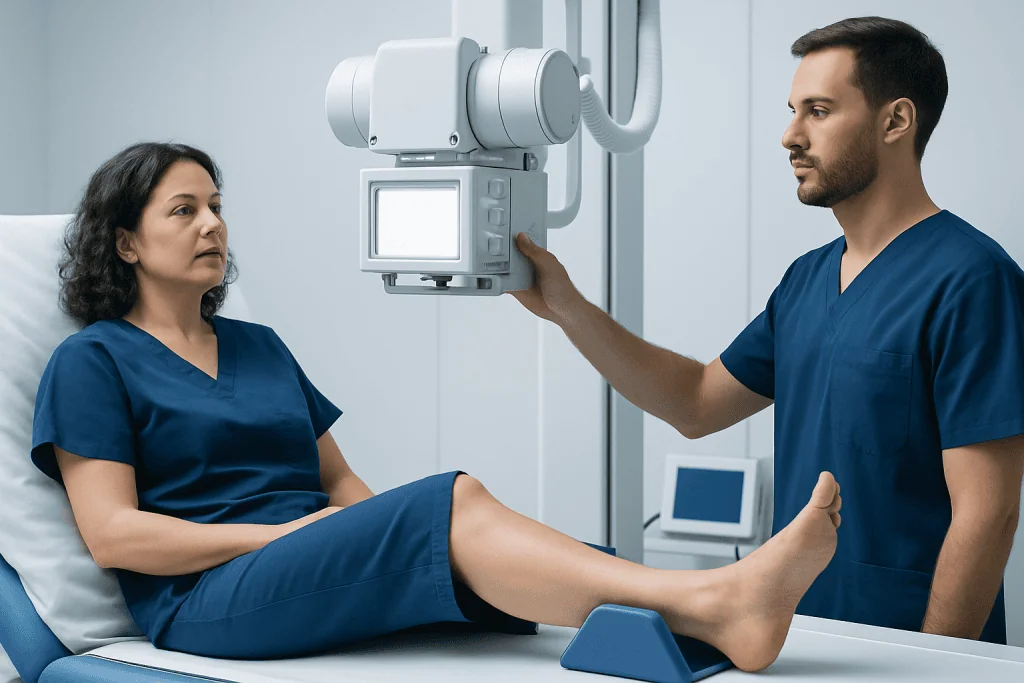
The most common symptom of a medial malleolus fracture is pain on the inner side of the ankle, especially after a twist, fall, sports injury, or direct blow. Swelling usually develops quickly, and bruising may spread around the ankle or into the foot over the next hours or days.
Many people find it painful or impossible to put weight on the injured leg. Others can still walk, especially if the fracture is small or stable, so being able to take a few steps does not rule out a broken bone. The ankle may feel stiff, tender to touch, or unstable, and moving it up, down, or side to side can increase discomfort.
Symptoms can vary depending on whether other tissues are involved. A fracture combined with ligament damage or another bone injury often causes more swelling, deformity, and difficulty walking. Symptoms that deserve urgent attention include visible ankle deformity, numbness, coldness in the foot, severe pain that is worsening, or skin that looks threatened by a sharp bone edge.
- Inner ankle pain and point tenderness
- Swelling and bruising
- Difficulty bearing weight
- Reduced ankle motion
- A feeling of instability or the ankle “giving way”
Causes, injury patterns, and risk factors
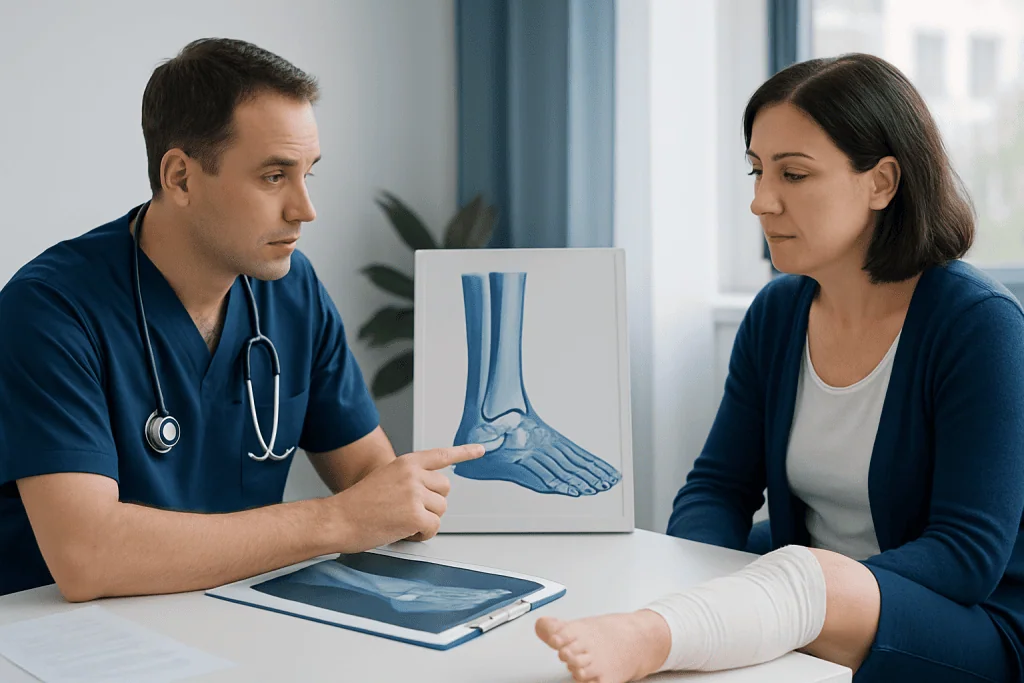
This fracture most often happens when the ankle twists forcefully. Sports, slipping on uneven ground, falling from a height, and road traffic injuries are common causes. In some cases, a direct impact to the ankle can also break the medial malleolus.
The exact pattern depends on the direction and force of the injury. A simple twist may create a small crack, while higher-energy trauma can cause multiple fractures or a fracture-dislocation, where the ankle joint loses its normal position. Doctors also consider whether the surrounding ligaments are torn, because ligament injury can make an ankle unstable even when the fracture itself looks small.
Certain factors can increase risk. These include participation in high-impact sports, previous ankle injuries, poor balance, and weak bone quality. Older adults and people with osteoporosis may be more likely to fracture the ankle from relatively low-energy falls. Conditions affecting bone strength may be relevant in some patients and can overlap with broader issues such as osteoporosis.
It is also important to understand that swelling and pain after an ankle twist are not always “just a sprain.” An inner ankle injury can coexist with ligament damage or another fracture, so persistent tenderness over the bone should be assessed by a qualified clinician.
How doctors diagnose a medial malleolus fracture
Diagnosis starts with the history of the injury and a physical examination. The doctor asks how the injury happened, where the pain is located, whether the person could walk afterward, and whether there are symptoms such as numbness or severe instability. On examination, they check swelling, tenderness, skin condition, circulation, sensation, and whether the ankle appears aligned.
X-rays are the main first imaging test. They help confirm whether the inner ankle bone is fractured and show whether the pieces are displaced. Standard ankle views are often enough, but additional views may be needed when the injury pattern is more complex.
CT scans can provide a more detailed picture of the joint surface and fracture shape, which can be useful when planning treatment, especially surgery. MRI is less commonly needed for the fracture itself but may help evaluate ligament, tendon, or cartilage injuries when symptoms are not fully explained by the X-ray findings. In some patients, doctors also look for injuries higher up the leg because ankle rotation injuries can occasionally involve the fibula.
The goal of diagnosis is not only to identify a break, but also to decide whether the ankle joint is stable and well aligned. That decision shapes whether treatment can be non-surgical or whether a procedure such as ankle surgery is the safer option.
Treatment options
Treatment depends on the fracture type, the position of the bone fragments, and the stability of the ankle. Stable, non-displaced fractures may heal well with conservative care. This often involves immobilization in a cast or walking boot, limiting or avoiding weight bearing for a period of time, and regular follow-up imaging to make sure the fracture remains in good position as it heals.
Displaced fractures, fractures involving the joint surface, or injuries associated with ankle instability are more likely to need surgery. The aim is to restore the normal shape of the ankle, align the joint surface accurately, and hold the bone in place while it heals. Internal fixation may use screws or plates depending on the fracture pattern. In selected cases, minimally invasive techniques may be suitable, but the approach is individualized.
Pain control, swelling management, and protection of the skin are important in both surgical and non-surgical care. Doctors may advise elevation, ice application in the early stage, and keeping weight off the ankle until it is safe. A personalized rehabilitation plan often follows, sometimes with physical therapy and rehabilitation to restore motion, strength, balance, and walking confidence.
When surgery is recommended, it is usually because it offers the best chance of healing in a good position. At the same time, surgery is still a treatment choice made after discussing risks, benefits, and expected recovery. In appropriate cases, orthopedic teams may also coordinate advanced imaging through MRI when soft-tissue or associated injuries need closer evaluation.
Recovery, rehabilitation, and possible complications
Recovery time varies from person to person. It depends on age, general health, bone quality, smoking status, whether the fracture was simple or complex, and whether surgery was needed. Most patients improve gradually over weeks to months, and ankle swelling can take longer to settle than pain.
Rehabilitation is an important part of recovery. Once the bone is healing and the doctor says it is safe, gentle exercises can help restore ankle motion and reduce stiffness. Later stages focus on muscle strength, balance, and returning to work, daily activities, or sports. Progress should be gradual so the healing bone is not overloaded too soon.
Like any fracture, this injury can have complications. These may include delayed healing, nonunion, malunion, stiffness, persistent swelling, cartilage injury, post-traumatic arthritis, or chronic ankle instability if associated injuries are missed. Surgical treatment can also carry risks such as infection, irritation from hardware, or blood clots, although these risks vary by patient and procedure.
Regular follow-up is valuable because it helps detect healing problems early. If recovery is slower than expected, doctors may reassess alignment, mobility, or related injuries. For international patients, Acibadem International’s multidisciplinary specialists and JCI-accredited hospitals diagnose and treat orthopedic injuries with coordinated imaging, surgery, and rehabilitation when needed.
Prevention, self-care, and when to seek medical care
Not every ankle injury can be prevented, but practical steps may reduce risk. Supportive footwear, caution on slippery or uneven surfaces, strength and balance training, and gradual return to sports after previous injury can all help protect the ankle. For people with low bone density, addressing bone health with a doctor may also lower future fracture risk.
Self-care immediately after an ankle injury often includes resting the joint, applying ice for short periods, using compression if advised, and elevating the foot to reduce swelling. It is sensible to avoid putting weight on the ankle until a clinician has assessed significant pain or bony tenderness. Over-the-counter pain relief may help some people, but it should not replace medical evaluation when a fracture is possible.
Medical care should be sought promptly after a significant ankle injury if there is marked swelling, bruising, inability to bear weight, pain directly over the inner ankle bone, or a feeling that the ankle is unstable. Urgent assessment is especially important if the ankle looks deformed, the skin is broken, the foot feels numb or cold, or pain is severe and worsening.
Even if symptoms seem mild, a person should arrange a medical review if pain and tenderness persist, walking remains difficult, or swelling does not improve. Early assessment helps distinguish a sprain from a fracture and supports safer healing.
Frequently asked questions
Is a medial malleolus fracture the same as an ankle sprain?
No. A medial malleolus fracture is a break in the inner ankle bone, while an ankle sprain is an injury to the ligaments. The symptoms can overlap, which is why imaging is often needed when there is bony tenderness or difficulty walking.
Can someone walk with a medial malleolus fracture?
Sometimes, yes. A small or stable fracture may still allow limited walking, but bearing weight can worsen pain and does not mean the injury is minor. Any suspected fracture should be assessed by a doctor.
Does every medial malleolus fracture need surgery?
No. Some fractures heal well with a cast or walking boot if the bone is well aligned and the ankle is stable. Surgery is more likely when the fracture is displaced, involves the joint surface, or occurs with instability or other ankle injuries.
How long does recovery usually take?
Recovery varies depending on the severity of the fracture and the treatment used. Bone healing often takes several weeks, but full recovery of strength, flexibility, and confidence in walking can take longer. Swelling may persist even after pain has improved.
What are the warning signs that urgent care is needed?
Urgent care is important if the ankle looks deformed, there is an open wound, the foot becomes numb or cold, or pain is severe and worsening. Inability to bear weight after a significant injury is also a reason to seek prompt medical evaluation.
Can a medial malleolus fracture cause long-term problems?
It can, especially if the fracture heals in poor alignment or if associated injuries are missed. Possible longer-term issues include stiffness, persistent pain, instability, or arthritis in the ankle joint. Proper diagnosis, follow-up, and rehabilitation help lower these risks.
References
- American Academy of Orthopaedic Surgeons
- National Institute for Health and Care Excellence
- OrthoInfo
- American College of Radiology
- MedlinePlus
This article is for general information only and is not a substitute for professional medical advice. Please consult a qualified doctor about your individual situation.
Joint and spine care in Turkey — expert assessment & treatment
JCI-accredited · board-certified surgeons · reply within 24h
Add us as a Preferred Source to see more of our trusted health content across Google Search, AI Overviews and Discover.