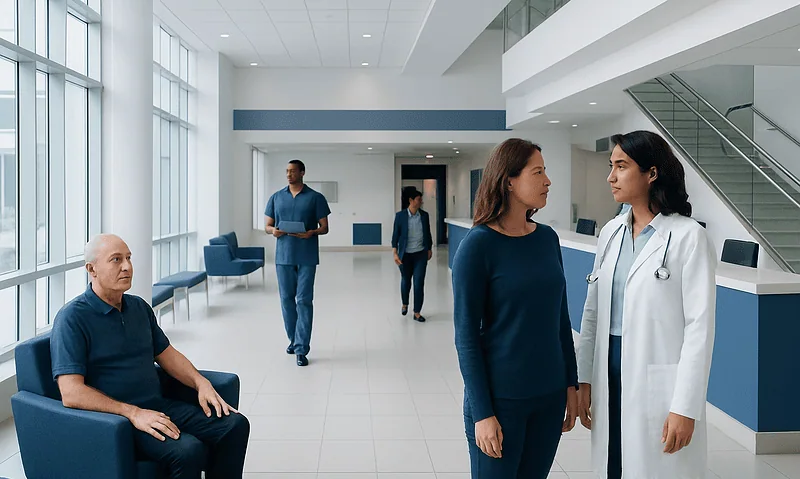
Medical Residency — Explained by Medical Evidence, Not Myths

Medical residency is postgraduate physician training completed after medical school. Residents are licensed doctors who care for patients under graded supervision.
Key Takeaways
- Medical residency is postgraduate physician training completed after medical school.
- Residents are licensed doctors who care for patients under graded supervision.
- Residency length and daily duties vary by specialty and country.
- The aim is patient safety, clinical competence, and progressive independence.
- Common myths include that residents are “just students” or that long hours alone define training.
Medical residency is the supervised clinical training doctors complete after medical school to practice independently in a chosen specialty. It is structured, evidence-based training designed to build safe decision-making, practical skills, and professional responsibility over several years.
Overview: What medical residency really is
Medical residency is the period of supervised clinical training that follows medical school. During residency, a doctor works in hospitals and clinics, examines patients, orders and interprets tests, develops treatment plans, performs procedures within their training, and learns to make decisions with increasing independence. In simple terms, residency is how a medical graduate becomes a fully trained physician in a specialty such as internal medicine, pediatrics, surgery, radiology, or neurology.
Evidence-based descriptions of residency are often more helpful than popular myths. Residents are not medical students, and they are not expected to know everything on day one. They are qualified doctors who train within a structured system of supervision, feedback, and assessment. Their responsibilities increase over time as they demonstrate knowledge, judgment, communication skills, and safe patient care.
The exact structure of medical residency depends on the country, healthcare system, and specialty. However, the core purpose is consistent: to turn theoretical knowledge into reliable clinical practice. Good residency training emphasizes patient safety, teamwork, ethics, communication, and lifelong learning, not simply endurance or long working hours.
How residency fits into a doctor’s training pathway

To understand medical residency, it helps to place it within the full path to becoming a specialist physician. A person typically completes undergraduate or pre-medical education where required, then medical school, then licensing steps set by the relevant authority. Residency comes after graduation from medical school and is the stage where a doctor trains in a chosen field while caring for real patients.
Some doctors complete only residency before practicing independently in a broad specialty. Others continue with fellowship training to gain advanced expertise in a subspecialty, such as cardiology after internal medicine or pediatric neurology after pediatrics. This means residency should be seen as the foundation of specialist practice rather than the final endpoint for every doctor.
Training is usually organized by year, often called postgraduate year or residency year. Early years tend to focus on core clinical assessment, common conditions, urgent decision-making, and safe handover. Later years usually involve more complex cases, procedural responsibility where relevant, leadership within the care team, and teaching junior trainees or students.
Because residents work across different settings, they may spend time in emergency care, inpatient wards, intensive care, outpatient clinics, diagnostic services, operating rooms, and on-call shifts. These experiences are designed to expose them to both routine and complex cases, including conditions that may require advanced evaluation with MRI scanning or CT imaging when clinically appropriate.
What resident doctors do in daily practice

A resident doctor’s day is practical and patient-centered. Residents take medical histories, perform physical examinations, review medications, assess test results, discuss diagnoses, and coordinate treatment plans with senior physicians and the wider healthcare team. In procedural specialties, they may also assist with or perform procedures according to their level of training and supervision.
Residents also play a major role in communication. They explain next steps to patients and families, update records, participate in rounds, and collaborate with nurses, pharmacists, therapists, and consultants. This communication work is not separate from medical care; it is central to safe care, especially when patients have multiple conditions or need transitions between emergency, inpatient, and outpatient services.
Another important part of residency is formal learning. Residents attend teaching sessions, case conferences, simulation training, and morbidity and mortality reviews. They may study medical literature, learn quality improvement methods, and prepare for specialty examinations. This reflects the fact that modern residency is not only service delivery but also a carefully monitored educational program.
- Direct patient assessment and treatment planning
- Supervised decision-making in routine and urgent situations
- Documentation and communication across the care team
- Procedural training where relevant to the specialty
- Regular teaching, feedback, and competency assessment
What residency is not: common myths and the evidence-based reality
One common myth is that residents are “still students.” In reality, they have completed medical school and are doctors. While they are still learning, they are learning through structured clinical responsibility under supervision. Their role is more advanced than that of a student, but their work is also intentionally supported by senior physicians to maintain patient safety.
Another myth is that residency is mainly about surviving exhaustion. Fatigue has been widely studied because it can affect both learning and safety, and many systems now use duty-hour rules, supervision standards, and wellness measures to reduce unnecessary risk. Although residency can be demanding, high-quality training is defined by competency, supervision, and continuity of learning rather than by overwork alone.
A third myth is that residents only carry out instructions. In fact, residency trains doctors to think clinically: to evaluate symptoms, weigh possible diagnoses, recognize urgent warning signs, and respond appropriately. For example, a resident may help assess whether symptoms reflect a benign issue or a condition such as stroke, brain tumor, or another serious disorder that needs urgent specialist review.
It is also inaccurate to assume that all countries use the same residency model. Titles, training lengths, licensing steps, and work patterns differ internationally. Even so, the evidence-based principles are broadly shared: supervised practice, defined competencies, staged responsibility, and assessment of clinical performance over time.
How residency quality and patient safety are supported
Patient safety is central to residency training. Residents do not practice in isolation; they work within systems that include attending physicians, consultants, nursing teams, protocols, and multidisciplinary review. Supervision may be direct at the bedside, immediately available within the hospital, or provided through scheduled review depending on the resident’s experience level and the clinical situation.
Programs also use competency-based evaluation. This means residents are assessed not only on knowledge, but also on communication, professionalism, procedural skill, teamwork, and the ability to recognize their limits. A resident is expected to ask for help when needed. In well-run systems, asking for senior input is considered good judgment, not weakness.
Modern healthcare increasingly relies on diagnostic support and coordinated specialist input. Residents therefore learn when to involve other teams and how to use investigations responsibly. For some patients, this may include referral for PET-CT or specialist consultation if cancer, inflammation, or another complex diagnosis is being considered. The educational goal is not to order more tests, but to order the right tests for the right reasons.
Quality also depends on reflective practice. Residents review outcomes, discuss complications in educational settings, and learn from near misses and system issues. This culture of review helps improve care and teaches future specialists how to balance clinical confidence with humility and caution.
How patients may experience care during a residency program
Patients treated in teaching hospitals often meet resident doctors as part of their care team. This can be reassuring when patients understand the structure: the resident may spend significant time listening, examining, and coordinating care, while more senior doctors guide decision-making and approve plans when required. Teaching environments can provide thorough review because several clinicians may discuss the same case from different levels of experience.
Patients can reasonably ask who is responsible for their care, what the resident’s role is, and whether a supervising specialist has reviewed the plan. Clear answers should be available. In many settings, residents are the first doctors to assess changes in symptoms, and they are trained to escalate concerns quickly if a patient becomes unwell.
Teaching hospitals also often care for complex conditions that require coordinated expertise. For example, residency teams may work alongside specialists evaluating disorders such as epilepsy or planning treatment pathways that include Gamma Knife treatment for selected neurological conditions. In these settings, residency training occurs within a broader multidisciplinary model rather than replacing specialist care.
For patients and families, the most helpful approach is open communication. If anything is unclear, asking for explanations in plain language is appropriate. Good medical teams welcome questions about diagnosis, tests, treatment options, expected recovery, and who will be involved in decisions.
When to seek medical care
Medical residency itself is a training stage, not an illness, so it does not create symptoms that need treatment in patients. However, people often search for “medical residency” while trying to understand the doctor who is caring for them in a hospital or emergency setting. In that context, the key issue is not the resident’s title but the patient’s symptoms and whether prompt assessment is needed.
A person should seek urgent medical care for severe or sudden symptoms such as chest pain, difficulty breathing, one-sided weakness, confusion, seizures, heavy bleeding, severe allergic reactions, or sudden vision loss. These problems require immediate evaluation regardless of which clinician first sees the patient. Residents are trained to recognize emergencies and involve senior specialists quickly.
Non-urgent symptoms still deserve medical attention if they are persistent, worsening, unexplained, or interfering with daily life. Examples include ongoing abdominal pain, recurrent headaches, unintended weight loss, persistent fever, changes in bowel habits, new lumps, or prolonged fatigue. Early assessment can help identify common causes and rule out more serious conditions.
Near the end of a care journey, some patients choose international centers for diagnosis or treatment planning. Acibadem International’s multidisciplinary specialists and JCI-accredited hospitals evaluate and treat a wide range of conditions for international patients, with care coordinated across appropriate specialties.
Why understanding residency can help patients make informed decisions
Knowing what medical residency means can make healthcare encounters less confusing. It helps patients understand why they may interact with more than one doctor, why questions may be repeated for safety, and how decisions are reviewed within a team. It also clarifies that a resident doctor is a licensed physician in advanced training, not an observer without responsibility.
This understanding can improve communication and trust. Patients who know the care structure may feel more comfortable asking who is leading the case, when a specialist will review the plan, and what follow-up is needed. These are appropriate questions in any hospital, clinic, or emergency setting.
Most importantly, an evidence-based view of medical residency replaces myths with a clearer picture: residency is a supervised, accountable, and essential stage of physician training. Its purpose is to produce doctors who can deliver safe, informed, compassionate care. For patients, that means residency is best understood not as a warning sign, but as part of how modern medicine trains specialists responsibly.
Frequently asked questions
What is medical residency in simple terms?
Medical residency is the supervised training doctors complete after medical school in a chosen specialty. During this period, they care for patients while gaining practical experience and increasing responsibility under senior oversight.
Is a resident doctor a real doctor?
Yes. A resident has graduated from medical school and is a physician. The difference is that they are still in specialty training and work within a structured system of supervision and assessment.
How long does medical residency last?
The length varies by specialty and country. Some residencies last only a few years, while others, especially procedure-heavy specialties, may take longer and can be followed by fellowship training.
Do residents treat patients on their own?
Residents actively treat patients, but not without a training framework. Their independence increases over time, and supervising doctors remain responsible for guidance, review, and support, especially for complex or high-risk decisions.
Why do patients sometimes see several doctors in a teaching hospital?
Teaching hospitals use team-based care. A patient may be seen by a resident, a senior resident, and an attending specialist so that assessment, learning, and patient safety all work together.
Does residency mean the quality of care is lower?
Not necessarily. In well-run teaching hospitals, residents work under supervision and within systems designed to support safe care. Many teaching centers also provide access to broad specialist expertise, advanced diagnostics, and multidisciplinary review.
References
- World Health Organization
- Accreditation Council for Graduate Medical Education
- American Medical Association
- Association of American Medical Colleges
- General Medical Council
This article is for general information only and is not a substitute for professional medical advice. Please consult a qualified doctor about your individual situation.
Explore treatments in Turkey — costs, top hospitals & a free quote
JCI-accredited · board-certified surgeons · reply within 24h
Add us as a Preferred Source to see more of our trusted health content across Google Search, AI Overviews and Discover.

More from the Health Library
Pine Pollen — Explained by Medical Evidence, Not Myths
Best Breakfast for Weight Loss: An Evidence-Based Guide for Patients
Night Sweats Men: What Patients Need to Know
Peripheral Vision — Explained by Medical Evidence, Not Myths
Hip Bone — Explained by Medical Evidence, Not Myths