Melasma: An Evidence-Based Guide for Patients

Melasma causes patchy facial darkening, usually on the cheeks, forehead, nose, or upper lip. Sunlight is one of the strongest triggers, and even small amounts of UV or visible light can worsen it.
Key Takeaways
- Melasma causes patchy facial darkening, usually on the cheeks, forehead, nose, or upper lip.
- Sunlight is one of the strongest triggers, and even small amounts of UV or visible light can worsen it.
- Hormonal changes, genetics, and some medications or cosmetics may contribute.
- Diagnosis is usually clinical, based on a skin examination by a doctor.
- Treatment often combines strict sun protection with topical medicines and selected procedures.
- Early medical advice can help confirm the diagnosis and reduce the chance of worsening pigmentation.
Melasma is a common, harmless skin condition that causes symmetrical brown or gray-brown patches, most often on the face. It can be persistent, but many people improve with sun protection, trigger management, and dermatologist-guided treatment.
Overview
Melasma is a chronic pigment disorder that causes flat, darker-than-usual patches on the skin, especially on sun-exposed areas of the face. The patches are typically brown, tan, or gray-brown and often appear symmetrically on both sides of the face. Although melasma is medically harmless, it can be frustrating because it may last for months or years and can affect self-confidence.
The condition happens when pigment-producing cells in the skin, called melanocytes, make too much melanin. This increase is usually linked to a combination of factors rather than a single cause. Sun exposure is a major trigger, and hormonal influences and inherited skin sensitivity often play an important role as well.
Melasma can affect people of any skin tone, but it is more common in women and in individuals with medium to darker complexions. It often becomes more noticeable in adulthood and may worsen during summer months or in sunny climates. Many patients first notice it during pregnancy or after starting hormonal medications.
Even though melasma is common, it is not the same as every other type of facial discoloration. Conditions such as post-inflammatory hyperpigmentation, sun spots, or other pigment disorders may look similar. A proper skin assessment helps guide the right treatment approach and avoid products or procedures that may irritate the skin and worsen the pigmentation.
Symptoms and What Melasma Looks Like
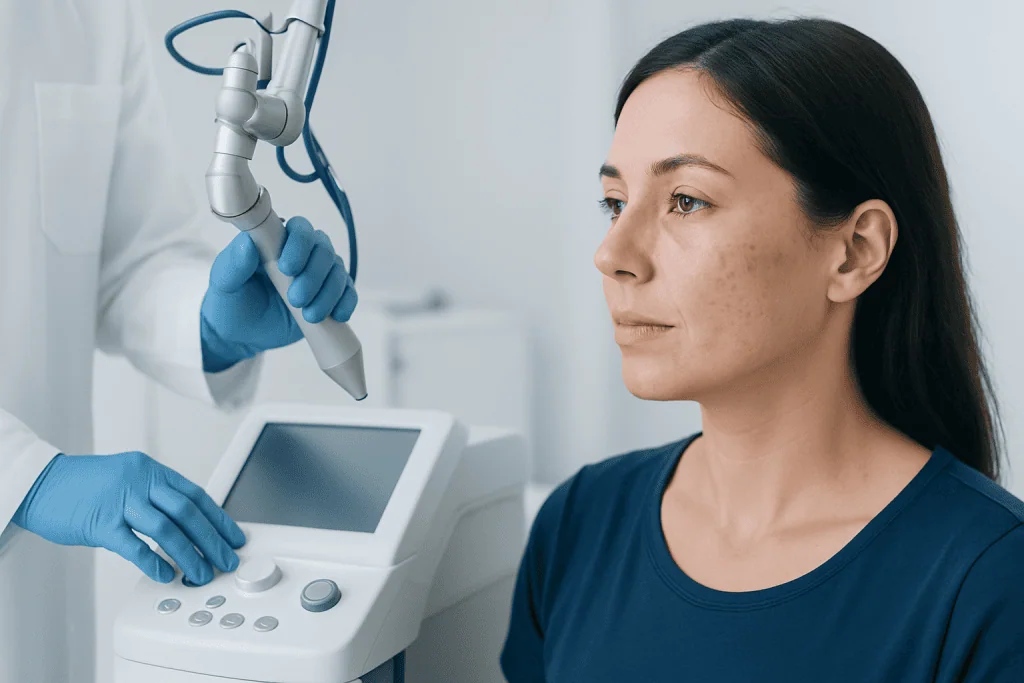
The main symptom of melasma is painless darkening of the skin in patches. These areas are not raised, itchy, infected, or scaly. The color may range from light brown to dark brown or gray-brown, depending on skin tone and the depth of pigment in the skin.
The most common locations are the cheeks, forehead, bridge of the nose, upper lip, chin, and jawline. In some people, melasma can also affect the neck or forearms, especially when those areas receive regular sunlight. The pattern is often symmetrical, which means similar patches appear on both sides of the face.
Melasma may become more obvious after sun exposure, during pregnancy, or during periods of hormonal change. Some people notice that the patches fade somewhat in winter and return or darken again in sunnier months. Others have a more persistent pattern that improves slowly over time.
- Brown, tan, or gray-brown facial patches
- Symmetrical distribution on the cheeks, forehead, nose, or upper lip
- No pain, bleeding, or open sores
- Darkening after sunlight or heat exposure
- Long-lasting or recurrent discoloration
Causes and Risk Factors

Melasma develops when the skin produces excess pigment in response to internal and external triggers. The exact mechanism is complex, but sunlight is one of the best-established causes. Ultraviolet light and visible light can stimulate melanocytes, leading to more pigment production and making existing melasma darker.
Hormonal factors are also strongly associated with melasma. Pregnancy is a well-known trigger, which is why melasma is sometimes called the “mask of pregnancy.” Birth control pills, hormone therapy, and hormonal fluctuations may also contribute in some people. A family history of melasma suggests that genetics affects how the skin responds to these triggers.
Skin irritation may worsen pigmentation. Harsh skincare products, overuse of exfoliants, friction, and some cosmetic ingredients can provoke inflammation that encourages pigment production. Heat exposure may also make melasma more visible in certain patients, even without direct sunburn.
Other possible contributors include thyroid disease, photosensitizing medications, and frequent sun exposure without adequate protection. Because several pigment conditions can overlap, a doctor may also consider other causes of facial discoloration such as hyperpigmentation or inflammation-related dark marks. Identifying triggers helps shape a safer, more effective treatment plan.
How Melasma Is Diagnosed
Melasma is usually diagnosed through a medical history and careful skin examination. A dermatologist often recognizes the characteristic pattern and location of the discoloration. The doctor may ask when the patches started, whether they change with the seasons, and whether pregnancy, hormonal medications, or skincare products may have played a role.
In some cases, a Wood’s lamp examination may be used to better assess how deep the pigment is within the skin. This can help estimate whether melasma is more epidermal, dermal, or mixed, which may influence how well certain treatments work. However, even with this tool, response to treatment can still vary from person to person.
Most people do not need extensive testing. If the history suggests a possible hormonal or medical contributor, the doctor may recommend additional evaluation. This is especially relevant when pigmentation is unusual in pattern, begins suddenly, or is accompanied by other symptoms.
A skin biopsy is rarely needed, but it may be considered when the diagnosis is uncertain. The goal is not only to confirm melasma, but also to exclude other conditions that may require a different approach, such as medication-related pigmentation, post-inflammatory changes, or uncommon pigment disorders.
Treatment Options
Melasma treatment usually works best when it combines daily light protection with targeted therapies. Improvement often takes time, and gradual fading is more realistic than immediate clearing. Because the condition tends to recur, maintenance care is often as important as active treatment.
Doctors commonly begin with topical treatments. These may include prescription lightening agents, retinoids, azelaic acid, or combination creams designed to reduce pigment production and speed skin renewal. Treatment choice depends on skin type, the depth of pigment, irritation risk, pregnancy status, and how sensitive the skin is. Some products can cause dryness or irritation, so medical guidance is important.
For selected patients, procedures may be considered when topical therapy and sun protection are not enough. Options may include chemical peels, carefully chosen laser treatments, or other dermatologist-led pigment therapies. These approaches can help in some cases, but they also carry a risk of worsening pigmentation if not selected appropriately. In broader pigment-care planning, a doctor may discuss dermatology evaluation and treatment, chemical peel treatment, or laser treatment when clinically suitable.
Pregnancy-related melasma may improve after delivery, but it does not always disappear completely. For patients seeking specialist support, Acibadem International’s multidisciplinary teams in JCI-accredited hospitals assess pigment disorders and design individualized care for international patients. Because melasma can overlap with other skin concerns, some people also benefit from evaluation of related issues such as skin discoloration patterns before starting procedures.
Prevention and Self-care
Consistent sun protection is the foundation of melasma care. Even when treatment is working, unprotected exposure can quickly trigger relapse. A broad-spectrum sunscreen with high protection, applied every day and reapplied as directed, is one of the most important steps. Tinted sunscreens that help block visible light may be particularly helpful for some patients.
Physical protection matters too. Wide-brimmed hats, sunglasses, and seeking shade can reduce daily exposure, especially during strong sunlight hours. People who spend time near windows or drive often may still need protection because light exposure can accumulate over time.
Gentle skincare supports the skin barrier and may reduce irritation-related worsening. It is often best to avoid aggressive scrubs, frequent peels at home, or layering too many active ingredients without professional advice. Fragrance-free cleansers and moisturizers can be useful for sensitive skin.
- Use sunscreen daily, even on cloudy days
- Wear a hat and limit direct sun exposure when possible
- Avoid harsh skincare that causes burning or redness
- Discuss hormonal triggers with a qualified doctor if needed
- Be patient, as improvement often takes several weeks to months
When to Seek Medical Care
It is sensible to seek medical advice when new facial pigmentation appears, especially if the diagnosis is uncertain or over-the-counter products are not helping. A doctor can confirm whether the patches are melasma or another condition and can recommend treatment based on skin type and trigger pattern.
Medical review is also important if the pigmentation changes quickly, becomes irregular, or is associated with redness, scaling, pain, or other unusual symptoms. These features are less typical of melasma and may suggest another skin condition that needs a different evaluation.
People who are pregnant, breastfeeding, have sensitive skin, or use multiple skincare products may benefit from specialist guidance before starting treatment. A dermatologist can help choose safer options and reduce the risk of irritation or rebound darkening.
Prompt evaluation can also be useful when melasma is causing significant emotional distress or affecting quality of life. Supportive, evidence-based care can make treatment more manageable and may help patients set realistic expectations about improvement and long-term maintenance.
Frequently asked questions
Is melasma dangerous?
Melasma is not dangerous and does not turn into skin cancer. It is a harmless pigment condition, but it can be persistent and may affect appearance and confidence. A doctor can help confirm the diagnosis if there is any uncertainty.
Can melasma go away on its own?
Sometimes it can fade, especially if it developed during pregnancy and hormonal triggers settle afterward. However, many cases persist or return, particularly with ongoing sun exposure. Daily sun protection is important even when the patches improve.
What is the best treatment for melasma?
There is no single best treatment for everyone. Most patients do best with a combination of strict sun protection and dermatologist-guided topical therapy, with procedures reserved for selected cases. Treatment depends on skin type, trigger factors, and how deep the pigment is.
Does sunscreen really help melasma?
Yes. Sunscreen is one of the most important parts of melasma management because light exposure is a major trigger. Regular use can help prevent darkening, support treatment results, and reduce recurrence.
Can laser treatment cure melasma?
Laser treatment does not reliably cure melasma, and in some people it may worsen pigmentation if not carefully selected. It may help certain patients when performed by experienced specialists as part of a broader plan. A dermatologist can advise whether it is appropriate.
Who is more likely to develop melasma?
Melasma is more common in women, people with medium to darker skin tones, and those with a family history of the condition. It is also associated with pregnancy, hormonal therapies, and frequent sun exposure. Still, it can occur in a wide range of patients.
References
- American Academy of Dermatology
- National Institute of Arthritis and Musculoskeletal and Skin Diseases
- British Association of Dermatologists
- DermNet
- Mayo Clinic
This article is for general information only and is not a substitute for professional medical advice. Please consult a qualified doctor about your individual situation.
Explore treatments in Turkey — costs, top hospitals & a free quote
JCI-accredited · board-certified surgeons · reply within 24h
Add us as a Preferred Source to see more of our trusted health content across Google Search, AI Overviews and Discover.

More from the Health Library



Related Specialists

Assoc. Prof. Dr. Selim Aydın
Cardiovascular Surgery
Dr. Hüseyin Hüsnü Gönençer
Anesthesiology
Dr. Evis Ertaş
Gynecology & Obstetrics
Prof. Dr. Remzi Tözün
Orthopedic Surgery & Traumatology