Meningitis Stiff Neck: Symptoms, Causes, and Treatment Options

A stiff neck is a possible symptom of meningitis but is not present in every person. Fever, severe headache, light sensitivity, confusion, rash, and vomiting can occur alongside neck stiffness.
Key Takeaways
- A stiff neck is a possible symptom of meningitis but is not present in every person.
- Fever, severe headache, light sensitivity, confusion, rash, and vomiting can occur alongside neck stiffness.
- Bacterial meningitis is a medical emergency and requires prompt hospital treatment.
- Viral meningitis is often less severe, but it still needs medical evaluation because symptoms can overlap.
- Vaccination, hand hygiene, and prompt treatment of certain infections can help reduce some meningitis risks.
Meningitis stiff neck may occur when inflammation affects the protective membranes around the brain and spinal cord. A stiff neck alone is often caused by a muscle problem, but urgent medical assessment is needed when it occurs with fever, severe headache, vomiting, rash, confusion, seizures, or unusual sleepiness.
Overview: Can Meningitis Cause a Stiff Neck?
Meningitis stiff neck describes neck stiffness caused by inflammation of the meninges, the thin protective layers surrounding the brain and spinal cord. This inflammation can make moving the neck painful or difficult, particularly when trying to bend the chin toward the chest. It can occur with headache, fever, and sensitivity to light, but symptoms vary widely between individuals.
A stiff neck by itself is much more commonly related to muscle strain, poor sleeping position, arthritis, or another non-serious cause. However, neck stiffness should not be dismissed when it develops suddenly or is accompanied by fever, intense headache, vomiting, confusion, a new rash, seizure, or marked drowsiness. These features require urgent medical assessment.
Meningitis can be caused by bacteria, viruses, fungi, parasites, certain medications, autoimmune conditions, or cancer-related inflammation. Bacterial meningitis is the most urgent form because it can progress quickly. Viral meningitis is more common in many settings and may be milder, but only clinical assessment and testing can identify the cause reliably.
What Does a Meningitis Stiff Neck Feel Like?
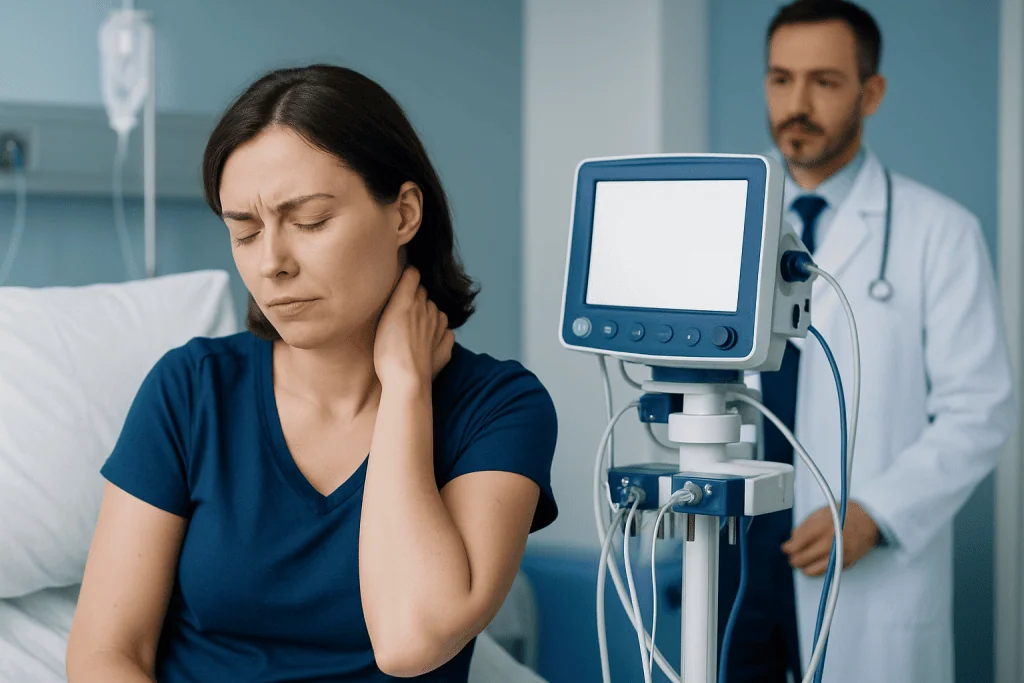
Neck stiffness from meningitis often feels different from an ordinary sore neck. The neck may be painful and resistant to movement, especially forward bending. Some people describe discomfort at the back of the neck that becomes worse with movement, while others mainly notice that they cannot comfortably bring their chin toward their chest.
Not everyone with meningitis develops obvious neck stiffness. It may be absent early in the illness, in young children, older adults, and people with weakened immune systems. For this reason, clinicians consider the whole pattern of symptoms rather than relying on one sign alone.
Symptoms that may occur with a meningitis stiff neck include:
- Fever and chills
- Severe or unusual headache
- Nausea or vomiting
- Sensitivity to bright light
- Confusion, irritability, or difficulty staying awake
- Muscle aches and feeling generally unwell
- Seizures in some cases
- A purple-red rash that does not fade under pressure, particularly with meningococcal disease
In babies, signs can be less specific. They may include poor feeding, repeated vomiting, unusual crying, reduced alertness, a bulging soft spot on the head, limpness, stiffness, or seizures. Parents and caregivers should seek urgent medical advice if an infant appears seriously unwell.
Causes and Risk Factors

The most important infectious causes of meningitis are viruses and bacteria. Enteroviruses are a frequent cause of viral meningitis. Bacterial meningitis may be caused by several bacteria, including meningococcus, pneumococcus, and group B streptococcus in newborns. The type of organism and a person’s age, health, and vaccination history help guide testing and treatment.
Bacterial meningitis can sometimes follow an infection in another part of the body, such as the ear, sinuses, lungs, or bloodstream. It can also occur after certain head injuries, neurosurgical procedures, or leakage of cerebrospinal fluid. Viral infections may spread through respiratory droplets, close contact, or contact with contaminated stool, depending on the virus.
Anyone can develop meningitis, but risk may be higher in infants, adolescents and young adults in close-living settings, older adults, people without recommended vaccines, and those with immune suppression. Conditions affecting the spleen, cochlear implants, certain immune treatments, and recent brain or spinal procedures can also increase risk for particular forms of meningitis.
Close contact does not always mean that a person will develop meningitis. In some meningococcal cases, however, public health teams may recommend preventive antibiotics for close contacts. This decision should be guided by a clinician or local public health authority.
How Meningitis Is Diagnosed
Suspected meningitis is assessed urgently. A clinician will ask about the timing of symptoms, recent illnesses, travel, possible exposures, medicines, immune health, and vaccination history. They will also examine the person’s alertness, neck movement, skin, breathing, circulation, and neurological function.
Blood tests and blood cultures may help identify infection and assess how the body is responding. A lumbar puncture, also called a spinal tap, is often the key test. During this procedure, a small sample of cerebrospinal fluid is collected from the lower back and tested for signs of infection, inflammation, and the likely cause.
Some people may need a brain scan before lumbar puncture, particularly if there are signs suggesting increased pressure in the skull or another neurological concern. Imaging should not unnecessarily delay urgent antibiotics when bacterial meningitis is strongly suspected. Testing is tailored to the person’s condition and is performed in a hospital setting.
Several illnesses can resemble meningitis, including severe migraine, influenza, COVID-19, encephalitis, bloodstream infection, and significant muscle strain. Encephalitis can also cause headache, fever, confusion, or seizures, and may occur alongside meningitis. Accurate diagnosis is important because the treatment and urgency may differ.
Treatment Options and Recovery
Treatment depends on the cause, severity, age, and overall health of the person. When bacterial meningitis is suspected, doctors usually begin intravenous antibiotics as soon as possible, often before all test results are available. Hospital care may also include intravenous fluids, oxygen, medicines for fever or seizures, and close monitoring. In selected situations, corticosteroids may be used to reduce inflammation-related complications.
Viral meningitis often improves with supportive care, including rest, fluids, and treatment for pain or fever when appropriate. Some viral causes may need antiviral medication, especially if herpes viruses are suspected. Fungal, parasitic, autoimmune, and medication-related meningitis require cause-specific treatment directed by specialists.
Recovery varies. Many people with uncomplicated viral meningitis recover fully over days to weeks, although tiredness and headaches can last longer. Bacterial meningitis can cause serious complications, such as hearing loss, seizures, neurological changes, or problems with memory and concentration, so follow-up care may include hearing tests, rehabilitation, or neurological review.
People should not try to manage suspected meningitis at home with pain relievers or rest alone. If there is concern for bacterial meningitis, prompt emergency treatment is essential. Lumbar puncture testing and hospital-based treatment help clinicians establish the cause and provide appropriate care without delay.
Prevention and Everyday Self-Care
Vaccination is one of the most effective ways to prevent several forms of bacterial meningitis. Recommended vaccines vary by country, age, medical conditions, occupation, travel plans, and outbreak circumstances. These may include vaccines against meningococcal disease, pneumococcal disease, and Haemophilus influenzae type b. A clinician can advise which vaccines are appropriate for an individual or family.
Everyday measures can also reduce the spread of some infections. These include frequent handwashing, covering coughs and sneezes, avoiding the sharing of drinks or eating utensils, cleaning frequently touched surfaces, and staying home when acutely unwell where possible. These steps cannot prevent every case but support general infection control.
After diagnosis and treatment, recovery should be guided by the clinical team. Adequate rest, gradual return to normal activities, hydration, and attendance at follow-up appointments can support recovery. Persistent headaches, fatigue, hearing changes, balance problems, mood changes, or concentration difficulties should be discussed with a doctor.
Preventive antibiotics are not routinely needed for everyone exposed to a person with meningitis. They are considered for specific close contacts of certain bacterial infections, especially meningococcal disease. Public health professionals and treating clinicians can explain who needs preventive treatment and how quickly it should be started.
When to Seek Medical Care
Emergency medical care is needed for neck stiffness with fever, severe headache, confusion, a rapidly spreading or non-blanching rash, seizure, fainting, trouble breathing, severe weakness, or difficulty waking. These symptoms may indicate meningitis or another serious illness and should be assessed immediately. People should use local emergency services rather than drive themselves if they are very unwell.
Urgent same-day medical advice is also appropriate for a new stiff neck with headache, vomiting, light sensitivity, or flu-like illness, particularly in infants, older adults, pregnant people, or those with weakened immune systems. It is safer to seek assessment early because symptoms can change quickly and may not all appear at once.
A stiff neck after exercise, awkward sleeping, or prolonged screen use is often muscular when there is no fever or systemic illness and movement gradually improves. Even then, medical advice is appropriate if pain is severe, follows an injury, causes numbness or weakness, persists, or is accompanied by symptoms affecting balance, speech, or vision.
Acibadem International’s multidisciplinary specialists and JCI-accredited hospitals assess and treat neurological and infectious conditions for international patients, including urgent presentations that may require hospital evaluation.
Frequently asked questions
Is a stiff neck always a sign of meningitis?
No. Most stiff necks are caused by muscle strain, awkward posture, sleeping position, or joint problems. Meningitis is more concerning when neck stiffness occurs with fever, severe headache, vomiting, light sensitivity, confusion, rash, or unusual drowsiness.
Can a person have meningitis without a stiff neck?
Yes. Neck stiffness is a common symptom, but it is not present in every case. Infants, older adults, and people with weakened immune systems may have less typical symptoms, so medical assessment should consider the full symptom pattern.
How quickly does meningitis stiff neck develop?
The timing depends on the cause. Bacterial meningitis can develop rapidly over hours or a short period of time, while viral meningitis may develop more gradually. Because it is not possible to determine the cause based on timing alone, urgent assessment is needed when warning signs are present.
Can a stiff neck from meningitis be relieved by stretching?
Stretching is not an appropriate way to test or treat suspected meningitis. If neck stiffness is accompanied by fever, severe headache, vomiting, rash, confusion, or sleepiness, the person should seek urgent medical care rather than attempt home treatment.
What rash is associated with meningitis?
Meningococcal disease can cause a red, purple, or dark rash that may not fade when pressed with a clear glass or finger. A rash may be absent, especially early in illness, so people should not wait for one to appear before seeking help for serious symptoms.
Is viral meningitis dangerous?
Viral meningitis is often less severe than bacterial meningitis and many people recover well with supportive care. However, its symptoms can overlap with bacterial meningitis and encephalitis, so prompt medical evaluation is still important.
References
- Centers for Disease Control and Prevention
- World Health Organization
- National Institute of Neurological Disorders and Stroke
- Mayo Clinic
- National Health Service
This article is for general information only and is not a substitute for professional medical advice. Please consult a qualified doctor about your individual situation.
Meningitis in Turkey — costs, top hospitals & a free quote
JCI-accredited · board-certified surgeons · reply within 24h
Add us as a Preferred Source to see more of our trusted health content across Google Search, AI Overviews and Discover.