Meningitis Symptoms Explained: Common Triggers and Red Flags

Meningitis symptoms often start with fever, headache, and neck stiffness, but not everyone has all three. Symptoms may differ in babies, children, teens, older adults, and people with weakened immune systems.
Key Takeaways
- Meningitis symptoms often start with fever, headache, and neck stiffness, but not everyone has all three.
- Symptoms may differ in babies, children, teens, older adults, and people with weakened immune systems.
- Bacterial meningitis is a medical emergency and usually needs urgent hospital treatment.
- A rash, confusion, seizures, severe sleepiness, or rapidly worsening illness are important red flags.
- Doctors diagnose meningitis using a physical exam, blood tests, imaging when needed, and often a lumbar puncture.
Meningitis symptoms commonly include fever, headache, neck stiffness, nausea, vomiting, and sensitivity to light, but the pattern can vary by age and cause. Because meningitis can worsen quickly, recognizing red flags early and seeking prompt medical evaluation is important.
Overview: what meningitis symptoms usually feel like
Meningitis is inflammation of the protective membranes around the brain and spinal cord. When people search for meningitis symptoms, they are usually asking which signs matter most and which ones need urgent attention. The most widely recognized symptoms are fever, headache, and neck stiffness, but many people also develop nausea, vomiting, sensitivity to light, sleepiness, or confusion.
Symptoms can look different depending on the cause. Viral meningitis may cause a flu-like illness with headache and fever that improves with supportive care, while bacterial meningitis can progress more quickly and become severe. Fungal and other less common forms may develop more gradually, especially in people with weakened immune systems.
Meningitis can affect adults and children, but infants may not show the classic pattern. Instead, a baby may be unusually irritable, difficult to wake, feed poorly, vomit, or have a bulging soft spot on the head. Because the signs can overlap with other illnesses, meningitis is diagnosed by a doctor rather than by symptoms alone.
Common meningitis symptoms and how they may appear

The classic symptoms of meningitis are fever, severe headache, and a stiff neck. Some people notice that turning the head downward is painful or that the neck feels unusually tight. A headache from meningitis is often persistent and more intense than an ordinary tension headache, though headache severity alone cannot confirm the diagnosis.
Other common symptoms include sensitivity to light, nausea, vomiting, poor appetite, body aches, and extreme tiredness. Some people feel mentally slowed, confused, or unusually drowsy. In children and adults, these symptoms can start suddenly or evolve over several hours to a couple of days.
Important red flags can include:
- Confusion, disorientation, or difficult-to-wake sleepiness
- Seizures
- A new rash, especially one that does not fade when pressed
- Persistent vomiting
- Severe neck stiffness with fever and headache
- Rapid worsening over hours
Not every person with meningitis has all symptoms, and some early symptoms resemble viral illnesses such as influenza. That is why the overall pattern, timing, age of the patient, and clinical examination are important in deciding how urgently meningitis should be investigated.
How symptoms differ in babies, children, and adults
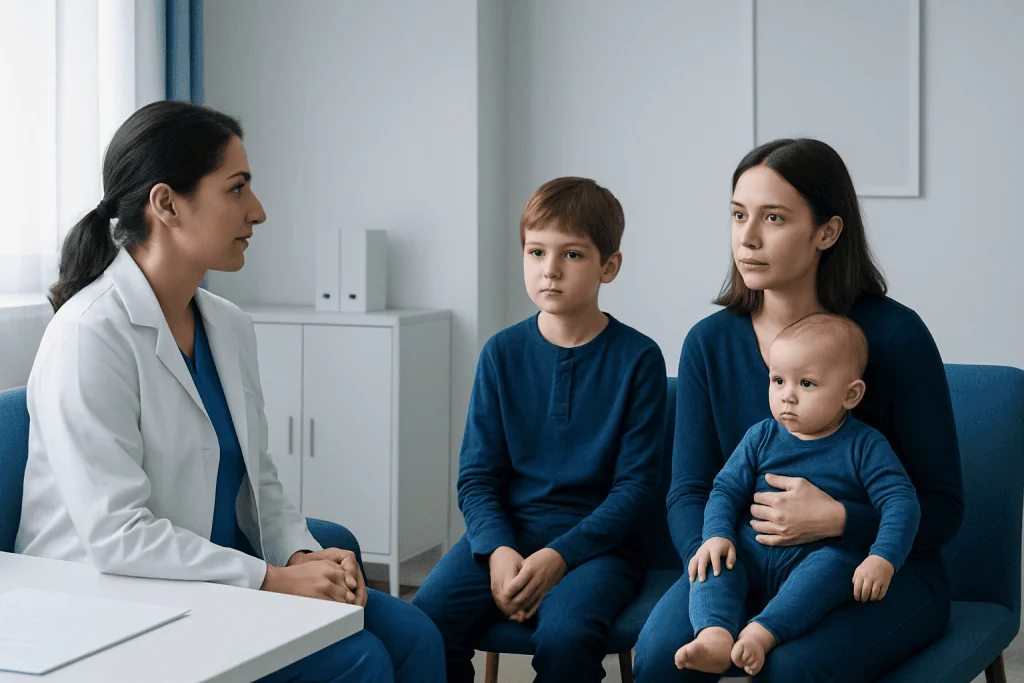
In babies, meningitis symptoms are often less specific than in older children or adults. A newborn or infant may have fever or low body temperature, weak feeding, unusual crying, limpness, vomiting, or a bulging fontanelle, which is the soft spot on top of the head. Some babies become hard to console, while others become unusually sleepy and less responsive.
In toddlers and school-age children, common signs include fever, headache, vomiting, sensitivity to light, neck stiffness, and irritability. A child may avoid bright rooms, lie still, or complain that moving the neck hurts. In some cases, the first changes are behavioral, such as confusion, less interaction, or unusual sleepiness.
In teenagers and adults, the more classic pattern is easier to recognize: fever, headache, stiff neck, and feeling very unwell. Older adults may present differently, sometimes with more subtle confusion, weakness, reduced alertness, or less obvious fever. People with weakened immune systems may also have an atypical presentation, so even mild but unexplained neurological symptoms deserve medical advice.
Common triggers and causes behind meningitis symptoms
Meningitis symptoms are triggered by inflammation around the brain and spinal cord, but the underlying causes vary. Viruses are a common cause and often produce a milder illness, although some viral infections can still be serious. Bacteria are especially important because bacterial meningitis can progress quickly and requires urgent treatment.
Less commonly, meningitis may be caused by fungi, tuberculosis, parasites, certain medications, autoimmune inflammation, or cancer-related processes. Sometimes it follows an infection in the ear, sinuses, lungs, or bloodstream. Head injury, skull fracture, neurosurgery, or devices that access the nervous system can also increase risk in some people.
Risk factors include close exposure to someone with certain infections, living in shared settings such as dormitories, incomplete vaccination, very young age, older age, and conditions that weaken immunity. Recent upper respiratory symptoms do not prove meningitis, but they can be part of the broader illness pattern. A doctor may also consider related conditions affecting the brain or nervous system, such as encephalitis, because symptoms can overlap.
How doctors evaluate and diagnose meningitis
Doctors diagnose meningitis by combining symptoms, examination findings, and laboratory tests. The medical team will ask when symptoms began, how quickly they progressed, whether there has been exposure to infections, and whether there are signs such as rash, seizures, confusion, or severe neck pain. Temperature, blood pressure, breathing, and overall alertness are also important in judging urgency.
Tests often include blood work and blood cultures to look for infection. A lumbar puncture, sometimes called a spinal tap, is a key test because it allows cerebrospinal fluid to be analyzed for signs of inflammation, bacteria, viruses, or other causes. Depending on the situation, brain imaging such as MRI or [[TREATMENT:computerized-tomography-(ct)-scan|CT scanning]] may be done before or alongside other tests.
Diagnosis should not be delayed if bacterial meningitis is strongly suspected. In urgent cases, treatment may begin before all test results are back. This approach helps protect the brain and nervous system while doctors confirm the exact cause and choose the most appropriate therapy.
Treatment options and what happens in hospital
Treatment depends on the cause. Bacterial meningitis usually requires urgent hospital care with intravenous antibiotics and close monitoring. Doctors may also use other medicines, such as corticosteroids in selected cases, to reduce inflammation and help lower the risk of some complications. Supportive care can include fluids, pain relief, fever control, oxygen, and treatment for seizures if needed.
Viral meningitis often improves with rest, fluids, and symptom relief, though some patients need hospital observation, especially if symptoms are severe or the diagnosis is uncertain. Fungal or tuberculosis-related meningitis requires specific antimicrobial treatment, often for a longer period. If doctors suspect pressure changes, abscess, or another complication, they may arrange additional neurological or neurosurgical evaluation.
Hospital teams monitor for complications such as dehydration, low blood pressure, reduced consciousness, hearing problems, or long-term neurological effects. In complex cases, coordinated care from infectious disease specialists, neurologists, pediatricians, and critical care teams may be needed. Acibadem International’s multidisciplinary specialists and JCI-accredited hospitals diagnose and treat neurological infections for international patients when advanced evaluation is required.
Prevention, self-care, and when to seek medical care
Prevention focuses on lowering infection risk. Vaccination is one of the most important ways to help prevent some forms of bacterial and viral meningitis. Good hand hygiene, avoiding close contact when someone is acutely ill, and following medical advice after a known exposure can also help. In certain situations, close contacts of a person with bacterial meningitis may be offered preventive antibiotics by public health or medical teams.
At home, self-care is appropriate only for mild symptoms that are already being monitored by a clinician and when meningitis has not been strongly suspected. Rest, hydration, and fever or pain relief may ease discomfort, but they do not replace medical assessment if warning signs are present. It is safest not to assume that a severe headache or stiff neck is simply a routine viral illness.
Medical care should be sought urgently for fever with severe headache and neck stiffness, a new rash, confusion, seizures, fainting, trouble waking, or rapidly worsening illness. Babies with poor feeding, unusual crying, extreme sleepiness, vomiting, or a bulging soft spot should be evaluated promptly. If symptoms are severe or progressing quickly, emergency care is appropriate.
In some cases, doctors may use additional tests such as [[TREATMENT:electroencephalography-(eeg)|electroencephalography]] if seizures or altered awareness are part of the picture. Anyone who has ongoing headaches, hearing changes, concentration problems, or weakness after meningitis should arrange follow-up care, because recovery may continue after the infection itself is treated.
Frequently asked questions
What are the first symptoms of meningitis?
Early meningitis symptoms often include fever, headache, and feeling generally unwell. Neck stiffness, nausea, vomiting, and sensitivity to light may follow. In some people, symptoms begin suddenly, while in others they build over hours or a day or two.
Does meningitis always cause a stiff neck?
No. Neck stiffness is a classic symptom, but not everyone has it, especially early in the illness or in infants and older adults. That is why doctors look at the full pattern of symptoms rather than one sign alone.
How can meningitis symptoms differ from flu symptoms?
Both illnesses can cause fever, headache, body aches, and tiredness, which can make early symptoms hard to tell apart. Meningitis is more concerning when there is marked neck stiffness, confusion, severe light sensitivity, seizures, or rapid worsening. A non-blanching rash is another important warning sign.
What does a meningitis rash look like?
A meningitis-related rash may appear as small red or purple spots or larger purple areas. One important feature is that it may not fade when pressed. However, not all meningitis causes a rash, and the absence of rash does not rule meningitis out.
Can viral meningitis go away on its own?
Many cases of viral meningitis improve with supportive care, such as rest, fluids, and symptom control. Even so, symptoms should still be medically evaluated because early bacterial meningitis can look similar. A clinician can decide whether home care, observation, or hospital treatment is safest.
When should a child be taken to the doctor for possible meningitis?
A child should be assessed urgently for fever with severe headache, neck stiffness, unusual sleepiness, confusion, repeated vomiting, seizures, or a rash. In babies, poor feeding, a bulging soft spot, limpness, or difficult-to-soothe crying also need prompt evaluation. If symptoms are severe or worsening quickly, emergency care is appropriate.
References
- World Health Organization
- Centers for Disease Control and Prevention
- National Institute of Neurological Disorders and Stroke
- American Academy of Pediatrics
- Mayo Clinic
This article is for general information only and is not a substitute for professional medical advice. Please consult a qualified doctor about your individual situation.
Meningitis in Turkey — costs, top hospitals & a free quote
JCI-accredited · board-certified surgeons · reply within 24h
Add us as a Preferred Source to see more of our trusted health content across Google Search, AI Overviews and Discover.

More from the Health Library



Related Specialists
Dr. Birol Esen
General Surgery
Prof. Dr. Murat Bozkurt
Orthopedic Surgery & Traumatology
Dr. Özgür Kabagöz
Emergency Service
Dr. Mehmet Can Şahin
Inpatient Clinic Physicians Clinical Service