Mohs Surgery: Candidacy, Procedure Steps, and Recovery Timeline

Mohs surgery removes skin cancer layer by layer and examines each layer immediately. It is commonly used for selected basal cell and squamous cell carcinomas, especially on the face and other sensitive areas.
Key Takeaways
- Mohs surgery removes skin cancer layer by layer and examines each layer immediately.
- It is commonly used for selected basal cell and squamous cell carcinomas, especially on the face and other sensitive areas.
- The main advantages are high cure rates and maximum preservation of healthy skin.
- Most procedures are done with local anesthesia in an outpatient setting.
- Recovery is usually manageable, but healing time depends on wound size, location, and reconstruction method.
- A dermatologist or skin cancer specialist can help determine whether Mohs surgery is the best option.
Mohs surgery is a precise skin cancer treatment that removes cancer one thin layer at a time while checking each layer under a microscope during the same visit. It is often recommended for certain basal cell and squamous cell skin cancers when preserving healthy tissue and confirming complete removal are especially important.
Overview: what Mohs surgery is and how it works
Mohs surgery is a specialized technique used to treat certain types of skin cancer. Instead of removing a wide area of tissue all at once, the surgeon removes the visible tumor along with a very thin layer of surrounding skin. That layer is then mapped, processed, and examined under a microscope while the patient waits.
If cancer cells are still seen at the edge of the removed tissue, the surgeon can identify exactly where they remain and remove another thin layer only from that area. This step-by-step process continues until no cancer cells are detected. Because the tissue is checked during the procedure itself, Mohs surgery aims to fully remove the cancer while sparing as much healthy skin as possible.
Mohs surgery is most often used for common skin cancers such as basal cell carcinoma and squamous cell carcinoma. It may be especially useful when the cancer is on the nose, eyelids, lips, ears, scalp, fingers, genitals, or other places where preserving normal tissue matters for appearance or function.
Who may be a candidate for Mohs surgery
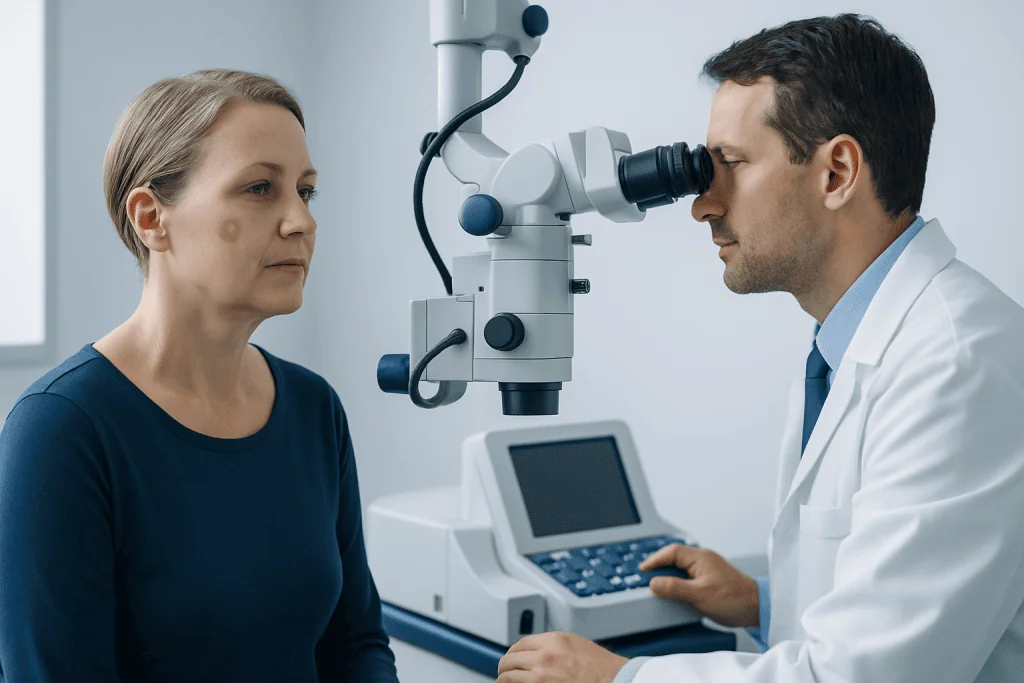
Not every skin cancer requires Mohs surgery. Candidacy depends on the type of cancer, where it is located, how large it is, whether it has returned after prior treatment, and whether the borders are difficult to define. A specialist will also consider the person’s age, general health, medications, and goals for treatment and healing.
Mohs surgery is commonly recommended for tumors with a higher risk of recurrence or tissue damage if treated less precisely. It is also often considered when the cancer has aggressive growth features under the microscope, when it has come back after earlier treatment, or when a previous biopsy suggests that the edges may be difficult to clear.
Situations in which Mohs surgery may be particularly appropriate include:
- Skin cancers on cosmetically or functionally sensitive areas, especially the face
- Large tumors or tumors with poorly defined borders
- Recurrent basal cell or squamous cell carcinoma
- Tumors with aggressive microscopic subtypes
- Cancers in people with weakened immune systems
In some cases, other treatments may be more suitable, such as standard excision, curettage and electrodesiccation, cryotherapy, radiation therapy, or other tailored skin cancer approaches. A dermatologist may discuss these options alongside skin cancer treatment planning to help match the procedure to the individual diagnosis.
Procedure steps: what happens during Mohs surgery
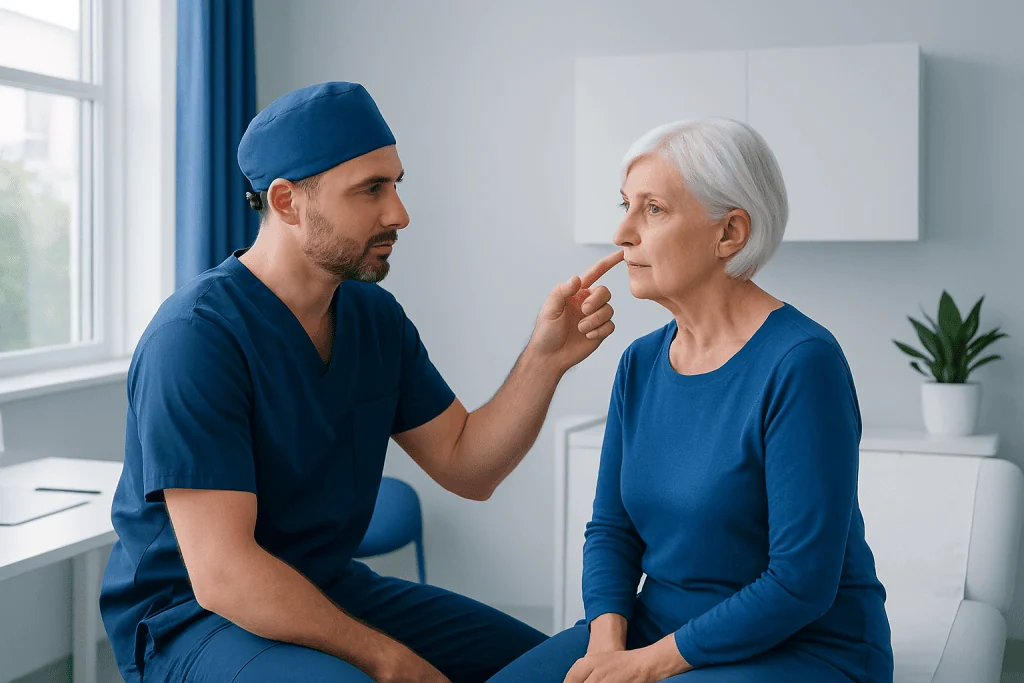
Mohs surgery is usually performed in an outpatient setting under local anesthesia. This means the treatment area is numbed, but the patient stays awake. The visit may take several hours because tissue processing and microscopic examination are repeated as needed, though the actual surgical stages are usually brief.
First, the surgeon identifies the biopsy site and visible tumor, then injects local anesthetic to numb the area. The visible cancer and a thin layer of surrounding tissue are removed. A temporary dressing is applied while the tissue is carefully marked and sent for immediate laboratory processing.
Next, the surgeon examines the full edge and underside of the removed layer under a microscope using a detailed map. If cancer remains, the map shows where those cells are located. The patient then returns to the procedure room, and only the area with remaining cancer is removed. This cycle continues until the margins are clear.
Once the cancer has been fully removed, the surgeon discusses wound repair. Depending on the size and location, the wound may be left to heal naturally, closed with stitches, or repaired with a flap or graft. Some patients may need reconstructive planning, and in selected cases this may involve plastic and reconstructive surgery for the best functional and cosmetic outcome.
Benefits and possible risks
The main benefit of Mohs surgery is precision. Because each layer is examined during the procedure, Mohs surgery can confirm that the cancer has been removed before the patient leaves. This often results in high cure rates for appropriate skin cancers and helps preserve the maximum amount of healthy surrounding tissue.
This tissue-sparing approach can be especially valuable on the face and other areas where even small differences in tissue removal may affect appearance, comfort, or function. For many patients, Mohs surgery also reduces the chance of needing a larger excision than necessary.
Like any surgical procedure, Mohs surgery has potential risks. These can include bleeding, pain, swelling, bruising, infection, delayed wound healing, scar formation, and temporary or sometimes longer-lasting numbness due to irritation of small nerves. The final cosmetic result depends on the tumor size, location, repair technique, and individual healing.
Rarely, a cancer may be more extensive than expected or need additional treatment after surgery. If a tumor has spread beyond the skin or shows features suggesting more advanced disease, the care team may recommend further evaluation, which can include dermatology care and additional oncology or imaging assessment.
Recovery timeline and aftercare
Recovery after Mohs surgery varies from person to person. Many patients go home shortly after the procedure with a bandage and written wound-care instructions. Mild soreness, swelling, tightness, and a small amount of drainage are common in the first few days, especially if the surgery was near the eyes, lips, or nose.
During the first 24 to 48 hours, patients are often advised to rest, keep the wound clean and dry as instructed, and avoid strenuous activity that could increase bleeding. Elevating the treated area when possible may help reduce swelling. If stitches are used, they are commonly removed within about one to two weeks, depending on the location.
The wound may appear pink or firm for weeks to months as healing continues. A scar is expected, but scars usually soften and fade over time. Full healing can take several weeks for smaller wounds and longer for larger wounds, grafts, or flap repairs. Following wound-care instructions closely supports healing and may improve the final result.
Patients should contact their doctor if they notice increasing redness, warmth, pus, worsening pain, persistent bleeding, or fever. Regular follow-up remains important because having one skin cancer increases the chance of developing another in the future.
How doctors diagnose and plan treatment before Mohs surgery
Mohs surgery is usually planned after a skin biopsy has confirmed the diagnosis. The pathology report helps identify the cancer type and may describe whether it has features that make recurrence or deeper spread more likely. The doctor also examines the skin lesion and may review photographs, prior pathology, or earlier treatment records.
During the consultation, the specialist explains whether Mohs surgery is likely to offer an advantage over standard excision or another treatment. The discussion often includes the likely size of the surgical defect, whether reconstruction may be needed, how long the visit may take, and whether any medications should be reviewed before the procedure.
Patients should tell the care team about blood thinners, bleeding disorders, pacemakers, implanted devices, allergies, smoking, and any history of poor wound healing. They should also mention if they are pregnant or have immune suppression. This information helps guide safe planning and aftercare.
If the cancer appears more complex, the care team may coordinate with other specialists. Near the end of the treatment journey, some international patients choose evaluation at centers such as Acibadem International, where multidisciplinary specialists in JCI-accredited hospitals diagnose and treat skin cancers and support follow-up care.
Prevention and self-care after treatment
After Mohs surgery, prevention focuses on lowering the risk of future skin cancers and noticing changes early. Sun protection is one of the most important long-term steps. This includes seeking shade, wearing protective clothing and a wide-brimmed hat, and using a broad-spectrum sunscreen as recommended by a doctor.
Regular skin self-checks can help patients become familiar with their skin and spot new or changing areas. It can be helpful to look for sores that do not heal, bumps that bleed easily, scaly patches, or spots that change in size, color, or texture. Any concerning change should be shown to a healthcare professional.
Follow-up visits are also important. People who have had one nonmelanoma skin cancer are at increased risk of another, so the doctor may recommend periodic full-skin examinations. Keeping appointments and bringing up any new lesions promptly can support earlier treatment if needed.
General self-care also matters for healing and skin health. Avoiding tobacco, following wound-care instructions, eating a balanced diet, and protecting the scar from sun exposure may support recovery and improve the appearance of the healed area over time.
When to seek medical care
A person should seek medical care if they notice a skin growth or sore that does not heal, a spot that repeatedly bleeds or crusts, a scaly patch that persists, or a bump that grows over time. Evaluation is also important for any lesion near the eyes, nose, lips, or ears, where delaying treatment may make reconstruction more complex.
After Mohs surgery, prompt medical advice is recommended for heavy or ongoing bleeding, signs of infection, fever, rapidly increasing swelling, or severe pain that is not improving. Patients should also call their doctor if stitches come apart or if the wound suddenly changes in appearance.
Urgent care may be needed if there is difficulty breathing, facial swelling suggesting a severe allergic reaction, or uncontrolled bleeding that does not stop with firm pressure. In non-urgent situations, a planned review with a dermatologist or surgeon is the best way to discuss candidacy, treatment options, and expectations for recovery.
Frequently asked questions
Is Mohs surgery only used for skin cancer?
Mohs surgery is mainly used for certain skin cancers, especially basal cell carcinoma and squamous cell carcinoma. In selected situations, it may also be used for some less common skin tumors when precise margin control is important.
How long does Mohs surgery take?
The length of the visit varies because the tissue is checked in stages during the same appointment. Many patients should expect to spend several hours at the clinic, even though each surgical stage itself is usually relatively short.
Is Mohs surgery painful?
Local anesthesia is used to numb the area, so patients usually should not feel pain during the tissue removal itself. Some pressure or movement may be noticed, and mild soreness afterward is common but often manageable with the doctor's recommended aftercare.
Will Mohs surgery leave a scar?
Yes, any surgery that removes skin will leave some degree of scar. However, Mohs surgery is designed to preserve as much healthy tissue as possible, which may help limit the size of the wound and support a better cosmetic outcome in appropriate cases.
What is the difference between Mohs surgery and standard excision?
In standard excision, the tumor and a planned margin of surrounding skin are removed at once, and the tissue is usually examined later. In Mohs surgery, tissue is removed in thin stages and checked immediately, allowing the surgeon to remove additional tissue only where cancer remains.
Can skin cancer come back after Mohs surgery?
Mohs surgery offers excellent cure rates for selected tumors, but no treatment can guarantee that cancer will never return. Ongoing follow-up is important because recurrence can happen, and people who have had one skin cancer may develop another new one elsewhere.
References
- American Academy of Dermatology
- National Cancer Institute
- American Cancer Society
- National Comprehensive Cancer Network
- British Association of Dermatologists
This article is for general information only and is not a substitute for professional medical advice. Please consult a qualified doctor about your individual situation.
Oncology care in Turkey — second opinion and treatment plan
JCI-accredited · board-certified surgeons · reply within 24h
Add us as a Preferred Source to see more of our trusted health content across Google Search, AI Overviews and Discover.

More from the Health Library



Related Specialists

Asst. Prof. Dr. Zeynep Tuğçe Sarıkaya
Intensive Care
Prof. Dr. İsmet Aydoğdu
Hematology
Dr. Aslı Saran İkizler
Radiation Oncology
Dr. Munara Bolatkhan
Inpatient Clinic Physicians Clinical Service