Mohs Surgery for Skin Cancer: Procedure, Margins, and Recovery

Mohs surgery removes visible skin cancer and then examines thin layers under a microscope until the margins are clear. It is most commonly used for basal cell carcinoma and squamous cell carcinoma, and in selected cases for other skin cancers.
Key Takeaways
- Mohs surgery removes visible skin cancer and then examines thin layers under a microscope until the margins are clear.
- It is most commonly used for basal cell carcinoma and squamous cell carcinoma, and in selected cases for other skin cancers.
- Because the surgeon checks the entire surgical margin during the procedure, Mohs surgery can help spare healthy tissue.
- Most procedures are done with local anesthesia, and many patients go home the same day with a pressure dressing.
- Recovery depends on the size, depth, and location of the wound, as well as the type of reconstruction used.
- Any new, changing, bleeding, or non-healing skin lesion should be assessed by a qualified dermatologist or skin cancer specialist.
Mohs surgery is a precise technique for removing certain skin cancers while checking the tissue margins during the same visit. It is especially useful in areas where preserving healthy skin matters, such as the face, ears, scalp, hands, feet, and genitals.
Overview
Mohs surgery, also called Mohs micrographic surgery, is a specialized procedure used to treat selected skin cancers. During the procedure, the surgeon removes the visible tumor and a very thin layer of surrounding tissue, then examines that tissue under a microscope while the patient waits. If cancer cells remain at the edge or base of the specimen, another thin layer is removed only from the area where cancer is still present.
This step-by-step approach is designed to remove cancer completely while preserving as much healthy skin as possible. It is particularly valuable in cosmetically and functionally important areas, including the eyelids, nose, lips, ears, scalp, fingers, toes, and genitals. It may also be recommended for tumors that are large, recurrent, fast-growing, have poorly defined borders, or show aggressive microscopic features.
Mohs surgery is most often used for basal cell carcinoma and squamous cell carcinoma, the two most common non-melanoma skin cancers. In selected situations, specially trained teams may use Mohs or staged excision techniques for melanoma in situ or other rare skin tumors, often with additional laboratory stains. The best approach depends on the cancer type, location, previous treatments, and the patient’s overall health.
How Mohs Surgery Works
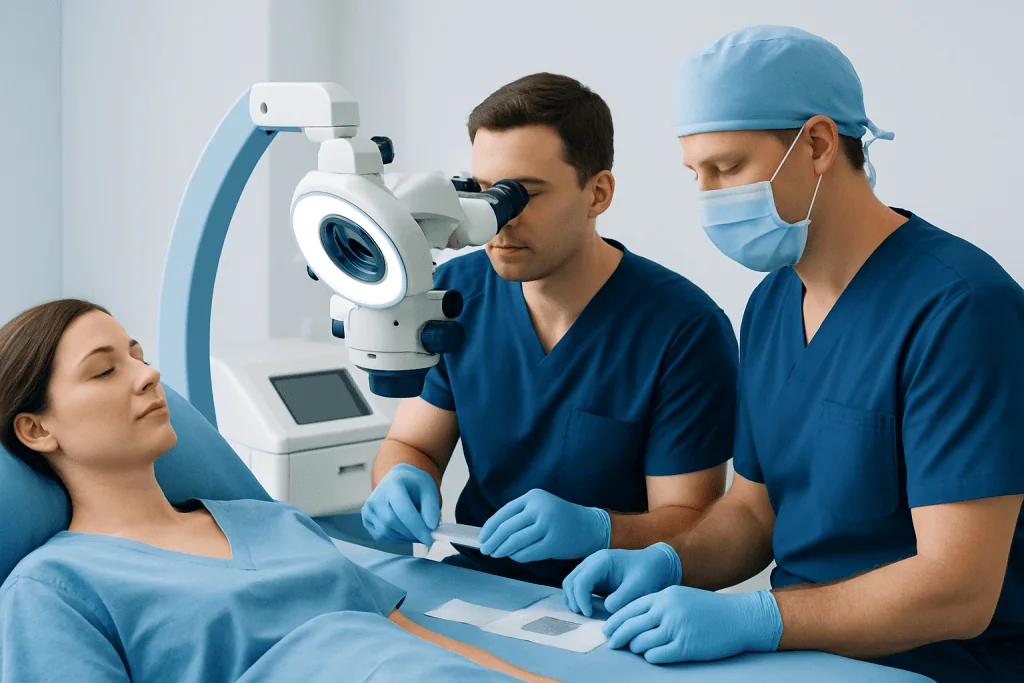
The Mohs procedure is different from standard excision because the tissue is processed and mapped in a way that allows the surgeon to examine nearly the entire surgical margin. In a typical excision, a tumor is removed with a predetermined rim of normal-looking skin, and a sample of the margin is checked later by a pathology laboratory. With Mohs surgery, the surgeon removes tissue in stages and checks the margins during the appointment.
After numbing the area with local anesthesia, the visible cancer is removed. The tissue is carefully marked, mapped, frozen, cut into very thin sections, and examined under a microscope. If cancer cells are seen at a specific point on the map, the surgeon knows exactly where to remove another layer. This process continues until no cancer cells are detected at the examined margins.
For the patient, much of the appointment may involve waiting between stages while the laboratory work is performed. The actual cutting portion is usually brief, but tissue processing and microscopic review take time. Some tumors clear after one stage, while others need several stages, especially if they have roots extending beyond what is visible on the skin surface.
Margins and Why They Matter

In skin cancer treatment, the word margins refers to the edges and the deep base of the removed tissue. A clear margin means that no cancer cells are seen at the examined edge of the specimen. A positive margin means that cancer cells are still present at an edge, suggesting that additional treatment may be needed.
Mohs surgery focuses on complete margin assessment. The tissue is oriented and flattened so that the surgeon can evaluate the peripheral and deep margins in a controlled way. This is one reason Mohs surgery is often chosen for tumors with unclear borders or for tumors in areas where taking a large safety margin could affect appearance or function.
Clear margins do not mean a person will never develop another skin cancer. They mean the treated tumor has been removed to the point that no remaining cancer is seen in the examined tissue. Patients who have had one skin cancer remain at higher risk for future skin cancers, so regular skin checks and sun protection remain important after treatment.
Who May Be a Candidate
Mohs surgery is not necessary for every skin cancer. Many early, low-risk skin cancers on the trunk, arms, or legs can be treated effectively with standard excision or other dermatologist-recommended treatments. Mohs is usually considered when the cancer has features that make complete removal more challenging or when preserving healthy tissue is especially important.
A dermatologist, dermatologic surgeon, or skin cancer specialist may recommend Mohs surgery for cancers that are located on high-risk or delicate areas, have returned after previous treatment, are large or rapidly growing, have indistinct borders, or show aggressive patterns under the microscope. It may also be considered for patients who are immunosuppressed, because some skin cancers can behave more aggressively in this setting.
Common reasons Mohs surgery may be discussed include:
- Basal cell carcinoma or squamous cell carcinoma on the face, ears, scalp, hands, feet, or genitals.
- A tumor that has recurred after previous treatment.
- A skin cancer with poorly defined borders.
- A tumor in an area where tissue preservation may improve cosmetic or functional outcome.
- High-risk microscopic features reported on biopsy.
What to Expect Before and During the Procedure
Before Mohs surgery, the care team usually reviews the biopsy report, medical history, allergies, current medicines, and any bleeding or clotting conditions. Patients should tell the doctor about blood thinners, implanted devices, immune system conditions, and previous reactions to anesthesia. Medicines should not be stopped unless the prescribing doctor or surgeon advises it.
On the day of surgery, the area is cleaned and numbed with local anesthesia. Most patients remain awake during the procedure and feel pressure or movement rather than sharp pain. After the first layer is removed, a temporary dressing is placed while the tissue is processed. The patient may rest, read, or wait in the clinic between stages.
Once the margins are clear, the surgeon discusses how the wound will heal. Small wounds may be closed with stitches in a straight line, allowed to heal naturally, or repaired with a skin flap or graft. In certain complex areas, reconstruction may involve a plastic surgeon, oculoplastic surgeon, ear, nose and throat specialist, or another surgical specialist. The decision depends on wound size, depth, location, skin laxity, and the patient’s priorities.
Recovery and Aftercare
Most patients return home the same day after Mohs surgery. A pressure dressing is commonly applied to reduce bleeding and swelling. The care team provides instructions on when to remove the dressing, how to clean the wound, whether to apply ointment, and when to return for suture removal or wound review.
Mild discomfort, tightness, swelling, bruising, or a small amount of oozing can occur in the first few days. Pain is often manageable with the medicines recommended by the treating doctor. Patients should avoid strenuous exercise, heavy lifting, bending, swimming, or activities that could stretch the wound until the surgeon confirms it is safe.
Healing time varies. A small wound closed with stitches may look well healed within a couple of weeks, but scar maturation continues for months. Wounds on the lower legs, ears, nose, and areas with reduced circulation may take longer. Good wound care, not smoking, adequate nutrition, and careful sun protection can support healing.
Patients should contact their care team if they notice bleeding that does not stop with firm pressure, increasing redness or warmth, worsening pain, pus-like drainage, fever, separation of the wound edges, or any symptom that feels concerning. Prompt advice can often solve minor wound issues before they become more troublesome.
Benefits, Limitations, and Possible Risks
The main benefit of Mohs surgery is its combination of precise cancer removal and tissue conservation. Because the surgeon examines the margins during the procedure, additional tissue is removed only where cancer cells remain. This can be important for areas where even a few millimeters of skin can affect eyelid movement, lip shape, nasal contour, or hand function.
Like all surgical procedures, Mohs surgery has limitations and possible risks. These may include bleeding, infection, bruising, swelling, scarring, temporary or permanent numbness, wound healing problems, and the need for additional reconstruction. In rare situations, a tumor may be more extensive than expected, or further treatment may be advised based on the final assessment and the cancer’s behavior.
Mohs surgery also requires specialized training, laboratory support, and time. The appointment can last several hours because each stage must be processed and reviewed carefully. For some tumors, other treatments may be more appropriate, including standard excision, curettage and electrodesiccation, topical therapies, radiation therapy, photodynamic therapy, or systemic treatments. The safest choice is individualized after clinical examination and review of the biopsy.
Prevention, Follow-Up, and When to See a Doctor
After Mohs surgery, follow-up is important because having one skin cancer increases the chance of developing another. The dermatologist will recommend a skin examination schedule based on the cancer type, location, number of previous skin cancers, immune status, and other risk factors. Patients should also become familiar with their own skin and report changes early.
Sun protection is a practical part of long-term care. This includes seeking shade, wearing protective clothing and a broad-brimmed hat, using broad-spectrum sunscreen as directed, and avoiding intentional tanning. Sun protection is still needed on cloudy days and during everyday outdoor activities, not only at the beach or pool.
A doctor should evaluate any new or changing spot, a sore that does not heal, a lesion that bleeds easily, a scaly or crusted patch, a pearly or shiny bump, or a firm tender growth. People with a personal history of skin cancer, organ transplantation, long-term immunosuppressive treatment, or extensive sun damage should be especially attentive to new lesions.
Acibadem International’s multidisciplinary specialists and JCI-accredited hospitals diagnose and treat skin cancers, including cases where Mohs surgery or coordinated reconstruction may be considered for international patients. Patients should consult a qualified dermatologist or skin cancer surgeon to understand whether Mohs surgery is appropriate for their diagnosis.
Frequently asked questions
Is Mohs surgery painful?
Mohs surgery is usually performed with local anesthesia, so the treated area is numb during the procedure. Patients may feel pressure, movement, or mild pulling, but they should not feel sharp pain. Some soreness, tightness, or swelling can occur afterward and is usually manageable with the care plan recommended by the doctor.
How long does Mohs surgery take?
The length of the appointment varies because the surgeon removes and examines tissue in stages. Some tumors clear after one stage, while others require several stages. Patients are often advised to keep most of the day free, even though the active surgical time may be relatively short.
Will Mohs surgery leave a scar?
Any surgery that cuts the skin can leave a scar. Mohs surgery is designed to preserve healthy tissue, which may help limit the size of the wound, especially in delicate areas. The final appearance depends on the tumor size and depth, wound location, repair method, skin type, healing pattern, and aftercare.
What is the difference between Mohs surgery and regular excision?
In regular excision, the cancer is removed with a planned margin of normal-looking skin, and the tissue is usually checked later by a pathology laboratory. In Mohs surgery, the surgeon removes the cancer in thin layers and checks the margins during the same visit. Additional tissue is taken only from areas where cancer cells remain.
Can Mohs surgery be used for melanoma?
Mohs surgery is most commonly used for basal cell carcinoma and squamous cell carcinoma. In selected cases, especially melanoma in situ in cosmetically sensitive areas, specialized Mohs or staged excision techniques may be considered with appropriate laboratory methods. The decision should be made by a dermatologist or skin cancer specialist familiar with the tumor type and location.
When can normal activities resume after Mohs surgery?
Many people can return to light daily activities soon after the procedure, but strenuous exercise and heavy lifting are often limited for a short period. The exact timing depends on the wound size, repair type, and location. Patients should follow their surgeon’s instructions to reduce bleeding, swelling, and wound tension.
Does clear margin after Mohs surgery mean the cancer is cured?
Clear margins mean that no cancer cells were seen at the examined edges of the removed tissue during the procedure. This is a reassuring result for the treated cancer, but it does not eliminate the risk of future skin cancers. Regular follow-up skin examinations and sun protection remain important.
References
- American Academy of Dermatology Association
- National Comprehensive Cancer Network
- American Society for Dermatologic Surgery
- Skin Cancer Foundation
- National Cancer Institute
This article is for general information only and is not a substitute for professional medical advice. Please consult a qualified doctor about your individual situation.
Skin Cancer in Turkey — costs, top hospitals & a free quote
JCI-accredited · board-certified surgeons · reply within 24h
Add us as a Preferred Source to see more of our trusted health content across Google Search, AI Overviews and Discover.